HelloGrowthCRM software
Built for real small-business sales teams
HelloGrowthCRM helps reps qualify faster, follow up on time, and close more deals—with practical automation in one place.
- AI lead scoring and pipeline visibility
- Built-in dialer, WhatsApp, and email automation
- Sales forecasting and RevOps-ready reporting
Recording customer advance payments correctly ensures your business accounts reflect the true financial position and comply with accounting principles. Small business owners often face confusion about when to recognise income and how to track prepayments accurately.
Why this comes up / what goes wrong
Many small businesses in New Zealand receive payments from customers before delivering goods or services. These advance payments, also called deposits or prepayments, should not be treated as immediate income. Instead, they represent a liability until the sale is completed. Mistakes often occur when businesses record advances as revenue prematurely, causing inaccurate profit reporting and potential tax issues. Without clear steps, it’s easy to misclassify these payments, lose track of customer balances, or fail to apply advances properly to invoices.
Step-by-step
- Identify the advance payment
- Confirm the payment received is an advance, not a final payment.
- Record the payment date, amount, and customer details.
- Record the payment as a liability
- Debit your bank or cash account to reflect the money received.
- Credit a liability account named “Customer Advances” or “Customer Deposits.”
- This shows the money is held until goods or services are delivered.
- Track the advance on the customer’s account
- Maintain a record of each customer’s advance payments.
- This helps when applying the payment to future invoices.
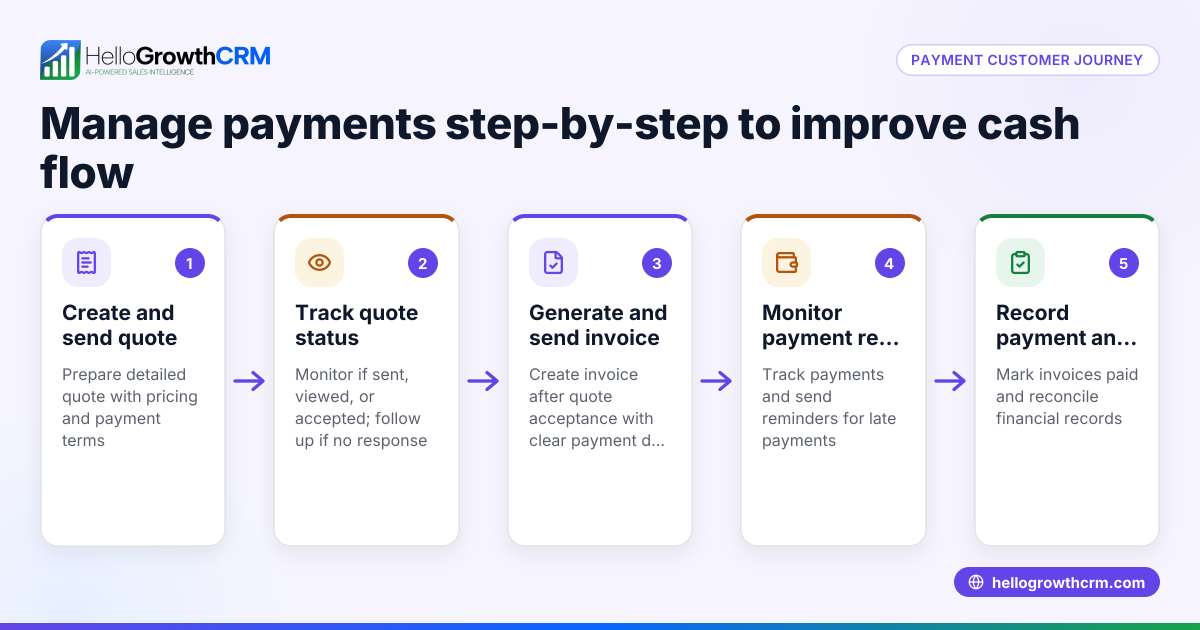
- Issue a quotation or proposal if applicable
- Send a detailed quote or proposal outlining goods or services.
- Track its status (sent, viewed, accepted) to manage follow-up efficiently.
- Deliver goods or services as agreed
- Fulfil your sales agreement or contract.
- Generate and send the invoice
- Create an invoice for the total amount due.
- Include a note showing the advance payment applied.
- Apply the advance payment to the invoice
- Debit the “Customer Advances” liability account to reduce it.
- Credit your sales or revenue account to recognise income.
- This ensures income is recognised only for delivered goods or services.
- Reconcile payments received
- Match payments with invoices in your accounting system.
- Confirm advance payments are fully applied and customer balances are accurate.
- Review regularly
- Check outstanding advances and follow up with customers if needed.
Example (fictional figures)
A Christchurch-based building company receives an advance payment from a client on 15/05/2024 for a house renovation project.
- Advance payment received: NZ$20,000
- Total project cost: NZ$120,000
Step 1 & 2: Record the advance payment
Bank (Debit) = NZ$20,000
Customer Advances (Credit) = NZ$20,000
Step 3: Track the customer advance balance
Customer A has NZ$20,000 advance recorded.
Step 6: Invoice after partial completion on 30/06/2024
Invoice amount: NZ$60,000
Step 7: Apply advance payment to invoice
Customer Advances (Debit) = NZ$20,000
Sales Revenue (Credit) = NZ$20,000
Bank (Debit) = NZ$40,000 (remaining invoice amount received)
Accounts Receivable (Credit) = NZ$60,000 (invoice total)
Arithmetic:
NZ$20,000 + NZ$40,000 = NZ$60,000 (total invoice payment)
Net effect: Recognise NZ$60,000 revenue, with NZ$20,000 from advance and NZ$40,000 from invoice payment.
Common mistakes
- Recording advances as immediate income: Prevent this by always crediting a liability account first.
- Not tracking advances per customer: Use a customer ledger or CRM to avoid confusion.
- Failing to apply advances to invoices: Regularly reconcile payments and invoices.
- Mixing advance payments with regular receipts: Keep separate accounts for clarity.
- Ignoring follow-up on unused advances: Monitor and refund or apply as needed.
Use tools like the customer health score to monitor customer payment status and balances.
Doing this in HelloGrowthCRM
HelloGrowthCRM offers a quoting and proposal tool that lets you build, send, and track commercial documents from a deal record. The quotation status (sent, viewed, accepted) appears on the same screen as your follow-up tasks, helping you manage advance payment discussions efficiently. After the sale, service requests stay on the same customer record as the deal for easy ongoing management. Learn more about HelloGrowthCRM for New Zealand and its WhatsApp and SMS CRM features.
Frequently asked questions
How do I record a customer advance payment in my accounting system? Record the advance as a liability by crediting a customer advances account and debiting your bank account. Only recognise it as income when you deliver the goods or services and invoice the customer.
Can I track advance payments using HelloGrowthCRM? HelloGrowthCRM helps manage sales with quotes and proposals linked to deals, showing their status and helping you follow up on payments and approvals, which supports tracking advance payments.
What happens if the customer cancels after paying an advance? You should refund the advance or negotiate terms. Adjust your liability account accordingly to reflect the refund or cancellation.
Should GST be charged on advance payments? NEEDS EXPERT REVIEW. Generally, GST applies when the payment is made, but consult an accountant for specific rules.
How do I ensure I don’t lose track of customer advances? Maintain clear records in your accounting system or CRM, reconcile payments regularly, and monitor customer balances using tools like the customer health score.
Key takeaways
- Record customer advance payments as liabilities, not income.
- Track advances per customer to apply them correctly.
- Apply advances against invoices when delivering goods or services.
- Use detailed quotations and follow-up to manage sales efficiently.
- Reconcile payments and invoices regularly to keep accounts accurate.
- HelloGrowthCRM helps track quotes, proposals, and service requests on the same customer record.
Start managing your customer advance payments today with clear steps and better tools. Start on the Free Forever plan (200 leads, no credit card).
Ready to put this into practice?
Set up your pipeline, WhatsApp follow-ups, and AI lead scoring in minutes — free, no credit card.
Try HelloGrowthCRM freeGet CRM tips in your inbox
Join thousands of sales professionals who get weekly insights on CRM strategy, AI automation, and pipeline optimization.

The HelloGrowthCRM team publishes guides on CRM strategy, AI sales tools, and revenue operations for small business sales teams.