HelloGrowthCRM software
Built for real small-business sales teams
HelloGrowthCRM helps reps qualify faster, follow up on time, and close more deals—with practical automation in one place.
- AI lead scoring and pipeline visibility
- Built-in dialer, WhatsApp, and email automation
- Sales forecasting and RevOps-ready reporting
To reconcile invoice and payment records in India, you need to systematically compare your issued invoices against payments received, ensuring all amounts and dates align and every payment is accounted for. This process helps maintain accurate financial records and prevents losses from missed or delayed payments. This article explains why reconciliation is important, provides a clear step-by-step method, includes a worked example with realistic Indian figures, highlights common mistakes, and suggests how CRM tools can assist.
Why this comes up / what goes wrong
Small business owners in India often face challenges reconciling invoices and payments because they handle multiple clients, various payment methods, and sales channels like WhatsApp and spreadsheets. Payments may be delayed, partial, or unrecorded, and invoices may be mismatched or lost. Without a clear process, businesses risk cash flow problems, accounting errors, and difficulty tracking outstanding dues. Reconciliation confirms which invoices are fully paid, partially paid, or overdue, enabling better follow-up and financial control.
Step-by-step
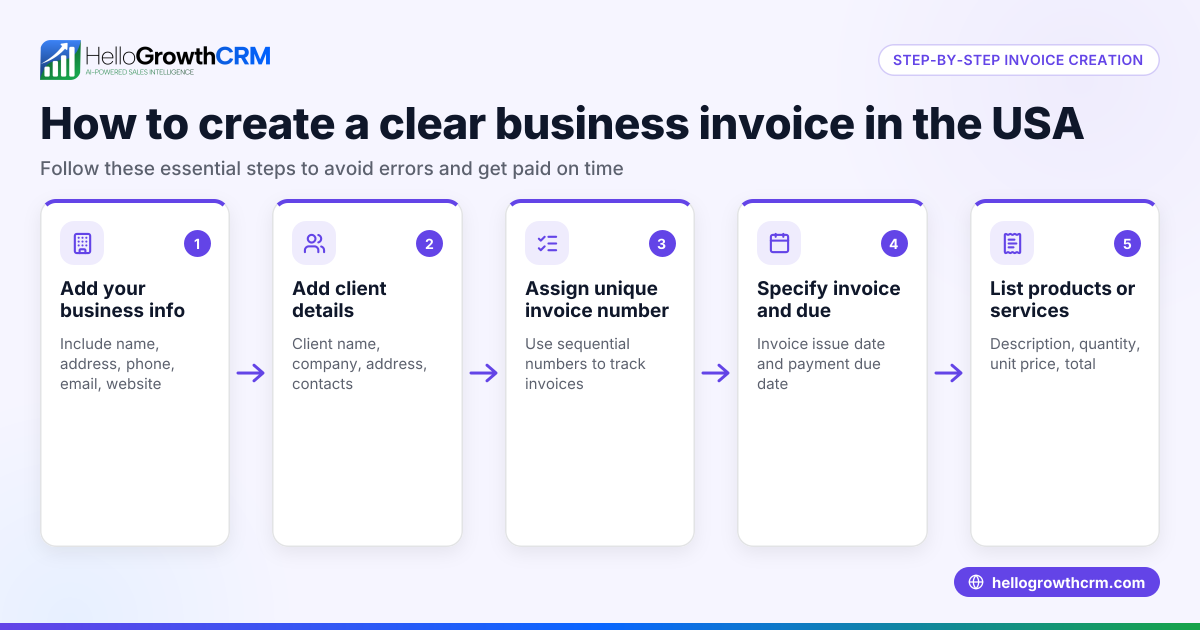
- Gather all invoices issued for the period: Collect copies or digital records of all invoices sent to customers during the reconciliation period. Include invoice numbers, dates, amounts, and client details.
- Collect payment records: Obtain bank statements, payment gateway reports, and cash receipt records showing payments received, including dates, amounts, and payer information.
- Match payments to invoices by invoice number: For each payment, identify the corresponding invoice using the invoice number mentioned in payment references or customer communication.
- Verify payment amounts against invoice amounts: Check if the payment amount matches the invoice total. Note any partial payments or overpayments.
- Check payment dates: Confirm that payments were received within expected timeframes and note any delays.
- Record payment status for each invoice: Mark invoices as Paid, Partially Paid, or Unpaid in your ledger, spreadsheet, or software.
- Investigate discrepancies: For unmatched payments or invoices, contact customers or your accounts team to clarify issues.
- Update your financial records: Adjust your accounting or CRM system to reflect reconciled statuses, outstanding amounts, and follow-up tasks.
- Maintain documentation: Keep scanned copies or digital files of invoices and payment proofs for audit and future reference.
- Review regularly: Perform reconciliation monthly or quarterly to keep records current and accurate.
Learn more about managing follow-ups and tasks with activities and task boards and simplify your outreach with the built-in CRM dialer.
Example (fictional figures)
ABC Traders issued three invoices in March 2024:
- Invoice #101 dated 05/03/2024: ₹1,00,000
- Invoice #102 dated 10/03/2024: ₹50,000
- Invoice #103 dated 20/03/2024: ₹75,000
Payments received in March:
- Payment on 15/03/2024: ₹1,00,000 referencing Invoice #101
- Payment on 25/03/2024: ₹25,000 referencing Invoice #102
- Payment on 28/03/2024: ₹75,000 referencing Invoice #103
Step-by-step reconciliation:
- Match payment ₹1,00,000 to Invoice #101: ₹1,00,000 = ₹1,00,000 → Fully Paid
- Match payment ₹25,000 to Invoice #102: ₹25,000 < ₹50,000 → Partially Paid; balance ₹50,000 - ₹25,000 = ₹25,000 outstanding
- Match payment ₹75,000 to Invoice #103: ₹75,000 = ₹75,000 → Fully Paid
Summary:
- Invoice #101: Paid
- Invoice #102: Partially Paid with ₹25,000 due
- Invoice #103: Paid
Common mistakes
- Ignoring partial payments: Not tracking partial payments leads to incorrect outstanding balances. Always note partial amounts and follow up on the remainder.
- Mismatching invoices and payments: Relying only on amounts without invoice numbers can cause errors. Insist on including invoice numbers in payment references.
- Delaying reconciliation: Waiting too long increases errors and cash flow problems. Schedule regular reconciliation, ideally monthly.
- Not updating records promptly: Failure to mark invoices as paid or partially paid causes confusion. Update your ledger or CRM immediately after reconciliation.
- Overlooking bank charges or deductions: Sometimes payments received are less due to bank fees. Account for these differences to avoid false discrepancies.
- Manual tracking without software: Using only spreadsheets or WhatsApp messages increases chances of mistakes and lost data. Consider a CRM with invoicing and payment tracking.
Learn more about managing follow-ups and tasks with activities and task boards and simplify your outreach with the built-in CRM dialer.
Doing this with CRM tools
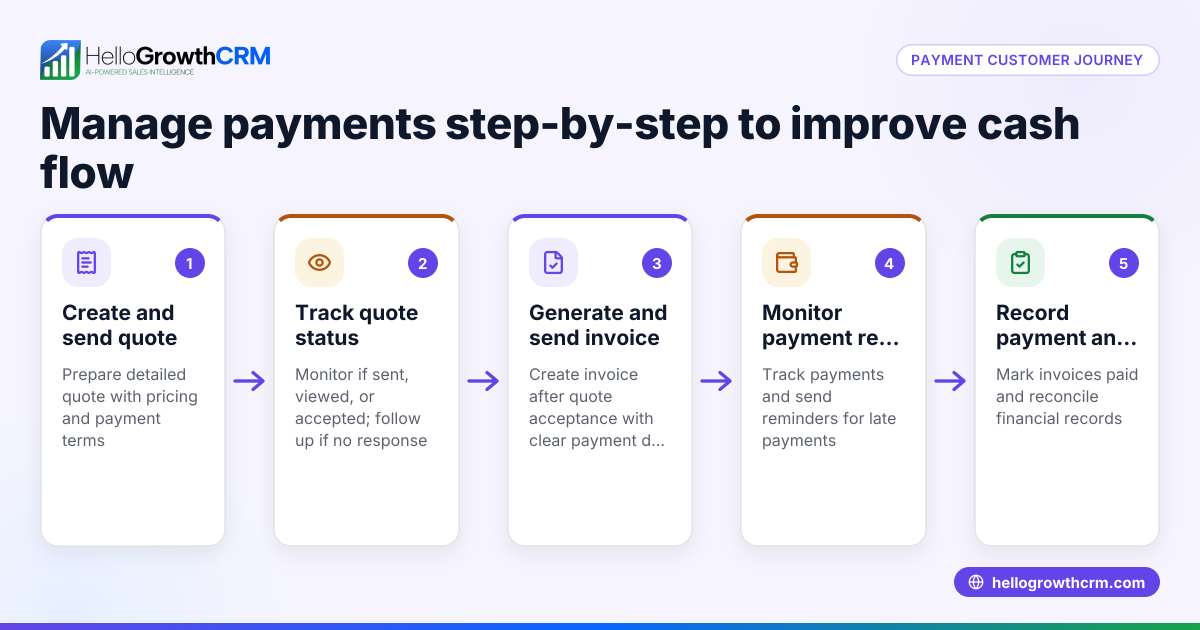
Some CRM tools designed for Indian SMBs offer features to help with invoice and payment management. These include building, sending, and tracking quotes, proposals, and invoices from deal records, and viewing the status of quotations (sent, viewed, accepted) alongside follow-up tasks. Integrations with platforms like IndiaMART and JustDial allow enquiries to arrive directly as leads, simplifying data capture. Activities and task boards turn follow-ups into tasks with due dates, and daily calls are organised into lists for easy management. These features help reduce manual errors and improve payment follow-up efficiency. Learn more about these capabilities at HelloGrowthCRM for India.
Frequently asked questions
How often should I reconcile invoice and payment records? Monthly reconciliation is recommended to maintain accurate records, catch discrepancies early, and ensure timely follow-ups on outstanding payments.
What if a payment does not match any invoice? Investigate by contacting the customer or checking your sales records. Sometimes payments are advance deposits or relate to different billing cycles. Clear communication helps resolve unmatched payments.
Can I reconcile invoices and payments without software? Yes, manual reconciliation is possible using spreadsheets and bank statements. However, it is time-consuming and prone to errors. Using a CRM with integrated invoicing and payment tracking can save time and reduce mistakes.
What details should I record during reconciliation? Record invoice numbers, invoice dates, payment dates, payment amounts, payment references, and status (paid, partially paid, unpaid). Keep proof of payments such as bank statements or receipts.
How can CRM task boards help with payment follow-up? Task boards organise follow-up activities with due dates, ensuring no payment reminders are missed. They provide a visual list of daily calls and tasks, reducing reliance on memory and improving collection efficiency.
Key takeaways
- Match payments to invoices using invoice numbers and amounts.
- Record payment status as Paid, Partially Paid, or Unpaid.
- Investigate and resolve discrepancies promptly.
- Reconcile regularly to maintain accurate financial records.
- Use CRM tools with task boards and integrations to improve follow-up and reduce errors.
Start reconciling your invoices and payments today with CRM tools designed for Indian SMBs. Start on the Free Forever plan (200 leads, no credit card) and manage your sales and payments efficiently.
Ready to put this into practice?
Set up your pipeline, WhatsApp follow-ups, and AI lead scoring in minutes — free, no credit card.
Try HelloGrowthCRM freeGet CRM tips in your inbox
Join thousands of sales professionals who get weekly insights on CRM strategy, AI automation, and pipeline optimization.

The HelloGrowthCRM team publishes guides on CRM strategy, AI sales tools, and revenue operations for small business sales teams.