HelloGrowthCRM software
Built for real small-business sales teams
HelloGrowthCRM helps reps qualify faster, follow up on time, and close more deals—with practical automation in one place.
- AI lead scoring and pipeline visibility
- Built-in dialer, WhatsApp, and email automation
- Sales forecasting and RevOps-ready reporting
Late invoice payments disrupt cash flow and operations for many small and mid-sized New Zealand businesses. Sending invoices promptly, clarifying payment terms upfront, and following up efficiently on overdue payments can reduce late payments. This article explains why late payments occur, provides clear steps you can take today, offers a worked example with realistic NZD figures and calculations, highlights common mistakes, and shows how HelloGrowthCRM supports managing quotes, proposals, invoices, and payments.
Why this comes up / what goes wrong
Small business owners often face late invoice payments because customers delay payment or dispute invoices. Late payments commonly happen when invoices are unclear, sent late, or payment terms are not well communicated. Inconsistent or slow follow-up allows overdue invoices to accumulate. Managing invoices via spreadsheets, texts, or emails makes tracking difficult. Without a clear process, chasing payments consumes time and causes cash flow uncertainty.
Step-by-step
- Set clear payment terms before work starts or goods are delivered. Communicate these terms in writing, specifying the payment due date (e.g., 20 days from invoice date) and accepted payment methods.
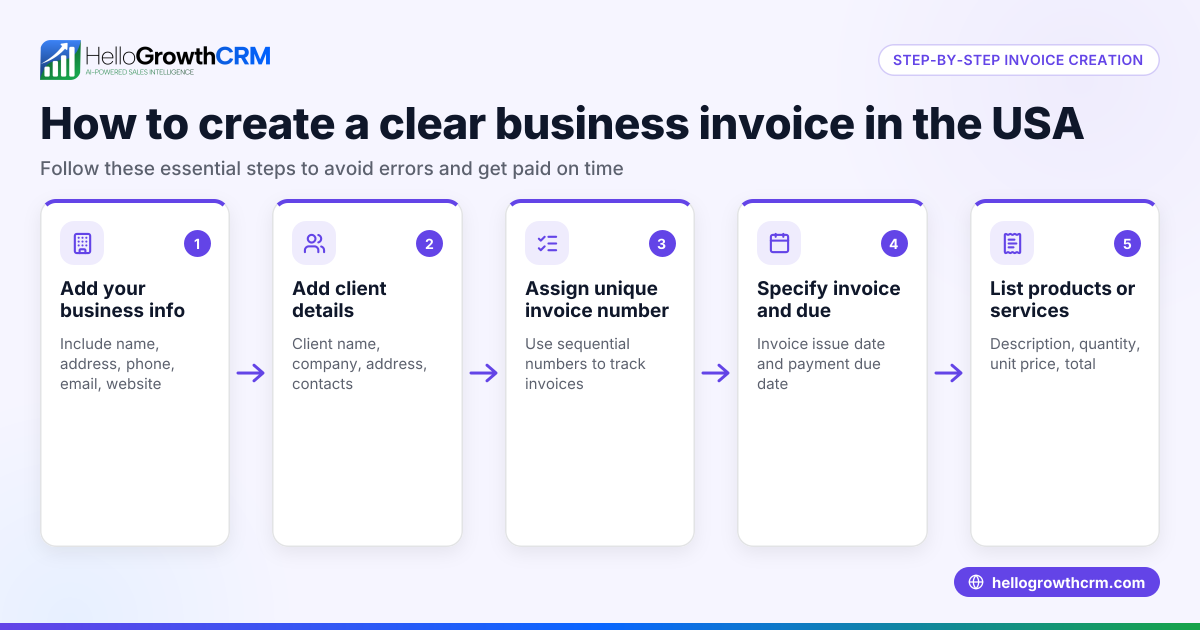
- Send invoices promptly once work is complete or goods delivered. Include invoice number, date, your contact details, customer details, an itemised list, total amount, and payment instructions.
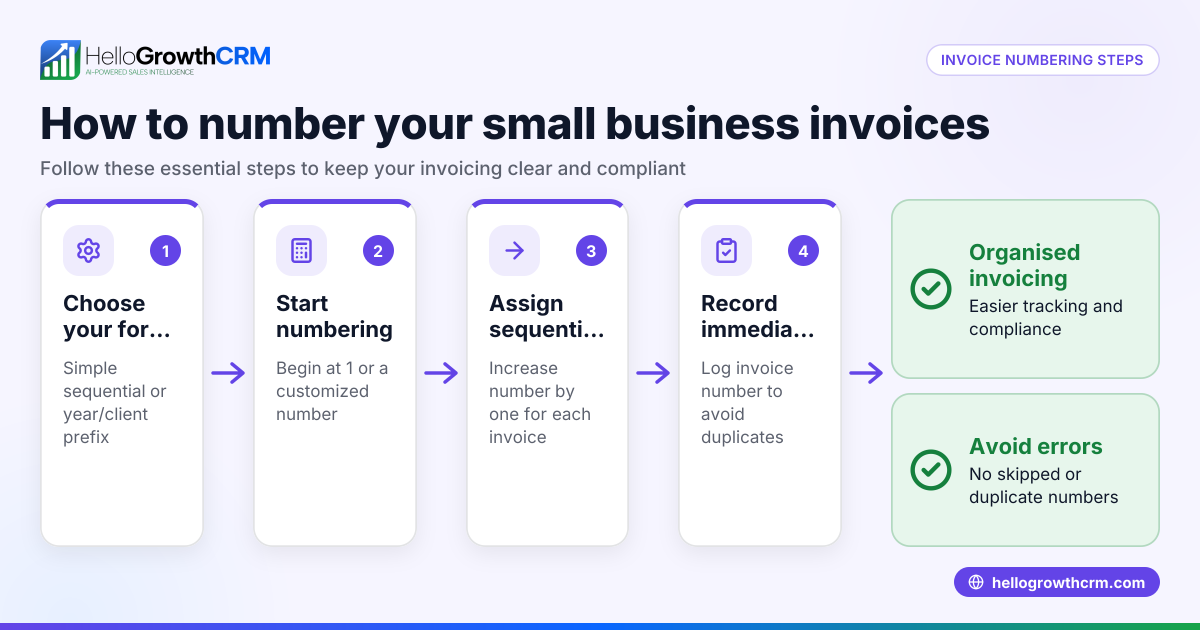
- Use consistent invoice numbering and dating. This helps both you and your customer track payments accurately.
- Confirm invoice receipt with the customer. A quick call or message ensures they have the invoice and understand the terms.
- Set reminders for upcoming payment due dates. Use calendar alerts or software to notify you a few days before payment is due.
- Follow up immediately when a payment is late. Send a polite reminder on the due date, then escalate with a phone call if there is no response within a week.
- Keep communication professional but firm. Document all follow-ups and responses.
- Offer multiple payment options if possible. This reduces excuses for late payment.
- Consider early payment incentives or late payment penalties. Make these clear in your payment terms.
- Review your invoicing and payment process regularly. Identify bottlenecks or frequent delays and adjust accordingly.
Using a CRM with quoting and invoicing tools can automate reminders, track invoice status, and centralise follow-ups, improving payment timeliness. See WhatsApp and SMS CRM for communication tools.
Example (fictional figures)
Hamilton Dairy Equipment Ltd supplied milking machine parts worth NZ$12,000 to a client on 01/05/2024. Their payment terms are 20 days from invoice date.
- Invoice date: 01/05/2024
- Invoice amount: NZ$12,000
- Payment due date: 01/05/2024 + 20 days = 21/05/2024
- Reminder set for: 21/05/2024 - 3 days = 18/05/2024
- On 22/05/2024, no payment received
- First reminder sent by email on 22/05/2024
- Follow-up call made on 29/05/2024
Calculations:
Payment due date = 01/05/2024 + 20 days = 21/05/2024 Reminder date = 21/05/2024 - 3 days = 18/05/2024
This example shows how setting reminders before due dates and following up after due dates helps reduce late payments.
Common mistakes
- Sending invoices late or inconsistently. Prevent this by invoicing immediately after delivery using a standard template.
- Unclear or missing payment terms. Always specify due dates and payment methods in writing.
- Ignoring overdue invoices too long. Follow up promptly on the due date to avoid accumulating delays.
- Using informal communication channels without documentation. Use email or CRM tools that keep records.
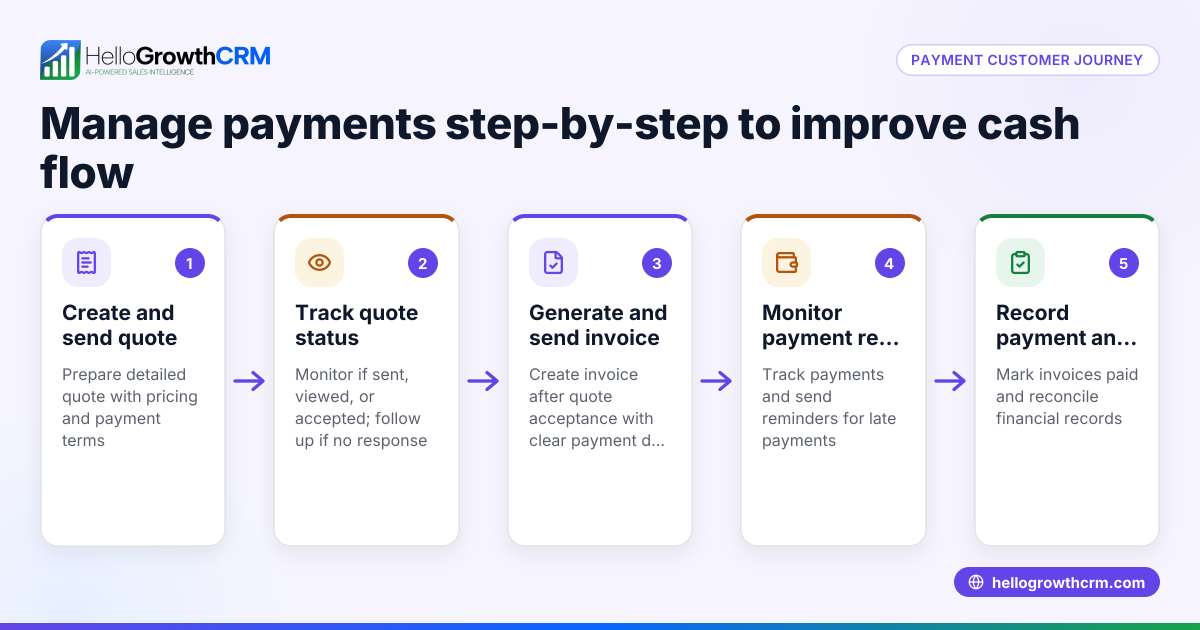
- Not tracking invoice status or payments in one place. Use a system showing invoice sent, viewed, accepted, and paid statuses.
- Failing to offer convenient payment options. Accept bank transfers, credit cards, or other common methods.
See HelloGrowthCRM for New Zealand for local CRM solutions.
Doing this in HelloGrowthCRM
HelloGrowthCRM includes a built-in quoting and proposal tool for building, sending and tracking commercial documents like quotes, proposals and invoices directly from a deal record. You can generate invoices tied to closed deals and reconcile payments received. The quotation status (sent, viewed, accepted) is visible on the same screen as the follow-up task, helping you stay on top of customer responses and payment follow-ups. Learn more on the built-in CRM dialer page.
Frequently asked questions
How soon should I send an invoice after delivering goods or services? Send invoices as soon as the work is complete or goods delivered to avoid delays. Prompt invoicing sets clear expectations and starts the payment clock immediately.
What payment terms are typical in New Zealand? Common terms are 7, 14, or 20 days from invoice date. Choose terms that suit your cash flow but make them clear to your customer upfront.
How can I encourage customers to pay on time? Set clear terms, send reminders before the due date, follow up promptly on late payments, and consider incentives for early payment or penalties for late payment.
What if a customer disputes an invoice? Respond quickly, clarify any misunderstandings, and provide supporting documents. Keep communication professional and document all interactions.
Can I automate invoice reminders? Yes, using CRM software with quoting and invoicing features can automate reminders and track payment status, reducing manual follow-up work.
What payment methods should I accept? Offer multiple options such as bank transfers, credit cards, and online payment gateways to make it easy for customers to pay promptly.
Key takeaways
- Send clear, detailed invoices promptly after delivery.
- Set and communicate payment terms upfront.
- Use reminders and follow up immediately on overdue payments.
- Keep all invoice and payment communications documented.
- Avoid common mistakes like late invoicing and unclear terms.
- Use tools with quoting and invoicing features to track invoices and automate follow-ups.
Start reducing late invoice payments today by applying these steps. To manage your quotes, proposals, invoices and payments efficiently, Start on the Free Forever plan (200 leads, no credit card).
Ready to put this into practice?
Set up your pipeline, WhatsApp follow-ups, and AI lead scoring in minutes — free, no credit card.
Try HelloGrowthCRM freeGet CRM tips in your inbox
Join thousands of sales professionals who get weekly insights on CRM strategy, AI automation, and pipeline optimization.

The HelloGrowthCRM team publishes guides on CRM strategy, AI sales tools, and revenue operations for small business sales teams.