HelloGrowthCRM software
Built for real small-business sales teams
HelloGrowthCRM helps reps qualify faster, follow up on time, and close more deals—with practical automation in one place.
- AI lead scoring and pipeline visibility
- Built-in dialer, WhatsApp, and email automation
- Sales forecasting and RevOps-ready reporting
Late invoice payments disrupt cash flow for many small and mid-sized businesses in the UAE. Clients often delay payments due to unclear invoices, missing payment terms, or lack of timely reminders. To reduce late payments, you need a clear, consistent process for invoicing, communication, and tracking payments.
Why this comes up / what goes wrong
Many UAE small business owners face late payments because invoices are sent late or lack full details like payment terms and bank information. Without clear terms agreed upfront, clients may not prioritise payments. Follow-up communications are often irregular or informal, such as WhatsApp messages or phone calls without a tracking system. This causes confusion about which invoices are overdue and which payments have been received. Without visibility, businesses cannot prioritise collections effectively, leading to cash flow issues.
Step-by-step
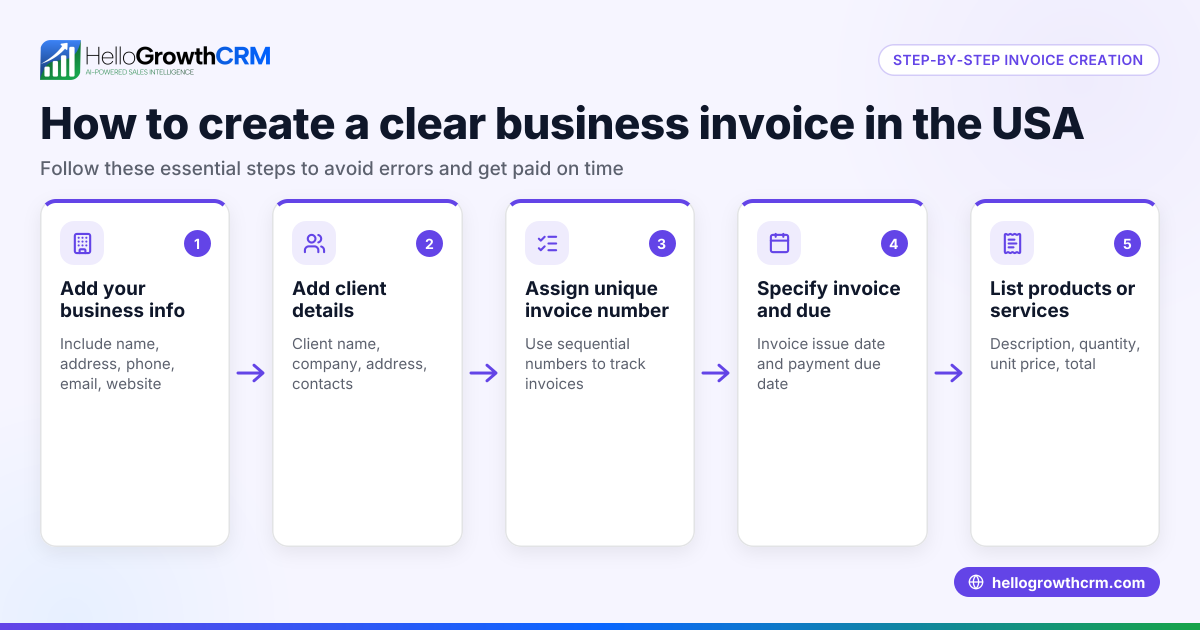
- Send invoices promptly and clearly
- Prepare and send the invoice immediately after delivering the product or service.
- Include all necessary details: invoice date, due date, payment terms (e.g., “Payment due within 30 days”), exact amount, invoice number, and payment methods.
- Verify the invoice for accuracy to avoid disputes.
- Set clear payment terms upfront
- Agree payment terms with the client before starting work.
- Include these terms in contracts, proposals, or quotes.
- Specify penalties or interest for late payments if applicable.
- Use consistent invoice numbering and maintain records
- Assign unique, sequential invoice numbers.
- Track all invoices and their payment status using a spreadsheet or CRM.
- Send reminders before and after due dates
- Send a polite reminder 5 days before the payment due date.
- If unpaid after the due date, follow up immediately with a call, WhatsApp message, or email.
- Adjust communication method according to client preference.
- Offer multiple payment options
- Provide bank transfer details, cheque instructions, or online payment links.
- Make it easy for clients to pay promptly.
- Maintain professional, clear communication
- Use a polite, factual tone.
- Clearly state invoice number, amount due, and due date.
- Ask if there are any issues delaying payment and offer assistance.
- Track payments and update records daily
- When payment is received, mark the invoice as paid.
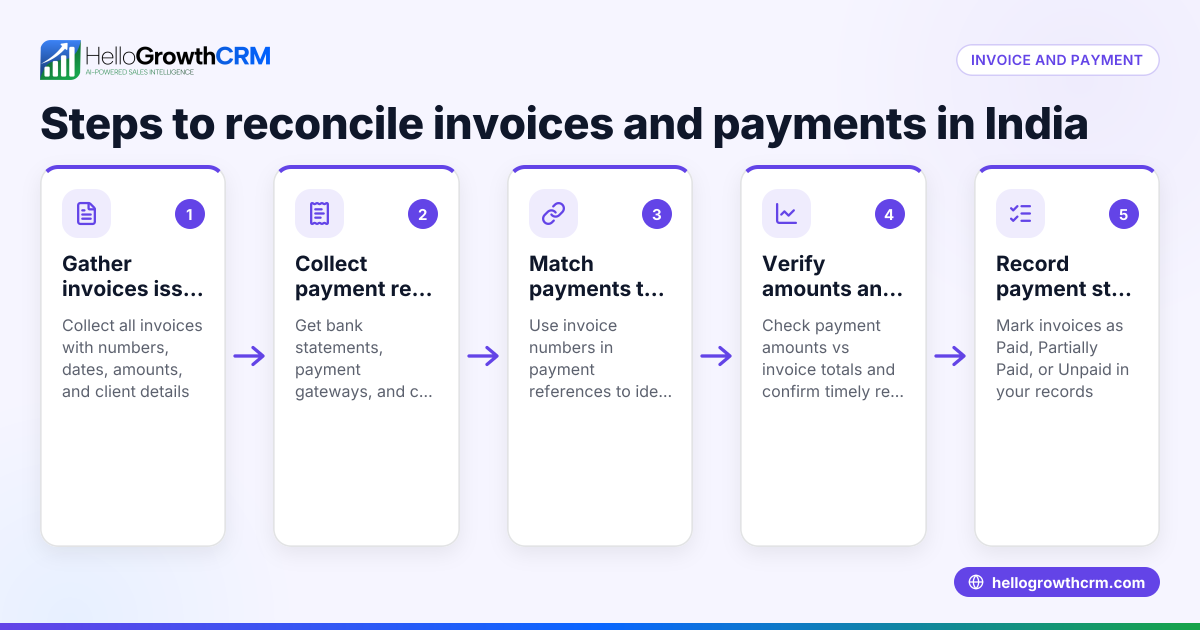
- Reconcile payments with invoices to avoid confusion.
- Escalate late payments if necessary
- Send a formal letter or email after 30 days overdue.
- Consider legal advice if payments remain significantly delayed.
Example (fictional figures)
A real-estate brokerage in Dubai Marina completes a property sale on 05/05/2024 and issues an invoice for AED 48,000 with 30-day payment terms.
- Invoice date: 05/05/2024
- Payment due date: 04/06/2024
- Invoice amount: AED 48,000
Steps:
- Invoice sent on 05/05/2024 with clear payment terms.
- Reminder sent on 30/05/2024 (5 days before due date).
- Payment not received by 04/06/2024; follow-up call made on 05/06/2024.
- Client promises payment by 10/06/2024.
- Payment received on 09/06/2024.
Tracking example:
- Invoice AED 48,000 × 100% = AED 48,000 (total due)
- Payment received AED 48,000
- Balance AED 48,000 - AED 48,000 = AED 0 (paid in full)
This approach helps avoid late payments through proactive communication and tracking.
Common mistakes
- Sending invoices late or with errors: Prevent this by preparing invoices immediately after service and double-checking details.
- No clear payment terms: Always agree and document payment terms before starting work.
- Irregular follow-up: Schedule reminders and follow-ups in advance to maintain consistency.
- Using informal channels without tracking: Use a CRM or spreadsheet to record all communications and payments.
- Ignoring client payment difficulties: Communicate openly and offer solutions if clients face issues.
- Not reconciling payments properly: Update payment status daily to avoid confusion.
Doing this in HelloGrowthCRM
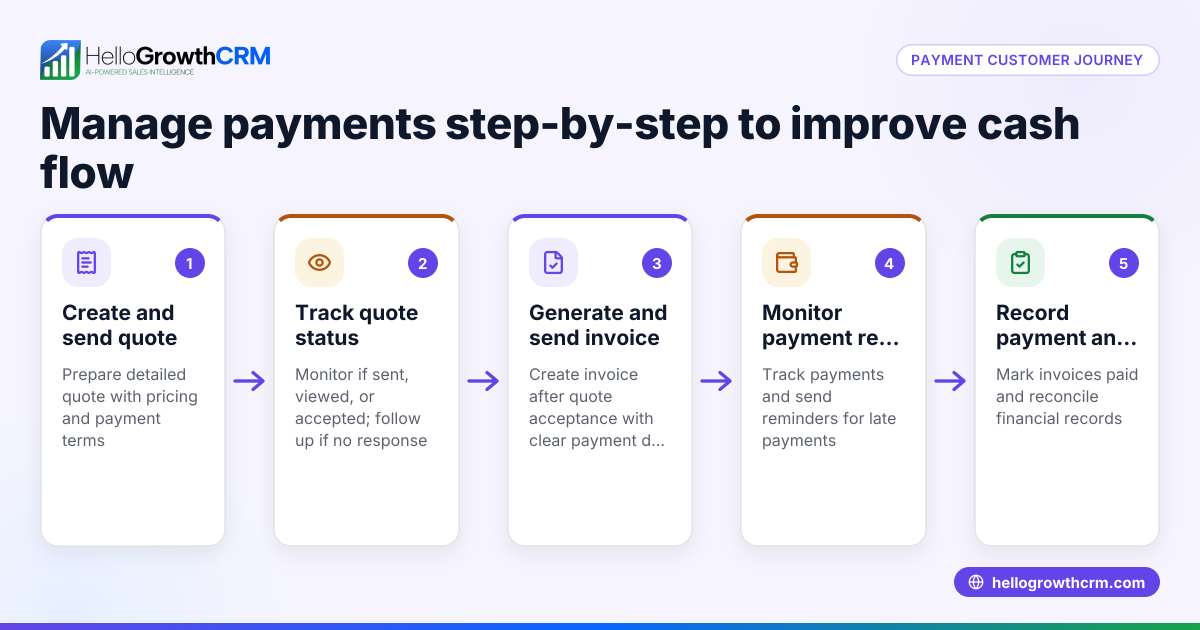
HelloGrowthCRM lets you create, send, and track quotes, proposals, and invoices directly from each deal record. You can view the status of each quotation (sent, viewed, accepted) on the same screen as your follow-up tasks, making payment reminders easier to manage. Payments received are linked to invoices and deals, helping you reconcile and track payments efficiently. Learn more about these features at built-in CRM dialer and explore how HelloGrowthCRM supports WhatsApp and SMS CRM.
Frequently asked questions
How soon should I send an invoice after delivering a service? Send the invoice immediately after delivering the product or service to start the payment period and avoid delays.
What payment terms are common in the UAE? A 30-day payment term from the invoice date is typical, but always agree terms upfront and clearly state them on the invoice.
How can I remind clients without damaging relationships? Use polite, professional reminders focusing on facts and offering help if there are payment issues. Avoid aggressive language.
Can I offer discounts for early payment? Yes, offering early payment discounts can encourage clients to pay sooner. Calculate the financial impact carefully to protect your margins.
What if a client consistently pays late? Consider stricter payment terms, requiring deposits upfront, or seek legal advice if late payments harm your business.
Key takeaways
- Send clear, accurate invoices promptly with agreed payment terms.
- Use reminders before and after due dates to prompt payment.
- Track invoices and payments carefully using a system.
- Communicate professionally and offer flexible payment options.
- Use tools like HelloGrowthCRM to manage quotes, invoices, and follow-ups in one place.
Start managing your invoices better today and reduce late payments by following these steps. You can also Start on the Free Forever plan (200 leads, no credit card) to organise your sales and invoicing efficiently.
Ready to put this into practice?
Set up your pipeline, WhatsApp follow-ups, and AI lead scoring in minutes — free, no credit card.
Try HelloGrowthCRM freeGet CRM tips in your inbox
Join thousands of sales professionals who get weekly insights on CRM strategy, AI automation, and pipeline optimization.

The HelloGrowthCRM team publishes guides on CRM strategy, AI sales tools, and revenue operations for small business sales teams.