HelloGrowthCRM software
Built for real small-business sales teams
HelloGrowthCRM helps reps qualify faster, follow up on time, and close more deals—with practical automation in one place.
- AI lead scoring and pipeline visibility
- Built-in dialer, WhatsApp, and email automation
- Sales forecasting and RevOps-ready reporting
To retain customers in business, you must consistently deliver value, communicate clearly, and provide ongoing support that meets or exceeds expectations. This article explains why customer retention is crucial, offers a step-by-step guide to retaining customers, includes a worked example with realistic figures, highlights common mistakes, and describes how HelloGrowthCRM can help.
Why this comes up / what goes wrong
Small business owners often struggle to keep customers because they focus mainly on acquiring new leads rather than nurturing existing ones. Customers may feel neglected if follow-up is slow, communication is inconsistent, or service issues are not resolved promptly. Without a clear system to manage customer relationships, businesses risk losing repeat sales, referrals, and stable revenue. Many also find it hard to track ongoing service requests and customer history, leading to poor experiences that drive customers away.
Step-by-step
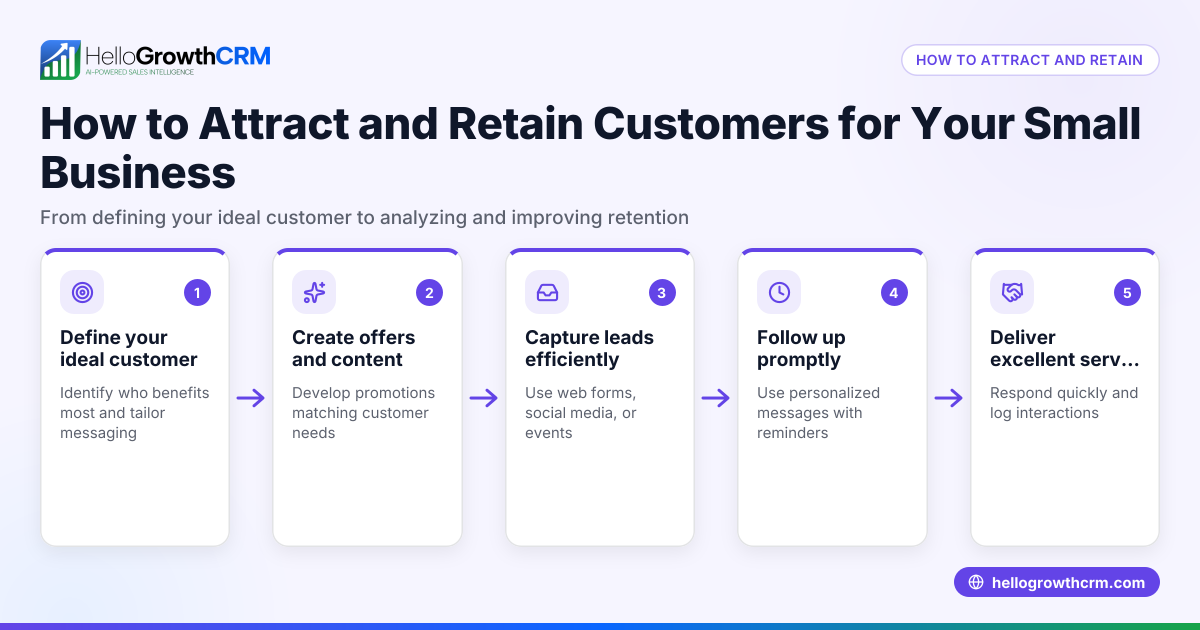
- Deliver consistent value: Ensure your product or service quality remains high. Check customer feedback regularly and act on it to improve. This builds trust and satisfaction.
- Communicate proactively: Reach out to customers with updates, offers, or useful information. Confirm they understand how to get the most from your product or service.
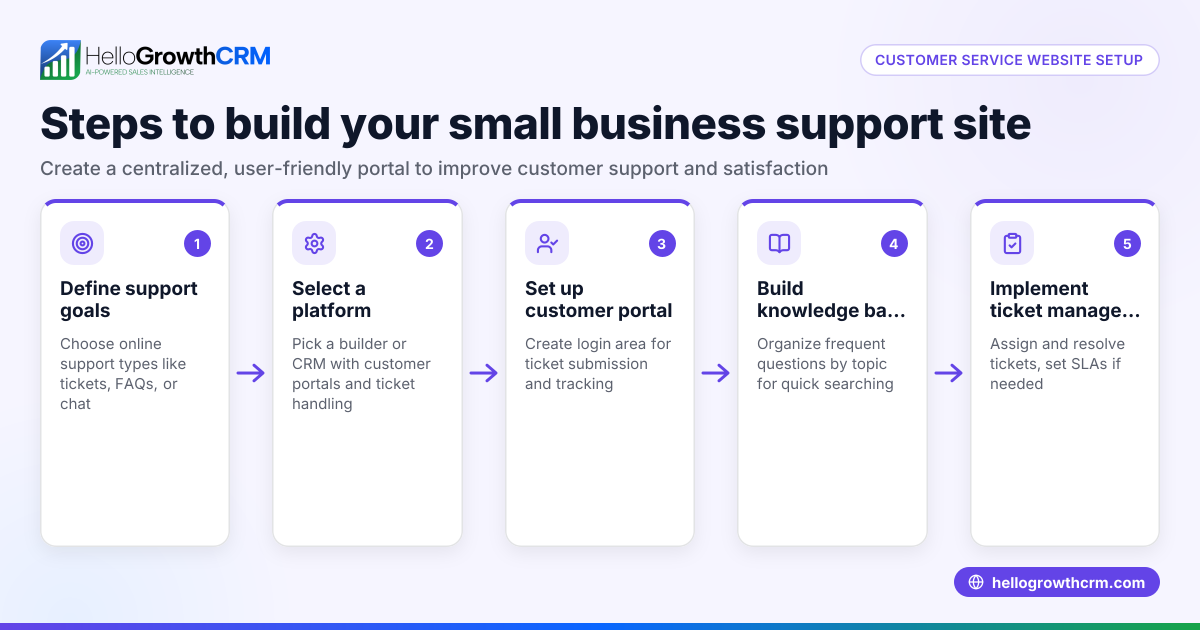
- Respond quickly to issues: When customers raise concerns, address them promptly. Use a ticketing system to log and track all service requests until resolution to prevent issues from being forgotten.
- Personalize interactions: Use customer data to tailor communications and offers. Recognize repeat customers and reward loyalty with special deals or acknowledgments.
- Ask for feedback and referrals: Encourage customers to share their experience and recommend your business to others. A referral program can motivate them.
- Monitor customer health: Regularly review customer engagement and satisfaction scores to identify at-risk accounts. Adjust your approach for those customers to improve retention. Learn more about customer health scores here.
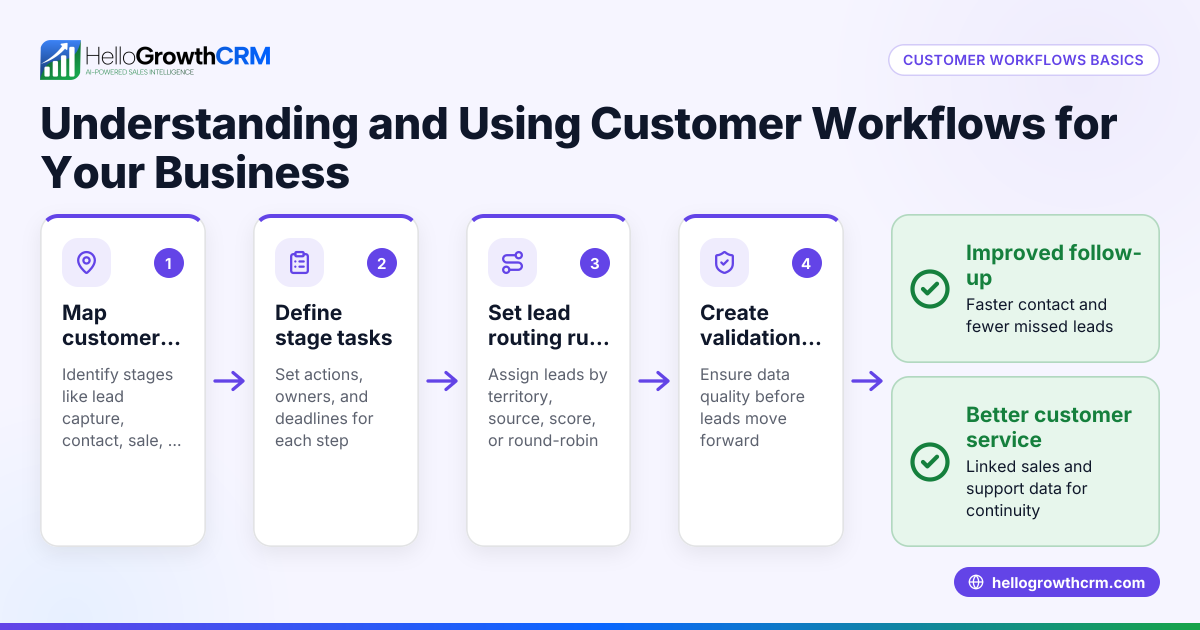
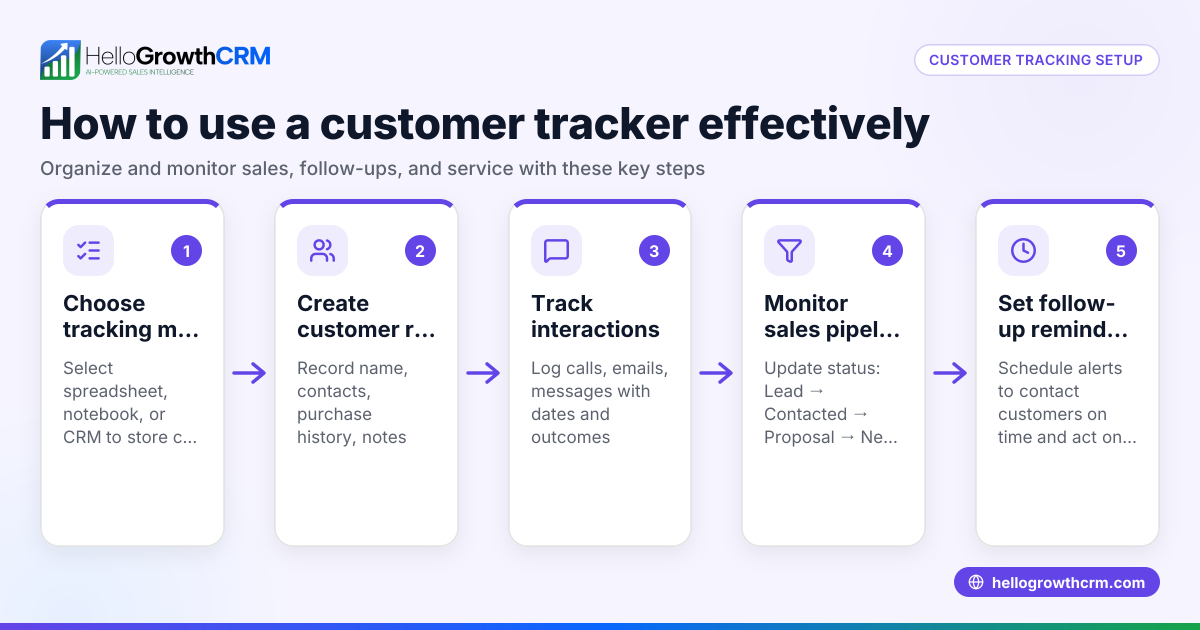
- Maintain a centralized record: Keep all customer interactions, deals, and service requests in one place to provide seamless service and quick access to history.
Check that each step is measurable: for example, track response times, number of follow-ups, referral counts, and customer satisfaction ratings.
Example (fictional figures)
A two-location dental practice in Columbus, Ohio, had 1,200 active patients as of 01/01/2026. They wanted to improve retention over the year.
- The average revenue per patient per year is $750.
- Their goal was to reduce patient loss from 20% to 10% by 12/31/2026.
Calculate current patient loss revenue: 1,200 patients × 20% loss = 240 lost patients 240 lost patients × $750 = $180,000 lost revenue
Calculate target patient loss revenue: 1,200 patients × 10% loss = 120 lost patients 120 lost patients × $750 = $90,000 lost revenue
Calculate potential revenue saved: $180,000 - $90,000 = $90,000
They implemented steps including personalized follow-ups, quick response to appointment issues, and a referral program. They tracked all patient communications and service tickets centrally to ensure no issue was missed.
Common mistakes
- Ignoring existing customers: Prevent this by scheduling regular check-ins and tracking customer health scores. See more on customer health score.
- Slow or no follow-up on complaints: Use a ticketing system to log and resolve issues quickly so customers feel heard and valued.
- Unorganized customer data: Keep all customer information, deals, and service requests in one system to avoid missed opportunities and confusion.
- Generic communication: Personalize messages based on customer history and preferences to build stronger relationships.
- No referral encouragement: Implement a referral tracking program to reward loyal customers and encourage word-of-mouth growth.
- Failing to measure retention: Without tracking metrics like repeat purchases or customer satisfaction, you can’t know if your retention efforts are working.
Doing this in HelloGrowthCRM
HelloGrowthCRM supports customer retention by keeping all customer interactions, referrals, support tickets, and knowledge base articles on the same customer record. Its built-in dialer lets sales or service reps call customers directly from the CRM and log call outcomes automatically, ensuring follow-up is timely and documented. This centralization helps maintain clear communication and quick issue resolution. Learn more about HelloGrowthCRM for the United States and its WhatsApp and SMS CRM capabilities.
Frequently asked questions
How often should I contact customers to retain them? Contact frequency depends on your business and customer preferences. Generally, regular check-ins every 1-3 months work well, combined with immediate responses to any issues or inquiries.
What is the best way to handle customer complaints? Respond quickly and acknowledge the issue. Use a ticketing system to track progress and resolution, ensuring no complaint is overlooked and customers feel valued.
How can I measure customer retention success? Track metrics like repeat purchase rate, customer lifetime value, and customer health scores. These indicate how well you keep customers over time.
Should I ask customers for referrals? Yes, referrals are a strong growth source. Make it easy for customers to refer others and track referrals to reward them appropriately.
Can a CRM improve customer retention? Yes, by centralizing customer data, communication history, and service requests, a CRM helps deliver consistent and personalized service that encourages loyalty.
Key takeaways
- Retain customers by delivering consistent value and proactive communication.
- Track and resolve service issues quickly to maintain trust.
- Personalize interactions and reward customer loyalty.
- Use centralized records to manage all customer information and interactions.
- Avoid common mistakes like slow follow-up and unorganized data.
- Measure retention success with clear metrics and customer health scores.
Start retaining more customers today with clear steps and tools like HelloGrowthCRM.
Start on the Free Forever plan (200 leads, no credit card) at HelloGrowthCRM.
Ready to put this into practice?
Set up your pipeline, WhatsApp follow-ups, and AI lead scoring in minutes — free, no credit card.
Try HelloGrowthCRM freeGet CRM tips in your inbox
Join thousands of sales professionals who get weekly insights on CRM strategy, AI automation, and pipeline optimization.

The HelloGrowthCRM team publishes guides on CRM strategy, AI sales tools, and revenue operations for small business sales teams.