HelloGrowthCRM software
Built for real small-business sales teams
HelloGrowthCRM helps reps qualify faster, follow up on time, and close more deals—with practical automation in one place.
- AI lead scoring and pipeline visibility
- Built-in dialer, WhatsApp, and email automation
- Sales forecasting and RevOps-ready reporting
To segment customers for campaigns in Canada, you need to organize your customer base into meaningful groups based on characteristics that affect how they respond to your marketing. This involves collecting data, choosing segmentation criteria, and creating customer lists for targeted outreach. This article explains why segmentation is important, provides step-by-step instructions, a worked example, common mistakes to avoid, and how HelloGrowthCRM can assist.
Why this comes up / what goes wrong
Small business owners in Canada often struggle to run effective marketing campaigns because they treat all customers the same. Without segmentation, campaigns may be too generic, causing low engagement and wasted resources. Many businesses lose leads or sales because follow-up messages are irrelevant or poorly timed. Segmenting customers helps deliver tailored messages that increase response rates and sales.
For example, a business owner might have customers ranging from new leads to loyal repeat buyers but sends the same email to everyone. This can cause disinterest or confusion. Segmentation ensures each group receives messages suited to their stage in the customer journey or their interests.
Step-by-step
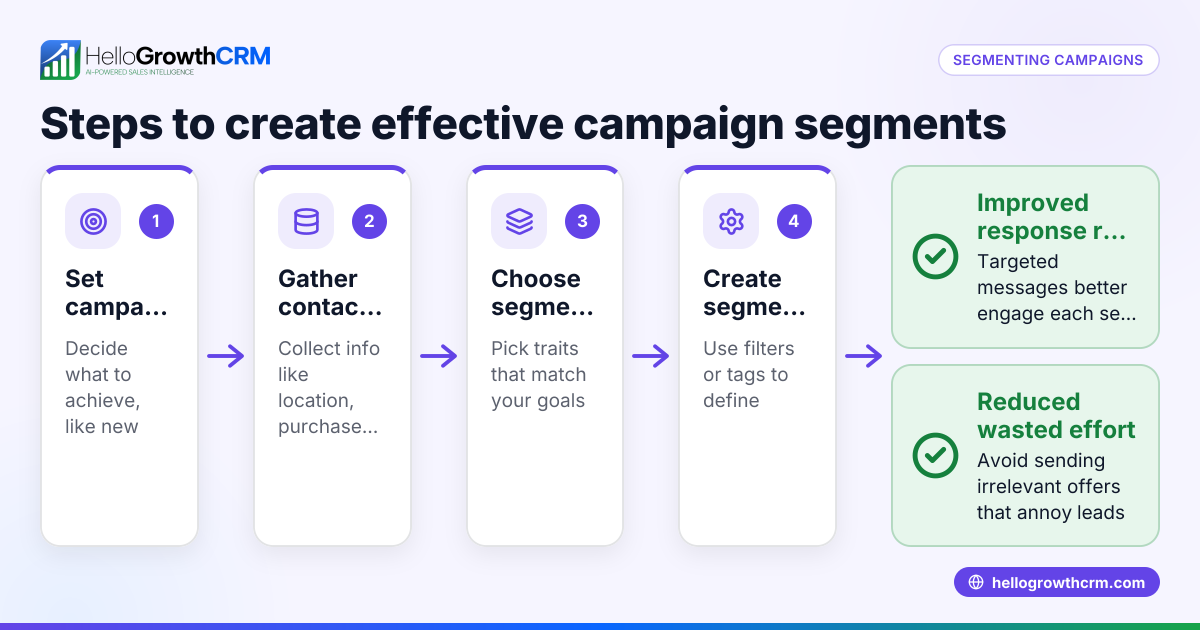
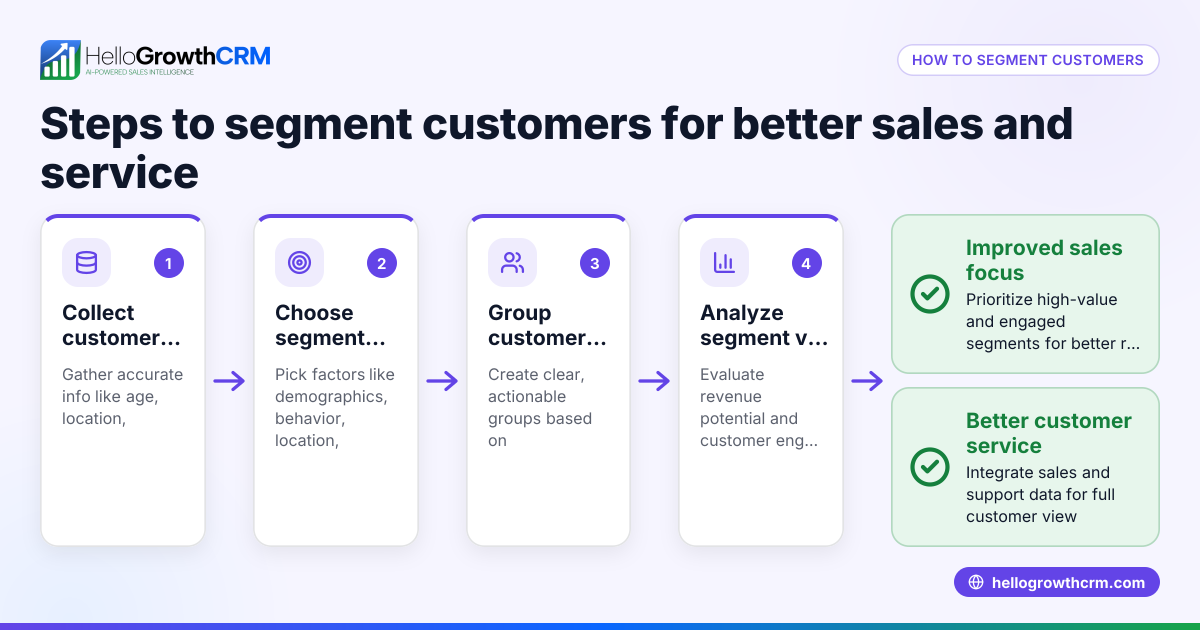
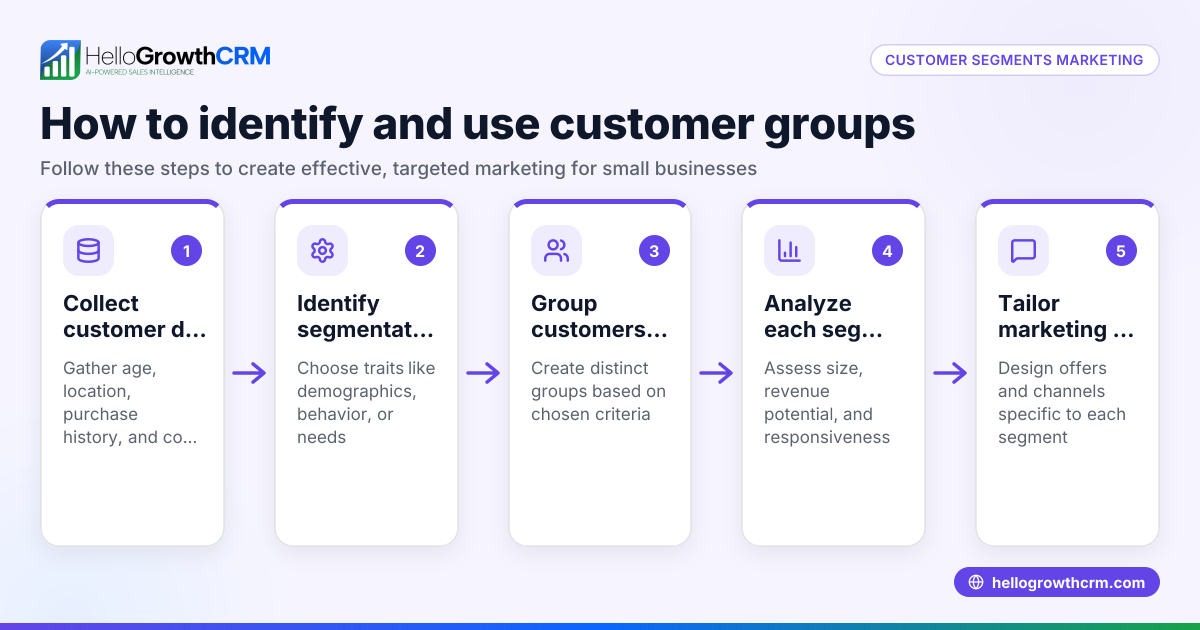
- Collect customer data: Gather information such as age, location, purchase history, product preferences, and engagement level. Check your sales records, website forms, or CRM.
- Define segmentation goals: Decide what you want to achieve with your campaign. For example, promote a new product to frequent buyers or win back inactive customers.
- Choose segmentation criteria: Select relevant fields to divide customers. Common criteria include:
- Demographics (age, gender, location)
- Purchase behaviour (frequency, recency, amount spent)
- Engagement (email opens, website visits)
- Customer status (new lead, active customer, lapsed customer)
- Segment your list: Use your CRM or spreadsheet filters to create groups based on chosen criteria. For example, customers who made a purchase in the last 3 months and spent over C$500.
- Verify segment quality: Check that each segment has enough customers to target and that the criteria make sense for your campaign goal.
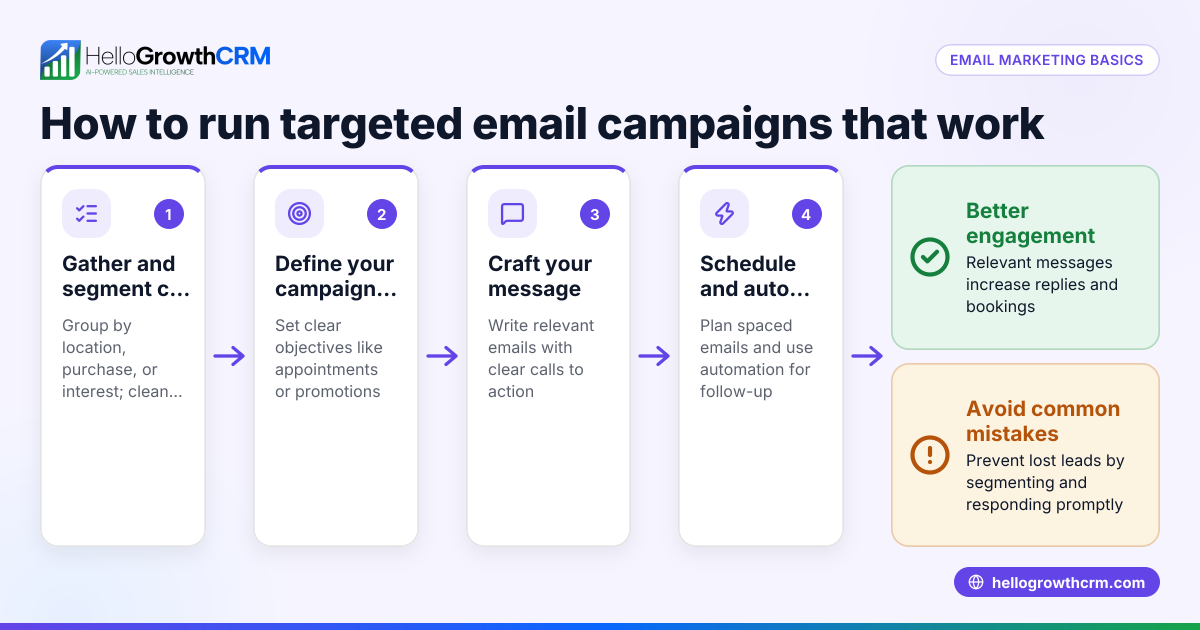
- Plan tailored messages: Write campaign content suited to each segment’s interests and needs.
- Launch and monitor: Send campaigns and track responses. Adjust segments or messaging as needed.
Check out the customer health score feature to track engagement and identify valuable segments.
Example (fictional figures)
A mortgage brokerage in Mississauga, Ontario, wants to run a campaign promoting refinancing options to recent buyers and a separate campaign to inactive leads.
- Total customers: 1,200
- Recent buyers (purchased in last 6 months): 300
- Inactive leads (no contact in last 12 months): 200
Step 1: Collect data on purchase date and contact history.
Step 2: Goal - increase refinancing inquiries from recent buyers; re-engage inactive leads.
Step 3: Criteria:
- Segment A: Purchase date >= 2023-01-01 (last 6 months)
- Segment B: No contact since before 2022-07-01 (last 12 months)
Step 4: Filter database:
- Segment A size = 300
- Segment B size = 200
Step 5: Verify each segment is large enough for a meaningful campaign.
Step 6: Draft messages:
- Segment A: "Considering refinancing? Here's how to save on your mortgage."
- Segment B: "We miss you! Here's what’s new at our brokerage."
Step 7: Launch campaigns and track responses.
Common mistakes
- Using too broad segments: Avoid grouping all customers together. Prevent by choosing specific, relevant criteria.
- Ignoring data quality: Incomplete or outdated data leads to poor segmentation. Regularly update and clean your database.
- Not aligning segments with campaign goals: Segments must match what you want to achieve. Review goals before segmenting.
- Over-segmenting: Too many small groups can be hard to manage. Balance granularity with practicality.
- Neglecting follow-up: Segmentation without proper follow-up wastes effort. Use tools like HelloGrowthCRM sequences and campaigns to automate follow-ups.
Doing this in HelloGrowthCRM
HelloGrowthCRM helps Canadian businesses segment customers and run campaigns with these features:
- Sequences and campaigns: Set up automated five-step follow-ups over two weeks that run until a prospect replies, saving manual effort.
- Customer portal, referrals, tickets and knowledge base: Keep service requests and referrals linked to the same customer record after the sale.
- Managed RevOps: If you don’t have a sales manager, a specialist can manage your follow-up queue weekly, ensuring no lead is lost.
Learn more about how HelloGrowthCRM supports Canadian businesses here.
Frequently asked questions
What data should I use to segment customers in Canada? Use data like demographics, purchase history, engagement, and customer status. The choice depends on your campaign goals.
How often should I update my customer segments? Update segments regularly, at least monthly or after major campaigns, to reflect new purchases or changes in customer behaviour.
Can I automate customer segmentation? Some CRMs can automate segmentation based on rules. HelloGrowthCRM supports campaigns and sequences that work well once segments are defined.
What if my customer data is incomplete? Start by cleaning your data: remove duplicates, fill missing fields, and verify contacts. Better data leads to better segmentation.
How do I know if my segmentation is working? Track campaign responses and sales from each segment. Adjust criteria if some segments underperform.
For more on managing customer engagement, see WhatsApp and SMS CRM.
Key takeaways
- Segment customers by relevant criteria like demographics, purchase history, and engagement.
- Align segments with clear campaign goals to improve effectiveness.
- Keep data clean and updated for accurate segmentation.
- Use automation tools like HelloGrowthCRM sequences to streamline follow-up.
- Avoid overly broad or overly narrow segments.
Start segmenting your customers today to improve campaign results and sales.
Start on the Free Forever plan (200 leads, no credit card) at HelloGrowthCRM.
Ready to put this into practice?
Set up your pipeline, WhatsApp follow-ups, and AI lead scoring in minutes — free, no credit card.
Try HelloGrowthCRM freeGet CRM tips in your inbox
Join thousands of sales professionals who get weekly insights on CRM strategy, AI automation, and pipeline optimization.

The HelloGrowthCRM team publishes guides on CRM strategy, AI sales tools, and revenue operations for small business sales teams.