HelloGrowthCRM software
Built for real small-business sales teams
HelloGrowthCRM helps reps qualify faster, follow up on time, and close more deals—with practical automation in one place.
- AI lead scoring and pipeline visibility
- Built-in dialer, WhatsApp, and email automation
- Sales forecasting and RevOps-ready reporting
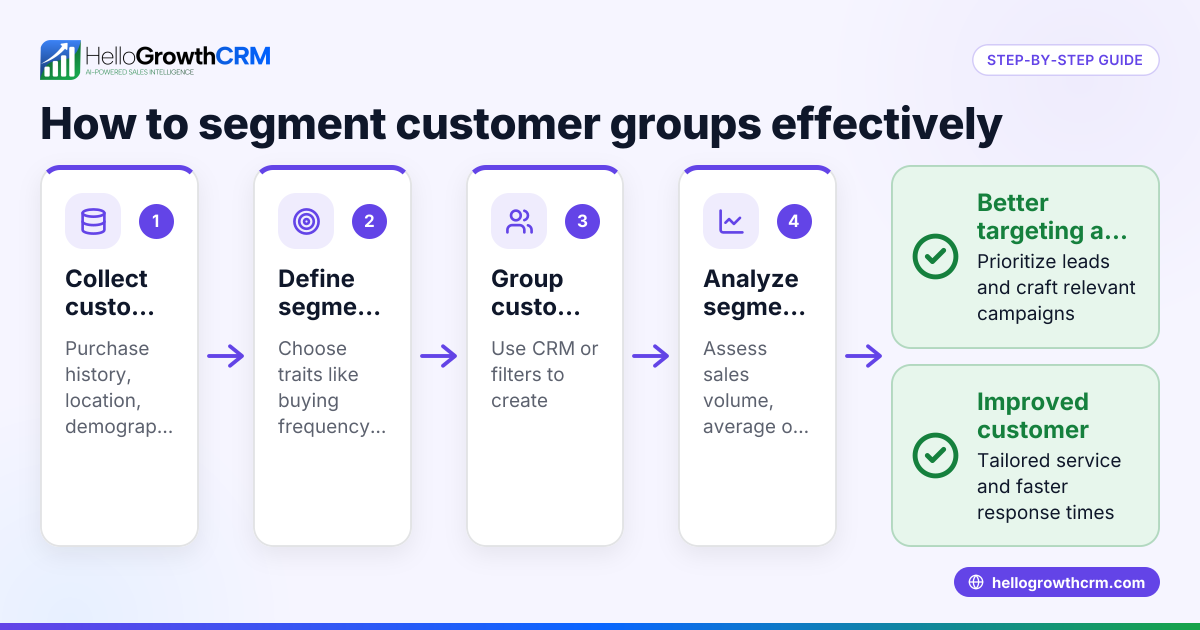
To segment customers for campaigns in the UK, start by gathering relevant customer data such as demographics, purchase history, and engagement levels. Group customers by shared traits or behaviours that match your campaign goals. This guide explains why segmentation is important, provides clear steps, a worked example, common errors to avoid, and describes how HelloGrowthCRM features support segmentation and campaign management.
Why this comes up / what goes wrong
Many small businesses in the UK treat all customers as one group when running marketing campaigns. This often leads to generic messages that do not engage recipients well, resulting in lost sales opportunities. Running sales through WhatsApp, email, and spreadsheets can scatter customer data, making it difficult to target effectively. Slow follow-up and uncoordinated communication channels cause leads to be missed. Segmenting customers helps focus efforts on the right groups, improving engagement and sales outcomes.
Step-by-step
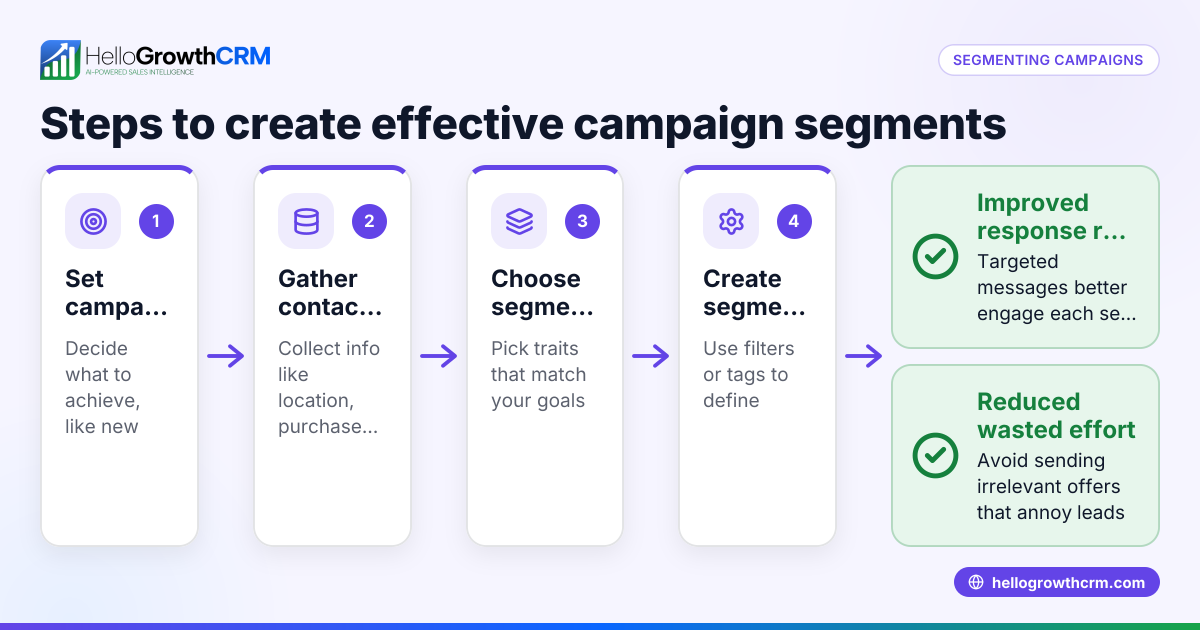
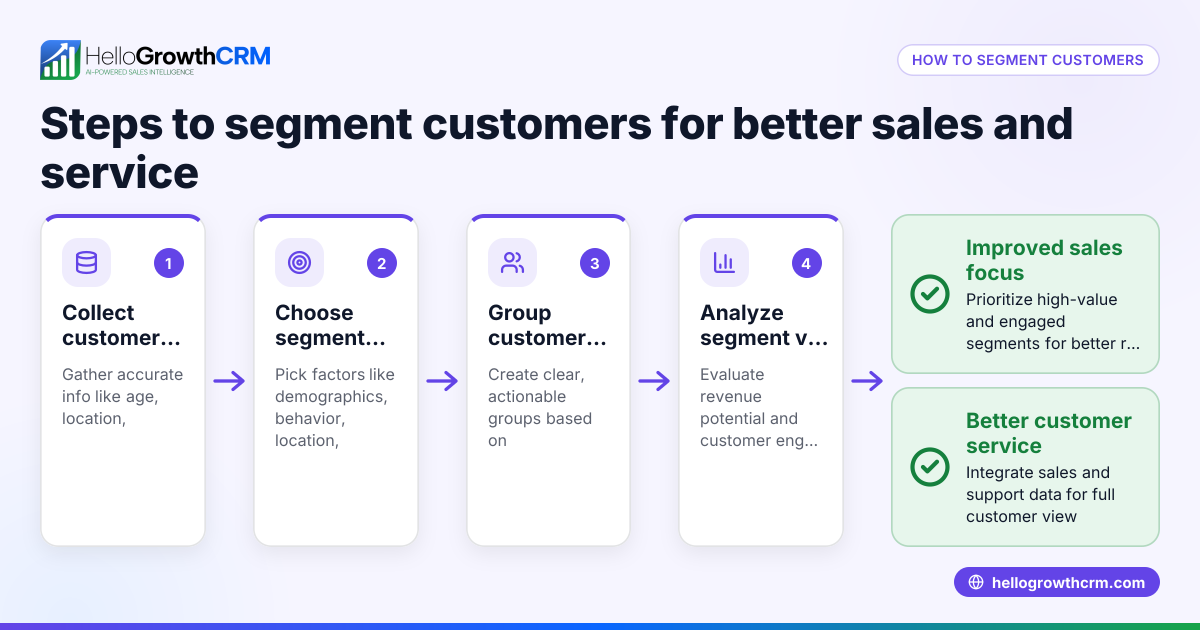
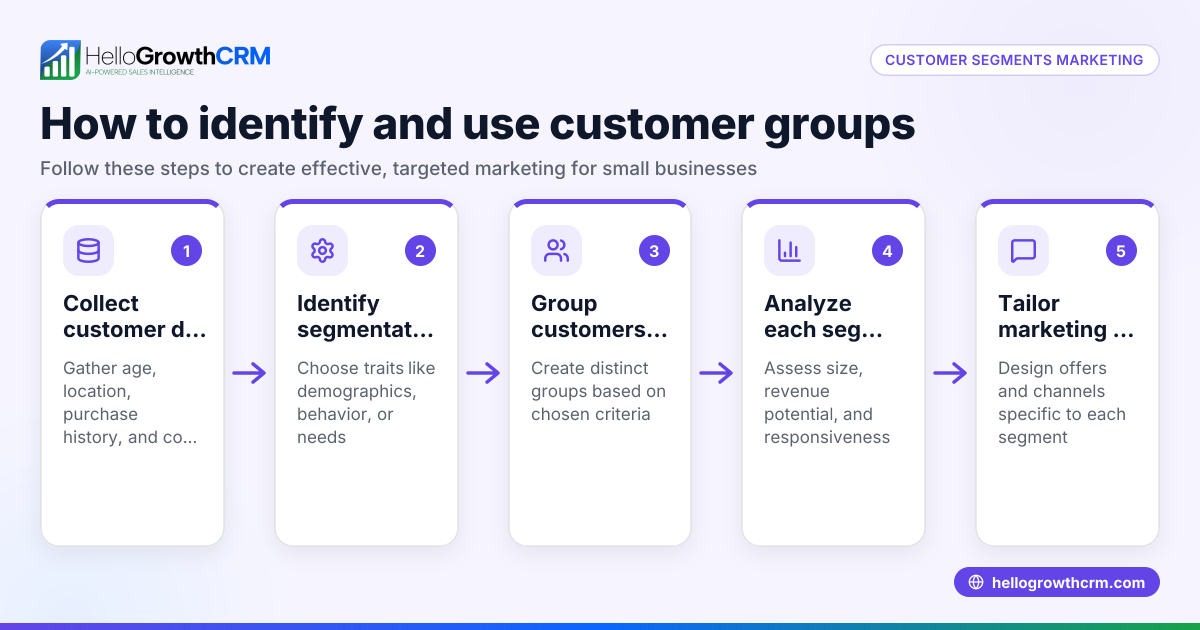
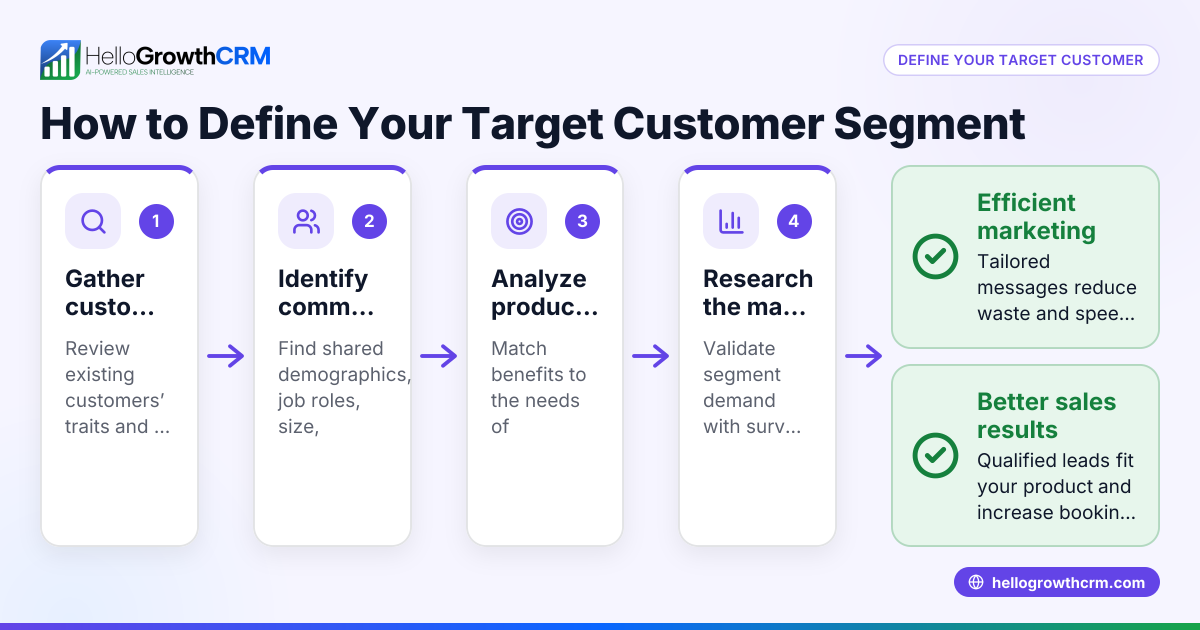
- Gather customer data: Collect information such as age, location, purchase history, product preferences, and communication responses. Verify the data is accurate and up to date.
- Define segmentation criteria: Choose criteria that align with your campaign goals. Common examples include:
- Demographics: age, gender, location
- Purchase behaviour: frequency, recency, spend amount
- Engagement: email opens, WhatsApp replies, website visits
- Customer value: high-value vs low-value customers
- Create customer groups: Use the criteria to group customers into segments. For example, customers who bought within the last 3 months and spent over £500.
- Validate segments: Check each segment's size and relevance. Ensure segments are large enough to run a campaign but specific enough for targeted messaging.
- Tailor campaign messages: Develop messages that suit each segment’s interests and behaviours.
- Run campaigns and sequences: Use tools such as Sequences and Campaigns to automate follow-up and multi-channel outreach. Monitor responses and adjust segments as needed.
- Review and refine: Analyse campaign results to identify which segments performed best. Update your segmentation criteria accordingly.
Example (fictional figures)
A kitchen-fitting company in Leeds plans a campaign in April 2024 promoting eco-friendly kitchen units.
- Step 1: Gather data from sales records and WhatsApp chats.
- Step 2: Define criteria:
- Customers who purchased kitchen units in the last 12 months
- Customers living in Yorkshire
- Customers who spent over £1,000
- Step 3: Create segments:
- Segment A: Purchased in last 6 months, spent more than £2,000
- Segment B: Purchased 6-12 months ago, spent between £1,000 and £2,000
- Step 4: Validate segments:
- Segment A: 120 customers
- Segment B: 180 customers
- Step 5: Tailor messages:
- Segment A: Offer a 10% discount on eco-friendly upgrades
- Segment B: Highlight new product features and financing options
Worked example calculations for April campaign budget:
- Expected customers to convert in Segment A: 18 customers (assumed)
- Average sale value: £3,000
- Revenue from Segment A = 18 × £3,000 = £54,000
- Expected customers to convert in Segment B: 18 customers (assumed)
- Average sale value: £1,800
- Revenue from Segment B = 18 × £1,800 = £32,400
- Total estimated revenue = £54,000 + £32,400 = £86,400
This example shows how segmentation helps predict campaign impact and tailor offers.
Common mistakes
- Using too broad segments: Avoid treating all customers as one group. Prevent this by defining clear, specific criteria.
- Ignoring data quality: Outdated or incorrect data leads to ineffective segments. Regularly update and clean customer records.
- Not aligning segments with campaign goals: Segments should reflect marketing objectives. Review goals before segmenting.
- Over-segmenting: Creating too many small segments wastes resources. Keep segments manageable and meaningful.
- Neglecting follow-up: Segmentation only works if followed by timely outreach. Use automated sequences to ensure prompt follow-up.
- Failing to measure results: Without tracking, you cannot improve segmentation. Analyse campaign data and adjust segments.
Doing this in HelloGrowthCRM
HelloGrowthCRM offers Sequences and Campaigns that automate multi-step outreach over email, SMS and WhatsApp. A five-step follow-up runs automatically and stops when a prospect replies, ensuring timely engagement. After a sale, service requests remain linked to the same customer record through the customer portal, keeping communication organised. For founders without sales managers, Managed RevOps provides weekly follow-up execution and pipeline hygiene support. Learn more about WhatsApp and SMS CRM and how HelloGrowthCRM supports UK businesses on HelloGrowthCRM for the United Kingdom.
Frequently asked questions
How do I decide which customer data to use for segmentation? Focus on data directly related to your campaign goals, such as purchase history for sales promotions or location for local events. Make sure the data is accurate and current.
Can I segment customers using WhatsApp interactions? Yes, tracking replies and engagement on WhatsApp allows forming segments based on responsiveness or interest. Automated sequences pause when a reply is received, enabling timely follow-up.
How often should I update my customer segments? Update segments regularly, ideally before each campaign, to include recent purchases, changed preferences, or new engagement. This keeps targeting relevant.
What if my segments are too small to run a campaign? Broaden your criteria slightly or combine similar segments. Avoid over-segmentation which can dilute your efforts.
How can I measure if my segmentation is effective? Track response and conversion rates by segment. Use this data to refine your criteria and improve future campaigns.
Key takeaways
- Collect accurate customer data relevant to your campaign goals.
- Define clear, actionable segmentation criteria.
- Validate segments for size and relevance before campaigning.
- Tailor messages to each segment’s interests and behaviours.
- Automate outreach and follow-up using sequences.
- Regularly review campaign results to improve segmentation.
Start segmenting your customers today to improve campaign results. Start on the Free Forever plan (200 leads, no credit card).
Ready to put this into practice?
Set up your pipeline, WhatsApp follow-ups, and AI lead scoring in minutes — free, no credit card.
Try HelloGrowthCRM freeGet CRM tips in your inbox
Join thousands of sales professionals who get weekly insights on CRM strategy, AI automation, and pipeline optimization.

The HelloGrowthCRM team publishes guides on CRM strategy, AI sales tools, and revenue operations for small business sales teams.