HelloGrowthCRM software
Built for real small-business sales teams
HelloGrowthCRM helps reps qualify faster, follow up on time, and close more deals—with practical automation in one place.
- AI lead scoring and pipeline visibility
- Built-in dialer, WhatsApp, and email automation
- Sales forecasting and RevOps-ready reporting
To segment customers effectively for your marketing or sales campaigns in the USA, you organize your customer base into groups based on specific criteria. This lets you target messages that resonate with each group, improving engagement and sales. This article covers why segmentation matters, detailed steps to segment customers, a worked example with realistic figures, common mistakes, and how HelloGrowthCRM supports campaigns.
Why this comes up / what goes wrong
Many US small-business owners send campaigns to their entire customer list without segmentation. This often leads to low engagement because the message is irrelevant to many recipients. Without segmentation, you risk wasting time and money on campaigns that don’t convert. Leads can be lost due to slow follow-up or scattered data across emails and spreadsheets. Segmentation helps focus on customers most likely to respond, based on clear criteria.
Step-by-step
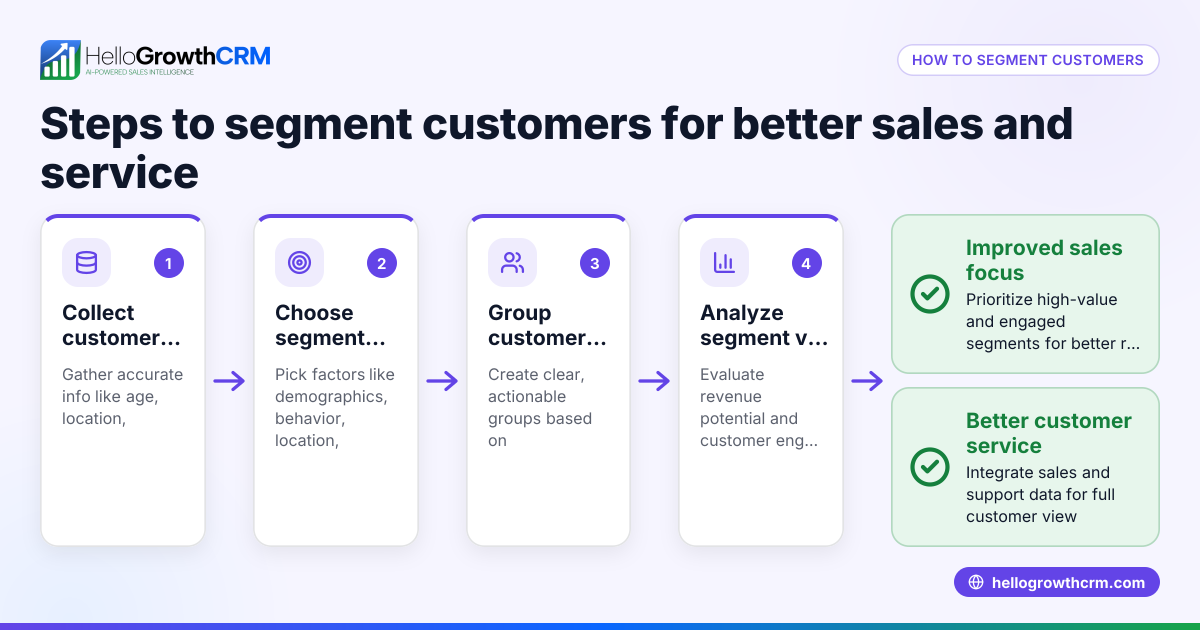
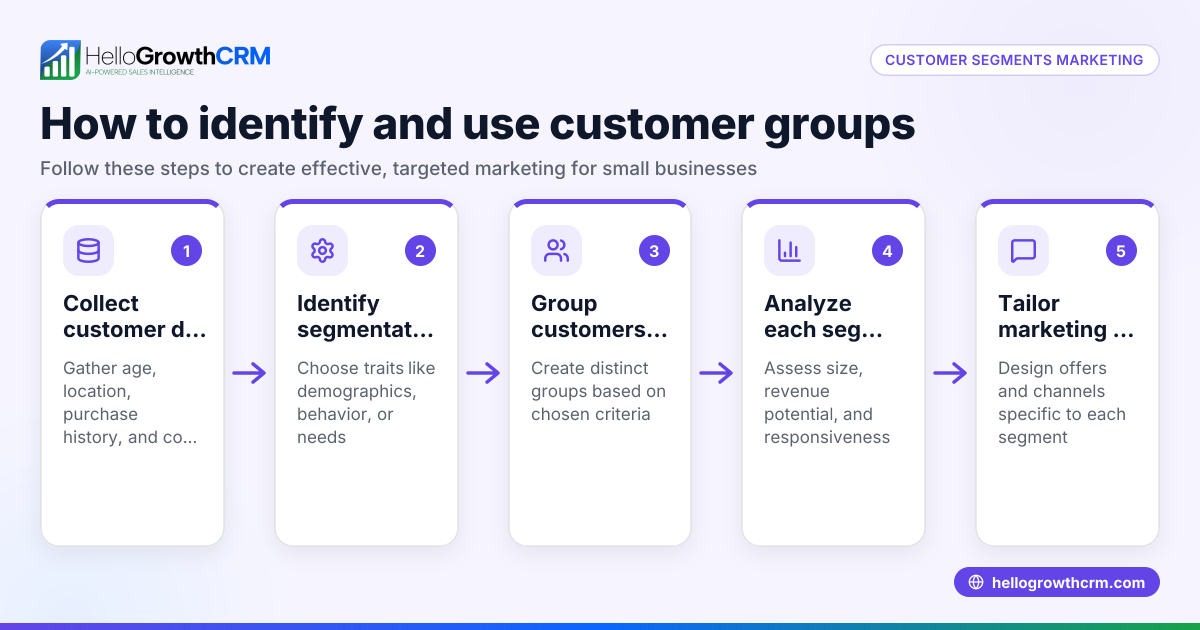
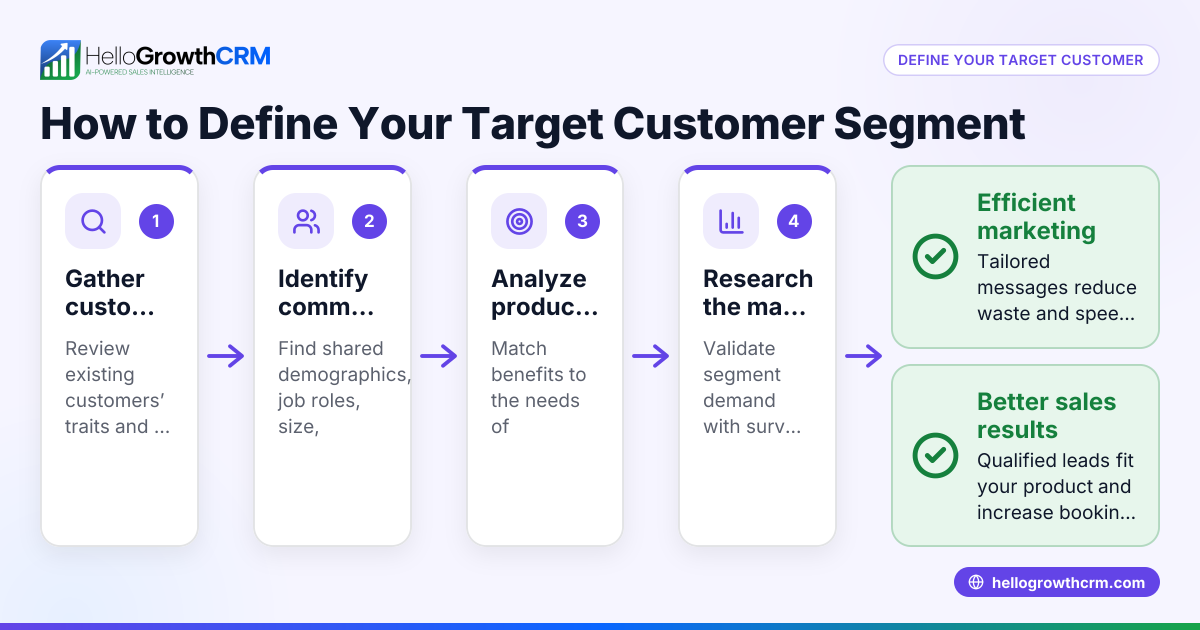
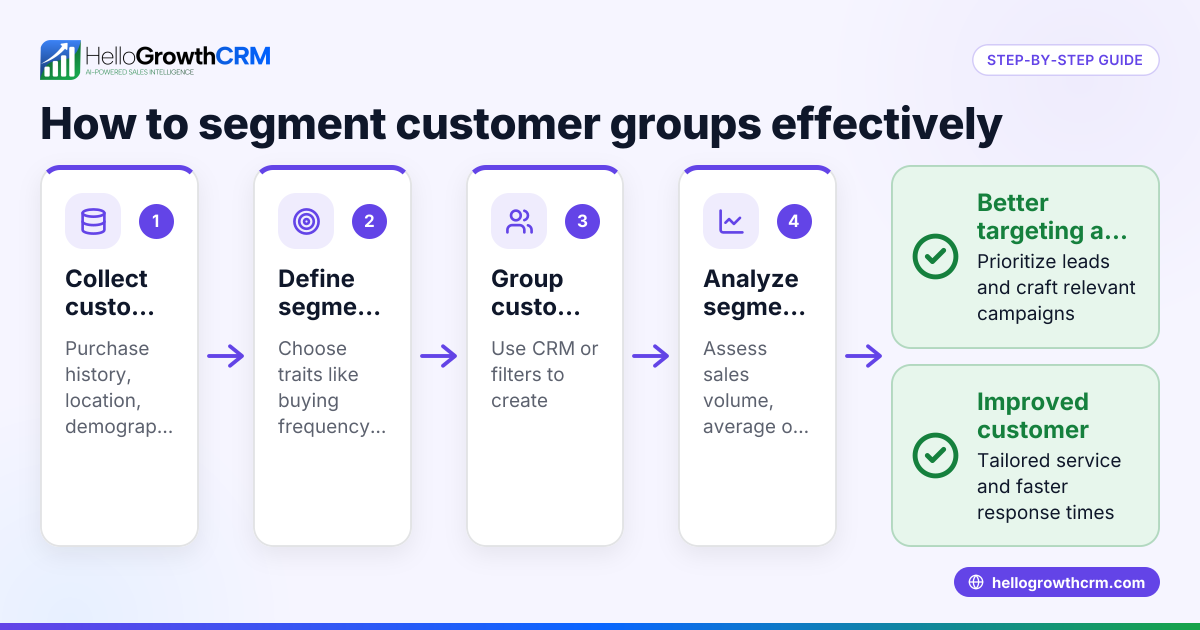
- Collect customer data: Gather all available customer information such as age, location, purchase history, product preferences, and engagement level. Check that your data is current and complete.
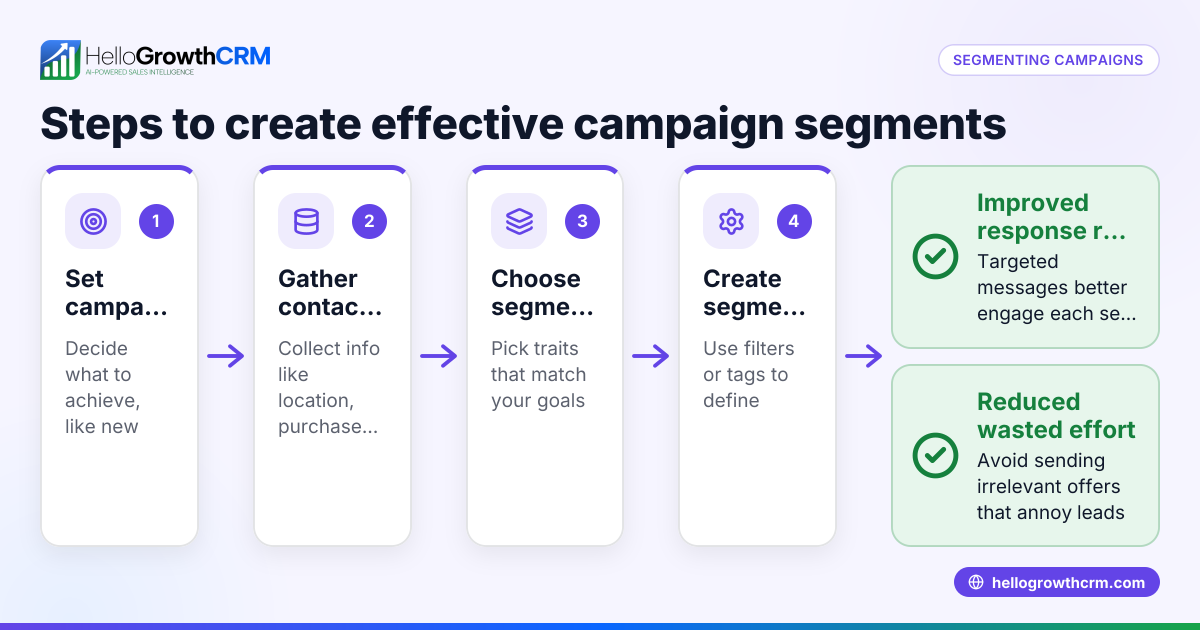
- Define segmentation goals: Decide what you want to achieve with your campaign. Examples include increasing repeat purchases, promoting a new product, or reactivating inactive customers.
- Choose segmentation criteria: Select factors that match your goal, such as:
- Demographics (age, gender, location)
- Purchase behavior (frequency, recency, amount spent)
- Engagement (email opens, website visits, responses)
- Group customers by segments: Create groups based on your criteria. For example, customers who spent over $500 in the last 6 months or those who haven’t purchased in over 3 months.
- Validate your segments: Check segment sizes and characteristics to ensure they are large enough to target yet specific enough to be meaningful.
- Tailor your campaign message: Customize content to each segment’s interests and needs.
- Set up campaign automation: Use tools to schedule and send campaigns automatically, tracking responses and stopping follow-up when customers reply.
- Analyze results and refine: After the campaign, review performance by segment to improve future targeting.
For outreach, consider tools offering sequences and campaigns that automate multi-step follow-up workflows across email, SMS, and WhatsApp channels. This improves response rates and saves time. Learn more about WhatsApp and SMS CRM.
Example (fictional figures)
A landscaping contractor in Charlotte, North Carolina, plans a campaign targeting customers likely to book spring lawn care.
- Total customers: 1,000
- Segment criteria: Customers who spent over $300 in the last 12 months and live within 20 miles
- Customers meeting criteria: 350
Calculation:
$300 × 350 = $105,000 (total segment purchase value)
The contractor creates two segments:
- Segment A: 200 customers who spent between $300 and $600
- Segment B: 150 customers who spent over $600
Segment A average spend: $450 Segment B average spend: $800
The contractor customizes messages:
- Segment A: Special discount offer
- Segment B: Premium service package
By focusing on these segments, the contractor targets $157,000 total customer spend potential instead of the full 1,000 customers, increasing campaign relevance and expected ROI.
Common mistakes
- Using too broad segments: Sending the same message to all customers reduces relevance. Prevent this by defining narrow, meaningful segments.
- Ignoring data quality: Outdated or incomplete data causes poor segmentation. Regularly update and clean your customer database.
- Over-segmentation: Creating too many tiny segments wastes resources and complicates campaigns. Balance granularity with practicality.
- Not aligning segments with campaign goals: Segments should directly support your campaign objectives. Review goals before grouping.
- Failing to track responses: Without monitoring how each segment reacts, you miss insights. Use tools that automate tracking and stop follow-up once customers respond.
For customer engagement tracking, explore features like the customer health score.
Doing this in HelloGrowthCRM
HelloGrowthCRM offers sequences and campaigns that run automated multi-step outreach workflows over two weeks, stopping immediately when a prospect replies. This helps you manage segmented campaigns efficiently without manual effort. After a sale, service requests remain linked to the same customer record as the deal, keeping data organized. If you don’t have a sales manager, HelloGrowthCRM’s Managed RevOps service assigns a specialist to handle follow-up queues weekly, ensuring timely lead management. Learn more about HelloGrowthCRM for the United States at hellogrowthcrm.com/usa.
Frequently asked questions
How many segments should I create for a campaign? Aim for 3 to 5 segments large enough to be cost-effective but specific enough to tailor messages. Too few segments reduce relevance; too many increase complexity.
What data is best for segmenting customers? Use a mix of demographics, purchase behavior, and engagement data. Purchase history often predicts sales campaign success best.
Can I segment customers without advanced software? Yes, you can use spreadsheets to sort and filter customer data manually. However, CRM tools that support automated sequences and campaigns save time and reduce errors.
How often should I update customer segments? Update segments before each campaign to reflect recent purchases and engagement. Regular updates keep targeting accurate.
What if I don’t have enough customer data? Start with available data like location or last purchase date, and collect more through interactions and web forms over time.
Key takeaways
- Segment customers by criteria aligned with your campaign goals.
- Use purchase history, demographics, and engagement data to create meaningful groups.
- Validate segment sizes to ensure effective targeting.
- Avoid pitfalls like over-segmentation and poor data quality.
- Automate campaigns and follow-up with tools offering sequences and campaigns.
Start segmenting your customers today to improve campaign results and save time. You can Start on the Free Forever plan (200 leads, no credit card) to organize and automate your segmented campaigns.
Ready to put this into practice?
Set up your pipeline, WhatsApp follow-ups, and AI lead scoring in minutes — free, no credit card.
Try HelloGrowthCRM freeGet CRM tips in your inbox
Join thousands of sales professionals who get weekly insights on CRM strategy, AI automation, and pipeline optimization.

The HelloGrowthCRM team publishes guides on CRM strategy, AI sales tools, and revenue operations for small business sales teams.