HelloGrowthCRM software
Built for real small-business sales teams
HelloGrowthCRM helps reps qualify faster, follow up on time, and close more deals—with practical automation in one place.
- AI lead scoring and pipeline visibility
- Built-in dialer, WhatsApp, and email automation
- Sales forecasting and RevOps-ready reporting
To set customer service SLA (Service Level Agreement) targets in India, start by defining clear, measurable goals for your team’s response and resolution times that align with your customers’ expectations and your business capacity. Then, break down these targets into specific metrics, assign responsibilities, and track performance regularly to ensure compliance and continuous improvement.
Why this comes up / what goes wrong
Small and mid-sized Indian businesses often struggle with setting SLA targets because they lack clear benchmarks or confuse SLA targets with general service goals. Without proper SLAs, customer service teams may respond slowly or inconsistently, causing lost leads and dissatisfied customers. Many Indian SMBs also run sales and service on WhatsApp and spreadsheets, which makes tracking and enforcing SLA targets difficult. This leads to delays in resolving customer issues and poor customer retention.
Step-by-step
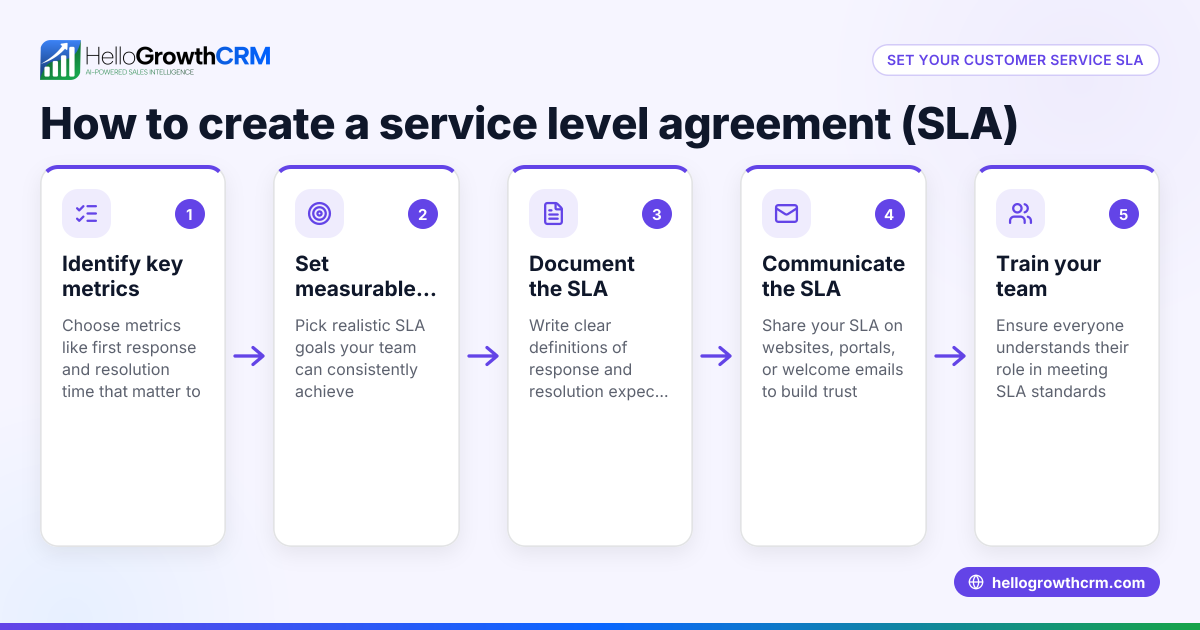
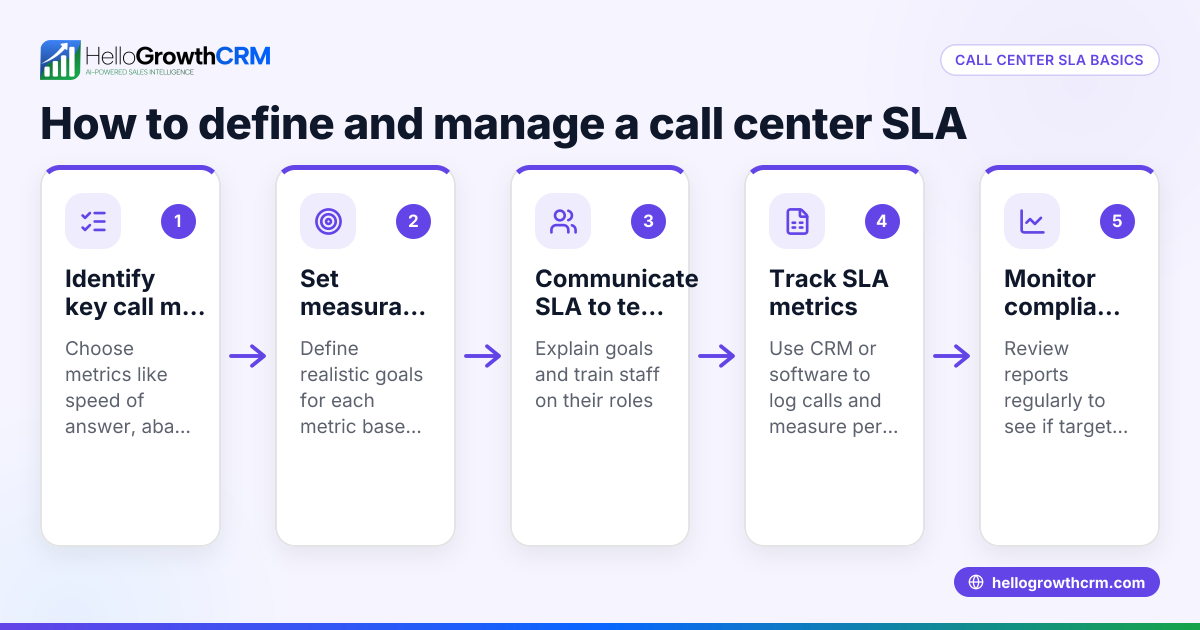
- Identify key service metrics to measure: Typical SLA metrics include first response time, resolution time, and customer satisfaction. Check which metrics matter most to your customers and your business.
- Gather baseline data: Measure your current average response and resolution times over a recent period (e.g., last 3 months). This helps set realistic targets.
- Set target timeframes for each metric: For example, first response within 4 hours, resolution within 24 hours. Make sure these are achievable given your team size and workload.
- Define priority levels for requests: Categorize tickets as high, medium, or low priority, with different SLA targets for each. For example, high priority issues resolved within 8 hours.
- Assign responsibilities and communicate SLAs: Ensure every team member knows their role in meeting SLA targets. Communicate SLAs clearly to customers via your website or customer portal.
- Implement tracking tools: Use software or CRM systems to log tickets, monitor response and resolution times, and alert teams to SLA breaches. This reduces reliance on spreadsheets.
- Review and adjust regularly: Analyze SLA performance monthly or quarterly. Adjust targets or processes based on data and customer feedback.
- Train and motivate your team: Provide training on SLA importance and use performance data to encourage improvements.
- Use customer feedback to refine SLAs: Incorporate customer satisfaction surveys to ensure SLAs meet expectations.
- Document SLAs formally: Create written SLA documents for internal use and customer reference.
Example (fictional figures)
ABC Electronics, a Mumbai-based SMB, wants to set SLA targets for its customer service team starting 01/07/2024.
- Baseline average first response time: 6 hours
- Baseline average resolution time: 48 hours
- Team size: 5 agents
ABC sets these SLA targets:
- First response time: within 4 hours
- Resolution time: within 24 hours
They categorize tickets:
- High priority: resolution within 8 hours
- Medium priority: resolution within 24 hours
- Low priority: resolution within 72 hours
Calculations for monthly workload:
Assume 300 tickets/month; 30% high priority, 50% medium, 20% low.
High priority tickets = 300 × 30% = 90 Medium priority tickets = 300 × 50% = 150 Low priority tickets = 300 × 20% = 60
Each agent handles 300 tickets ÷ 5 agents = 60 tickets/month.
To meet SLAs, ABC ensures:
- Agents respond within 4 hours for all tickets.
- High priority tickets resolved within 8 hours.
- Medium priority tickets resolved within 24 hours.
- Low priority tickets resolved within 72 hours.
ABC monitors this monthly and adjusts staffing or processes if SLAs are missed.
Common mistakes
- Setting unrealistic targets: Avoid choosing response or resolution times that your team cannot meet. Prevent by using baseline data to set achievable goals.
- Ignoring ticket prioritization: Treating all requests equally can overload the team. Prevent by defining priority levels with different SLA targets.
- Not tracking SLA compliance: Without monitoring, breaches go unnoticed. Prevent by using tools like HelloGrowthCRM to track tickets and SLA status.
- Poor communication of SLAs: Customers and staff unaware of SLAs lead to confusion. Prevent by documenting and sharing SLAs clearly.
- Neglecting regular reviews: SLAs become outdated if not reviewed. Prevent by scheduling periodic performance reviews.
- Relying on manual tracking: Using spreadsheets or WhatsApp alone risks errors and delays. Prevent by adopting CRM systems with ticket and SLA features like HelloGrowthCRM’s customer portal and tickets.
Doing this in HelloGrowthCRM
HelloGrowthCRM helps Indian SMBs manage SLAs effectively by keeping service requests on the same customer record as the deal. Its customer portal allows customers to raise tickets directly, while the built-in ticketing system tracks response and resolution times. The knowledge base supports faster resolutions, and referral tracking improves service reach. Using HelloGrowthCRM reduces manual errors and helps teams meet SLA targets reliably. Learn more about HelloGrowthCRM for India and its WhatsApp and SMS CRM capabilities to improve your customer service operations.
Frequently asked questions
What is a customer service SLA? A customer service SLA is a formal agreement defining expected service standards, such as response and resolution times, between a business and its customers. It helps set clear expectations and measures performance.
How do I decide SLA targets for my small business? Start by measuring current service times, understand your customers’ expectations, consider team capacity, and set realistic, prioritized targets. Regularly review and adjust based on performance.
Can I manage SLAs without software? While possible, manual tracking using spreadsheets or WhatsApp can be error-prone and inefficient. A CRM like HelloGrowthCRM helps automate ticket tracking, SLA monitoring, and customer communication.
How often should I review SLA targets? Review SLA targets at least quarterly to ensure they remain relevant and achievable, adjusting for changes in workload, team size, or customer expectations.
How does ticket prioritization affect SLA setting? Prioritizing tickets ensures critical issues get faster attention with stricter SLA targets, helping allocate resources efficiently and improve customer satisfaction.
Key takeaways
- Set SLA targets based on measurable metrics like response and resolution times.
- Use baseline data and customer expectations to set realistic goals.
- Categorize tickets by priority with different SLA timeframes.
- Track SLA compliance with tools instead of manual methods.
- Communicate SLAs clearly to customers and staff.
- Review and adjust SLA targets regularly for continuous improvement.
Start improving your customer service SLA management today with HelloGrowthCRM. Start on the Free Forever plan (200 leads, no credit card).
Ready to put this into practice?
Set up your pipeline, WhatsApp follow-ups, and AI lead scoring in minutes — free, no credit card.
Try HelloGrowthCRM freeGet CRM tips in your inbox
Join thousands of sales professionals who get weekly insights on CRM strategy, AI automation, and pipeline optimization.

The HelloGrowthCRM team publishes guides on CRM strategy, AI sales tools, and revenue operations for small business sales teams.