HelloGrowthCRM software
Built for real small-business sales teams
HelloGrowthCRM helps reps qualify faster, follow up on time, and close more deals—with practical automation in one place.
- AI lead scoring and pipeline visibility
- Built-in dialer, WhatsApp, and email automation
- Sales forecasting and RevOps-ready reporting
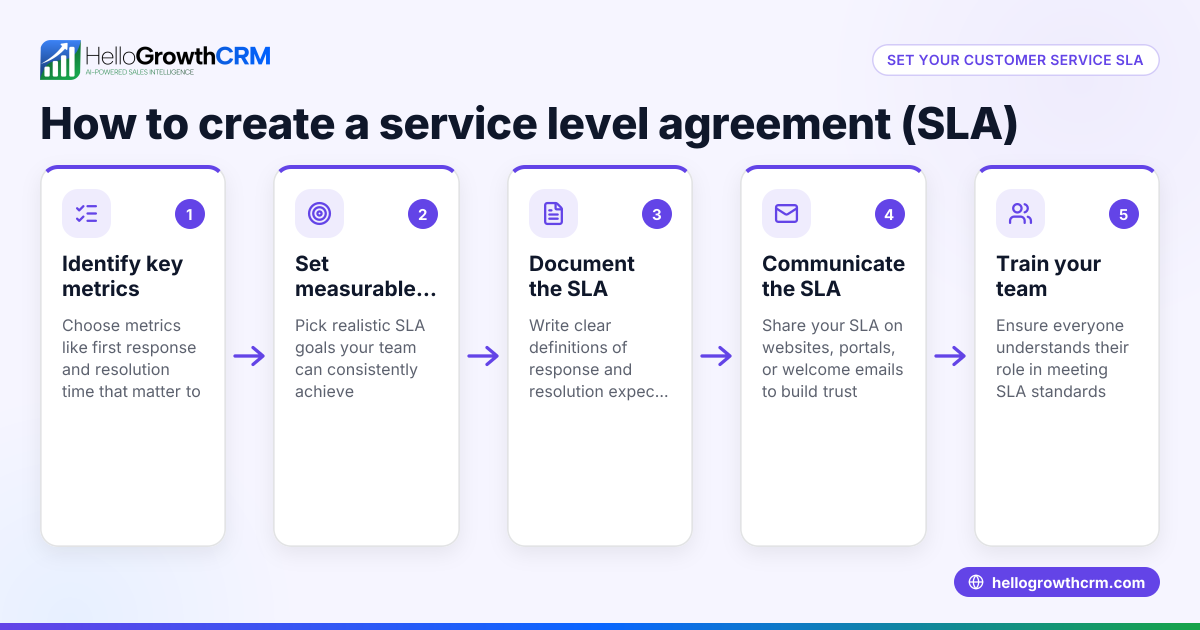
Setting customer service SLA (Service Level Agreement) targets ensures your business meets customer expectations consistently. SLAs specify how quickly your team should respond to and resolve customer requests. This guide explains why SLA targets matter for New Zealand small businesses, provides step-by-step instructions, a worked example, common pitfalls to avoid, and how HelloGrowthCRM can assist.
Why this comes up / what goes wrong
Small and mid-sized businesses in New Zealand often struggle with inconsistent customer service response times. Without clear SLA targets, teams may react slowly, leading to lost leads and dissatisfied customers. Many businesses lack formal SLA definitions, making it hard to measure or improve service quality. This is especially common when customer service is managed via informal channels like text messages, email, or spreadsheets.
Clear SLA targets help set expectations internally and externally. They guide your team on how quickly to respond and resolve issues, improving customer satisfaction and retention. SLA targets also help identify bottlenecks and training needs.
Step-by-step
- Identify customer service request types
- List common types of requests your team handles (e.g., product inquiries, technical support, billing questions).
- Check your current average response and resolution times for each type.
- Define measurable SLA metrics
- For each request type, decide on:
- Response time: how quickly your team acknowledges the request.
- Resolution time: how long it takes to fully resolve the issue.
- Make targets realistic based on your team size and workload.
- Set SLA targets based on customer expectations and business goals
- Use customer feedback or industry benchmarks where available.
- For example, aim to respond to product inquiries within 4 hours and resolve technical support issues within 24 hours.
- Document SLA targets clearly
- Write down the targets and share them with your team.
- Include these in training materials and customer communications if applicable.
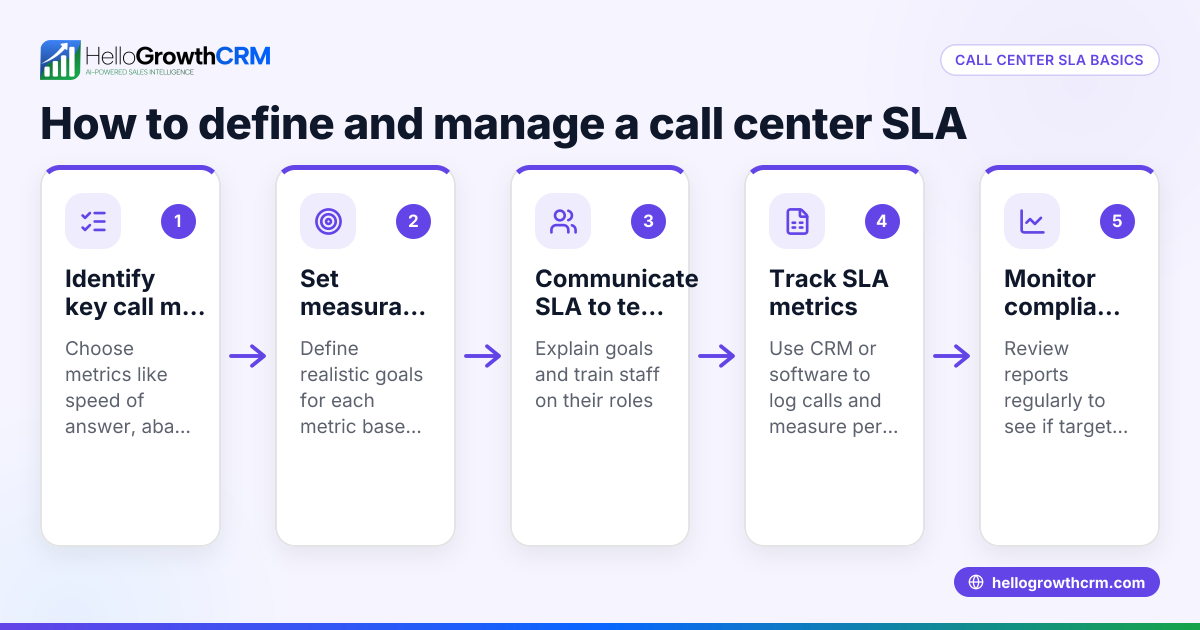
- Implement tracking and reporting
- Use tools or CRM systems to monitor response and resolution times.
- Set alerts for SLA breaches.
- Review and adjust regularly
- Analyse SLA performance monthly or quarterly.
- Adjust targets if needed based on team capacity and customer feedback.
- Communicate SLAs to customers
- Publish SLA commitments on your website or customer portal.
- This builds trust and sets clear expectations.
- Train your team
- Ensure everyone understands SLA targets and their role in meeting them.
For more on tracking customer engagement and health, see customer health score.
Example (fictional figures)
A Queenstown-based tourism operator wants to set SLA targets for their customer service team handling bookings and support.
- Current average response time for booking inquiries: 6 hours
- Current average resolution time for support issues: 48 hours
They decide:
- Booking inquiries: respond within 4 hours, resolve within 12 hours
- Support issues: respond within 8 hours, resolve within 24 hours
Calculations for booking inquiries SLA:
Current response time = 6 hours Target response time = 4 hours Improvement needed = 6 - 4 = 2 hours faster
Current resolution time = 48 hours Target resolution time = 12 hours Improvement needed = 48 - 12 = 36 hours faster
Calculations for support issues SLA:
Current response time = 6 hours (assumed same as booking) Target response time = 8 hours (more relaxed) Improvement needed = none, target is longer
Current resolution time = 48 hours Target resolution time = 24 hours Improvement needed = 48 - 24 = 24 hours faster
This operator will monitor these targets monthly and adjust staffing or processes to meet them.
Common mistakes
- Setting unrealistic targets
- Prevent by analysing current performance and team capacity before setting SLAs.
- Not differentiating request types
- Prevent by categorising requests; different issues need different SLA times.
- Failing to track SLA performance
- Prevent by using CRM tools or spreadsheets to monitor response and resolution times.
- Ignoring customer feedback
- Prevent by regularly surveying customers and adjusting SLAs accordingly.
- Not communicating SLAs to the team or customers
- Prevent by documenting SLAs and sharing them internally and externally.
- Overcomplicating SLA metrics
- Prevent by focusing on key measurable times: response and resolution.
For practical SLA management, explore WhatsApp and SMS CRM features that can help automate communication.
Doing this in HelloGrowthCRM
HelloGrowthCRM helps you manage customer service SLAs by keeping service requests on the same customer record as the deal. Its customer portal lets your customers submit tickets and access the knowledge base, improving self-service. Referral tracking and support tickets help you measure and respond to requests efficiently. Learn more about these features at HelloGrowthCRM for New Zealand.
Frequently asked questions
What is a good SLA target for customer service in NZ? Good SLA targets depend on your industry and customer expectations. Common targets are responding to inquiries within 4-8 hours and resolving issues within 24-48 hours. Adjust based on your team's capacity and customer feedback.
How often should I review SLA targets? Review SLA targets monthly or quarterly to ensure they remain realistic and aligned with customer needs. Use performance data and customer feedback to guide adjustments.
Can I set different SLA targets for different customers? Yes, you can prioritise customers based on value or contract terms and set different SLA targets accordingly. This helps allocate resources efficiently.
How do I track SLA breaches? Use CRM tools or ticketing systems that log response and resolution times. Set alerts for when SLAs are missed to take corrective action promptly.
Why is it important to communicate SLA targets to customers? Communicating SLAs builds trust and sets clear expectations, reducing frustration and improving satisfaction.
Key takeaways
- Define clear, measurable response and resolution times for each request type.
- Base SLA targets on current performance, customer expectations, and team capacity.
- Track SLA performance regularly and adjust targets as needed.
- Communicate SLAs clearly to your team and customers.
- Use CRM tools like HelloGrowthCRM to manage tickets and keep service requests linked to deals.
Setting effective SLA targets helps your New Zealand business improve customer satisfaction and retain leads. Ready to organise your customer service efficiently? Start on the Free Forever plan (200 leads, no credit card).
Ready to put this into practice?
Set up your pipeline, WhatsApp follow-ups, and AI lead scoring in minutes — free, no credit card.
Try HelloGrowthCRM freeGet CRM tips in your inbox
Join thousands of sales professionals who get weekly insights on CRM strategy, AI automation, and pipeline optimization.

The HelloGrowthCRM team publishes guides on CRM strategy, AI sales tools, and revenue operations for small business sales teams.