HelloGrowthCRM software
Built for real small-business sales teams
HelloGrowthCRM helps reps qualify faster, follow up on time, and close more deals—with practical automation in one place.
- AI lead scoring and pipeline visibility
- Built-in dialer, WhatsApp, and email automation
- Sales forecasting and RevOps-ready reporting
To track pending sales follow ups in Singapore effectively, you need a clear system to organise leads, schedule follow-ups with due dates, and review them daily. This prevents leads from going cold and ensures timely communication to close deals.
Why this comes up / what goes wrong
Many small business owners in Singapore rely on memory, WhatsApp chats, emails, or spreadsheets to manage sales follow-ups. These informal methods lack reminders, clear task assignments, and visibility of pending follow-ups. As your sales team grows or your lead volume increases, managing follow-ups without a centralised system becomes overwhelming. Leads get forgotten or contacted too late, causing lost sales opportunities. Without a reliable tracking method, your sales pipeline stalls and revenue suffers.
Step-by-step
- Gather all leads and sales contacts: Collect leads from WhatsApp, emails, spreadsheets, and web forms. Ensure no lead is missed.
- Create a unified list with follow-up dates: For each lead, record the last contact date, current sales stage, and next follow-up date. Use a spreadsheet or CRM.
- Assign follow-up tasks with due dates: Convert each pending follow-up into a task assigned to a team member, with a clear due date and priority.
- Review daily follow-up tasks: Every morning, check the list of follow-ups due that day. Prioritise calls or messages based on deal value, urgency, or sales stage.
- Log every interaction outcome immediately: After each call or message, record the result and set the next follow-up date or mark the lead as closed.
- Use reminders and alerts: Set notifications to alert you before follow-up tasks are due to avoid missing them.
- Update your sales pipeline regularly: Move leads through stages like contacted, quote sent, negotiation, and adjust follow-up dates accordingly.
Using sales task boards can help visualise daily follow-ups and keep tasks organised.
Example (fictional figures)
A renovation contractor in Jurong has 15 leads. One lead, Mr Tan, was sent a quotation on 01/05/2024 for S$48,000. The contractor sets a follow-up task for 08/05/2024 to check if Mr Tan has questions.
- Quotation sent date: 01/05/2024
- Follow-up date set: 08/05/2024
- Quotation value: S$48,000
On 08/05/2024, the contractor calls Mr Tan:
- Call outcome: Mr Tan requests a site visit
- Next follow-up date set: 15/05/2024
This process ensures the lead is actively managed and no follow-up is missed.
Arithmetic for follow-up scheduling:
Quotation sent date (01/05/2024) + 7 days = Follow-up date (08/05/2024)
Follow-up date (08/05/2024) + 7 days = Next follow-up date (15/05/2024)
This shows how the contractor spaces follow-ups one week apart to maintain contact without overwhelming the lead.
Common mistakes
- Relying on memory or informal notes: Prevent this by using a task list or CRM to schedule and remind follow-ups.
- Not setting clear follow-up dates: Always assign a specific date to each follow-up task.
- Failing to log interaction outcomes immediately: Record every contact result to plan next steps effectively.
- Ignoring low-value leads: Prioritise all leads; small deals can grow or lead to referrals.
- Overloading daily tasks without prioritisation: Sort follow-ups by urgency or deal size to focus efforts.
- Using multiple unconnected tools: Consolidate leads and follow-ups in one system to avoid lost information.
Learn more about managing tasks and follow-ups with sales task boards.
Doing this in HelloGrowthCRM
HelloGrowthCRM helps track pending sales follow ups with these features:
- Deals (pipeline): A quotation sent last week appears as a deal at the 'quote sent' stage with a follow-up date, so it is not forgotten.
- Activities and task boards: Each follow-up becomes a task with a due date; the day's calls are shown as a list, reducing memory load.
- Sequences and campaigns: Automated five-step follow-ups over two weeks run on their own and stop immediately when the prospect replies.
Learn more about these features in HelloGrowthCRM for Singapore.
Frequently asked questions
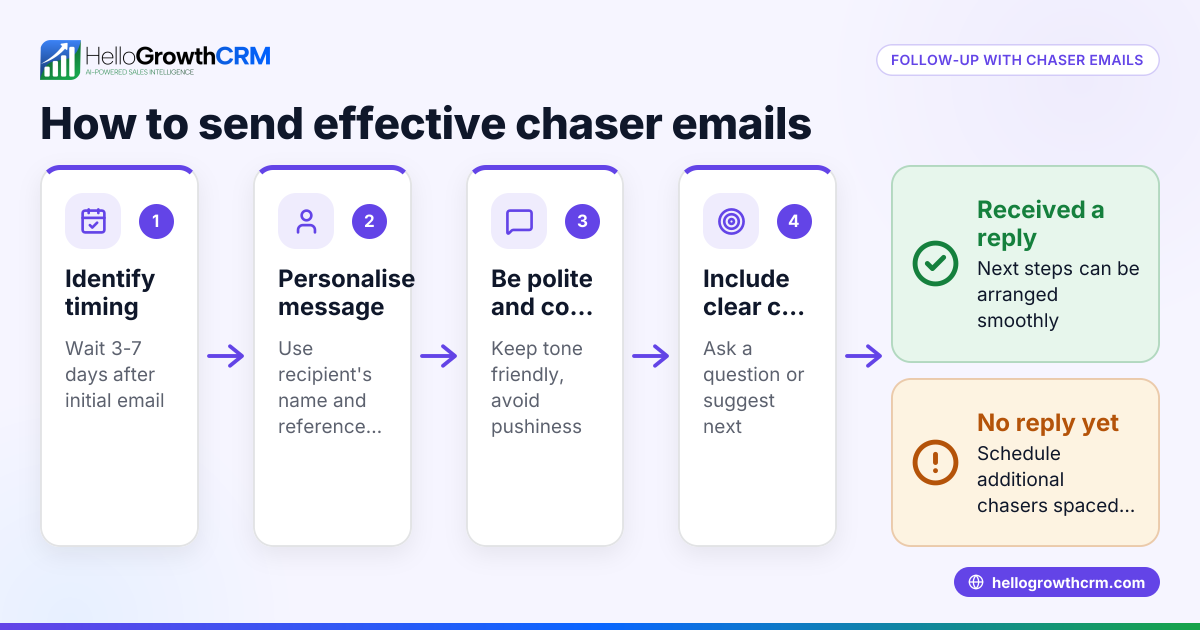
How often should I follow up with a sales lead? Follow-ups every 3 to 7 days usually work well but adjust based on lead interest and communication. Avoid contacting too frequently, which may annoy leads, or too infrequently, which lets leads cool off.
What is the best way to prioritise follow-ups? Prioritise leads by deal value, urgency, and sales stage. Use task boards to sort follow-ups by due date and importance.
How can I avoid missing follow-ups when busy? Set reminders and use task lists that alert you before follow-ups are due. A CRM with task boards automates this process.
Can I automate follow-ups without losing personal touch? Yes, sequences automate initial follow-ups and pause when a lead replies, allowing you to personalise communication thereafter.
Is WhatsApp a good tool for sales follow-ups? WhatsApp is widely used but can be disorganised without a CRM. Integrating WhatsApp with a CRM helps track conversations and follow-up tasks efficiently.
See how automation helps with email automation and sequences.
Key takeaways
- List all leads and assign specific follow-up dates.
- Turn follow-ups into tasks with due dates and priorities.
- Review daily follow-up tasks to focus efforts.
- Log each interaction outcome immediately.
- Avoid relying on memory or multiple disconnected tools.
- Use task boards and automation for consistent follow-ups.
Start tracking your pending sales follow ups today. You can Start on the Free Forever plan (200 leads, no credit card) with HelloGrowthCRM to organise your sales pipeline, tasks, and automated sequences efficiently.
Ready to put this into practice?
Set up your pipeline, WhatsApp follow-ups, and AI lead scoring in minutes — free, no credit card.
Try HelloGrowthCRM freeGet CRM tips in your inbox
Join thousands of sales professionals who get weekly insights on CRM strategy, AI automation, and pipeline optimization.

The HelloGrowthCRM team publishes guides on CRM strategy, AI sales tools, and revenue operations for small business sales teams.