HelloGrowthCRM software
Built for real small-business sales teams
HelloGrowthCRM helps reps qualify faster, follow up on time, and close more deals—with practical automation in one place.
- AI lead scoring and pipeline visibility
- Built-in dialer, WhatsApp, and email automation
- Sales forecasting and RevOps-ready reporting
To write a payment follow-up message in the UK, you should clearly and politely remind your customer about the unpaid invoice, including the invoice number, amount due, and the original due date. Keep your tone professional and courteous to maintain a good relationship, and offer help if they have any questions or issues. This article explains why payment follow-ups are important, gives you step-by-step instructions, a realistic example with figures, common mistakes to avoid, and how HelloGrowthCRM can support your follow-up process.
Why this comes up / what goes wrong
Small business owners in the UK often face late payments that affect cash flow. Many rely on informal methods like WhatsApp, email, or spreadsheets to track payments and reminders. This can lead to missed follow-ups or messages lacking clarity, which delays payment further. Writing a clear payment follow-up message helps remind customers professionally without damaging the business relationship. The challenge is balancing politeness with firmness and including all necessary details so the customer knows exactly what is owed and when.
Step-by-step
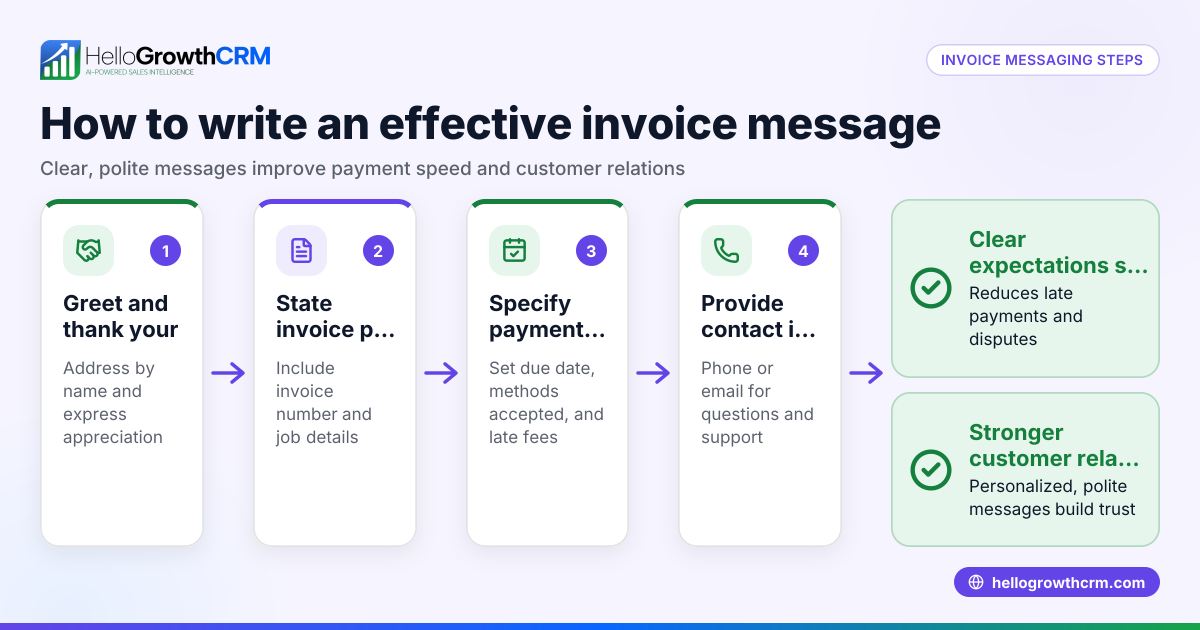
- Identify the invoice and payment details: Check your records for the invoice number, amount due, and the original payment due date. Confirm the payment is indeed overdue.
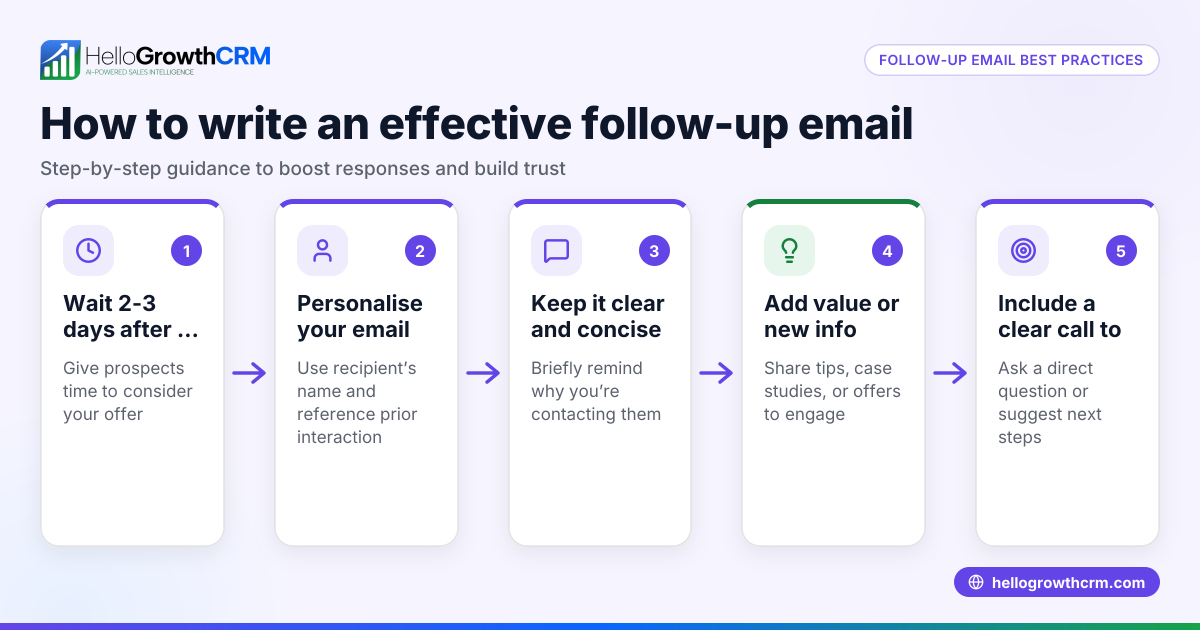
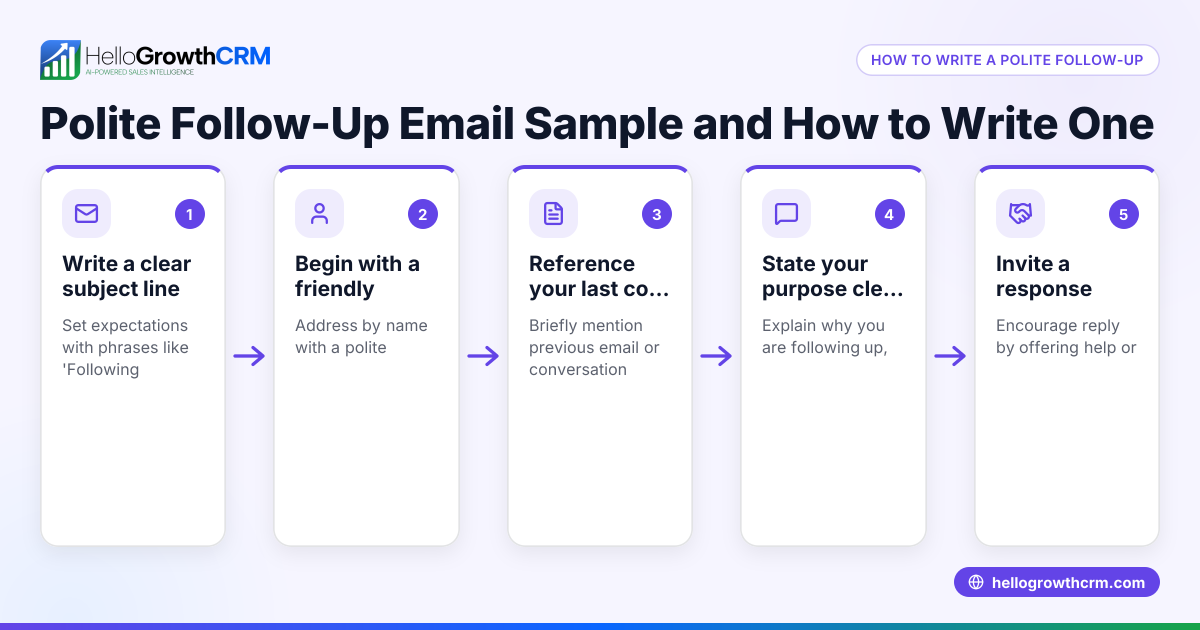
- Start with a polite greeting: Address the customer by name to personalise the message.
- State the purpose clearly: Mention the invoice number and the outstanding amount. For example, "I am writing to remind you about invoice #12345 for £1,200, which was due on 15/05/2024."
- Request payment politely: Use phrases like "Please arrange payment at your earliest convenience" or "Kindly settle the outstanding amount as soon as possible."
- Offer assistance: Add a sentence offering help if there are any questions or issues, such as "If you have any questions regarding this invoice, please let me know."
- Include payment methods or details: Remind them how to pay if necessary, e.g., bank details or payment links.
- Close professionally: End with a courteous closing like "Thank you for your attention to this matter" and your name and contact details.
- Check tone and clarity: Review the message to ensure it is polite, clear, and free of errors.
- Set a follow-up task: Note a reminder to follow up again if payment is not received within a set timeframe.
For ongoing follow-ups, consider using sales task boards to organise and track reminders efficiently. See more on sales task boards.
Example (fictional figures)
A solar-panel installer in Glasgow needs to follow up on an unpaid invoice:
- Invoice number: 2024-078
- Amount: £3,450
- Due date: 10/06/2024
- Today's date: 20/06/2024
Message:
"Dear Mr Smith,
I hope this message finds you well. I am writing to remind you that invoice 2024-078 for £3,450 was due on 10/06/2024. Please arrange payment at your earliest convenience.
If you have any questions about this invoice, please do not hesitate to contact me.
Thank you for your attention to this matter.
Kind regards,
Jane Doe Solar Solutions Glasgow"
The arithmetic showing the overdue payment is:
£3,450 (invoice amount) = £3,450 (outstanding)
The message clearly states the overdue invoice and amount, the due date, and politely requests payment.
Common mistakes
- Being too vague: Not including invoice numbers or amounts confuses the customer. Always specify these details.
- Using a harsh tone: Aggressive language can damage relationships. Keep messages polite and professional.
- Delaying follow-ups: Wait too long after the due date and payment may be further delayed. Set reminders to follow up promptly.
- Not offering help: Customers may have questions or issues. Offering assistance encourages communication.
- Failing to track follow-ups: Without a system, you may forget who to contact next. Use tools like sales task boards to organise follow-ups.
- Ignoring multiple communication channels: Relying on email alone may miss responses. Consider WhatsApp or SMS for faster replies. Learn more about WhatsApp and SMS CRM.
Doing this in HelloGrowthCRM
HelloGrowthCRM helps you manage payment follow-ups by turning each reminder into a task with a due date on your sales task board. This means your daily calls and messages are organised, not left to memory. WhatsApp conversations with customers are logged on their lead record, and follow-up messages can go out directly as WhatsApp or SMS messages. You can also set up automated sequences to send a series of payment reminders over two weeks, which stop as soon as the customer replies. This keeps your follow-up consistent and saves time. Learn more about email automation and sequences.
Frequently asked questions
How soon after the payment due date should I send a follow-up message? Send a polite reminder within a few days after the due date. Prompt follow-up increases the chance of quick payment without seeming pushy.
What if the customer disputes the invoice? Offer to discuss any concerns and provide supporting documents. Clear communication can resolve disputes and maintain goodwill.
Can I use WhatsApp to send payment reminders? Yes, WhatsApp is widely used and can be effective for reminders. HelloGrowthCRM supports WhatsApp messaging logged on customer records for easy follow-up.
How many follow-up messages should I send? A typical approach is a sequence of up to five reminders over two weeks, adjusting tone from gentle to firmer. Stop if the customer responds.
Should I include payment instructions in the follow-up? Yes, including payment details or links reduces friction and makes it easier for the customer to pay promptly.
Key takeaways
- Clearly state invoice number, amount, and due date in your message.
- Use polite, professional language and offer assistance.
- Send reminders promptly after the due date.
- Track follow-ups systematically using task boards.
- Use multiple channels like WhatsApp and SMS for better response.
- Automate sequences to maintain consistent follow-up without manual effort.
Start managing your payment follow-ups efficiently and keep your cash flow steady. Start on the Free Forever plan (200 leads, no credit card).
Ready to put this into practice?
Set up your pipeline, WhatsApp follow-ups, and AI lead scoring in minutes — free, no credit card.
Try HelloGrowthCRM freeGet CRM tips in your inbox
Join thousands of sales professionals who get weekly insights on CRM strategy, AI automation, and pipeline optimization.

The HelloGrowthCRM team publishes guides on CRM strategy, AI sales tools, and revenue operations for small business sales teams.