HelloGrowthCRM software
Built for real small-business sales teams
HelloGrowthCRM helps reps qualify faster, follow up on time, and close more deals—with practical automation in one place.
- AI lead scoring and pipeline visibility
- Built-in dialer, WhatsApp, and email automation
- Sales forecasting and RevOps-ready reporting
Inhouse sales means your business uses an internal sales team based at your office or remotely but managed directly by you, rather than outsourcing sales to third parties or relying solely on online self-service. These salespeople handle lead contact, product demos, negotiations, and closing deals. Many small and mid-sized US businesses choose inhouse sales to maintain control over customer relationships and improve follow-up speed.
Why this comes up / what goes wrong
Small-business owners often consider inhouse sales when they notice leads are lost due to slow follow-up or scattered communication across text messages, emails, and spreadsheets. Without a dedicated team focused on sales, leads can fall through the cracks. Owners may also want to keep sales knowledge and customer insights within the company rather than handing them to external agents. However, managing an inhouse sales team requires clear processes and tools to avoid inefficiency, missed follow-ups, and poor pipeline visibility.
Step-by-step
- Define your sales process clearly. Map out stages from lead capture to closing, such as qualification, demo, quote, negotiation, and closed-won or lost. Check that each stage has clear entry and exit criteria.
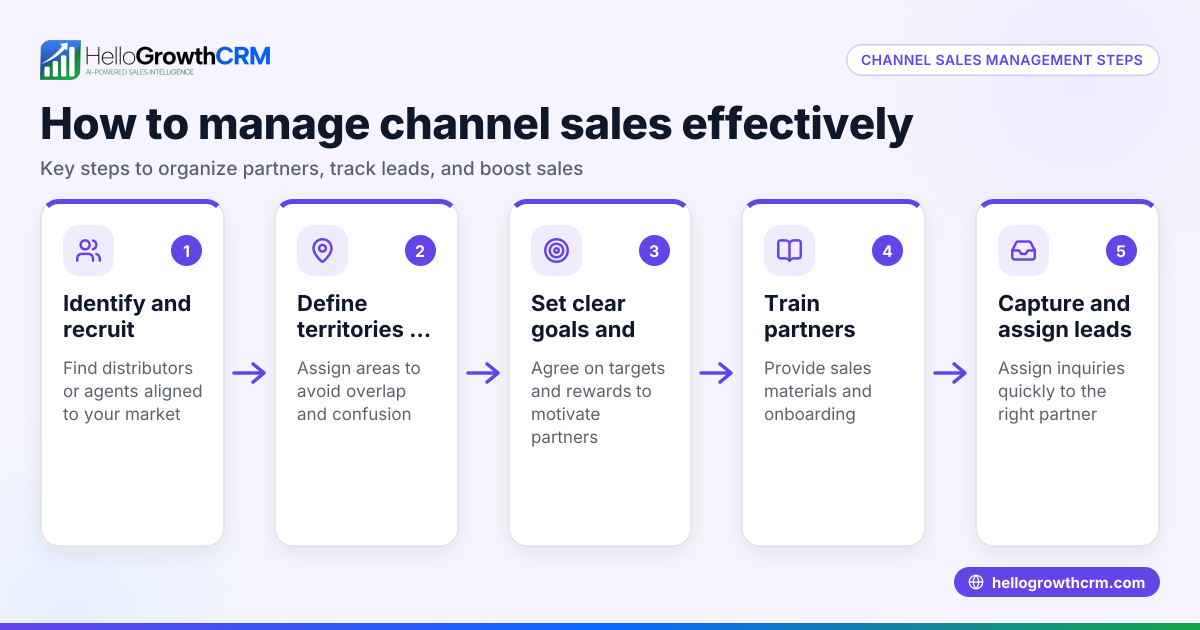
- Assign roles and territories. Decide who handles inbound leads, who does outbound outreach, and if salespeople cover specific regions or customer types. Check that responsibilities do not overlap confusingly.
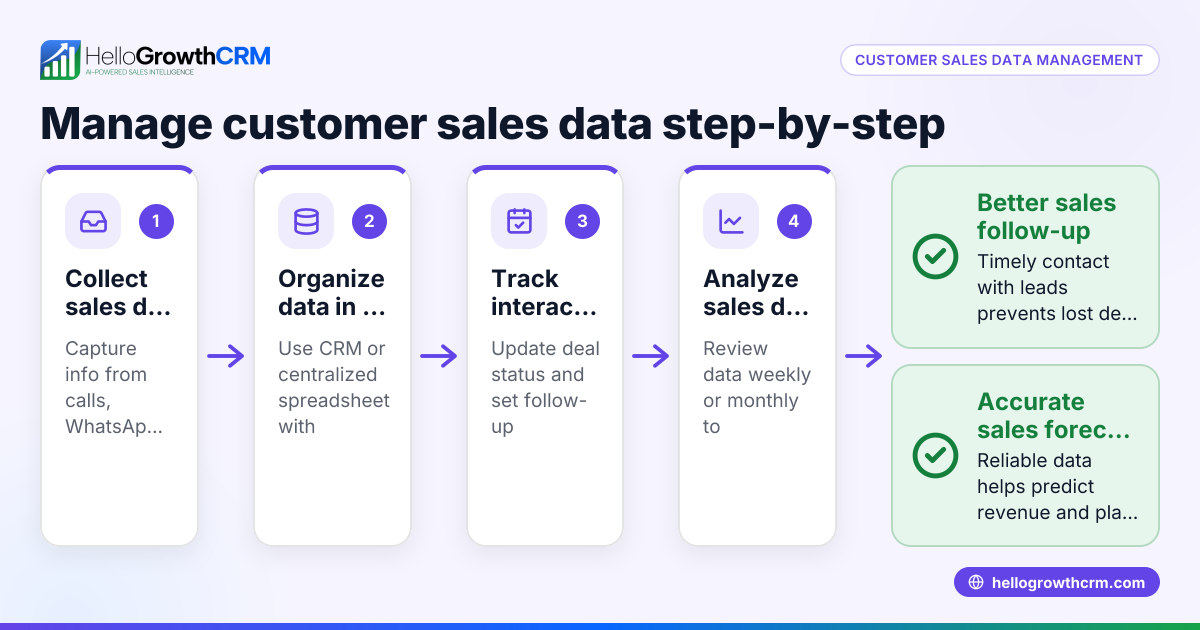
- Set up a system to track deals and follow-ups. Use a CRM or spreadsheet to log each lead and update its status regularly. Check that follow-up dates are set and reminders are active. HelloGrowthCRM’s Deals pipeline helps keep deals visible and on schedule. See HelloGrowthCRM AI CRM.
- Train your sales team on communication channels. If you use WhatsApp, email, or SMS, ensure everyone follows consistent messaging and timing rules. Check message templates and response times.
- Monitor sales activity and pipeline health weekly. Review open deals, stages, and stuck opportunities. Check that no deal is forgotten and that follow-ups happen on schedule.
- Analyze sales performance and adjust. Look at conversion rates, average deal size, and sales cycle length. Check if your team meets targets or needs support.
Example (fictional figures)
A residential real-estate team in Phoenix, Arizona, uses inhouse sales to follow up on leads from their website.
- They captured 100 leads in April 2026.
- 60 leads were qualified and moved to the "quote sent" stage.
- Average deal size is $350,000.
- Conversion rate from quote to closed-won is 25%.
Calculations:
Qualified leads = 60
Closed deals = 60 × 25% = 15
Total sales value = 15 × $350,000 = $5,250,000
This team tracks each lead in their CRM with follow-up dates to avoid losing deals.
Common mistakes
- Not tracking leads in one place. Leads get lost when spread across emails and spreadsheets. Prevent by using a CRM pipeline like the Deals feature to keep deals visible and updated.
- Ignoring follow-up deadlines. Without reminders, salespeople forget to contact leads. Prevent by setting automatic follow-up tasks.
- Unclear sales stages. If team members disagree on what stage a deal is in, forecasting and reporting suffer. Prevent by defining and documenting stages clearly.
- Poor communication consistency. Random messaging confuses prospects. Prevent by standardizing templates and channels, such as WhatsApp or SMS sequences. Learn more at WhatsApp and SMS CRM.
- No performance review. Without regular check-ins, problems go unnoticed. Prevent by scheduling weekly pipeline reviews and coaching.
Doing this in HelloGrowthCRM
Several features support inhouse sales teams:
- Deals (pipeline): Track open opportunities from first contact through close with stage movement and follow-up dates, so no quotation or lead is forgotten. Learn more at HelloGrowthCRM AI CRM.
- Territories, field operations and commissions: Manage sales territories, log field visits from mobile, and track commissions linked to deals, ideal for teams covering multiple regions. Details at territory management.
- Managed RevOps: For founders without a sales manager, done-for-you revenue operations support is available with weekly follow-up execution and pipeline hygiene to keep leads moving. More information is available on our website.
Frequently asked questions
What is the difference between inhouse sales and outsourced sales? Inhouse sales is done by your own employees working within your company, while outsourced sales is handled by an external agency or contractor. Inhouse teams offer more control and direct customer relationship management.
How do I measure inhouse sales team performance? Track metrics like number of leads contacted, conversion rates, average deal size, sales cycle length, and pipeline velocity. Use CRM reports to monitor these regularly.
Can inhouse sales work for small teams? Yes, even small teams benefit from having dedicated salespeople who follow up leads systematically rather than relying on the owner or random staff.
What tools help manage inhouse sales? A CRM with a deal pipeline, task reminders, and communication sequences helps organize leads and automate follow-up. HelloGrowthCRM integrates WhatsApp, SMS, and email sequences with pipeline tracking. See WhatsApp and SMS CRM and built-in CRM dialer.
How to avoid losing leads in inhouse sales? Ensure every lead is entered into a CRM, assign clear follow-up tasks, set reminders, and review pipeline stages weekly to catch stalled deals.
Key takeaways
- Inhouse sales means managing your own sales team internally to handle leads and close deals.
- Clear sales stages, role assignments, and tracking systems are essential.
- Regular follow-up and pipeline reviews prevent lost leads.
- Avoid common mistakes like scattered lead data and missed deadlines.
- A CRM with pipeline tracking, territory management, and managed RevOps support helps your inhouse sales team succeed.
Start managing your inhouse sales effectively today. Start on the Free Forever plan (200 leads, no credit card) and keep your leads organized and followed up.
Ready to put this into practice?
Set up your pipeline, WhatsApp follow-ups, and AI lead scoring in minutes — free, no credit card.
Try HelloGrowthCRM freeGet CRM tips in your inbox
Join thousands of sales professionals who get weekly insights on CRM strategy, AI automation, and pipeline optimization.

The HelloGrowthCRM team publishes guides on CRM strategy, AI sales tools, and revenue operations for small business sales teams.