HelloGrowthCRM software
Built for real small-business sales teams
HelloGrowthCRM helps reps qualify faster, follow up on time, and close more deals—with practical automation in one place.
- AI lead scoring and pipeline visibility
- Built-in dialer, WhatsApp, and email automation
- Sales forecasting and RevOps-ready reporting
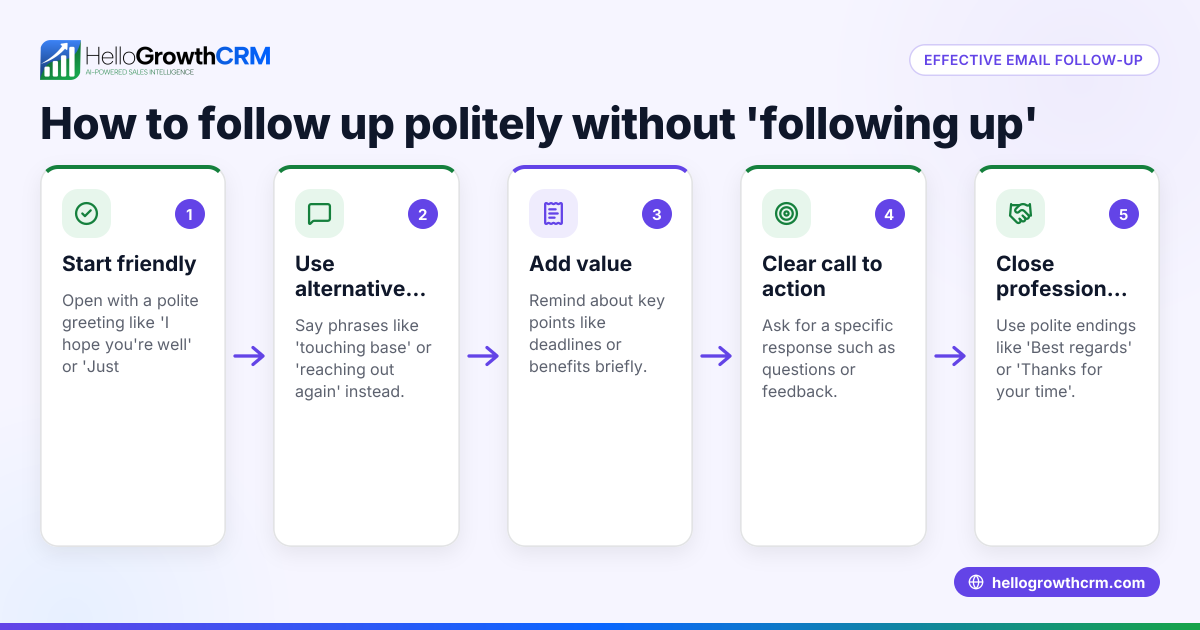
Instead of saying "I wanted to follow up," try using phrases such as "I’m checking in," "Following up on our last conversation," or "Just touching base to see if you had any questions." These alternatives communicate your intent clearly and professionally without sounding uncertain or passive.
Why this comes up / what goes wrong
Small business owners and salespeople often say "I wanted to follow up" because it feels polite or less pushy. However, this phrase can sound vague, overly tentative, or even like you are unsure about your own message. When leads or clients receive such messages, they might not feel the urgency or clarity needed to respond promptly. This can lead to slow replies, lost sales opportunities, or confusion about what you want next.
You might also struggle to remember when and how to follow up consistently without a system. Relying on memory or scattered notes means some prospects slip through the cracks. If your follow-up messages lack clarity or urgency, you risk losing leads to competitors who communicate more effectively.
Step-by-step
- Choose a clear, direct phrase: Instead of "I wanted to follow up," say "I’m following up on," "Checking in about," or "Just touching base regarding." These phrases set a purposeful tone.
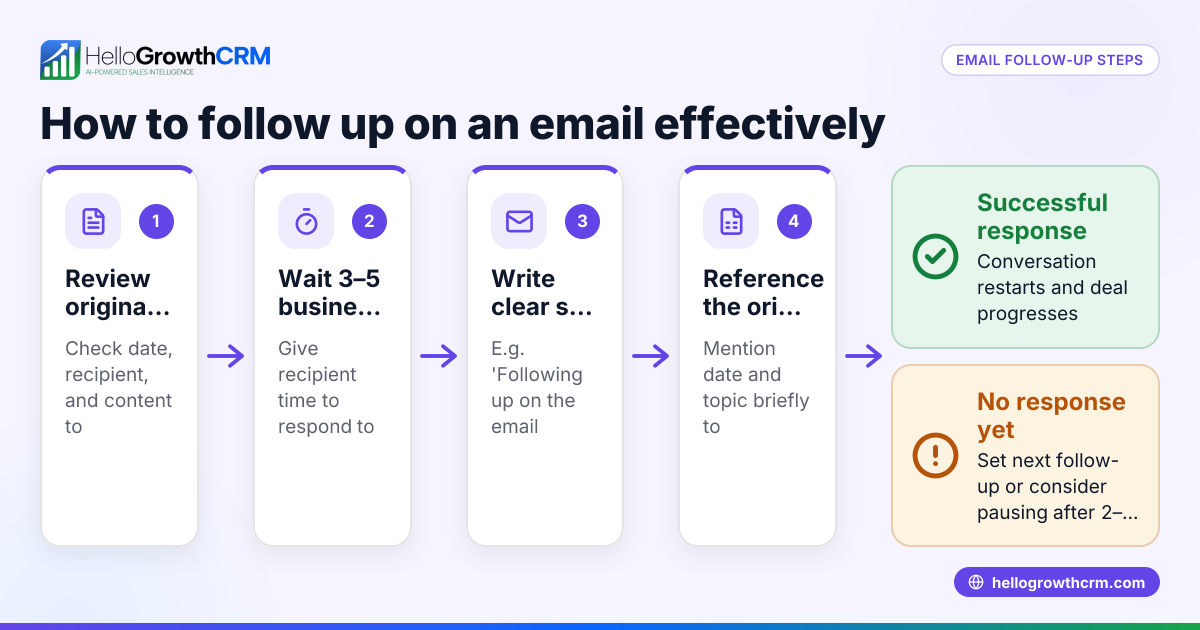
- State the reason for your message: Briefly remind the recipient what you are following up on, such as a previous call, proposal, or question.
- Include a call to action: Ask a clear question or suggest the next step, like scheduling a call or confirming interest.
- Set a deadline or timeframe: If appropriate, add a gentle timeline like "Please let me know by Friday" to encourage timely responses.
- Review and personalize each message: Tailor your message to the prospect’s situation to avoid sounding generic.
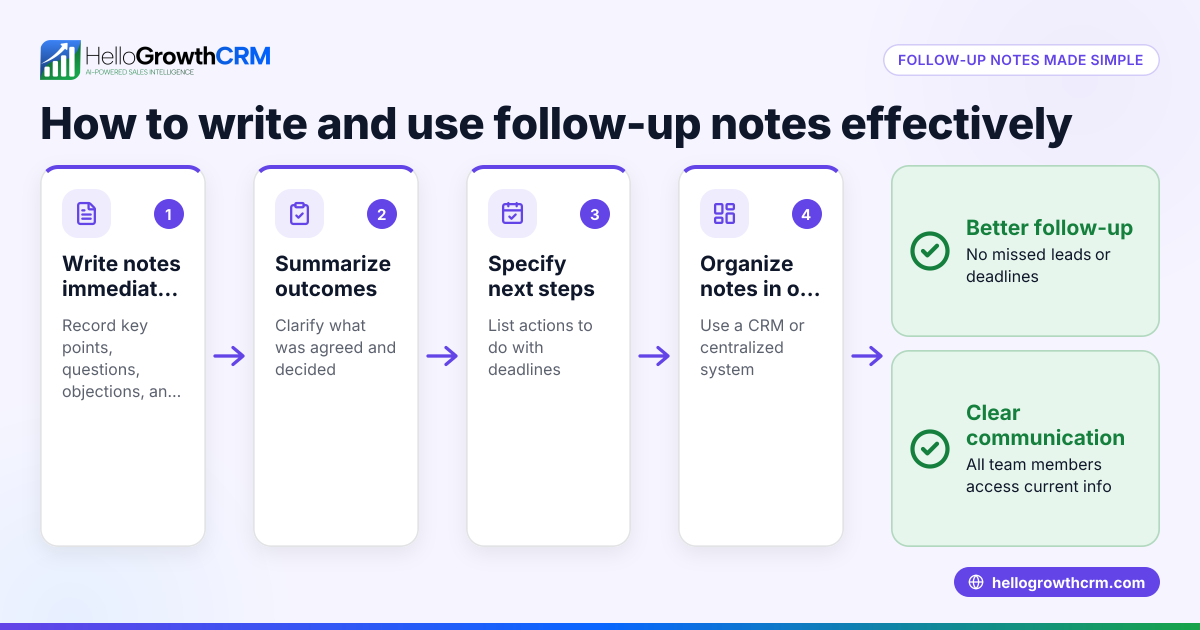
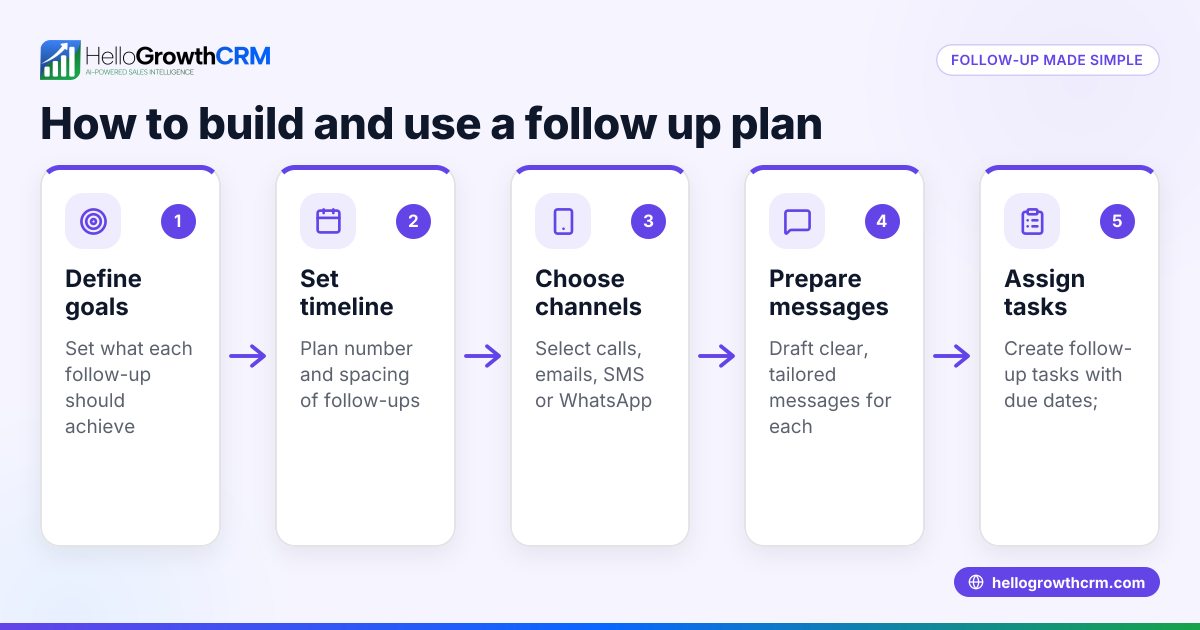
- Track follow-ups using a system: Use a CRM or task board to schedule and log each follow-up so nothing is missed.
Check that your message is concise, polite, and focused on the recipient’s needs rather than just your sales goals. Avoid repeating the same phrase in multiple follow-ups.
Example (fictional figures)
A two-location dental practice in Columbus, Ohio, is following up with a patient who requested a quote for teeth whitening on 05/01/2026. The receptionist wants to send a follow-up email on 05/08/2026.
Step 1: Choose phrase - "Following up on your teeth whitening quote."
Step 2: State reason - "We wanted to check if you had any questions about the quote we sent last week."
Step 3: Call to action - "Would you like to schedule an appointment?"
Step 4: Set timeframe - "Please let us know by 05/12/2026 so we can reserve your preferred time slot."
Step 5: Personalize - Add patient’s first name: "Hi Sarah,"
The email reads: "Hi Sarah,
Following up on your teeth whitening quote. We wanted to check if you had any questions about the quote we sent last week. Would you like to schedule an appointment? Please let us know by 05/12/2026 so we can reserve your preferred time slot.
Best regards, Columbus Dental Team"
This clear message is more effective than "I wanted to follow up" and guides the patient toward the next step.
Common mistakes
- Using vague phrases like "I wanted to follow up" repeatedly. Prevent this by preparing a list of clear alternatives and rotating them.
- Sending follow-ups without a clear purpose or call to action. Always state why you’re following up and what you want next.
- Failing to personalize messages. Avoid generic templates; add names and details to show attention.
- Relying on memory to track follow-ups. Use sales task boards or CRM tools to schedule and log every follow-up reliably. See more on sales task boards.
- Not stopping follow-ups after a reply. If the prospect responds, adjust your approach or pause automated sequences to avoid annoyance.
Doing this in HelloGrowthCRM
HelloGrowthCRM helps you manage follow-ups with features like activities and task boards where each follow-up becomes a task with a due date. The day's calls appear as a clear list, so you don’t have to remember who to contact next. You can also create sequences and campaigns—automated five-step follow-ups over two weeks that stop immediately when a prospect replies. For even more efficiency, AI agents draft follow-up messages after calls for your review and sending. Learn more about email automation and sequences and HelloGrowthCRM for the United States.
Frequently asked questions
What are good alternatives to saying "I wanted to follow up"? Use phrases like "I’m following up on," "Just checking in," or "Following up regarding." These sound more confident and direct.
How often should I follow up without annoying a prospect? A good rule is to space follow-ups a few days apart, typically 3-5 days, and limit to about five attempts over two weeks. Adjust based on the prospect’s responsiveness.
How can I keep track of follow-ups effectively? Using a CRM or sales task board helps you schedule, log, and remind yourself about follow-ups so none get forgotten or duplicated.
Should I personalize every follow-up message? Yes. Personalization increases response rates by showing you pay attention to the prospect’s needs and situation.
What if a prospect responds but doesn’t commit? Respond promptly, address their concerns, and offer next steps. If they remain undecided, space out further follow-ups or pause until they re-engage.
Key takeaways
- Replace "I wanted to follow up" with clearer, confident phrases like "Following up on" or "Just checking in."
- Always state the reason for your follow-up and include a clear call to action.
- Personalize each message to the recipient to increase engagement.
- Use tools like sales task boards or CRM systems to schedule and track follow-ups.
- Stop automated follow-ups immediately when a prospect replies to avoid frustration.
Start managing your follow-ups more effectively today. You can start on the Free Forever plan (200 leads, no credit card) with HelloGrowthCRM and organize your sales follow-ups with ease.
Ready to put this into practice?
Set up your pipeline, WhatsApp follow-ups, and AI lead scoring in minutes — free, no credit card.
Try HelloGrowthCRM freeGet CRM tips in your inbox
Join thousands of sales professionals who get weekly insights on CRM strategy, AI automation, and pipeline optimization.

The HelloGrowthCRM team publishes guides on CRM strategy, AI sales tools, and revenue operations for small business sales teams.