HelloGrowthCRM software
Built for real small-business sales teams
HelloGrowthCRM helps reps qualify faster, follow up on time, and close more deals—with practical automation in one place.
- AI lead scoring and pipeline visibility
- Built-in dialer, WhatsApp, and email automation
- Sales forecasting and RevOps-ready reporting
A logistics CRM is a specialised customer relationship management system designed to help logistics businesses manage leads, customers, and operations efficiently. It integrates communication channels, tracks shipments, and supports sales pipelines specific to logistics needs. This article explains why logistics businesses in Singapore seek a CRM, how to evaluate options step-by-step, a worked example, common mistakes to avoid, and how HelloGrowthCRM supports logistics teams.
Why this comes up / what goes wrong
Logistics businesses in Singapore, whether freight forwarders, transporters, or warehousing providers, often juggle multiple communication channels like WhatsApp, email, and phone calls. Many still rely on spreadsheets or manual notes to track leads, shipments, and customer follow-ups. This leads to missed opportunities, slow follow-up, and lost leads because no single system consolidates all customer interactions and operational details. Accountants and business owners face challenges reconciling sales data with operational status and forecasting revenue without a clear, centralised sales pipeline. The need for a logistics CRM arises from these inefficiencies, aiming to streamline sales, communication, and customer management in one platform.
Step-by-step
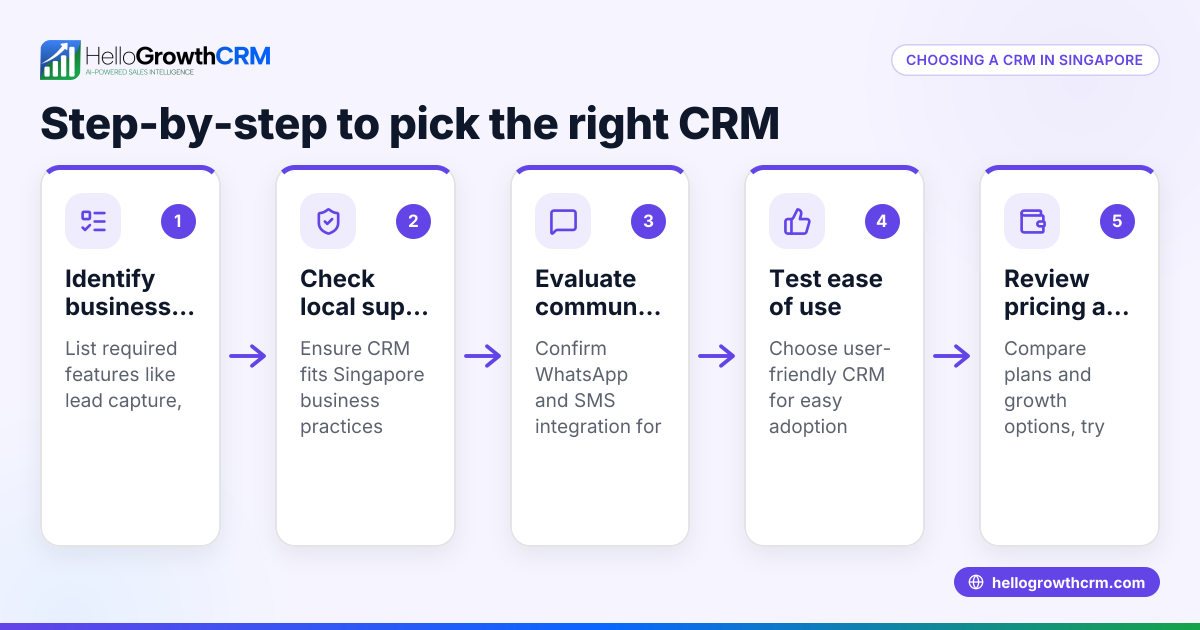
- Identify your logistics-specific needs: List what your business requires from a CRM, such as tracking shipments, managing multiple contacts per client, integrating WhatsApp communication, or sales forecasting.
- Evaluate communication integration: Check if the CRM supports channels your team uses daily, especially WhatsApp and SMS, which are popular in Singapore logistics. Confirm that conversations are logged and easy to review.
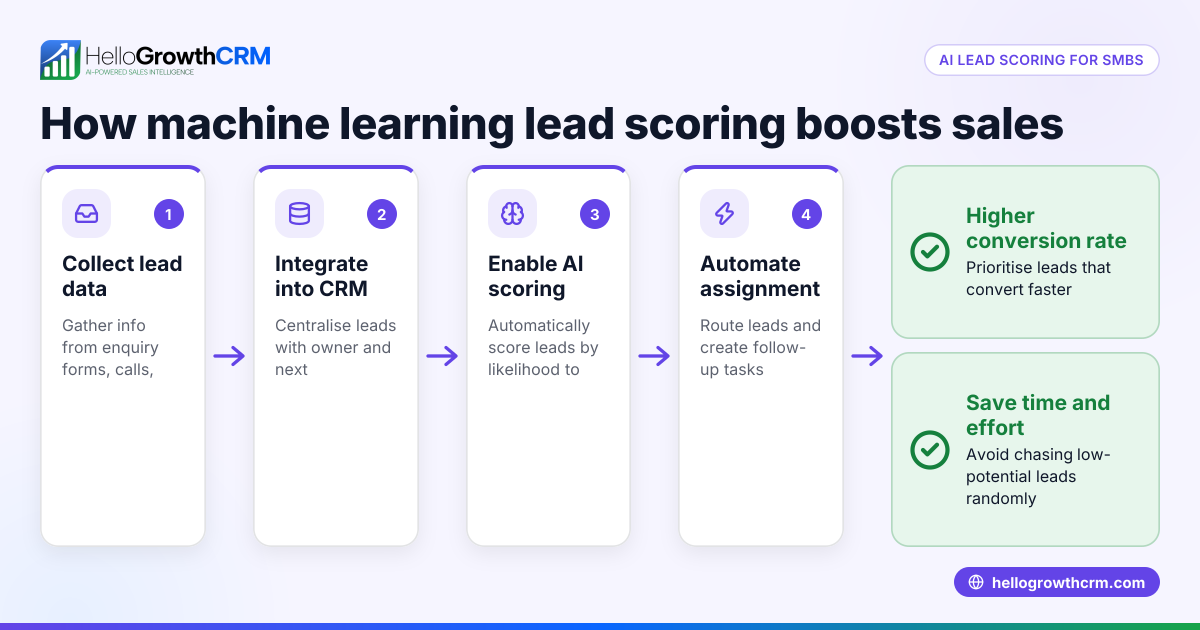
- Assess lead and pipeline management features: Ensure the CRM can capture leads from your website or other sources, score them for priority, and provide a clear visual pipeline for sales stages.
- Consider automation and AI assistance: Look for features like AI agents that can draft follow-up messages after calls to save time and standardise communication.
- Check team size and scalability: Confirm the CRM can handle your current team size and customer volume, with options to scale as you grow.
- Review pricing and plans carefully: Understand what features are included in free or entry-level plans versus paid tiers, especially if you want WhatsApp automation or calling features.
- Test user experience and adoption potential: Choose a CRM that your sales and operations team will actually use daily, with an intuitive interface and mobile access.
- Request a trial or demo: Use trial periods to test the CRM in your real logistics workflows before committing.
For more on logistics industry needs, see Transporters and logistics.
Example (fictional figures)
LogiTrack Pte Ltd is a freight forwarding company based in Woodlands, Singapore. They handle about 150 leads monthly and need to convert these into shipments efficiently.
- Monthly leads: 150
- Average shipment value: S$3,000
- Conversion rate without CRM: 20% (30 shipments)
- Conversion rate with CRM: 30% (45 shipments) (assumed improvement)
Calculations for monthly revenue:
Without CRM:
30 shipments × S$3,000 = S$90,000
With CRM:
45 shipments × S$3,000 = S$135,000
Monthly revenue increase:
S$135,000 - S$90,000 = S$45,000
LogiTrack uses a CRM to log WhatsApp conversations with leads, follow up promptly with AI-drafted messages, and track the sales pipeline visually. This reduces lead loss and improves forecasting.
Common mistakes
- Choosing a generic CRM without logistics features: Prevent by listing logistics-specific needs first.
- Ignoring communication channels like WhatsApp: Prevent by verifying the CRM supports WhatsApp message logging and follow-ups.
- Underestimating user adoption challenges: Prevent by involving your sales and operations team in trials.
- Overpaying for unused features: Prevent by comparing plans carefully and starting with a free or low-cost option.
- Not automating follow-ups: Prevent by choosing a CRM with AI agents or automation to draft messages after calls.
- Failing to integrate lead capture: Prevent by ensuring the CRM can capture leads automatically from web forms or integrations.
Learn more about WhatsApp integration at WhatsApp and SMS CRM.
Doing this in HelloGrowthCRM
HelloGrowthCRM supports logistics teams with WhatsApp and SMS messaging workflows that log conversations on lead records and allow follow-ups directly as messages. Its AI agents (in Beta on the Growth plan) draft follow-up messages after calls, saving time for sales reps who only need to review and send. For small teams, the Free Forever plan lets two users manage a full Kanban pipeline with 200 leads at no cost, ideal for startups or small logistics businesses. To explore how HelloGrowthCRM fits Singapore logistics, visit HelloGrowthCRM for Singapore.
Frequently asked questions
What features should a logistics CRM have? A logistics CRM should support communication channels like WhatsApp, track multiple contacts per client, manage leads and pipelines visually, automate follow-ups, and ideally include AI assistance for messaging. Integration with web forms and sales forecasting are also valuable.
Can I use WhatsApp with a logistics CRM in Singapore? Yes, many logistics CRMs, including HelloGrowthCRM, support WhatsApp messaging. Conversations are logged on lead records, and follow-ups can be sent as WhatsApp messages to keep communication smooth and timely.
Is there a free CRM suitable for small logistics teams? HelloGrowthCRM offers a Free Forever plan for up to two users managing 200 leads with a full Kanban pipeline. While WhatsApp automation and calling require paid plans, the free plan is a good start for small teams.
How does AI help in a logistics CRM? AI agents can draft follow-up messages after calls based on conversation context, reducing manual effort and speeding up lead engagement. This can improve conversion rates and standardise communication.
How do I ensure my logistics team uses the CRM daily? Choose a CRM with an intuitive interface, mobile access, and integration with the communication channels your team already uses, like WhatsApp. Involve your team during trials to gather feedback and tailor workflows.
Key takeaways
- Logistics CRMs help centralise communication, lead management, and sales pipelines specific to logistics businesses.
- Integration with WhatsApp and SMS is essential for Singapore logistics teams to maintain timely customer contact.
- AI agents can automate follow-ups and reduce manual workload.
- Start small with free plans to test CRM adoption before scaling.
- Avoid generic CRMs lacking logistics features or communication channel support.
- Involve your team in selecting a CRM to ensure daily use and effectiveness.
Start organising your logistics sales and customer management with HelloGrowthCRM. Start on the Free Forever plan (200 leads, no credit card).
Ready to put this into practice?
Set up your pipeline, WhatsApp follow-ups, and AI lead scoring in minutes — free, no credit card.
Try HelloGrowthCRM freeGet CRM tips in your inbox
Join thousands of sales professionals who get weekly insights on CRM strategy, AI automation, and pipeline optimization.

The HelloGrowthCRM team publishes guides on CRM strategy, AI sales tools, and revenue operations for small business sales teams.