HelloGrowthCRM software
Built for real small-business sales teams
HelloGrowthCRM helps reps qualify faster, follow up on time, and close more deals—with practical automation in one place.
- AI lead scoring and pipeline visibility
- Built-in dialer, WhatsApp, and email automation
- Sales forecasting and RevOps-ready reporting
Manufacturing sales training is specialized to equip sales teams with skills tailored to the manufacturing industry’s complex products and customer needs. Unlike generic sales training, it focuses on technical knowledge, understanding manufacturing processes, and managing long sales cycles.
Why this comes up / what goes wrong
Manufacturing business owners and accountants often find their sales teams struggle to convert leads because the salespeople lack deep product knowledge or fail to follow up effectively. The sales process in manufacturing is typically longer and involves multiple stakeholders, which makes training essential to close deals. Without industry-specific training, salespeople may miss key customer concerns or fail to communicate the value of technical solutions. This leads to lost revenue and inefficiencies.
Step-by-step
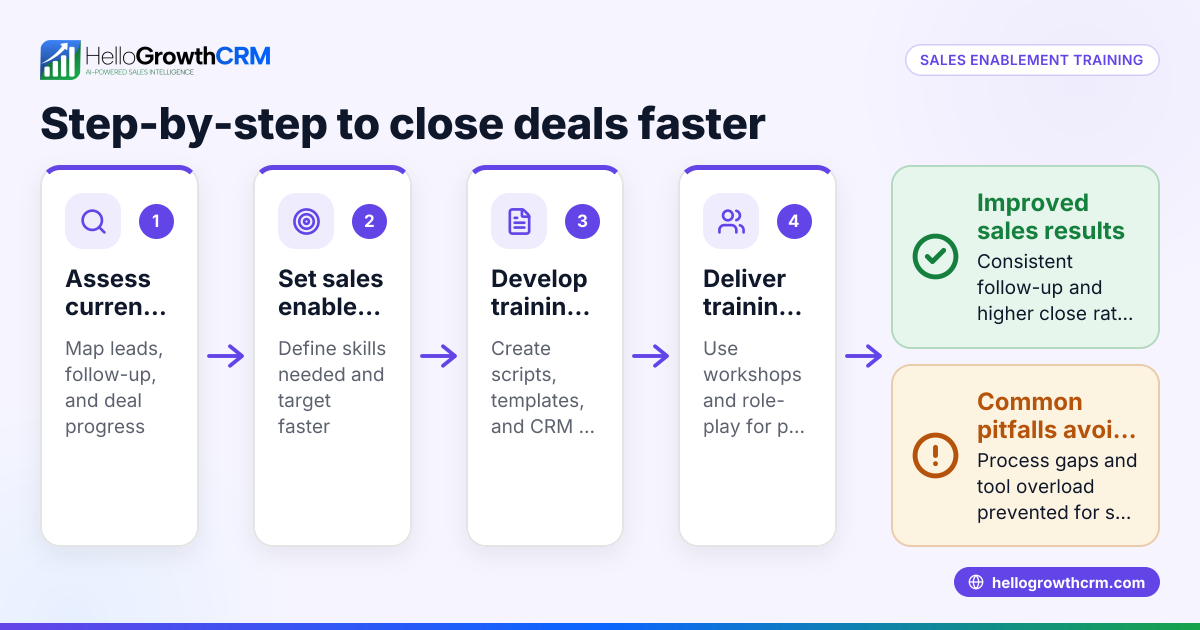
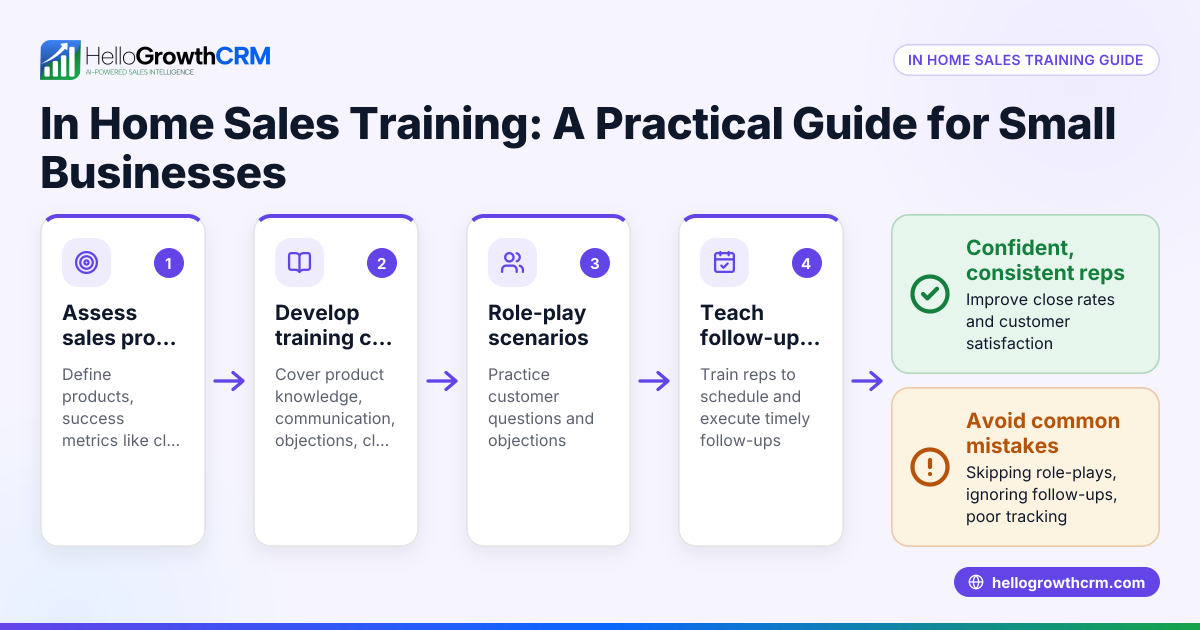
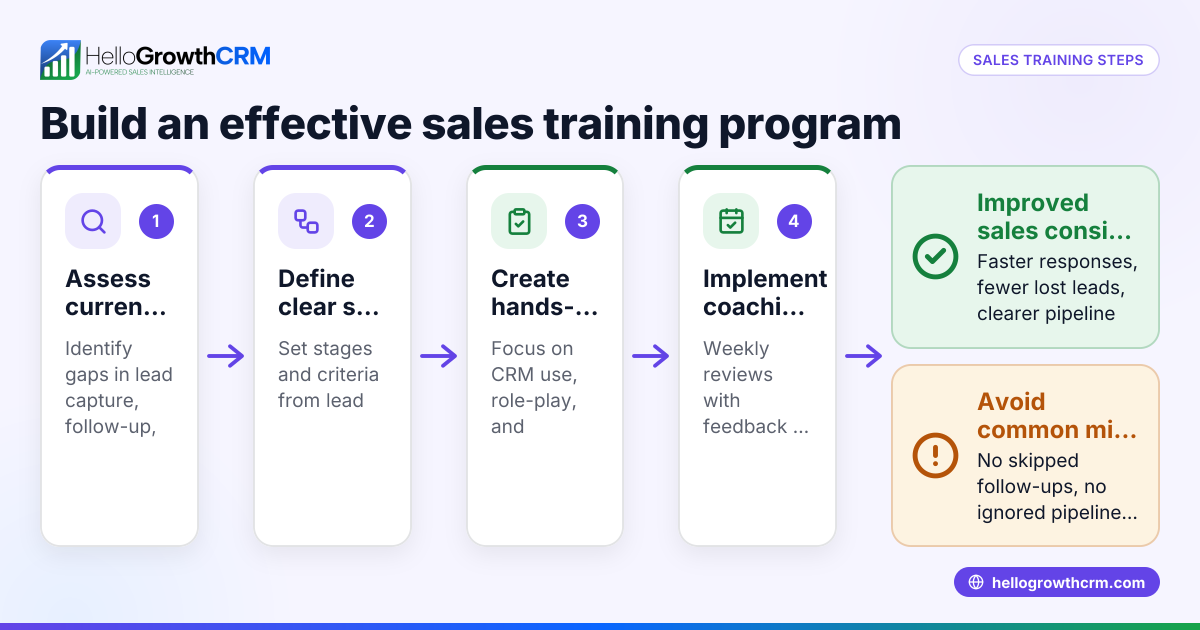
- Assess your sales team’s current skills and gaps
- Conduct interviews or surveys to find out where salespeople struggle.
- Check if they understand your products, pricing, and customer pain points.
- Define training goals specific to manufacturing
- Examples: improve technical product knowledge, master negotiation with engineers, shorten sales cycles.
- Align goals with business objectives like increasing average deal size or reducing follow-up delays.
- Choose a training provider or develop in-house content
- Look for programs with manufacturing industry experience.
- Verify they cover technical selling, customer needs analysis, and pipeline management.
- Schedule training sessions with practical exercises
- Include role plays on handling objections related to manufacturing specs.
- Use case studies from your own product lines.
- Implement a system to track training progress and impact
- Use CRM tools to monitor changes in sales activity and conversion rates.
- Set follow-up coaching sessions to reinforce learning.
- Integrate training with ongoing sales processes
- Align training with your CRM pipeline stages and task boards.
- Encourage sales reps to log customer interactions and follow-ups promptly.
- Review and update training regularly
- Manufacturing products evolve; keep training current with new features or market changes.
Example (fictional figures)
A manufacturing company in Columbus, Ohio, with two locations sells custom industrial equipment. They want to improve their sales team's closing rate, currently at 20%, by investing in sales training.
- They spend $15,000 on a manufacturing-specific sales training program on 03/01/2026.
- Before training, monthly sales revenue was $100,000.
- After training, closing rate improves to 30%, increasing monthly sales revenue.
Calculation:
Current monthly sales revenue = $100,000 Closing rate before training = 20% Expected sales revenue if closing rate increases to 30%: $100,000 × (30% ÷ 20%) = $100,000 × 1.5 = $150,000
Monthly sales increase = $150,000 - $100,000 = $50,000
Return on training investment (ROI) in first month = $50,000 - $15,000 = $35,000
This example shows how targeted sales training can boost revenue significantly.
Common mistakes
- Choosing generic sales training: Avoid programs that don’t address manufacturing-specific challenges. Prevent by vetting training content carefully.
- Skipping skill gap analysis: Without assessing needs, training may miss critical weaknesses. Prevent by conducting thorough team evaluations.
- Neglecting follow-up coaching: Training without reinforcement leads to poor retention. Prevent by scheduling regular coaching and refresher sessions.
- Not integrating training with sales tools: If CRM and sales processes aren’t aligned, gains may be lost. Prevent by syncing training with your CRM system and sales workflows.
- Ignoring feedback from sales reps: Training should adapt to real-world challenges. Prevent by collecting and acting on participant feedback.
Doing this in HelloGrowthCRM
HelloGrowthCRM supports manufacturing sales training by providing Deals (pipeline) to track open opportunities from first contact through close. For example, a quotation sent last week appears as a deal at the 'quote sent' stage with a follow-up date, ensuring no opportunity is forgotten. Territories, field operations, and commissions features allow manufacturing distributors’ field reps to log visits from their phones, while managers see the day's beat, improving field sales efficiency. Additionally, Managed RevOps offers done-for-you revenue operations support, helping founders without sales managers maintain weekly follow-up queues and pipeline hygiene. Learn more about HelloGrowthCRM for the United States.
Frequently asked questions
What skills are most important in manufacturing sales training? Key skills include technical product knowledge, understanding customer manufacturing processes, negotiation with technical buyers, and managing long sales cycles. Training should also cover CRM usage and follow-up discipline.
How long does manufacturing sales training usually take? Training length varies but typically ranges from a few days to several weeks, depending on depth. Ongoing coaching is essential to reinforce learning over months.
Can I develop manufacturing sales training in-house? Yes, if you have sales leaders with deep manufacturing experience. However, external providers often bring best practices and structured programs that save time.
How do I measure the success of sales training? Track metrics like closing rates, average deal size, sales cycle length, and follow-up activity in your CRM. Compare before-and-after training performance.
Is technology important in manufacturing sales training? Yes, integrating training with CRM tools helps salespeople apply skills in real sales scenarios and ensures consistent follow-up and pipeline management. See the CRM academy for tips.
How often should manufacturing sales training be updated? At least annually or whenever your products or market conditions change significantly. Continuous learning is key to staying competitive.
Key takeaways
- Manufacturing sales training must focus on technical knowledge and complex sales processes.
- Start by assessing your team’s specific skill gaps and define clear training goals.
- Choose or create training tailored to manufacturing challenges with practical exercises.
- Avoid common mistakes like generic training and poor integration with sales tools.
- Use CRM features like Deals (pipeline) and field operations to support trained sales teams.
- Regularly measure training impact and update content to stay relevant.
Manufacturing sales training is essential to equip your team for complex selling and long sales cycles. To help manage your sales pipeline and follow-ups effectively after training, consider using HelloGrowthCRM. Start on the Free Forever plan (200 leads, no credit card) to see how it fits your manufacturing sales process.
Ready to put this into practice?
Set up your pipeline, WhatsApp follow-ups, and AI lead scoring in minutes — free, no credit card.
Try HelloGrowthCRM freeGet CRM tips in your inbox
Join thousands of sales professionals who get weekly insights on CRM strategy, AI automation, and pipeline optimization.

The HelloGrowthCRM team publishes guides on CRM strategy, AI sales tools, and revenue operations for small business sales teams.