HelloGrowthCRM software
Built for real small-business sales teams
HelloGrowthCRM helps reps qualify faster, follow up on time, and close more deals—with practical automation in one place.
- AI lead scoring and pipeline visibility
- Built-in dialer, WhatsApp, and email automation
- Sales forecasting and RevOps-ready reporting
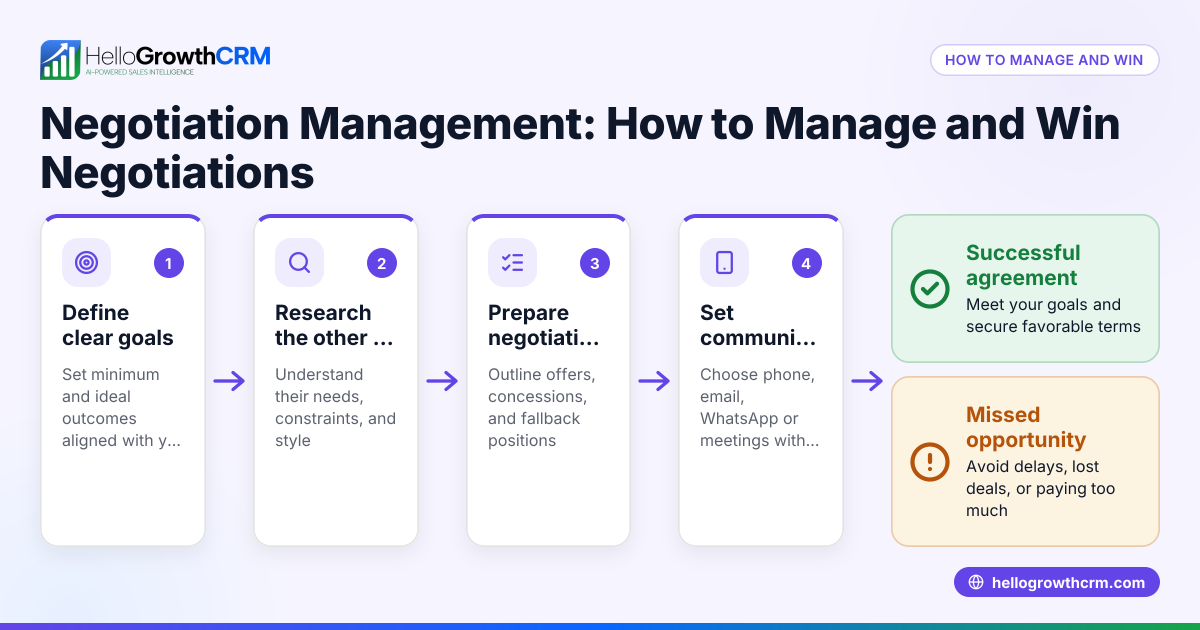
Fact based negotiation is a method where you focus on objective facts, data, and evidence during discussions to reach agreements that are fair and rational. This approach avoids emotional arguments or unverified claims, helping business owners negotiate more effectively and with confidence.
Why this comes up / what goes wrong
Small business owners often face negotiations with customers, suppliers, or partners where emotions or assumptions cloud judgment. For example, a supplier might claim their prices are standard, or a customer may insist on a discount without justification. Without facts, negotiations can stall or lead to unfair deals that hurt your business. Using fact based negotiation helps you avoid these traps by focusing on verifiable information like market prices, contract terms, or performance metrics. This approach is especially useful when you need to maintain good relationships but also protect your business interests.
Step-by-step
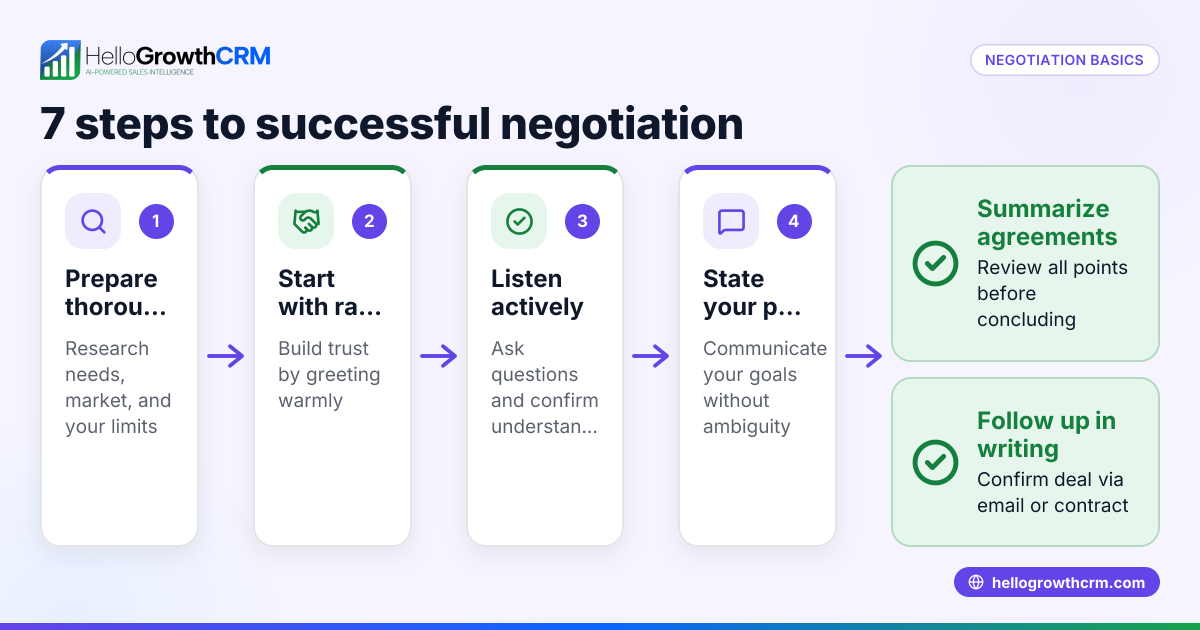
- Gather Relevant Facts: Collect all data related to the negotiation topic. This includes invoices, market price lists, contract terms, delivery records, or any documented communications. Check the accuracy and source of each fact.
- Define Your Objectives Clearly: Know what you want to achieve—whether it’s a price reduction, better payment terms, or service improvements. Your objectives should be realistic and based on the facts you have.
- Present Facts Calmly and Clearly: During the negotiation, share your facts in a straightforward manner. Use numbers, dates, and documents to support your position. Avoid emotional language or assumptions.
- Listen and Request Evidence: When the other party makes claims, ask for their supporting facts. This keeps the discussion fact-focused and prevents misunderstandings.
- Explore Options Based on Facts: Use the data to brainstorm solutions that meet both parties’ needs. For example, if market research shows a competitor offers a better price, discuss how to align your pricing fairly.
- Agree on Next Steps and Document Them: Once you reach an agreement, write down the terms referencing the facts discussed. This prevents future disputes.
By following these steps, you maintain control of the negotiation and reduce risks of unfavorable outcomes.
Example (fictional figures)
A residential real-estate team in Phoenix, Arizona, negotiates a commission split with a new agent joining the team.
- Current average commission per sale: $15,000
- Agent proposes a 50% split ($7,500 each)
- Team’s standard split is 60/40 in favor of the team ($9,000 / $6,000)
- Market research shows competitors offer splits between 55/45 and 65/35
Step 1: Gather facts
- Average commissions: $15,000
- Competitor splits: 55/45 to 65/35
Step 2: Define objectives
- Team wants to maintain profitability
- Agent wants a fair split competitive with market
Step 3: Present facts
- "Our standard split is 60/40, which aligns with market averages of 55/45 to 65/35."
Step 4: Listen and request evidence
- Agent provides competitor offers showing 55/45 splits.
Step 5: Explore options
- Propose a 58/42 split as a compromise.
Step 6: Agree and document
- Both agree on 58/42 split, documented in contract dated 04/15/2026.
This fact based negotiation ensures both sides understand the market context and reach a fair deal.
Common mistakes
- Relying on assumptions or hearsay: Prevent by always asking for evidence and verifying facts before negotiating.
- Letting emotions drive decisions: Stay calm and focus on data to avoid reactive concessions.
- Ignoring the other party’s facts: Listen carefully and validate their information to build trust.
- Failing to document agreements: Always write down terms referencing facts to avoid future disputes.
- Not preparing enough facts in advance: Prepare thoroughly to negotiate confidently.
Using a CRM with features like a built-in CRM dialer or WhatsApp and SMS CRM can help you keep track of negotiation communications and follow-ups efficiently.
Frequently asked questions
What is the difference between fact based negotiation and interest based negotiation? Fact based negotiation focuses on objective data and evidence to support positions, while interest based negotiation centers on understanding the underlying needs and interests of both parties. Both methods can be complementary.
How do I handle a negotiation when the other party refuses to share facts? Politely request evidence to support their claims and explain that decisions based on facts lead to fairer outcomes. If they refuse, consider whether continuing the negotiation is beneficial.
Can fact based negotiation work in emotional or high-stakes situations? Yes, it can help de-escalate tensions by focusing discussions on verifiable information rather than emotions.
Is fact based negotiation suitable for all types of small businesses? It is particularly effective in businesses with measurable data like sales, pricing, and contracts but can be adapted to various contexts by focusing on relevant facts.
How can I prepare facts efficiently for negotiations? Organize your data and communications using tools and systems designed for sales and customer management. For example, HelloGrowthCRM for the United States can help you capture and organize leads and communications.
Key takeaways
- Fact based negotiation relies on objective, verifiable data rather than emotions.
- Prepare by gathering accurate facts and defining clear objectives.
- Present and request facts calmly to keep discussions focused.
- Document agreements referencing the facts to prevent disputes.
- Avoid common mistakes like assumptions, emotional decisions, and poor preparation.
- Using tools like HelloGrowthCRM for the United States can support organized communication and follow-up.
Start your fact based negotiations with confidence. You can Start on the Free Forever plan (200 leads, no credit card) to organize your sales and customer data efficiently.
Ready to put this into practice?
Set up your pipeline, WhatsApp follow-ups, and AI lead scoring in minutes — free, no credit card.
Try HelloGrowthCRM freeGet CRM tips in your inbox
Join thousands of sales professionals who get weekly insights on CRM strategy, AI automation, and pipeline optimization.

The HelloGrowthCRM team publishes guides on CRM strategy, AI sales tools, and revenue operations for small business sales teams.