HelloGrowthCRM software
Built for real small-business sales teams
HelloGrowthCRM helps reps qualify faster, follow up on time, and close more deals—with practical automation in one place.
- AI lead scoring and pipeline visibility
- Built-in dialer, WhatsApp, and email automation
- Sales forecasting and RevOps-ready reporting
Outbound call recording means capturing and saving the audio of calls your business makes to customers or prospects. This allows you to review conversations for quality assurance, train your sales team, and meet legal requirements. This article covers why outbound call recording is important, how to implement it step-by-step, common mistakes to avoid, a worked example, and how a CRM with a built-in dialer helps manage outbound calls.
Why this comes up / what goes wrong
Small business owners often rely on outbound calls to generate sales, follow up on leads, or provide customer support. Without recording these calls, it can be hard to confirm what was said, coach sales reps effectively, or resolve disputes. Many businesses use personal phones or separate phone systems that do not automatically capture recordings, causing missed opportunities to improve sales skills and protect the business.
Common challenges include:
- Losing track of call outcomes because calls are made on personal phones or tracked only in spreadsheets.
- No way to review calls for training or compliance.
- Disputes with customers about promises or details discussed.
- Difficulty measuring sales team performance on calls.
These issues make outbound call recording a valuable practice for growing businesses.
Step-by-step
- Check your state’s laws on call recording. Some states require all parties to consent before recording. Confirm your legal obligations to avoid penalties.
- Select a phone system or CRM that supports call recording. Many modern systems offer this feature or integrate with recording tools.
- Set up your outbound calling workflow. Decide which calls will be recorded and notify callers and recipients as required by law.
- Test your recording setup. Make test calls to ensure recordings are clear, securely stored, and accessible for review.
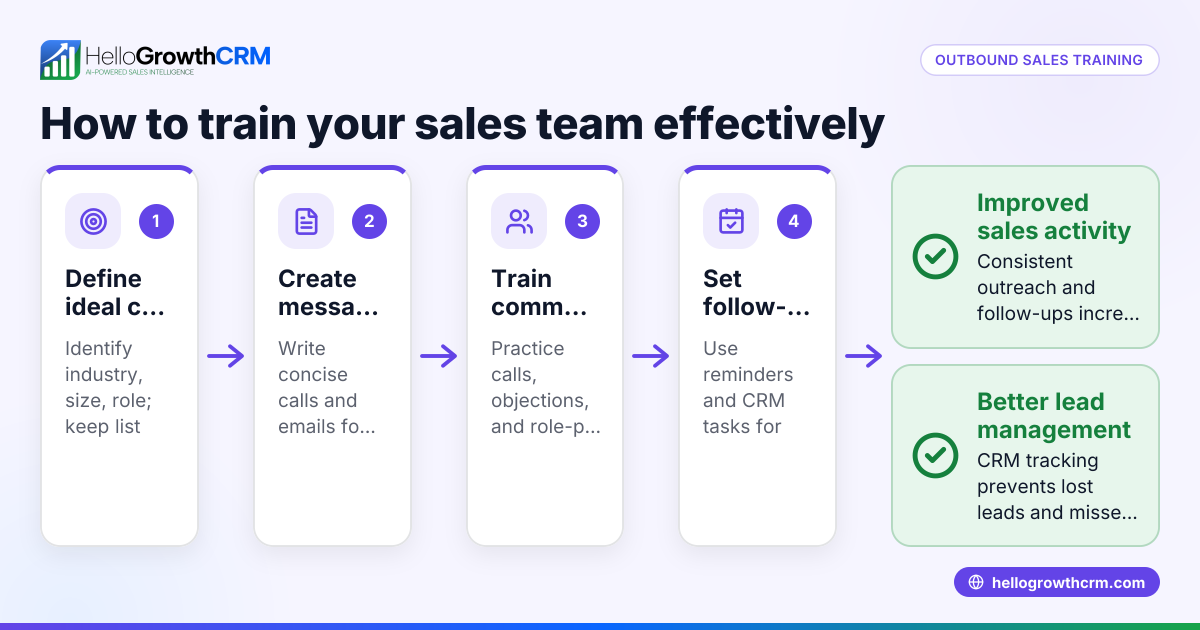
- Train your sales team on call recording policies. Explain the purpose of recording and how recordings will be used.
- Review recorded calls regularly. Use recordings to identify coaching opportunities, improve scripts, and ensure compliance.
- Securely store and manage recordings. Implement access controls and retention policies to protect sensitive information.
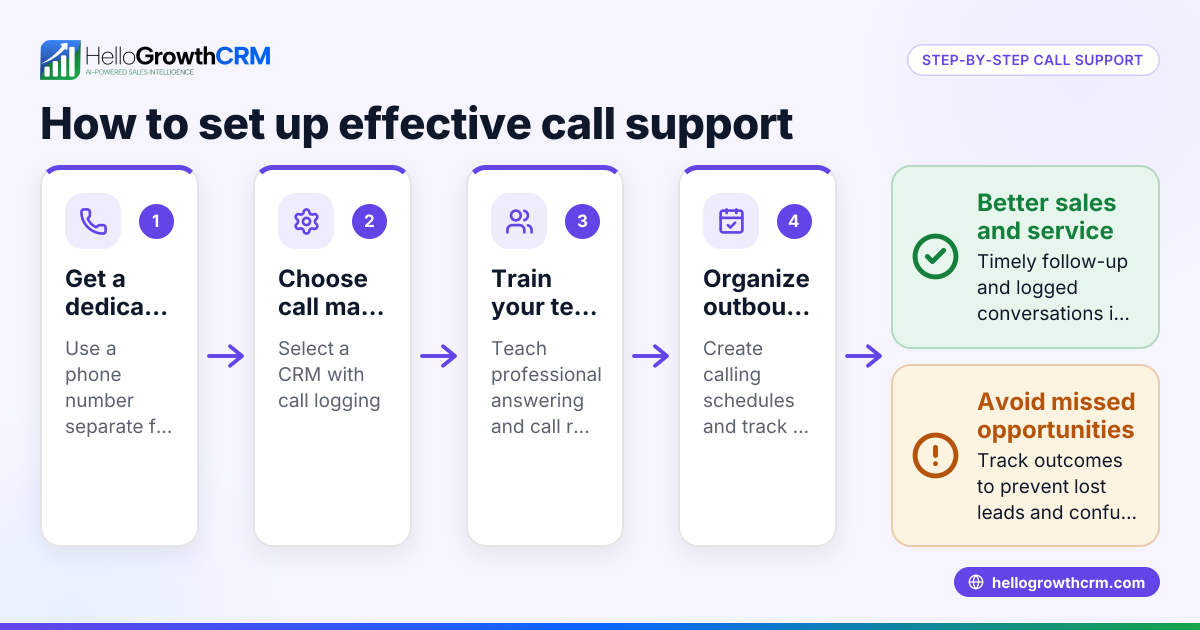
Using a built-in CRM dialer can help centralize outbound calling and logging, reducing reliance on personal phones or separate spreadsheets.
Example (fictional figures)
A two-location dental practice in Columbus, Ohio, wants to reduce missed patient appointments by improving outbound appointment reminder calls. They begin recording outbound calls starting 07/01/2026.
- They make 200 outbound calls per week.
- Staff spend 2 hours weekly reviewing recorded calls.
- They save 5 hours weekly due to fewer no-shows.
Calculations:
Weekly time spent reviewing calls = 2 hours Weekly time saved from fewer no-shows = 5 hours Net time saved weekly = 5 hours - 2 hours = 3 hours
Assuming staff hourly cost = $25/hour
Weekly cost saved = 3 hours × $25/hour = $75 Monthly cost saved = $75 × 4 weeks = $300
This shows that recording outbound calls and reviewing them can save the practice significant time and money by reducing missed appointments.
Common mistakes
- Not informing parties about call recording: Violates laws in some states. Prevent by clearly notifying all parties.
- Using personal phones for outbound calls: Results in no recordings and scattered data. Use a CRM with a built-in dialer instead.
- Failing to review recordings regularly: Recordings are useless if ignored. Schedule regular review sessions.
- Poor storage and security of recordings: Risks data breaches. Store recordings with proper access controls.
- Recording all calls without purpose: Wastes resources. Focus on calls that impact sales or compliance.
A built-in CRM dialer helps avoid many of these mistakes by centralizing calls and logging outcomes automatically.
Doing this in HelloGrowthCRM
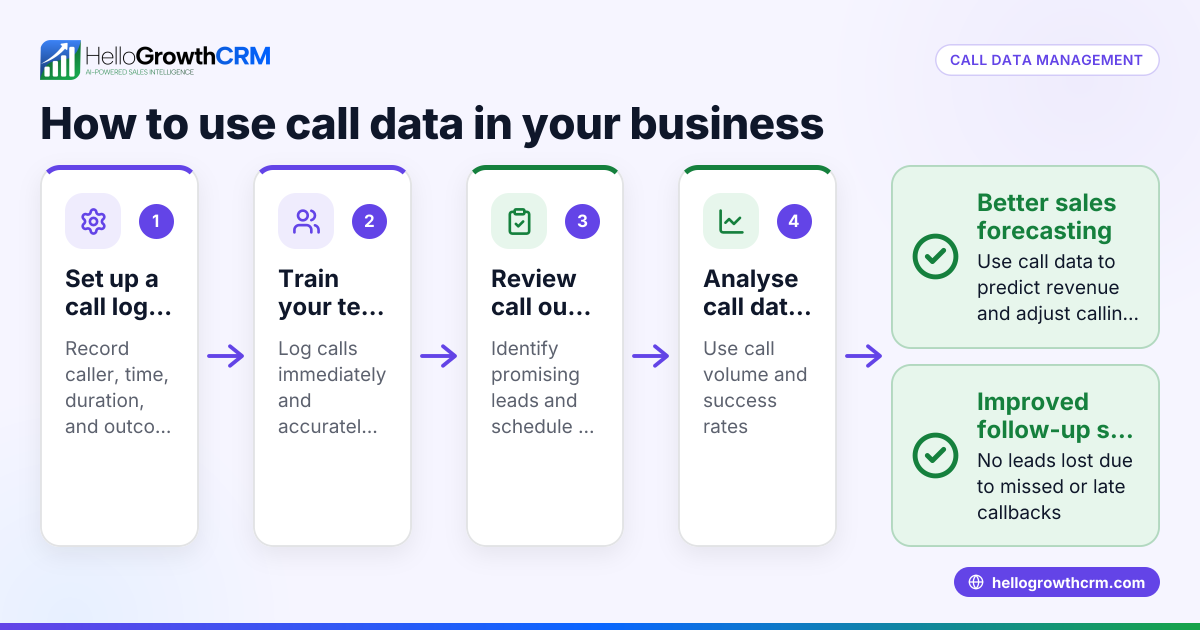
HelloGrowthCRM offers a built-in dialer that lets your reps work a lead list directly inside the CRM. Each call’s outcome is logged on the lead record, keeping a full call history tied to contacts and deals. This helps small businesses track outbound calls efficiently without juggling multiple tools. Learn more about the built-in CRM dialer and how it supports US small businesses on the HelloGrowthCRM for the United States page.
Frequently asked questions
Is outbound call recording legal in the US? Call recording laws vary by state. Some require all-party consent, others only one-party. Always check your state’s rules before recording calls.
Do I need special equipment to record outbound calls? You can use phone systems or CRMs with built-in recording features. Avoid personal phones. Many cloud-based systems simplify recording and storing calls.
How long should I keep recorded calls? Retention depends on your business needs and legal requirements. Common practice is 30 to 90 days, but consult legal advice for your industry.
Can I use recorded calls for training? Yes, recorded calls are valuable for coaching sales reps and improving scripts, provided you comply with privacy laws.
What if my current CRM lacks call recording? Consider upgrading to a CRM with a built-in dialer or integrating a call recording tool. A CRM with call logging helps manage outbound calls effectively.
How does a built-in dialer help with outbound calls? A built-in dialer lets reps call leads inside the CRM and logs each call’s outcome. This centralizes outbound calling and keeps a full call history linked to deals and contacts, improving follow-up and sales management. See WhatsApp and SMS CRM for more communication options.
Key takeaways
- Outbound call recording captures your business’s outgoing calls for quality, training, and compliance.
- Check your state’s laws before recording calls to ensure legal compliance.
- Use a CRM or phone system with call logging and recording features.
- Inform all parties about recording as required.
- Regularly review and securely store recordings.
- A built-in dialer centralizes outbound calls and logs outcomes to help manage leads effectively.
Start managing your outbound calls better by using a CRM with a built-in dialer. Start on the Free Forever plan (200 leads, no credit card) today.
Ready to put this into practice?
Set up your pipeline, WhatsApp follow-ups, and AI lead scoring in minutes — free, no credit card.
Try HelloGrowthCRM freeGet CRM tips in your inbox
Join thousands of sales professionals who get weekly insights on CRM strategy, AI automation, and pipeline optimization.

The HelloGrowthCRM team publishes guides on CRM strategy, AI sales tools, and revenue operations for small business sales teams.