HelloGrowthCRM software
Built for real small-business sales teams
HelloGrowthCRM helps reps qualify faster, follow up on time, and close more deals—with practical automation in one place.
- AI lead scoring and pipeline visibility
- Built-in dialer, WhatsApp, and email automation
- Sales forecasting and RevOps-ready reporting
Outbound sales training is essential for small and mid-sized businesses that want to grow by actively contacting potential customers rather than waiting for inbound leads. It teaches your sales team how to identify prospects, engage them effectively, handle objections, and close deals.
Why this comes up / what goes wrong
Small-business owners often struggle with outbound sales because their teams lack consistent training and processes. Salespeople may not know how to find the right prospects, what to say in calls or messages, or when to follow up. This leads to lost leads, slow responses, and missed revenue opportunities. Without training, teams rely on guesswork or inconsistent methods like texting or emailing from personal accounts, which reduces effectiveness and tracking.
Step-by-step
- Define your ideal customer and target list. Identify characteristics like industry, company size, and role. Check that your list is up to date and accurate.
- Create clear outbound messaging scripts. Write concise call scripts and email templates focused on value and questions, not hard selling. Review and revise based on feedback.
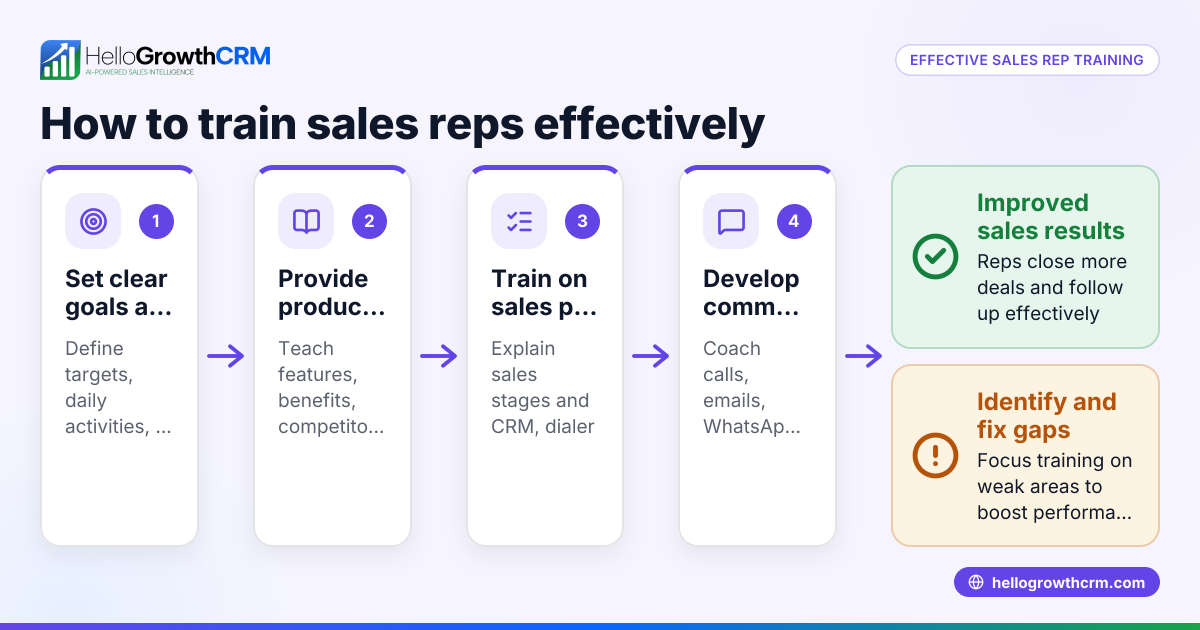
- Train on communication skills. Practice phone etiquette, active listening, and handling common objections. Role-play scenarios to build confidence.
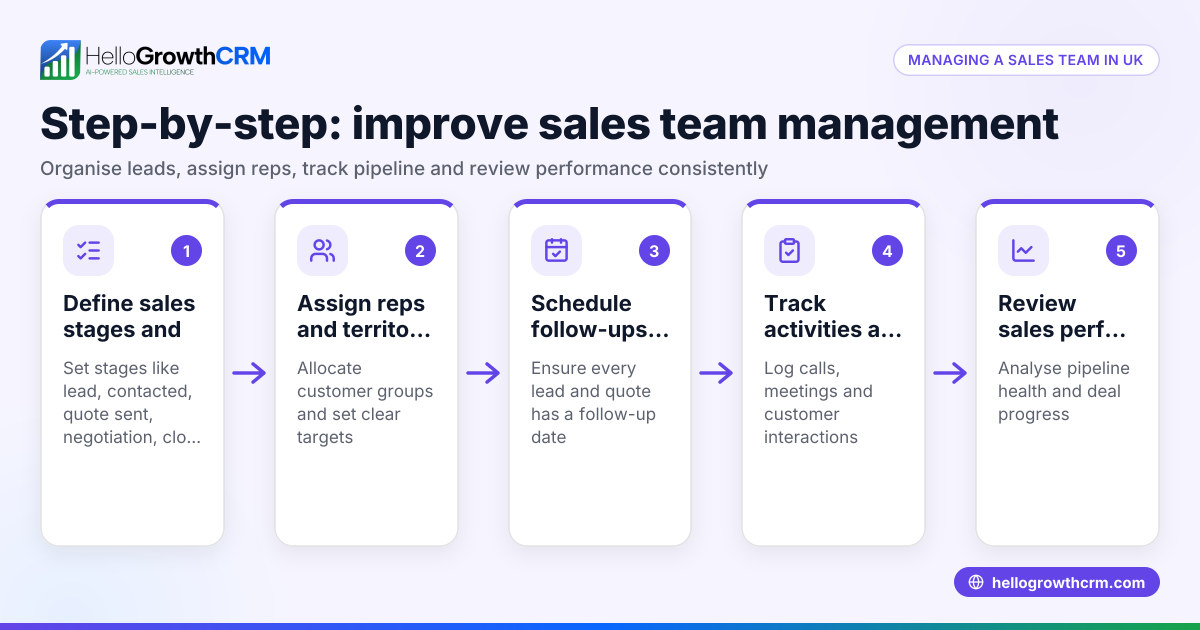
- Set follow-up schedules and rules. Teach when and how often to follow up leads, using reminders or CRM tasks to avoid forgetting.
- Use a tracking system. Implement a CRM or tool to log calls, emails, and outcomes. Check regularly that data is entered correctly.
- Monitor performance and coach regularly. Review reports, give feedback, and adjust training as needed.
- Incorporate multi-channel outreach. Train your team to use calls, emails, WhatsApp, and SMS where appropriate for better response rates.
For more guidance on managing sales activities and follow-ups, visit the CRM academy.
Example (fictional figures)
A B2B software reseller in Denver, Colorado, starts outbound sales training on 06/01/2026. They target mid-sized tech companies with annual revenue over $5,000,000.
- They build a list of 500 prospects.
- They develop a call script and email template.
- They train 3 sales reps for 2 weeks.
- Each rep calls 25 prospects daily and aims for 5 follow-ups per day.
Calculations:
Total calls per day = 25 calls × 3 reps = 75 calls
Total follow-ups per day = 5 follow-ups × 3 reps = 15 follow-ups
If 7 of these calls result in meetings, and 3 meetings convert to sales:
Meetings per day = 7
Sales per day = 3
Monthly sales (20 working days) = 3 sales × 20 days = 60 sales
Average deal size = $10,000
Monthly revenue = 60 sales × $10,000 = $600,000
This example shows how structured training and activity targets can drive predictable sales outcomes.
Common mistakes
- No clear target customer: Prevent by defining and verifying your ideal customer profile before outreach.
- Skipping follow-ups: Prevent by setting reminders and tracking follow-up tasks in a CRM.
- Using inconsistent messaging: Prevent by standardizing scripts and templates, then updating based on results.
- Lack of role-playing practice: Prevent by scheduling regular practice sessions to build confidence.
- Not tracking activities: Prevent by logging calls and emails in a CRM or tracking tool.
- Ignoring multi-channel outreach: Prevent by training reps to use calls, emails, WhatsApp, and SMS effectively.
For more on using WhatsApp and SMS in sales, see WhatsApp and SMS CRM.
Doing this in HelloGrowthCRM
HelloGrowthCRM supports outbound sales training with its Deals (pipeline) feature, where a quotation sent last week appears at the 'quote sent' stage with a follow-up date, ensuring no opportunity is forgotten. For field sales teams, its Territories, field operations and commissions tools allow logging visits directly from the phone and managers can monitor daily activity. Founders without a dedicated sales manager can benefit from Managed RevOps support, which provides weekly follow-up execution and pipeline hygiene. Learn more about how HelloGrowthCRM fits US business needs at HelloGrowthCRM for the United States.
Frequently asked questions
What is the difference between outbound and inbound sales training? Outbound sales training focuses on proactive outreach to potential customers through calls, emails, and messages, while inbound sales training prepares teams to handle incoming leads and inquiries. Both require different skills and processes.
How long does outbound sales training usually take? Training length varies but typically spans 1 to 3 weeks with ongoing coaching. Initial sessions cover scripts, objection handling, and systems, with continuous practice and feedback.
Can small businesses do outbound sales without a CRM? Yes, but it’s harder to track leads, follow-ups, and pipeline health. Using a CRM, especially one like HelloGrowthCRM with WhatsApp and SMS integration, makes managing outbound sales more organized and effective.
What skills are most important in outbound sales? Key skills include prospecting, clear communication, listening, objection handling, persistence, and time management for follow-ups.
How can I measure the success of outbound sales training? Track metrics like call volume, follow-up rate, meetings booked, conversion rates, and revenue growth. Regularly reviewing these helps adjust training and improve results.
For more on managing sales activities and follow-ups, visit the CRM academy.
Key takeaways
- Outbound sales training teaches proactive outreach skills like prospecting, messaging, and follow-up.
- Define your ideal customer and use clear scripts to guide conversations.
- Track all activities and follow-ups in a system to avoid lost leads.
- Practice role-playing and coach regularly to improve skills.
- Avoid common mistakes like skipping follow-ups or inconsistent messaging.
- HelloGrowthCRM offers tools to support pipeline management, field sales, and follow-up execution.
Start training your outbound sales team with a clear plan and the right tools. To try managing your outbound leads and pipeline efficiently, start on the Free Forever plan (200 leads, no credit card).
Ready to put this into practice?
Set up your pipeline, WhatsApp follow-ups, and AI lead scoring in minutes — free, no credit card.
Try HelloGrowthCRM freeGet CRM tips in your inbox
Join thousands of sales professionals who get weekly insights on CRM strategy, AI automation, and pipeline optimization.

The HelloGrowthCRM team publishes guides on CRM strategy, AI sales tools, and revenue operations for small business sales teams.