HelloGrowthCRM software
Built for real small-business sales teams
HelloGrowthCRM helps reps qualify faster, follow up on time, and close more deals—with practical automation in one place.
- AI lead scoring and pipeline visibility
- Built-in dialer, WhatsApp, and email automation
- Sales forecasting and RevOps-ready reporting
CPG sales training means preparing your sales team to understand and sell consumer packaged goods (CPG) effectively. This involves teaching product features, buyer behavior, sales strategies, and managing territories to improve results and reduce lost leads from slow follow-up. This article covers why CPG sales training is important, a detailed training approach, common errors to watch for, a realistic example, and how HelloGrowthCRM can help manage your sales pipeline.
Why this comes up / what goes wrong
Small business owners who sell CPG often face inconsistent sales because their teams lack focused training. Sales reps might not fully grasp product details or how to engage retail buyers and distributors. Managing multiple sales territories with spreadsheets, texts, or emails leads to missed opportunities and slow follow-up. Without proper training, teams may fail to prioritize leads, track deals, or execute sales strategies well, resulting in lost revenue and slower growth.
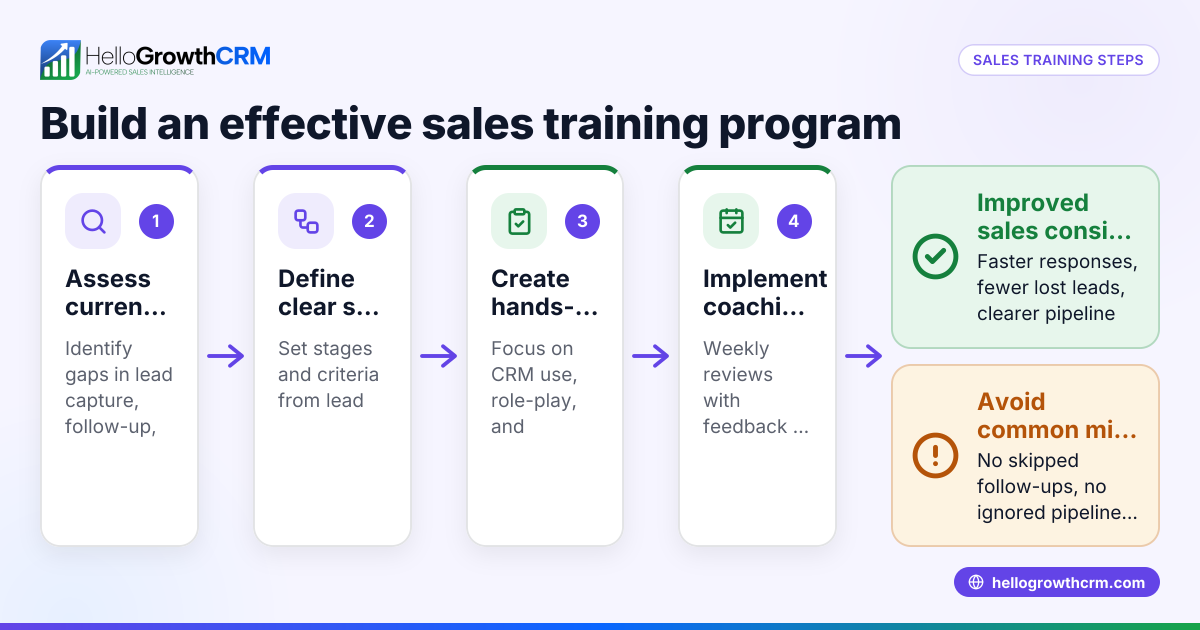
Step-by-step
- Assess your sales team’s skills and knowledge
- Identify gaps in product knowledge, sales techniques, and territory management.
- Understand specific needs for CPG sales like buyer motivations and distributor relations.
- Create a CPG-focused training program
- Include product features, competitor advantages, and common objections.
- Cover sales stages: prospecting, pitching, closing, and follow-up.
- Teach territory management and how to log field visits.
- Use role-playing and practical scenarios
- Simulate sales calls and meetings with retailers or distributors.
- Practice handling objections and negotiating deals.
- Train on sales tools and systems
- Show how to use CRM software for deal tracking, follow-ups, and pipeline management.
- Emphasize logging visits and activities for better territory control.
- Set clear goals and track progress
- Define sales targets, follow-up deadlines, and call activity goals.
- Review performance regularly and give feedback.
- Offer ongoing coaching and refreshers
- Keep skills updated with periodic training.
- Address new product launches or market changes.
- Encourage team collaboration and sharing
- Use meetings to share sales tactics and customer insights.
For more on managing sales processes and training, see our CRM academy.
Example (fictional figures)
GreenLeaf Organics, a small CPG company in Charlotte, North Carolina, sells natural snacks through retail accounts. They want to train their three-person sales team to increase monthly sales by 20% in six months.
- Current monthly sales: $75,000
- Goal: 20% increase in 6 months
Step 1: Assess skills
- Sales reps know products well but struggle with closing deals.
Step 2: Training program
- Focus on closing techniques and follow-up routines.
Step 3: Role-playing
- Weekly sessions for 4 weeks.
Step 4: CRM training
- Use HelloGrowthCRM pipeline tracking.
Step 5: Goals
- Each rep to close 2 new accounts per month.
Step 6: Ongoing coaching
- Monthly review meetings.
Calculation for sales goal: $75,000 × 20% = $15,000 $75,000 + $15,000 = $90,000 expected monthly sales after 6 months.
This structured training and CRM use help GreenLeaf Organics track progress and avoid lost leads.
Common mistakes
- Skipping product knowledge training: Prevent by ensuring reps fully understand product details and benefits.
- Neglecting follow-up discipline: Prevent by scheduling follow-ups in a CRM and setting reminders.
- Using disconnected tools: Prevent by consolidating sales activities in one system with pipeline and follow-up tracking.
- Ignoring territory management: Prevent by defining territories clearly and logging field visits.
- Failing to measure training effectiveness: Prevent by setting KPIs and reviewing results regularly.
- Not updating training with market changes: Prevent by scheduling periodic refreshers.
Learn more about managing territories and field operations on our HelloGrowthCRM for the United States page.
Doing this in HelloGrowthCRM
HelloGrowthCRM supports CPG sales training with these features:
- Deals (pipeline): Track every sales opportunity from first contact through to close, with stages and follow-up dates so quotations are not forgotten.
- Territories, field operations and commissions: Field reps log visits from their phones, and managers get a clear view of daily activities and territory coverage.
- Managed RevOps: For founders without sales managers, a revenue specialist works the follow-up queue weekly to keep leads moving and pipelines clean.
Explore how these tools can support your sales training on the WhatsApp and SMS CRM page.
Frequently asked questions
What is the focus of CPG sales training? It focuses on product knowledge, customer engagement, sales techniques specific to consumer packaged goods, and territory management. This training helps sales teams understand buyers and manage pipelines effectively.
How long does CPG sales training usually take? Typically, a comprehensive initial program lasts several weeks, depending on the specific training needs. Ongoing coaching and refresher sessions help maintain skills and adapt to market changes.
Can small businesses afford specialized CPG sales training? Yes, small businesses can start with internal training using role-playing and CRM tools to organize sales. Using a CRM with pipeline and follow-up features reduces overhead and improves results.
Why is territory management important in CPG sales? It ensures sales reps cover assigned regions efficiently, avoid overlap, and maximize customer visits. Logging visits and activities helps managers monitor performance and plan routes.
How can I measure the success of my CPG sales training? Track metrics like new accounts opened, sales volume increases, follow-up rates, and deal closure times. Regular reviews and feedback help adjust training as needed.
See more training resources at our CRM academy.
Key takeaways
- CPG sales training builds product knowledge, sales skills, and territory management.
- Structured training with role-play and CRM use improves sales consistency.
- Avoid mistakes like poor follow-up and disconnected tools.
- Use measurable goals and ongoing coaching to sustain improvements.
- HelloGrowthCRM helps manage deals, territories, and follow-up workflows.
Start improving your CPG sales team’s skills today. Start on the Free Forever plan (200 leads, no credit card) to organize your sales pipeline and follow-ups efficiently.
Ready to put this into practice?
Set up your pipeline, WhatsApp follow-ups, and AI lead scoring in minutes — free, no credit card.
Try HelloGrowthCRM freeGet CRM tips in your inbox
Join thousands of sales professionals who get weekly insights on CRM strategy, AI automation, and pipeline optimization.

The HelloGrowthCRM team publishes guides on CRM strategy, AI sales tools, and revenue operations for small business sales teams.