HelloGrowthCRM software
Built for real small-business sales teams
HelloGrowthCRM helps reps qualify faster, follow up on time, and close more deals—with practical automation in one place.
- AI lead scoring and pipeline visibility
- Built-in dialer, WhatsApp, and email automation
- Sales forecasting and RevOps-ready reporting
Sales follow up templates are pre-written messages designed to be sent to potential customers after an initial contact or meeting. They help sales teams maintain consistent communication, save time by avoiding writing messages from scratch, and improve the chances of converting leads by following up promptly and professionally. This article covers why sales follow up templates are important for small businesses, how to implement them in your sales process, a practical example, common mistakes to avoid, and how HelloGrowthCRM supports follow-up activities.
Why this comes up / what goes wrong
Many small businesses struggle with timely and consistent sales follow-up. Often, salespeople rely on memory or scattered notes across WhatsApp, email, and spreadsheets, leading to missed or delayed follow-ups. This disorganisation causes leads to go cold or slip through the cracks, reducing conversion rates. Sales follow up templates provide a structured way to reach out to prospects multiple times without sounding repetitive or pushy. They also reduce the pressure on sales teams to craft new messages each time, enabling faster and more confident outreach.
Step-by-step
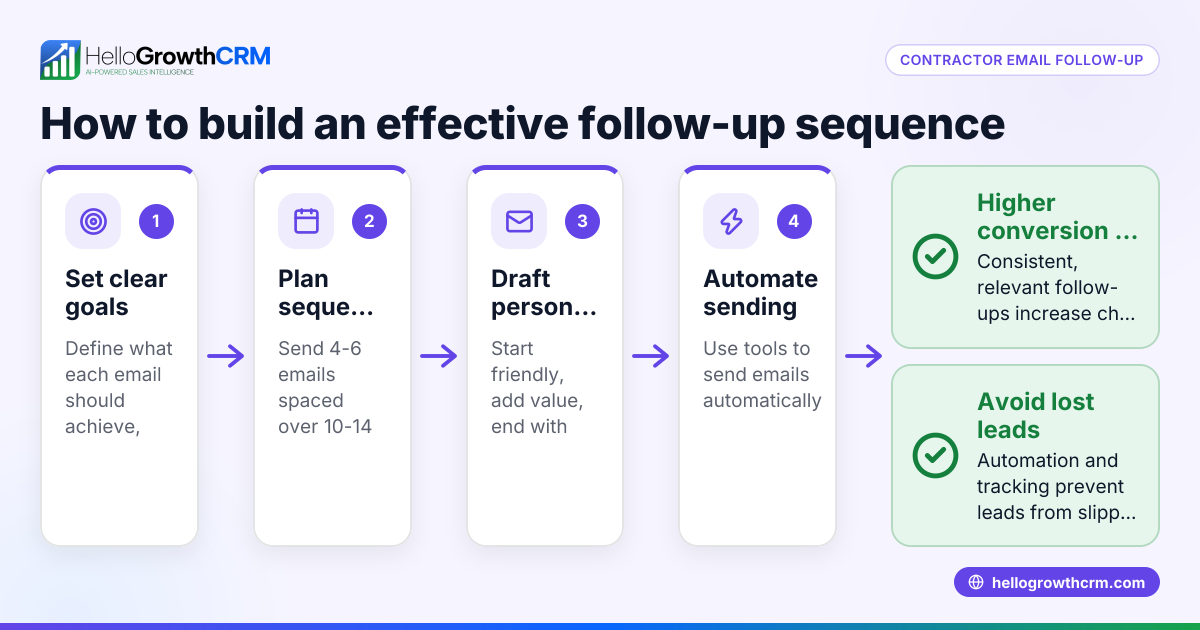
- Identify key follow-up stages: Determine when to send follow-ups, such as after an initial call, a product demo, or a proposal. Typical stages include 1 day, 3 days, 7 days, and 14 days after contact.
- Write clear, concise templates: Prepare short messages for each stage that remind the prospect of your previous interaction, offer value, and invite a response. Keep tone polite and professional.
- Personalise placeholders: Use placeholders for names, company, or product details to personalise each message automatically.
- Set reminders or automate sending: Use task boards or email automation tools to schedule follow-ups so none are missed. Check daily task lists to stay on track.
- Track responses: Mark when a prospect replies and stop further follow-ups to avoid annoyance.
- Review and refine templates: Regularly update your templates based on what messages get the best response rates.
Using tools like sales task boards helps you organise follow-ups as tasks with due dates, so you never forget when to send the next message. For automating sequences, see email automation and sequences.
Example (fictional figures)
An accountancy practice in Birmingham wants to follow up new leads after a free consultation call. They set a five-step follow-up over two weeks:
- Day 1: Thank you message
- Day 3: Reminder of services
- Day 7: Share a helpful guide
- Day 10: Check-in
- Day 14: Final offer
Suppose they generate 100 leads in a month, and each lead has a 10% chance to respond to the first follow-up, increasing by 5% with each subsequent message.
Calculations:
Day 1 responses: 100 × 10% = 10 Remaining leads: 100 - 10 = 90 Day 3 responses: 90 × 15% = 13.5 ≈ 14 Remaining leads: 90 - 14 = 76 Day 7 responses: 76 × 20% = 15.2 ≈ 15 Remaining leads: 76 - 15 = 61 Day 10 responses: 61 × 25% = 15.25 ≈ 15 Remaining leads: 61 - 15 = 46 Day 14 responses: 46 × 30% = 13.8 ≈ 14
Total responses: 10 + 14 + 15 + 15 + 14 = 68
This example shows how a structured follow-up template sequence can increase engagement over time.
Common mistakes
- Sending follow-ups too soon or too late: Prevent this by setting clear timing rules and using task boards to schedule follow-ups.
- Using generic, impersonal messages: Avoid by personalising templates with prospect names and relevant details.
- Not stopping follow-ups after a reply: Prevent annoyance by tracking responses and halting sequences immediately.
- Overloading prospects with too many messages: Limit follow-ups to 4-5 attempts over two weeks.
- Relying on memory or scattered notes: Use tools like sales task boards to organise follow-ups systematically.
Doing this in HelloGrowthCRM
HelloGrowthCRM helps manage sales follow-ups efficiently. Each follow-up becomes a task with a due date on activities and task boards, so your team sees exactly what to do each day without relying on memory. Automated sequences and campaigns let you set up a five-step follow-up over two weeks that runs on its own and stops the moment a prospect replies. Additionally, the Beta AI agents draft follow-up messages after calls, allowing your sales reps to review and send quickly, saving time and improving consistency.
Frequently asked questions
What is a good sales follow up template? A good sales follow up template is clear, concise, polite, and personalised. It reminds the prospect of your last interaction, offers value, and invites a response without being pushy.
How many follow-ups should I send? Typically, 4 to 5 follow-ups spaced over two weeks work well. Sending too few risks losing the lead; too many can annoy the prospect.
Can I automate sales follow-ups? Yes, with tools like HelloGrowthCRM you can automate multi-step follow-up sequences across email, WhatsApp, and SMS, which stop automatically when the prospect replies.
How do I personalise follow-up templates? Use placeholders for names, company, and product details that your CRM or email tool replaces automatically for each prospect.
What if a prospect doesn’t reply after all follow-ups? If there is no reply after your final follow-up, it’s best to pause and revisit the lead later or focus on warmer prospects to use your time efficiently.
Key takeaways
- Sales follow up templates save time and ensure consistent, timely contact with leads.
- Use clear, polite, and personalised messages scheduled at appropriate intervals.
- Track responses carefully and stop follow-ups when prospects reply.
- Avoid common mistakes like poor timing, generic messages, or over-contacting.
- HelloGrowthCRM offers task boards, automated sequences, and AI drafting to simplify follow-ups.
Start improving your sales follow-up today with ready-to-use sales templates and organise your tasks on sales task boards. Automate your outreach with email automation and sequences to save time and boost response rates.
Ready to get started? Start on the Free Forever plan (200 leads, no credit card) and see how HelloGrowthCRM can help your sales team follow up smarter.
Ready to put this into practice?
Set up your pipeline, WhatsApp follow-ups, and AI lead scoring in minutes — free, no credit card.
Try HelloGrowthCRM freeGet CRM tips in your inbox
Join thousands of sales professionals who get weekly insights on CRM strategy, AI automation, and pipeline optimization.

The HelloGrowthCRM team publishes guides on CRM strategy, AI sales tools, and revenue operations for small business sales teams.