HelloGrowthCRM software
Built for real small-business sales teams
HelloGrowthCRM helps reps qualify faster, follow up on time, and close more deals—with practical automation in one place.
- AI lead scoring and pipeline visibility
- Built-in dialer, WhatsApp, and email automation
- Sales forecasting and RevOps-ready reporting
A sales funnel CRM is a tool designed to manage and visualize your sales process stages, ensuring leads move smoothly from first contact to closing. It helps you keep track of open opportunities, schedule follow-ups, and automate communication. This article covers why small businesses look for a sales funnel CRM, step-by-step guidance to evaluate them, a practical example, common mistakes, and how HelloGrowthCRM supports your sales funnel.
Why this comes up / what goes wrong
Small business owners often search for a sales funnel CRM because managing leads manually with spreadsheets, emails, or text messages causes missed opportunities and slow follow-ups. Without a clear pipeline, leads fall through the cracks, and sales reps struggle to prioritize their work. This leads to lost revenue and a lack of visibility into the sales forecast. The complexity grows as the team expands or the product line diversifies, making simple tools inadequate. Business owners want a CRM that organizes deals by stage, reminds reps when to follow up, and integrates communication channels like WhatsApp and SMS.
Step-by-step
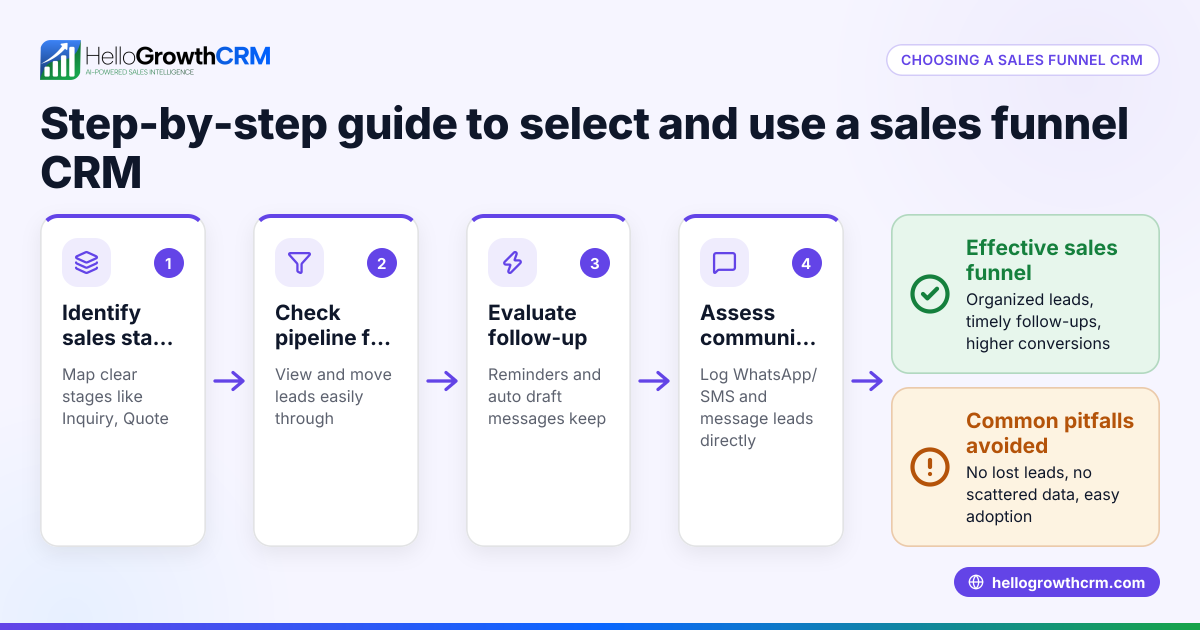
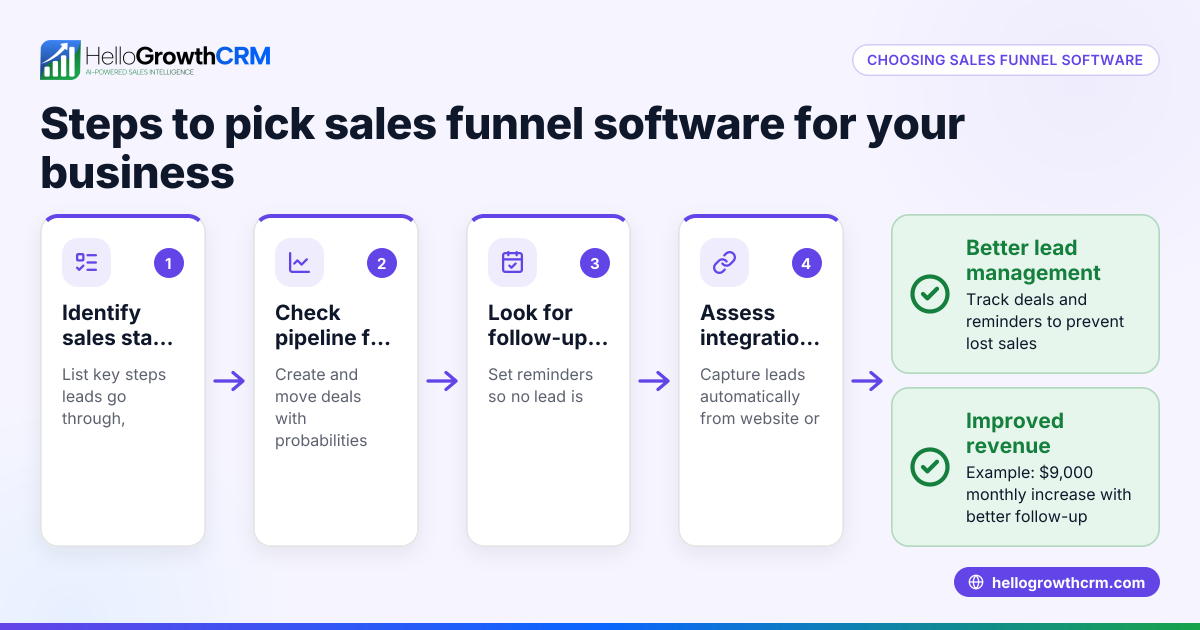
- Define your sales stages clearly. List each step from lead capture, qualification, proposal, negotiation, to closing. Check if the CRM lets you customize these stages.
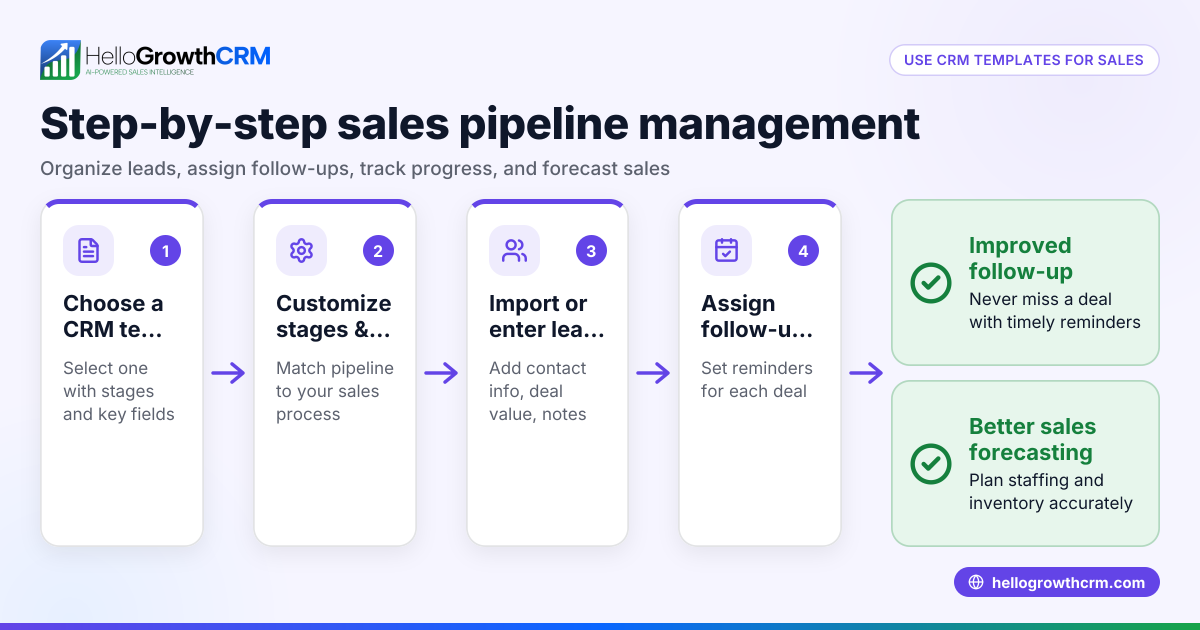
- Assess pipeline visibility features. Look for a dashboard or board view that shows deals by stage, expected values, and follow-up dates.
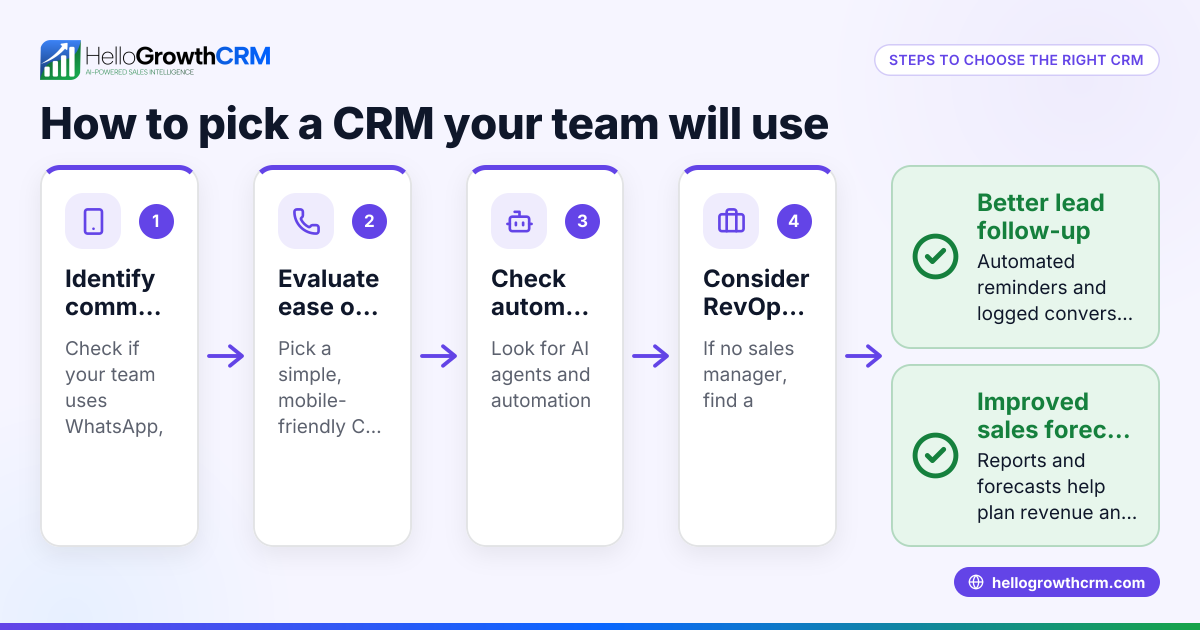
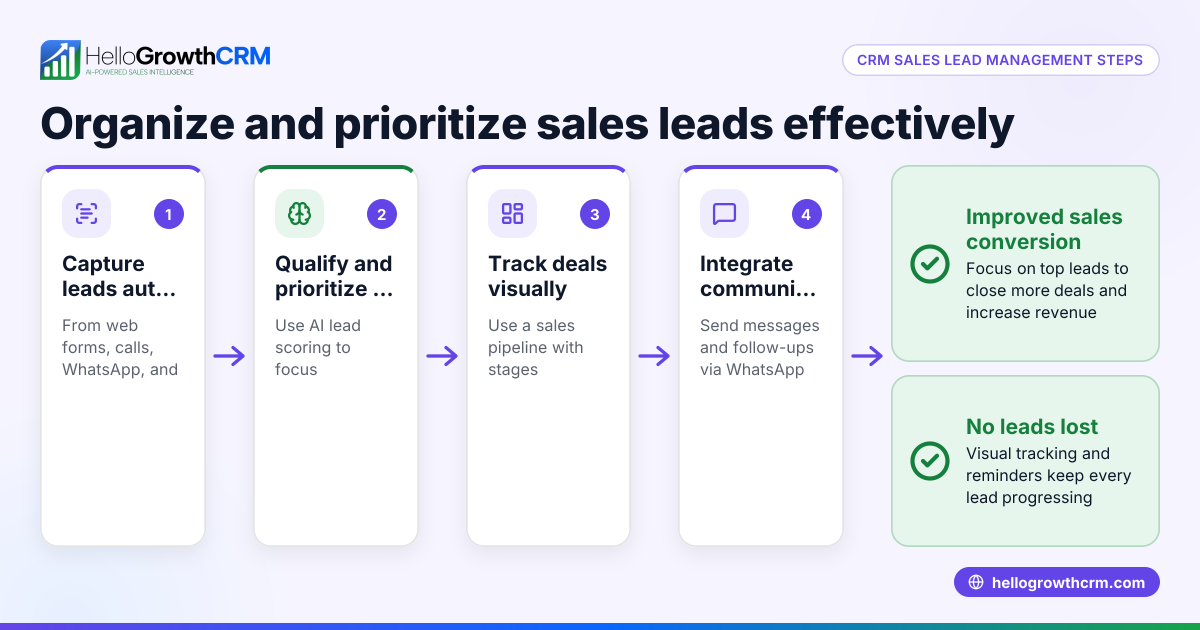
- Check communication integration. Confirm if the CRM supports channels your team uses, such as WhatsApp and SMS, and logs conversations on lead records.
- Evaluate automation capabilities. See if the CRM can automate follow-up reminders, sequence messages, or draft responses using AI agents.
- Consider ease of use and adoption. The CRM should be intuitive for your sales reps to update deals and communicate without extra hassle.
- Review reporting and forecasting tools. Ensure it can generate sales forecasts and reports to help you plan.
- Test lead capture options. Verify if it integrates with your website forms or other lead sources.
- Compare pricing and plan limits. Balance features against your budget and expected team size.
- Check for mobile access. Sales reps often work remotely and need mobile-friendly CRM access.
- Explore trial or free plans. Use trials to test real workflows before committing.
For more on CRM features, see CRM features.
Example (fictional figures)
A B2B software reseller in Denver, Colorado, receives 40 leads monthly. They estimate closing 10 deals each month with an average deal size of $15,000.
- Total leads per month = 40
- Deals closed per month = 10
- Average deal size = $15,000
Calculate expected monthly revenue:
40 leads - 10 deals closed = 30 leads not closed
10 deals × $15,000 = $150,000 expected revenue
If the business misses following up on 5 leads monthly that could have closed:
Missed deals = 5 leads
Lost revenue = 5 leads × $15,000 = $75,000
By using a sales funnel CRM, they aim to recover this lost $75,000 by improving follow-up and pipeline management.
Common mistakes
- Choosing a CRM without pipeline stages customization. Prevent this by ensuring the CRM lets you tailor stages to your sales process.
- Ignoring communication channel integration. If your team uses WhatsApp or SMS, pick a CRM that logs and sends messages there to keep all interactions in one place.
- Overcomplicating the CRM setup. Avoid with a user-friendly interface that your sales reps will actually use daily.
- Neglecting follow-up automation. Prevent missed deals by using CRM features that remind or draft follow-up messages.
- Not testing before buying. Use free trials or plans to verify the CRM fits your workflow.
For more on avoiding pitfalls, see AI CRM.
Doing this in HelloGrowthCRM
HelloGrowthCRM helps manage your sales funnel with its Deals (pipeline) feature, where a quotation sent last week appears as a deal at the 'quote sent' stage with a follow-up date, so it is not forgotten. It integrates WhatsApp and SMS, logging conversations on lead records and allowing follow-ups via messages. Additionally, AI agents draft follow-up messages after calls so reps only need to review and send, reducing manual work. Learn more at HelloGrowthCRM for the United States.
Frequently asked questions
What is the difference between a sales funnel CRM and a regular CRM? A sales funnel CRM emphasizes visualizing and managing deals through defined sales stages, helping prioritize leads and forecast sales. Regular CRMs may focus more on contact management without detailed pipeline tracking.
Can a sales funnel CRM automate follow-ups? Yes, many sales funnel CRMs offer automation like reminders, email or message sequences, and AI-generated follow-up drafts to keep leads engaged without manual effort.
Is WhatsApp integration common in sales funnel CRMs? WhatsApp integration is increasingly common, especially for small businesses that communicate with leads on mobile messaging. It helps keep conversations logged and accessible within the CRM.
How do I know if a sales funnel CRM will fit my small business? Look for customization of sales stages, ease of use, integration with your communication channels, and automation features. Testing a free plan or trial helps confirm fit.
What reports should a sales funnel CRM provide? Key reports include pipeline status, deal velocity, sales forecasting, and activity tracking to help you understand performance and plan growth.
Key takeaways
- A sales funnel CRM tracks leads through defined sales stages to prevent missed opportunities.
- Evaluate CRM options by checking pipeline visibility, communication integration, and automation.
- Avoid common mistakes like ignoring customization and not testing before buying.
- HelloGrowthCRM offers pipeline deals with follow-up reminders, WhatsApp and SMS logging, and AI agents drafting follow-ups.
- Use free trials or plans to ensure the CRM fits your sales process and team.
Start managing your sales funnel today with a CRM that your team will actually use. You can Start on the Free Forever plan (200 leads, no credit card).
Ready to put this into practice?
Set up your pipeline, WhatsApp follow-ups, and AI lead scoring in minutes — free, no credit card.
Try HelloGrowthCRM freeGet CRM tips in your inbox
Join thousands of sales professionals who get weekly insights on CRM strategy, AI automation, and pipeline optimization.

The HelloGrowthCRM team publishes guides on CRM strategy, AI sales tools, and revenue operations for small business sales teams.