HelloGrowthCRM software
Built for real small-business sales teams
HelloGrowthCRM helps reps qualify faster, follow up on time, and close more deals—with practical automation in one place.
- AI lead scoring and pipeline visibility
- Built-in dialer, WhatsApp, and email automation
- Sales forecasting and RevOps-ready reporting
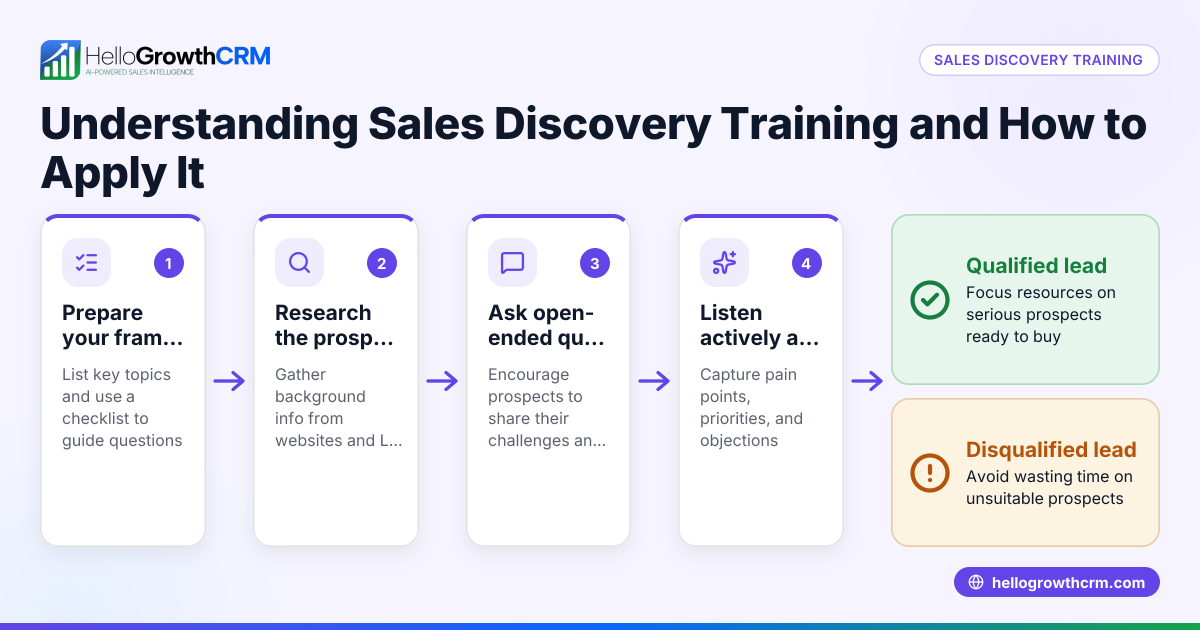
Sales skills training is essential for small businesses that want to convert more leads into customers by improving how their sales teams communicate, manage pipelines, and follow up. It involves teaching practical techniques such as prospecting, qualifying leads, presenting solutions, and closing sales. This article covers why sales skills training is important, how to start it step-by-step, common pitfalls, a worked example for a UK business, and how HelloGrowthCRM supports sales workflows including lead capture, qualification, pipeline management, and task tracking.
Why this comes up / what goes wrong
Many small-business owners and their sales teams struggle because they lack formal sales training. They often rely on informal methods like WhatsApp, email, and spreadsheets to track leads and follow up. This can lead to slow responses, forgotten opportunities, and inconsistent sales approaches. Without clear sales skills training, teams may fail to qualify leads properly or close deals efficiently, causing lost revenue and frustration.
Step-by-step
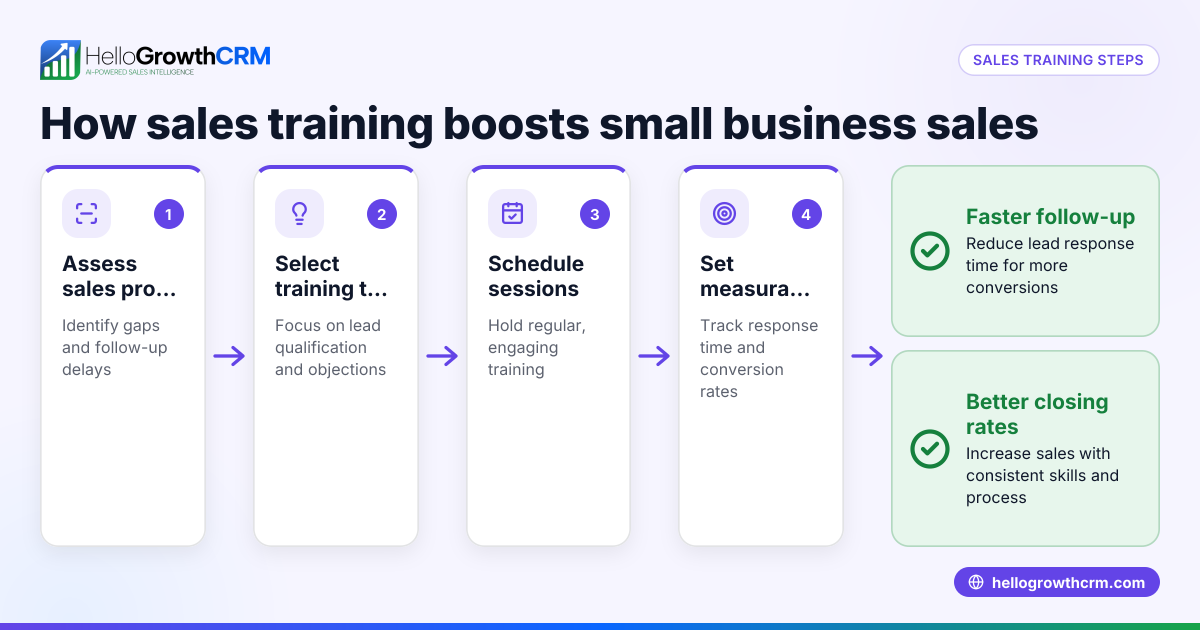
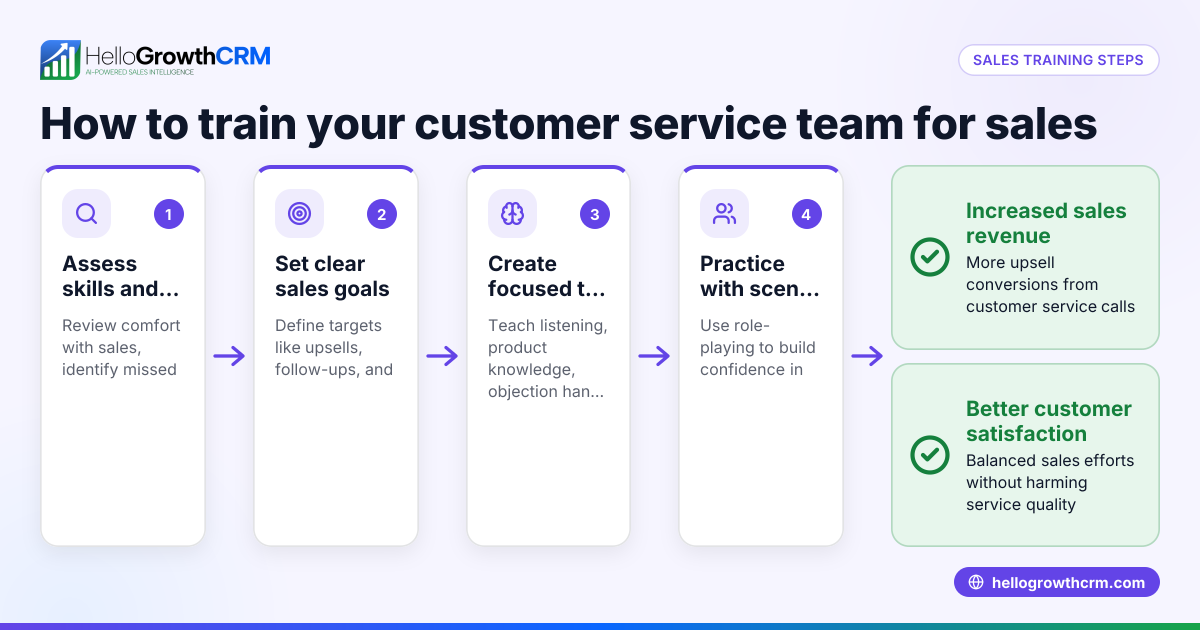
- Assess your current sales process and skills: Review how your team finds leads, follows up, and closes deals. Identify gaps such as poor follow-up timing or weak objection handling.
- Define clear sales goals and KPIs: Set measurable targets like increasing conversion rates or reducing follow-up times to guide training focus.
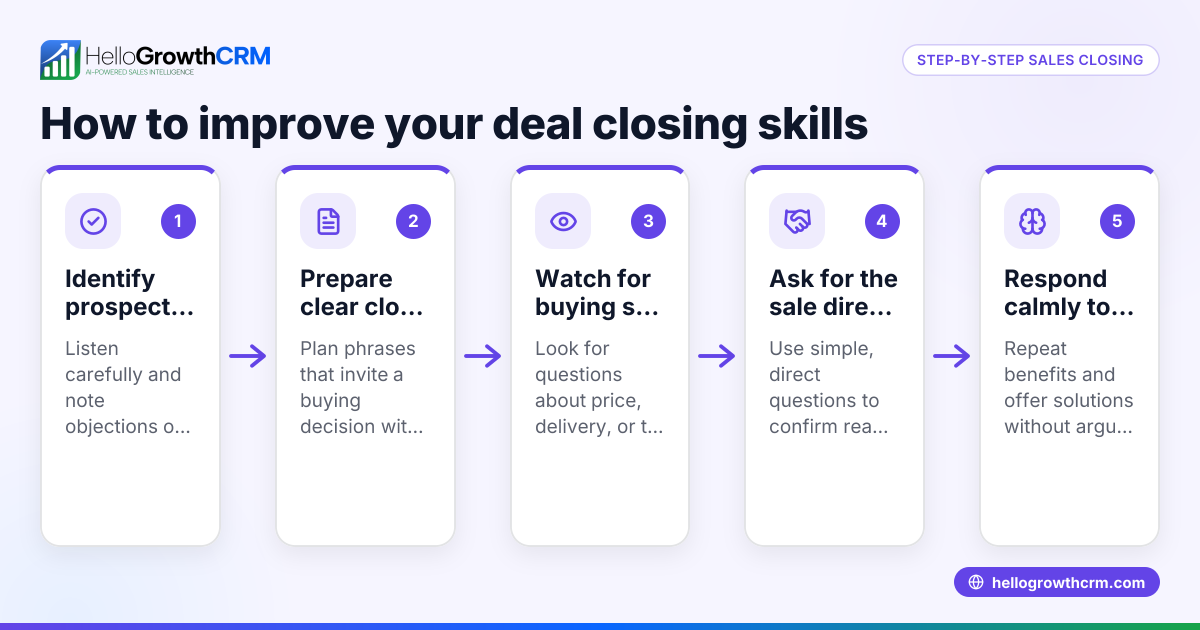
- Choose relevant sales training content: Select training that covers core skills like prospecting, qualifying leads, presenting benefits, objection handling, and closing techniques.
- Schedule regular training sessions: Plan initial and refresher sessions to build skills progressively, allowing time for practice and feedback.
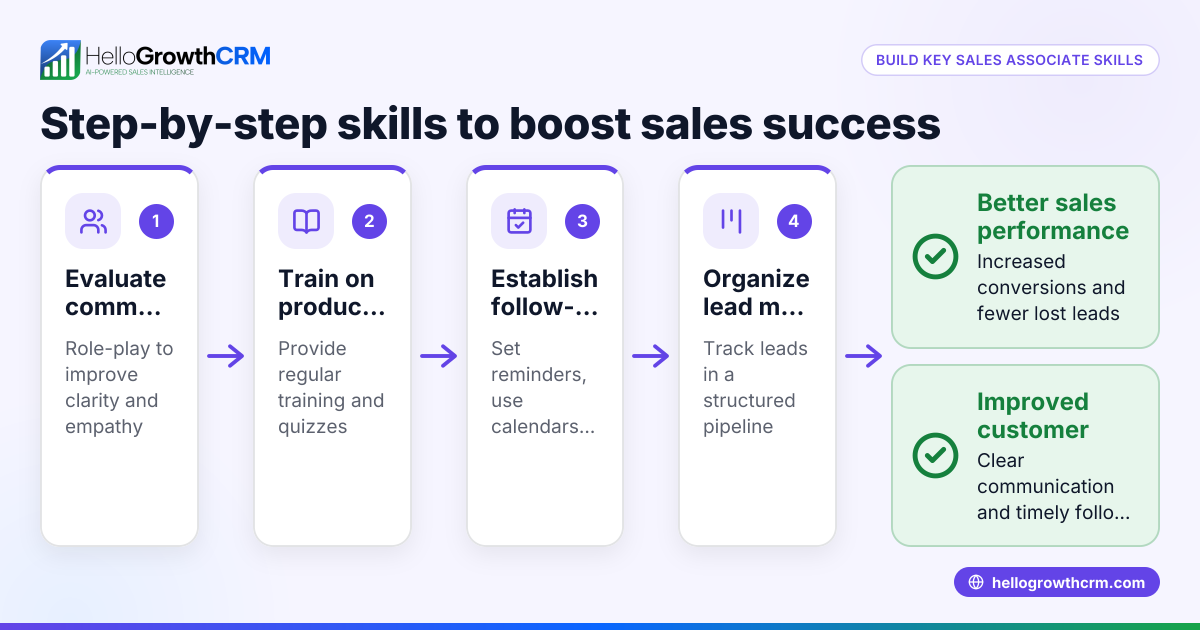
- Use role-playing and real scenarios: Practice common sales conversations and objections to build confidence.
- Implement a system to track leads and follow-ups: Use a CRM to ensure no opportunity is missed and to reinforce training with real data.
- Monitor performance and adjust training: Review sales results regularly to see what’s working and where further coaching is needed.
For more on organising your sales process and team management, see our CRM academy.
Example (fictional figures)
A kitchen-fitting company in Leeds wants to improve sales skills training for its 5-person sales team. They currently convert 10% of leads to sales and want to increase this to 15% by 31/12/2026.
- Current monthly leads: 100
- Current conversion rate: 10%
- Current monthly sales: 100 × 10% = 10 sales
- Target conversion rate: 15%
- Target monthly sales: 100 × 15% = 15 sales
If average sale value is £3,000:
- Current monthly revenue = 10 × £3,000 = £30,000
- Target monthly revenue = 15 × £3,000 = £45,000
By investing in sales skills training, the company aims to increase revenue by £45,000 - £30,000 = £15,000 monthly.
Steps they take:
- Assess gaps: slow follow-up and weak objection handling.
- Set KPIs: increase conversion rate by 5% within 6 months.
- Choose training focused on follow-up timing and objection handling.
- Schedule weekly role-play sessions.
- Use a CRM to track leads and set follow-up reminders.
- Review progress monthly and adjust training.
Common mistakes
- Skipping the assessment phase: Without understanding current weaknesses, training may miss key issues. Prevent by conducting honest reviews.
- One-off training sessions: Skills fade without repetition. Prevent by scheduling ongoing sessions.
- Ignoring real-world practice: Theoretical learning alone is ineffective. Prevent by using role-playing and live examples.
- Neglecting follow-up systems: Without tools to track leads, training benefits are lost. Prevent by implementing a CRM.
- Not measuring results: Without KPIs, it’s hard to know if training works. Prevent by setting clear goals and reviewing regularly.
- Overloading staff with information: Too much at once causes confusion. Prevent by breaking training into manageable parts.
See how to avoid these in our CRM academy.
Doing this in HelloGrowthCRM
HelloGrowthCRM helps small businesses keep sales training effective by making follow-up and pipeline management straightforward. Deals (pipeline) allow your team to track opportunities from first contact to close, with stages like 'quote sent' that include follow-up dates so no deal is forgotten. For businesses with field sales teams, Territories and commission tracking let reps log visits from their phones and managers see daily activity. If you don’t have a dedicated sales manager, Managed RevOps provides a specialist to handle weekly follow-ups and pipeline hygiene, ensuring your training translates into action. Learn more about these features at HelloGrowthCRM for the United Kingdom and WhatsApp and SMS CRM.
Frequently asked questions
What are the key sales skills to train? Focus on prospecting, qualifying leads, presenting solutions, handling objections, and closing. Communication and time management are also vital.
How often should sales training happen? Regularly, not just once. Weekly or monthly sessions with ongoing coaching keep skills sharp and adapt to changing markets.
Can sales skills training improve team motivation? Yes, training builds confidence and clarity, which boosts motivation and performance.
Do I need a CRM for effective sales training? While not mandatory, a CRM helps by tracking leads, follow-ups, and pipeline stages to support sales skills application.
How do I measure the success of sales skills training? Use KPIs like conversion rates, average deal size, and sales cycle length. Regular reviews help adjust training.
For more detailed guidance, visit our CRM academy.
Key takeaways
- Sales skills training improves how your team captures and moves leads through the pipeline.
- Start by assessing current skills and setting clear sales goals.
- Use regular, practical training with role-playing and real scenarios.
- Implement a CRM to track leads and ensure follow-up.
- Avoid one-off training and measure results to adjust.
- HelloGrowthCRM supports training by managing deals, tasks, and follow-ups within the CRM.
Start improving your sales skills and team performance today. Start on the Free Forever plan (200 leads, no credit card).
Ready to put this into practice?
Set up your pipeline, WhatsApp follow-ups, and AI lead scoring in minutes — free, no credit card.
Try HelloGrowthCRM freeGet CRM tips in your inbox
Join thousands of sales professionals who get weekly insights on CRM strategy, AI automation, and pipeline optimization.

The HelloGrowthCRM team publishes guides on CRM strategy, AI sales tools, and revenue operations for small business sales teams.