HelloGrowthCRM software
Built for real small-business sales teams
HelloGrowthCRM helps reps qualify faster, follow up on time, and close more deals—with practical automation in one place.
- AI lead scoring and pipeline visibility
- Built-in dialer, WhatsApp, and email automation
- Sales forecasting and RevOps-ready reporting
Sales discovery training is a focused approach to teaching sales teams how to ask the right questions and listen carefully to understand a prospect’s real business problems and goals. This process helps salespeople gather crucial information that guides them in offering the most relevant products or services. By mastering discovery, sales teams reduce wasted effort on unqualified leads and improve their chances of closing deals.
Why this comes up / what goes wrong
Small-business owners often find their sales teams struggle with inconsistent lead follow-up and unclear qualification criteria. Without proper discovery skills, salespeople may guess prospects’ needs or push unsuitable solutions. This wastes time and frustrates potential customers. Many small businesses still rely on text messages, emails, and spreadsheets to track leads, making it easy to lose important details or forget follow-ups.
Sales discovery training addresses these challenges by teaching a structured conversation method that uncovers the prospect’s pain points, budget, decision-making process, and timeline. This helps prioritize leads with the highest potential and builds trust through meaningful dialogue.
Step-by-step
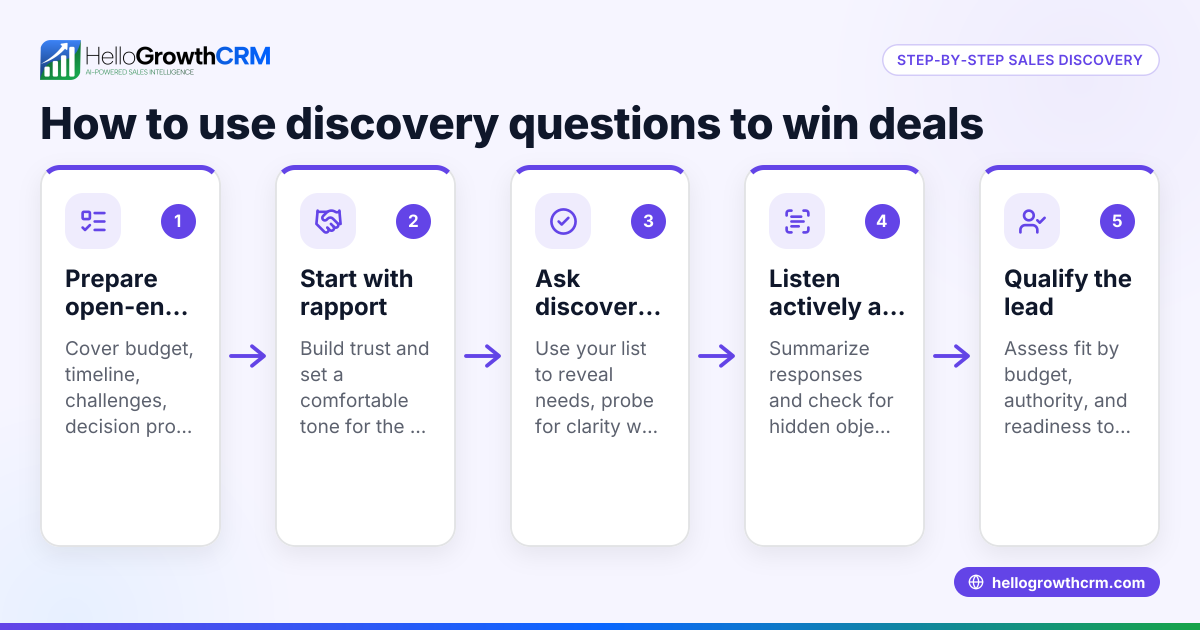
- Prepare your discovery framework: List key topics to cover such as the prospect’s challenges, goals, budget, timeline, decision makers, and previous solutions. Use a checklist or template to guide your conversation.
- Research the prospect beforehand: Gather background information from the company website, LinkedIn, or past interactions to make your questions relevant.
- Start with open-ended questions: Encourage prospects to describe their situation in their own words. For example, "What challenges are you facing with your current process?" or "What goals are you aiming to achieve this year?"
- Listen actively and take notes: Focus on both what is said and what is implied. Record pain points, priorities, and objections.
- Ask probing questions: Explore unclear areas deeper. For example, "How does that issue affect your daily operations?" or "Who else is involved in the decision?"
- Confirm understanding: Summarize what you heard and ask if you missed anything to ensure alignment.
- Qualify the lead: Decide if the prospect fits your ideal customer profile and is ready to proceed based on the information.
- Plan next steps and follow-up: Agree on the next action—demo, proposal, or call—and set a specific follow-up date.
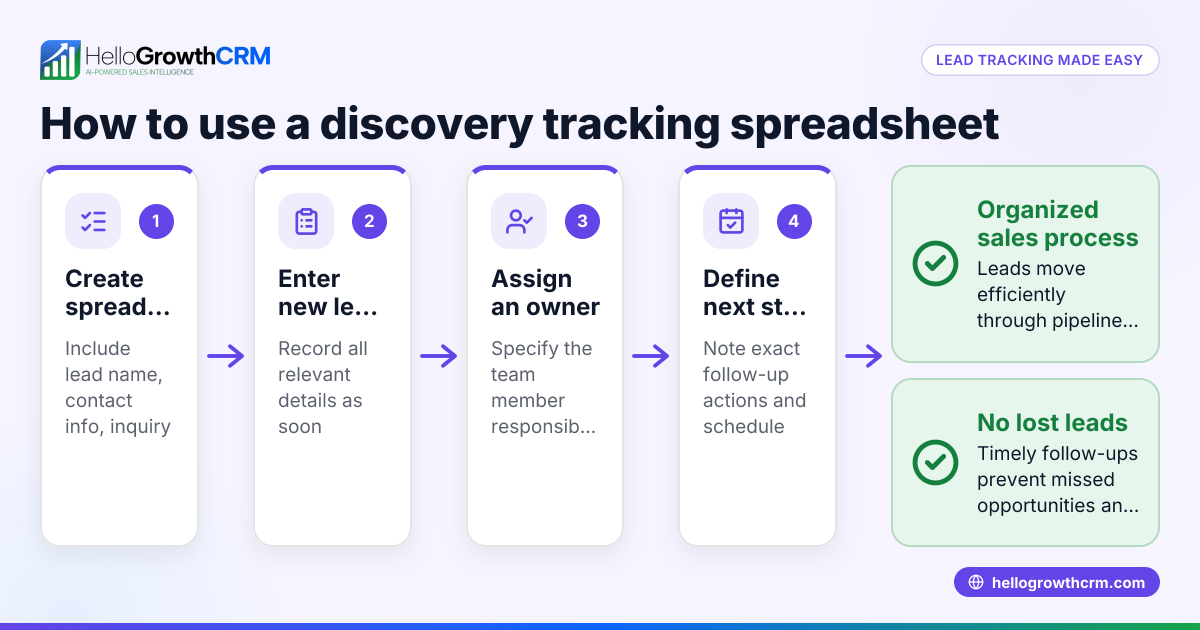
- Record all information systematically: Use a CRM or tracking tool to log discovery details, follow-up tasks, and reminders to keep momentum.
Following these steps consistently will improve your sales effectiveness and reduce lost leads. For more on organizing sales processes, see CRM academy.
Example (fictional figures)
A landscaping contractor in Charlotte, North Carolina, named GreenScape, wants to improve its sales process. On 04/15/2026, the sales rep conducts a discovery call with a potential client.
- The client says their current lawn care service is unreliable, causing missed appointments.
- They want a dependable service to maintain their commercial property.
- Budget is approximately $2,500 per month.
- Decision maker is the property manager, who expects a proposal by 04/22/2026.
The sales rep notes:
- Challenge: unreliable service
- Goal: dependable lawn care
- Budget: $2,500/month
- Decision maker: property manager
- Next step: send proposal by 04/22/2026
The rep qualifies the lead as a good fit and sets a follow-up reminder.
Calculations:
Monthly budget: $2,500
Estimated contract length: 12 months
Total contract value = $2,500 × 12 = $30,000
The rep plans to prepare a proposal reflecting this value and timeline.
This structured discovery helps GreenScape focus resources on serious prospects ready to buy.
Common mistakes
- Skipping preparation: Going into discovery calls without a plan leads to scattered questions and missed information. Prevent this by creating a checklist.
- Talking too much: Salespeople who dominate the conversation miss key insights. Prevent by asking open-ended questions and pausing to listen.
- Not recording details: Forgetting to log discovery notes causes lost context and follow-up failures. Use a CRM or note system to capture everything.
- Ignoring qualification: Pursuing every lead wastes time. Prevent by assessing budget, authority, need, and timeline during discovery.
- Failing to confirm next steps: Without agreed follow-up, prospects may lose interest. Always end calls with a clear next action and date.
For tips on avoiding these mistakes and improving sales processes, visit HelloGrowthCRM for the United States.
Doing this in HelloGrowthCRM
HelloGrowthCRM helps sales teams manage deals and follow-ups effectively. When a quotation is sent, it appears as a deal in the pipeline at the 'quote sent' stage with a follow-up date, so it is not forgotten. For sales teams with field reps, territory tools allow logging visits from the phone while managers see daily activity. For founders without sales managers, Managed RevOps provides weekly follow-up support to keep the sales queue moving. Learn more about these features at WhatsApp and SMS CRM.
Frequently asked questions
What is the main goal of sales discovery training? The main goal is to equip salespeople with skills to uncover a prospect’s true needs and buying motivations. This leads to better-qualified leads, tailored solutions, and higher close rates.
How long does sales discovery training usually take? Training length varies but often includes initial workshops followed by ongoing coaching. Many programs run from a few hours to several days, with practice sessions to build skills.
Can small businesses do sales discovery without a formal training program? Yes. Small businesses can start by adopting a structured questioning approach and using templates or checklists. Consistent practice and reviewing outcomes help improve skills over time.
What tools support effective sales discovery? Tools like CRM systems help record discovery notes, track follow-ups, and manage pipelines. HelloGrowthCRM offers pipeline deals with follow-up reminders, which supports organized discovery and sales management.
How does discovery differ from qualification? Discovery is the process of gathering detailed information about the prospect’s situation. Qualification uses that information to decide if the lead is worth pursuing further.
Key takeaways
- Sales discovery training teaches how to ask questions that uncover real customer needs.
- Structured discovery improves lead qualification and sales efficiency.
- Prepare, listen actively, record details, and confirm next steps in every discovery call.
- Avoid common mistakes like skipping preparation and failing to log information.
- Using CRM tools like HelloGrowthCRM helps track deals and follow-ups to prevent lost leads.
Start improving your sales discovery skills and never lose another lead. You can Start on the Free Forever plan (200 leads, no credit card) with HelloGrowthCRM today.
Ready to put this into practice?
Set up your pipeline, WhatsApp follow-ups, and AI lead scoring in minutes — free, no credit card.
Try HelloGrowthCRM freeGet CRM tips in your inbox
Join thousands of sales professionals who get weekly insights on CRM strategy, AI automation, and pipeline optimization.

The HelloGrowthCRM team publishes guides on CRM strategy, AI sales tools, and revenue operations for small business sales teams.