HelloGrowthCRM software
Built for real small-business sales teams
HelloGrowthCRM helps reps qualify faster, follow up on time, and close more deals—with practical automation in one place.
- AI lead scoring and pipeline visibility
- Built-in dialer, WhatsApp, and email automation
- Sales forecasting and RevOps-ready reporting
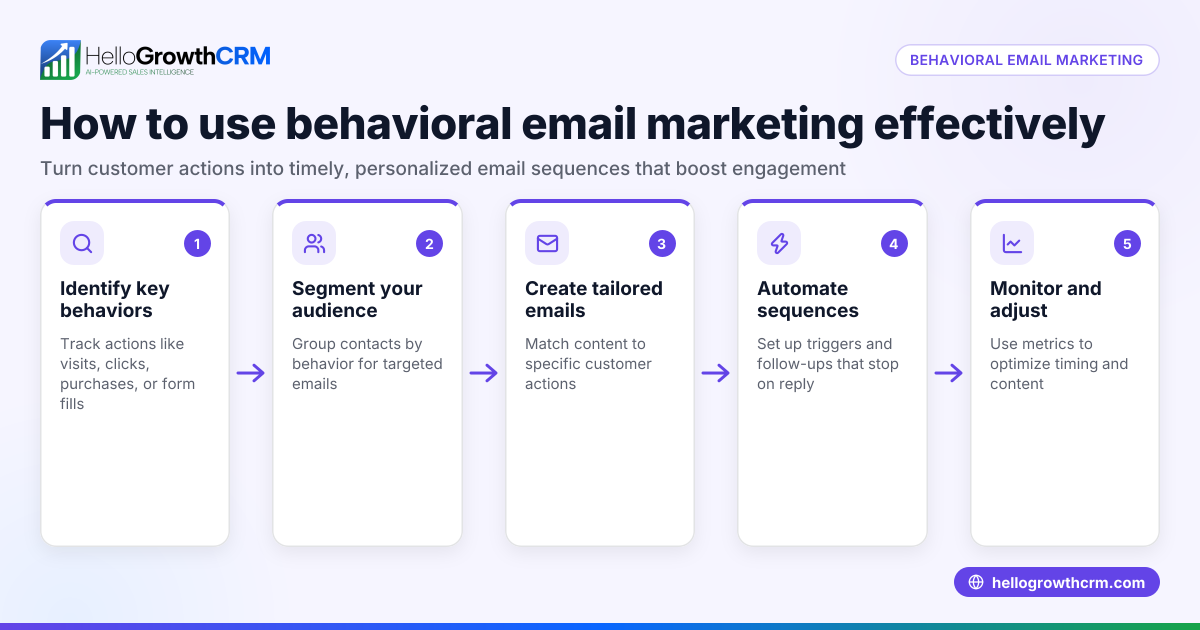
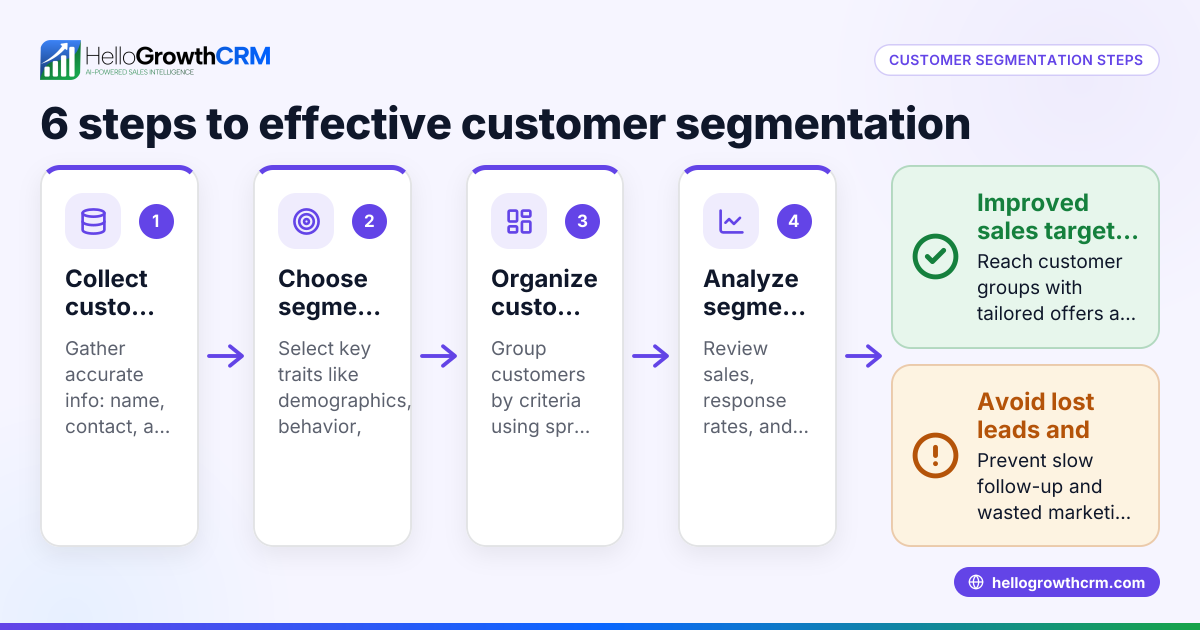
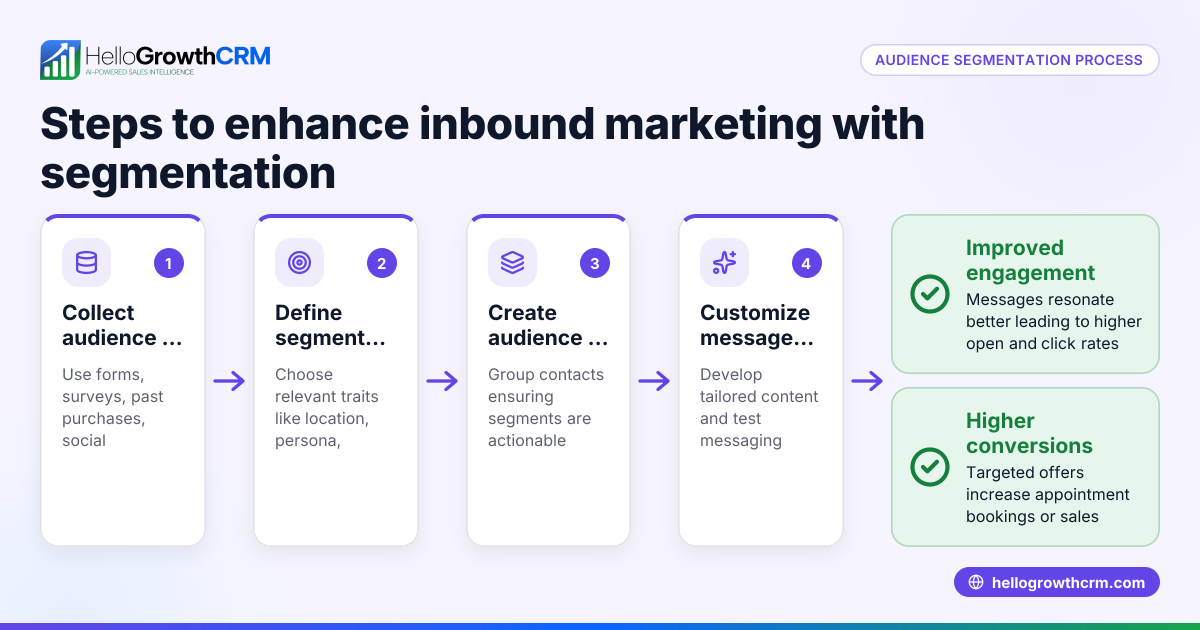
Behavioral segmentation groups customers based on their actions and interactions with your business’s products or services. The main four types are purchase behavior, user status, usage rate, and loyalty status. Knowing these helps small-business owners target marketing and sales efforts to specific customer groups, increasing engagement and sales.
Why this comes up / what goes wrong
Small-business owners often struggle because they treat all customers the same. Without behavioral segmentation, marketing messages may be too broad, leading to low response rates and missed sales opportunities. For example, sending a discount to a loyal customer who already buys frequently might not increase sales, while ignoring new users misses chances to convert them. Behavioral segmentation helps target the right message to the right customer based on how they behave.
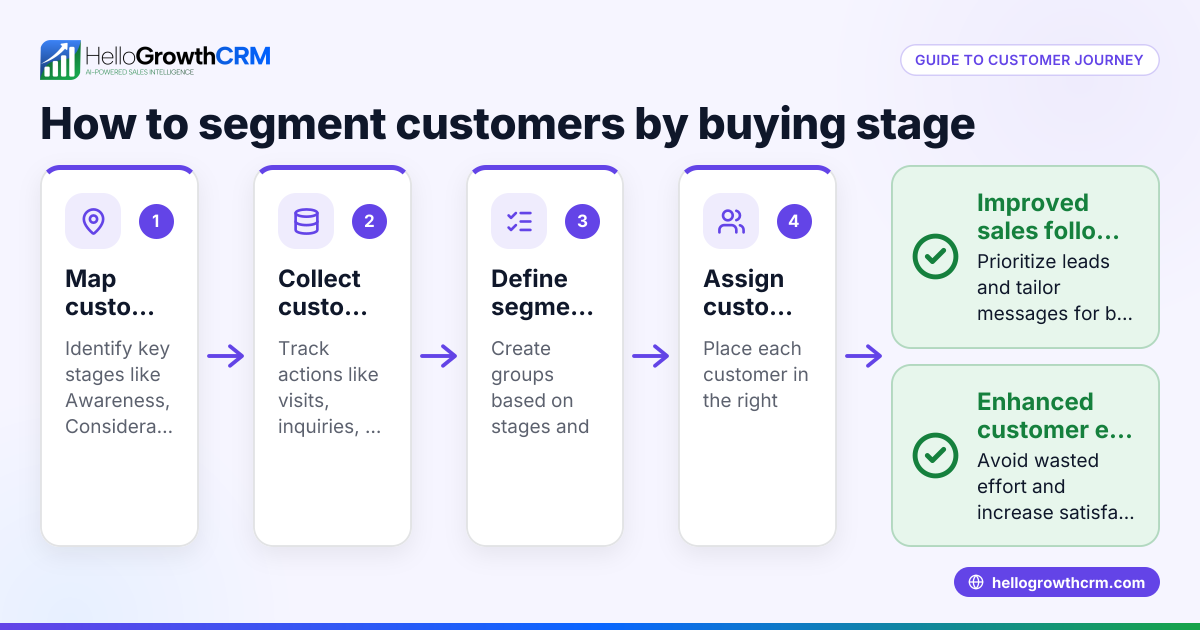
Many small businesses run sales and marketing on text messages, email, and spreadsheets, which can make it hard to track customer behavior accurately. This leads to slow follow-up and lost leads. Behavioral segmentation helps organize customers by behavior, so you can prioritize leads and personalize communication.
Step-by-step
- Identify Purchase Behavior
- Review what products or services customers buy.
- Segment customers by buying patterns such as seasonal purchases, product categories, or purchase frequency.
- Check sales records or your CRM data to classify customers.
- Determine User Status
- Classify customers as first-time users, regular users, or inactive/non-users.
- Use this to create onboarding campaigns for new users or retention efforts for regular users.
- Verify user status with recent activity logs or purchase dates.
- Assess Usage Rate
- Measure how often customers use your product or service.
- Group customers into light, medium, or heavy users.
- Tailor offers to encourage light users to increase usage or reward heavy users.
- Use usage data from your CRM or customer surveys.
- Evaluate Loyalty Status
- Identify loyal customers who repeatedly buy or engage.
- Recognize new customers and those at risk of leaving.
- Develop loyalty programs or win-back campaigns accordingly.
- Track loyalty with repeat purchase frequency or customer feedback.
- Gather Accurate Data
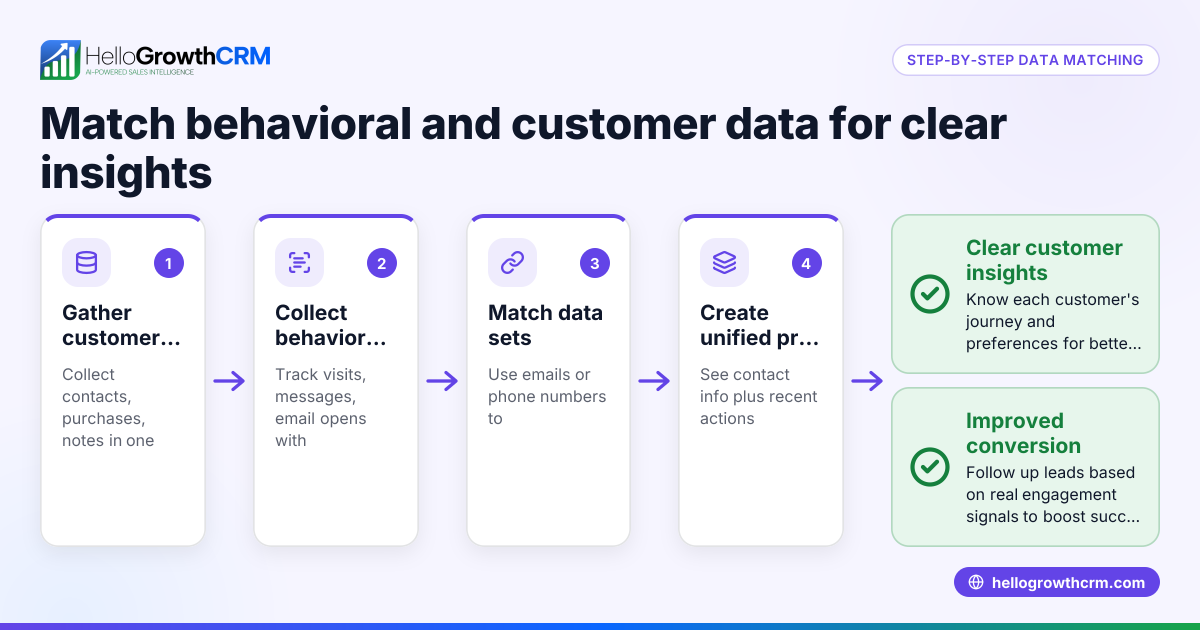
- Use sales records, CRM data, website analytics, or customer surveys.
- Make sure data is current and accurate to avoid misclassification.
- Regularly update your data sources.
- Apply Segments in Marketing and Sales
- Customize messaging, discounts, and follow-ups based on these segments.
- Monitor campaign results and adjust segmentation as needed.
- Review and Update Regularly
- Customer behaviors change over time.
- Schedule quarterly reviews to refresh your segments and stay relevant.
Using tools like a WhatsApp and SMS CRM or a built-in CRM dialer can help manage communication with these segments efficiently. Learn more about WhatsApp and SMS CRM and the built-in CRM dialer.
Example (fictional figures)
A B2B software reseller in Denver, Colorado, has 1,000 customers as of 06/01/2026. They want to segment their customers to improve marketing effectiveness.
- Total customers: 1,000
- Purchase Behavior:
- 600 customers buy cloud software
- 400 customers buy on-premise software
- User Status:
- 200 first-time buyers
- 700 regular buyers
- 100 inactive buyers
- Usage Rate:
- 300 light users
- 500 medium users
- 200 heavy users
- Loyalty Status:
- 250 loyal customers
- 600 new customers
- 150 at-risk customers
The reseller creates targeted campaigns:
- Cloud software buyers are invited to a training webinar.
- First-time buyers receive welcome emails with onboarding tips.
- Heavy users get loyalty discounts.
- At-risk customers receive win-back calls using the CRM dialer.
This targeted approach increases sales by $50,000 in the next quarter. Here’s the calculation:
Current quarterly sales: $1,200,000 Increase from targeted campaigns: $50,000 New quarterly sales total = $1,200,000 + $50,000 = $1,250,000
This $50,000 increase represents a 4.17% growth in quarterly sales:
$50,000 ÷ $1,200,000 = 0.0417 or 4.17%
Common mistakes
- Ignoring data accuracy: Prevent this by regularly cleaning and verifying your customer data. Outdated or wrong data leads to poor segmentation.
- Overlapping segments: Avoid this by clearly defining segment criteria and using exclusive categories. Overlap causes confusion and ineffective targeting.
- Not updating segments: Prevent by scheduling regular reviews to capture changes in customer behavior. Stale segments lose relevance.
- Treating all customers the same: Avoid this by applying targeted messaging based on behavioral segments. Generic messages reduce engagement.
- Neglecting communication channels: Use appropriate channels like WhatsApp or SMS for better engagement; see HelloGrowthCRM for the United States for guidance on managing customer communication efficiently.
Frequently asked questions
What is behavioral segmentation in marketing? Behavioral segmentation divides customers based on their actions related to a product or service, such as purchase habits, usage, or loyalty. This helps businesses tailor marketing efforts to specific customer groups.
How do I collect data for behavioral segmentation? Collect data from sales records, CRM systems, website analytics, and customer feedback. Ensuring data is accurate and up-to-date is essential for effective segmentation.
Can behavioral segmentation improve sales follow-up? Yes. By targeting customers based on their behavior, sales teams can prioritize leads and personalize communication, increasing conversion chances.
How often should I update behavioral segments? Segments should be reviewed and updated regularly, at least quarterly, to reflect changes in customer behavior and keep marketing relevant.
Is behavioral segmentation useful for small businesses? Absolutely. Small businesses benefit from focused marketing and sales efforts, improving lead follow-up and customer retention without wasting resources.
Key takeaways
- Behavioral segmentation groups customers by actions such as purchase behavior, user status, usage rate, and loyalty.
- Accurate and current data is critical for effective segmentation.
- Tailored marketing and sales efforts based on these segments improve engagement and increase sales.
- Common mistakes include ignoring data accuracy, overlapping segments, and failing to update regularly.
- Using appropriate communication channels like WhatsApp and SMS can boost customer engagement.
Start applying behavioral segmentation today to improve your sales and marketing results. You can Start on the Free Forever plan (200 leads, no credit card) to organize and manage your leads effectively.
Ready to put this into practice?
Set up your pipeline, WhatsApp follow-ups, and AI lead scoring in minutes — free, no credit card.
Try HelloGrowthCRM freeGet CRM tips in your inbox
Join thousands of sales professionals who get weekly insights on CRM strategy, AI automation, and pipeline optimization.

The HelloGrowthCRM team publishes guides on CRM strategy, AI sales tools, and revenue operations for small business sales teams.