
Overview
HubSpot grows expensive in a specific way: the free CRM is genuinely free, and then Marketing Hub tiers, Sales Hub seats, and contact-count pricing compound until the invoice needs its own approval flow. The HubSpot sync keeps contacts, companies, and deals aligned bidirectionally between HubSpot and HelloGrowthCRM so you can migrate in phases — or run a deliberate split where marketing stays on HubSpot tools while sales works a leaner pipeline.
Coexistence is the point. Sales can move to HelloGrowthCRM this quarter while nurture flows and forms keep running in HubSpot, with the sync keeping both sides truthful about lifecycle stage, ownership, and deal state. When you're ready, the final migration pass brings history across and the sync retires — no big-bang weekend, no frozen pipeline, no rep working from screenshots.
What data is involved
- Contacts and companies synced bidirectionally with email-based deduplication.
- Deals synced with pipeline, stage, amount, and close date mapped.
- Lifecycle stage and lead status alignable across both systems.
- Owners mapped to CRM users for consistent attribution.
- Notes, emails, and activity history imported in the migration pass.
- HubSpot lists and properties mappable to CRM tags and custom fields.
Step-by-step setup
Setup at a glance (3-5 bullets)
- Settings → Integrations → HubSpot Sync.
- OAuth to HubSpot and select objects (contacts, companies, deals).
- Define conflict rules (system of record per field) and sync frequency.
Sign in or sign up at HelloGrowthCRM. Open the login page, enter your credentials (or use Google), or choose Sign up if you need a new account. You must be signed in before you can open Settings and connect this integration.
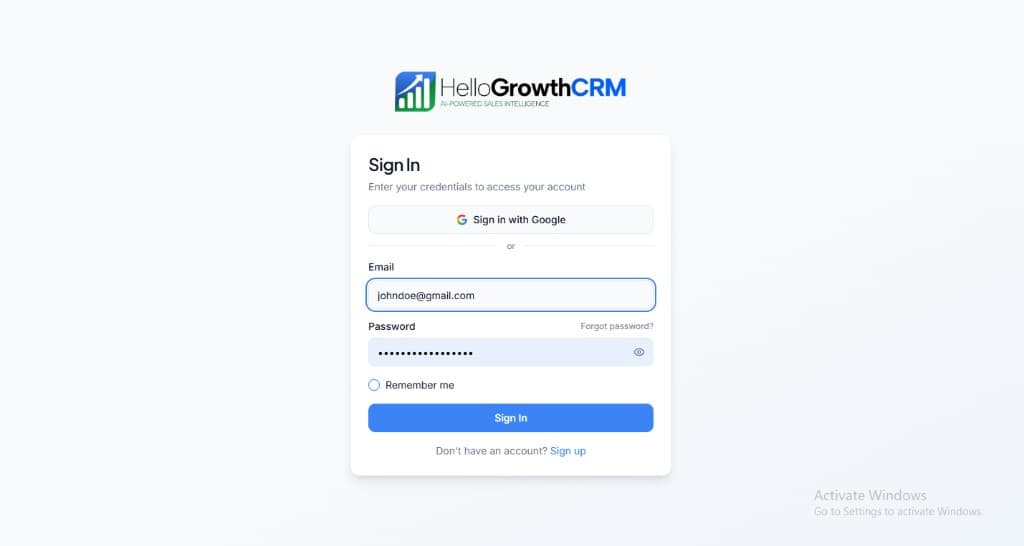
Open login page(opens in a new tab)app.hellogrowthcrm.com/login
Open Settings. In the left sidebar, under Admin, click Settings (you will land on the Settings area; the URL is app.hellogrowthcrm.com/settings).
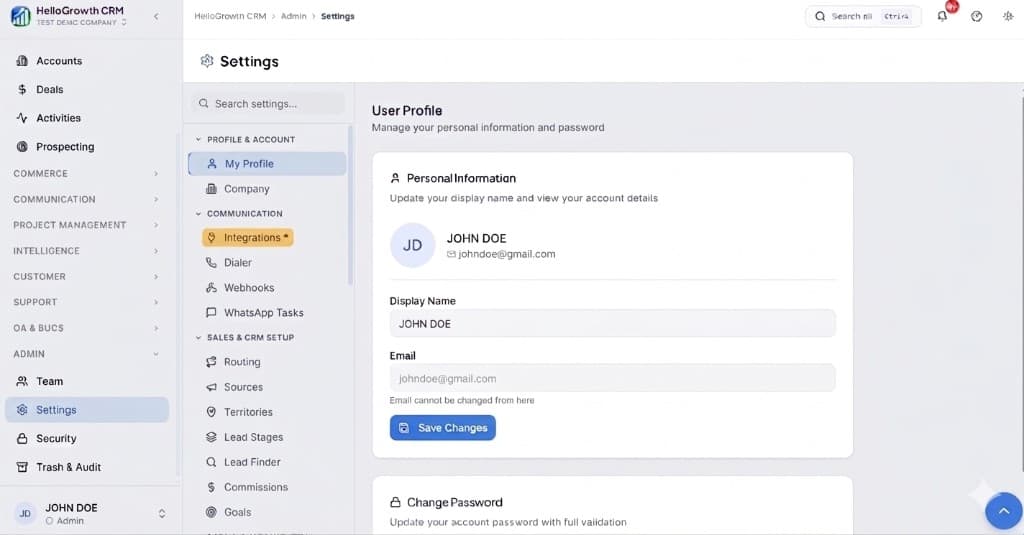
Open Settings(opens in a new tab)app.hellogrowthcrm.com/settings
Go to Integrations. On the Settings screen, use the middle settings menu. Under COMMUNICATION, click Integrations (star icon). Then find and configure this connector—the connector-specific steps below pick up from here.
Open Settings (Integrations)(opens in a new tab)app.hellogrowthcrm.com/settings
- Settings → Integrations → HubSpot Sync.
- OAuth to HubSpot and select objects (contacts, companies, deals).
- Define conflict rules (system of record per field) and sync frequency.
Best practices
- Decide the split before syncing: which system owns marketing contact state, which owns pipeline truth — ambiguity here is where sync pain comes from.
- Audit HubSpot properties first and map only the ones in active use; every HubSpot portal accumulates dead properties, and migration is the moment to shed them.
- Keep HubSpot forms and nurture running during transition — leads flow through the sync into the CRM pipeline, so nothing goes dark mid-move.
- Watch contact-count billing on the HubSpot side during coexistence; syncing shouldn't push you over a marketing-contacts tier you didn't plan to hit.
- Cut over team by team and retire the sync on a scheduled date rather than letting coexistence drift.
Best for & common use cases
Teams running HelloGrowthCRM alongside HubSpot or migrating in stages.
- Marketing-qualified handoffs visible in both CRMs until cutover.
Expected outcomes
- Faster lead handoff between tools and CRM owners
- Cleaner activity history for follow-up and reporting
- Lower manual copy-paste errors in the pipeline
Troubleshooting
- Contact counts don't match: HubSpot counts marketing contacts differently from CRM records — compare total contacts, not marketing-contact billing numbers.
- Lifecycle stages fighting: both systems set as writers — assign one owner for lifecycle during coexistence.
- Deals missing amounts: HubSpot deals used a custom amount property — map it explicitly to the CRM deal value field.
FAQ
Governance
Treat API keys and webhooks as production secrets. Align field mapping with your privacy policy and regional regulations (GDPR, marketing consent, telemarketing rules). Your admin controls which roles can install or edit integrations.
Related integrations in this category
Enterprise CRM sync for accounts, contacts, opportunities, and activities with field-level mapping.
Contact and deal sync with Pipedrive pipelines, stages, and owners.

Multi-CRM bidirectional sync for popular SMB platforms including Zoho CRM, Freshsales, Copper, and Insightly.

Creates Jira issues from CRM tasks for engineering and bug tracking.

Creates Linear issues from CRM tasks via the GraphQL API.

Creates support tickets from CRM records.
Creates Freshdesk tickets from CRM records.

Pushes CRM data to Notion databases with custom field mapping.