Overview
Resend is a developer-first email API known for clean ergonomics, React Email template support, and strong deliverability. In a CRM context it is the delivery layer for system and notification mail: assignment alerts, quote-sent confirmations, sequence steps, and any transactional message your workflows generate. The CRM decides when and to whom; Resend gets it delivered on your authenticated domain.
Resend suits teams that want email infrastructure managed as code — templates versioned in the repo with React Email, domains verified once, and webhook events flowing back into the systems that triggered the send. HelloGrowthCRM writes those delivery and engagement events back to the contact timeline, so even fully automated mail leaves an audit trail a rep can read before picking up the phone.
What data is involved
- CRM-triggered notifications and sequence emails delivered via the Resend API.
- Delivery, bounce, and complaint webhooks written back to the CRM contact timeline.
- Hard bounces flagged on the contact so automations stop mailing dead addresses.
- Sending domain and from-address managed in Resend, referenced by the CRM.
- Per-message metadata (deal ID, workflow, owner) attached for traceability.
- Suppressions respected before queueing new sends.
Step-by-step setup
Setup at a glance (3-5 bullets)
- Settings → Integrations → Resend.
- Add your API key and verified sending domain.
- Choose which CRM notifications route through Resend.
Sign in or sign up at HelloGrowthCRM. Open the login page, enter your credentials (or use Google), or choose Sign up if you need a new account. You must be signed in before you can open Settings and connect this integration.
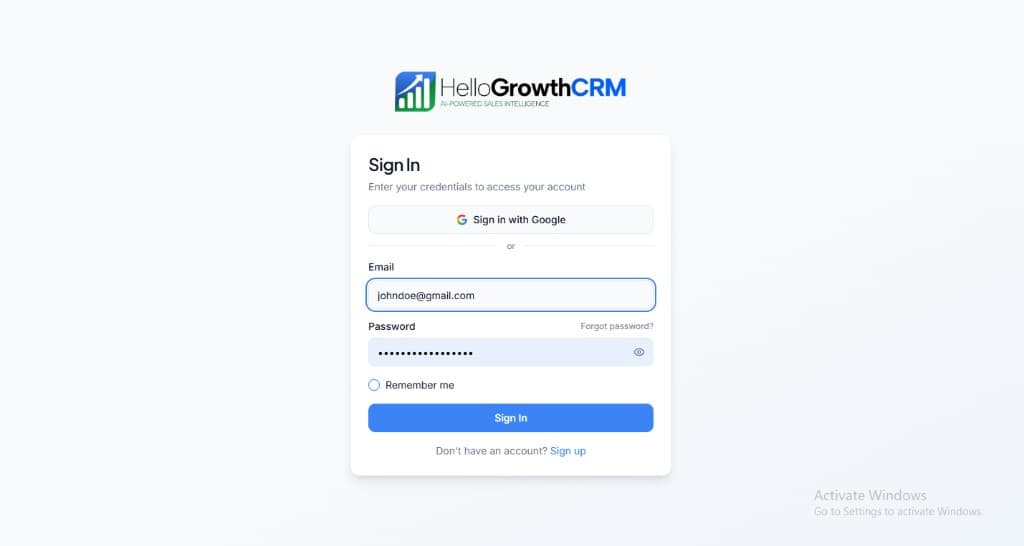
Open login page(opens in a new tab)app.hellogrowthcrm.com/login
Open Settings. In the left sidebar, under Admin, click Settings (you will land on the Settings area; the URL is app.hellogrowthcrm.com/settings).
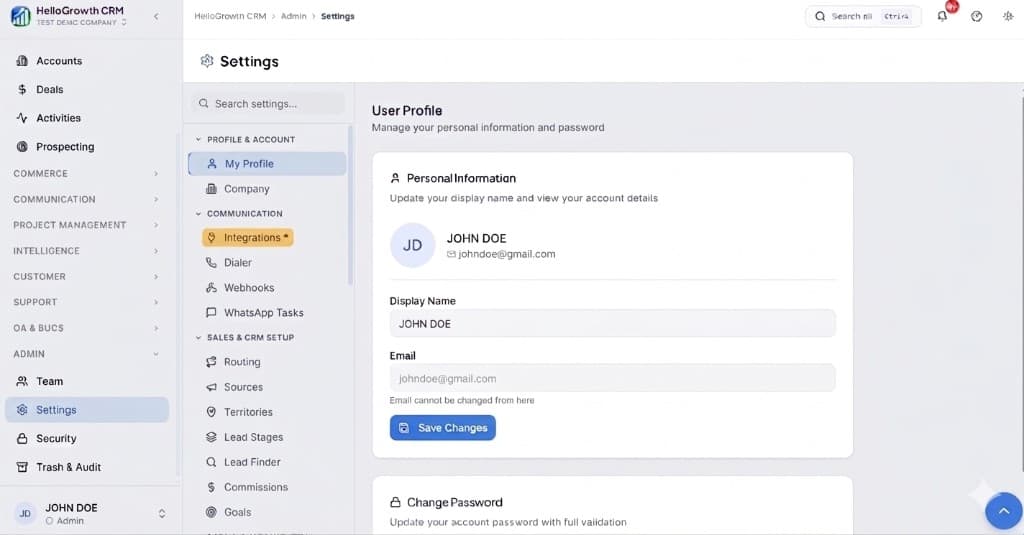
Open Settings(opens in a new tab)app.hellogrowthcrm.com/settings
Go to Integrations. On the Settings screen, use the middle settings menu. Under COMMUNICATION, click Integrations (star icon). Then find and configure this connector—the connector-specific steps below pick up from here.
Open Settings (Integrations)(opens in a new tab)app.hellogrowthcrm.com/settings
- Settings → Integrations → Resend.
- Add your API key and verified sending domain.
- Choose which CRM notifications route through Resend.
Best practices
- Verify your domain in Resend (SPF + DKIM) before the first CRM send; deliverability is inherited by everything after.
- Use a subdomain (for example, mail.yourcompany.com) for automated CRM mail so your root domain's reputation is insulated.
- Wire Resend's webhooks into the CRM from day one — bounce data on the timeline prevents silent list decay.
- Keep transactional templates minimal and text-forward; notification mail is judged on speed and clarity, not design.
- Rotate API keys through your normal secret-management process and scope them to sending only.
Best for & common use cases
Teams that want modern SMTP/API delivery with strong domain reputation tooling.
- Passwordless alerts, workflow emails, and internal routing from CRM automations.
Expected outcomes
- Faster lead handoff between tools and CRM owners
- Cleaner activity history for follow-up and reporting
- Lower manual copy-paste errors in the pipeline
Troubleshooting
- 403 on send: the API key is missing sending permission or was created for a different team — issue a fresh key in the Resend dashboard.
- Mail deferred or spam-foldered: domain verification incomplete — confirm the DNS records Resend lists all show verified.
- No events in the CRM: the webhook endpoint isn't registered in Resend or the signing secret doesn't match — re-copy both from the integration settings.
FAQ
Governance
Treat API keys and webhooks as production secrets. Align field mapping with your privacy policy and regional regulations (GDPR, marketing consent, telemarketing rules). Your admin controls which roles can install or edit integrations.
Related integrations in this category
Syncs CRM leads and contacts to Mailchimp audiences with a one-way push.
Creates and updates contacts in Brevo lists with field mapping and tags.
Pushes customer profiles and CRM lifecycle events (lead created, deal won, etc.) to Klaviyo.
Syncs CRM contacts to Constant Contact lists for email campaigns, event marketing, and list segmentation with field mapping.
High-volume transactional and marketing email delivery with CRM-triggered sends and bounce/engagement webhooks.
Contact sync and marketing automation triggers so CRM stages and tags drive ActiveCampaign automations.
Rich CRM notifications in Slack channels (new leads, deal updates, task reminders).
CRM notifications with rich embeds via webhook to your server channels.