Overview
SendGrid handles high-volume email delivery — password resets, notifications, campaigns — through an API and SMTP relay trusted at billions of sends per month. Connected to HelloGrowthCRM, it becomes the delivery engine for CRM-triggered mail: pipeline-stage notifications, quote follow-ups, and sequence emails go out through your authenticated SendGrid domain, and the engagement data comes back the other way.
The return path is the part teams underuse. SendGrid's event webhooks report delivery, opens, clicks, bounces, and spam complaints per message. Fed back into the CRM, those events land on the contact timeline — so a rep can see that yesterday's proposal email bounced before wondering why the prospect went quiet, and your lists stay clean because hard bounces mark the contact automatically instead of being re-mailed forever.
What data is involved
- CRM-triggered emails sent through your authenticated SendGrid domain and IP.
- Delivery, open, click, bounce, and spam-report events written back to the contact's CRM timeline.
- Hard bounces flagged on the CRM contact so sequences skip dead addresses.
- Templates referenced by ID so design lives in SendGrid while send logic lives in the CRM.
- Per-message metadata (deal, sequence, owner) attached for attribution.
- Suppression list respected: contacts suppressed in SendGrid are not queued from the CRM.
Step-by-step setup
Setup at a glance (3-5 bullets)
- Open Settings → Integrations → SendGrid.
- Paste your API key and verify the sending domain.
- Map CRM events to templates and webhook endpoints for delivery events.
Sign in or sign up at HelloGrowthCRM. Open the login page, enter your credentials (or use Google), or choose Sign up if you need a new account. You must be signed in before you can open Settings and connect this integration.
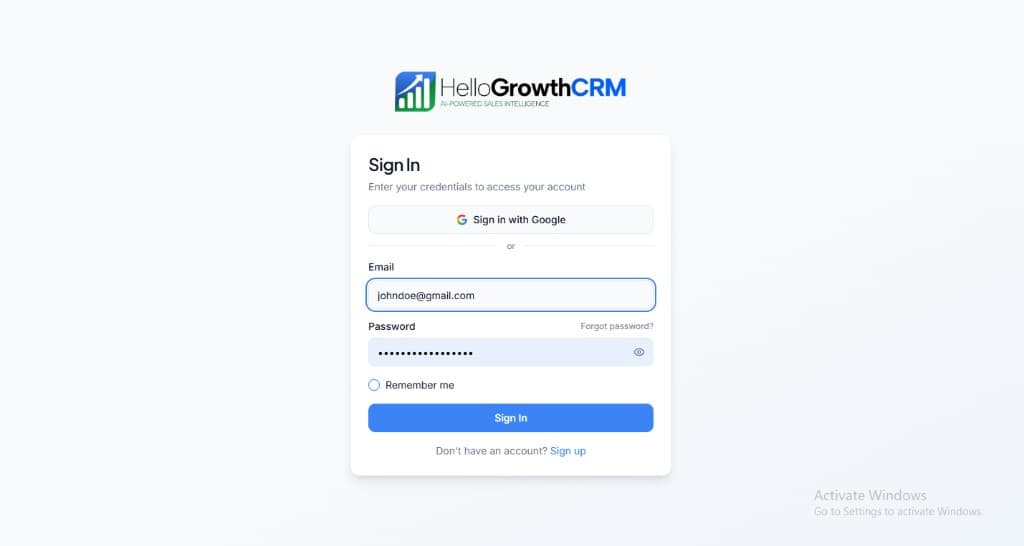
Open login page(opens in a new tab)app.hellogrowthcrm.com/login
Open Settings. In the left sidebar, under Admin, click Settings (you will land on the Settings area; the URL is app.hellogrowthcrm.com/settings).
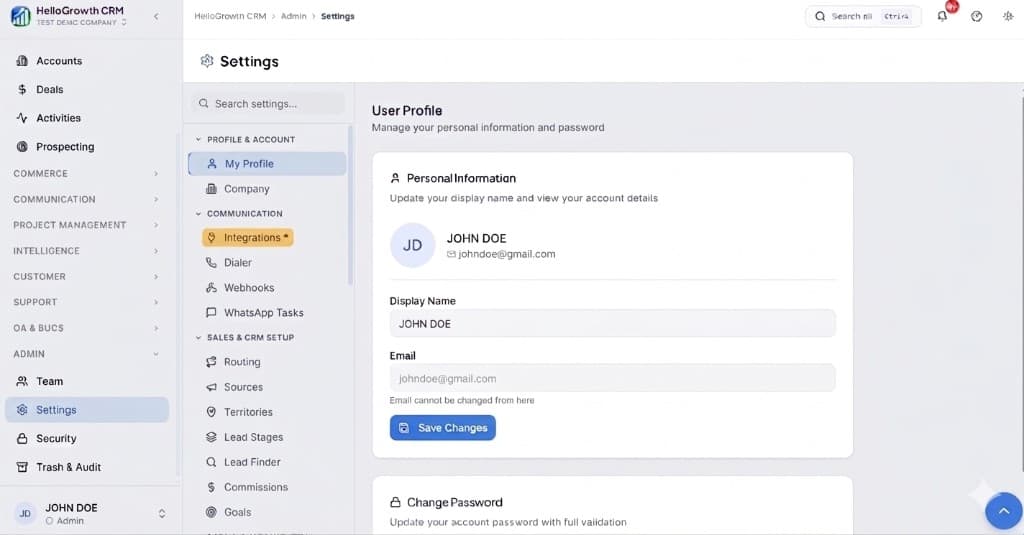
Open Settings(opens in a new tab)app.hellogrowthcrm.com/settings
Go to Integrations. On the Settings screen, use the middle settings menu. Under COMMUNICATION, click Integrations (star icon). Then find and configure this connector—the connector-specific steps below pick up from here.
Open Settings (Integrations)(opens in a new tab)app.hellogrowthcrm.com/settings
- Open Settings → Integrations → SendGrid.
- Paste your API key and verify the sending domain.
- Map CRM events to templates and webhook endpoints for delivery events.
Best practices
- Authenticate your sending domain (SPF, DKIM, DMARC) in SendGrid before routing CRM mail through it — deliverability is set up once and inherited by every send after.
- Separate transactional and marketing traffic with SendGrid subusers or dedicated IPs so a campaign's reputation never drags down quote emails.
- Wire the event webhook on day one; engagement data on the CRM timeline is most of the integration's value.
- Let hard bounces automatically end sequences for that contact — continuing to mail a dead address damages sender reputation.
- Keep templates in SendGrid and personalisation tokens in the CRM, so marketing can edit design without touching send logic.
Best for & common use cases
Teams that outgrow basic SMTP and need scalable, measurable outbound email from CRM workflows.
- Alert reps when a high-value lead opens a proposal email.
- Sync suppression lists when contacts bounce or unsubscribe.
Expected outcomes
- Faster lead handoff between tools and CRM owners
- Cleaner activity history for follow-up and reporting
- Lower manual copy-paste errors in the pipeline
Troubleshooting
- Emails landing in spam: domain authentication incomplete — verify SPF, DKIM, and DMARC records in SendGrid's sender authentication panel.
- No engagement events in the CRM: the event webhook URL is missing or unverified in SendGrid's Mail Settings — re-add it and send a test event.
- Sends failing with 401/403: the API key lacks Mail Send scope or was rotated — issue a new restricted key and update the CRM integration settings.
FAQ
Governance
Treat API keys and webhooks as production secrets. Align field mapping with your privacy policy and regional regulations (GDPR, marketing consent, telemarketing rules). Your admin controls which roles can install or edit integrations.
Related integrations in this category
Contact sync and marketing automation triggers so CRM stages and tags drive ActiveCampaign automations.
Developer-friendly transactional email API with high deliverability for CRM notifications and system mail.
Syncs CRM leads and contacts to Mailchimp audiences with a one-way push.
Creates and updates contacts in Brevo lists with field mapping and tags.
Pushes customer profiles and CRM lifecycle events (lead created, deal won, etc.) to Klaviyo.
Syncs CRM contacts to Constant Contact lists for email campaigns, event marketing, and list segmentation with field mapping.
Rich CRM notifications in Slack channels (new leads, deal updates, task reminders).
CRM notifications with rich embeds via webhook to your server channels.