HelloGrowthCRM software
Built for real small-business sales teams
HelloGrowthCRM helps reps qualify faster, follow up on time, and close more deals—with practical automation in one place.
- AI lead scoring and pipeline visibility
- Built-in dialer, WhatsApp, and email automation
- Sales forecasting and RevOps-ready reporting
Communication in negotiation means exchanging information clearly and listening actively to reach a mutually acceptable agreement. It involves verbal and nonverbal skills to express needs, understand the other party, and influence outcomes. This article covers why good communication matters in negotiation, step-by-step actions to improve it, common pitfalls to avoid, and how HelloGrowthCRM’s built-in dialer supports your sales calls.
Why this comes up / what goes wrong
Small-business owners often negotiate prices, contracts, or partnerships regularly. Poor communication during these negotiations can cause misunderstandings, lost deals, or strained relationships. For example, a plumbing company owner negotiating a service contract might fail to clarify payment terms or delivery timelines, leading to disputes later. Without clear communication, both sides may leave with unmet expectations or feel undervalued. This gap often arises because owners focus on what to say rather than how to listen and respond.
Step-by-step
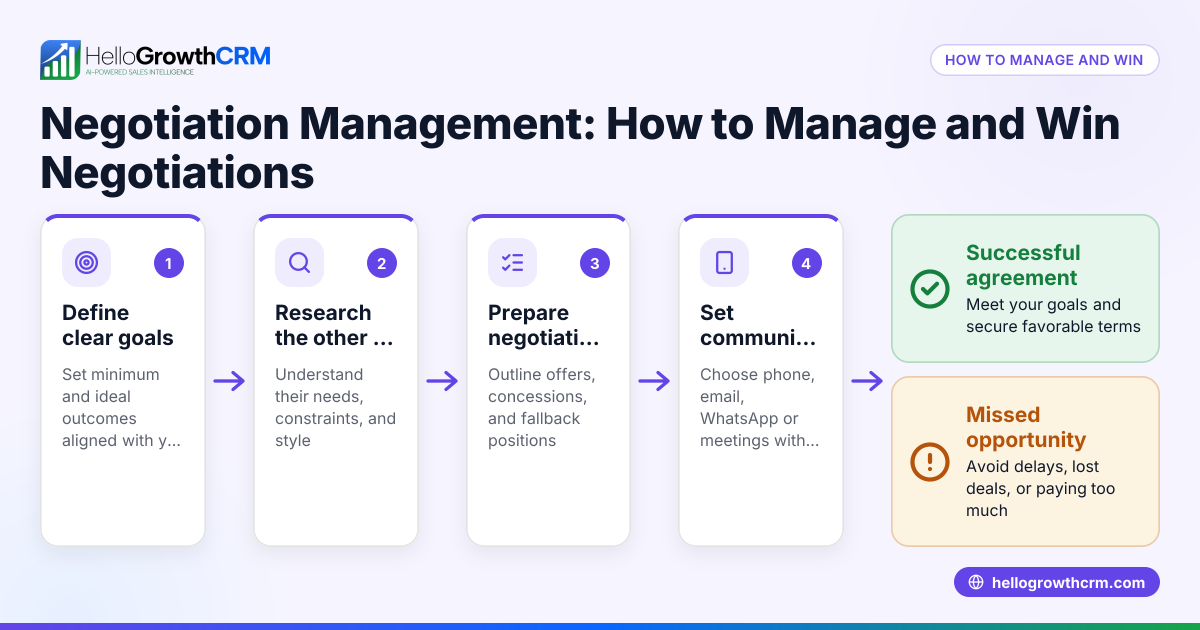
- Prepare your key points and objectives
- Write down what you want to achieve and your limits.
- Check that your goals are realistic and flexible.
- Start with open, friendly communication
- Use polite greetings and express interest.
- Check the other party’s mood and openness.
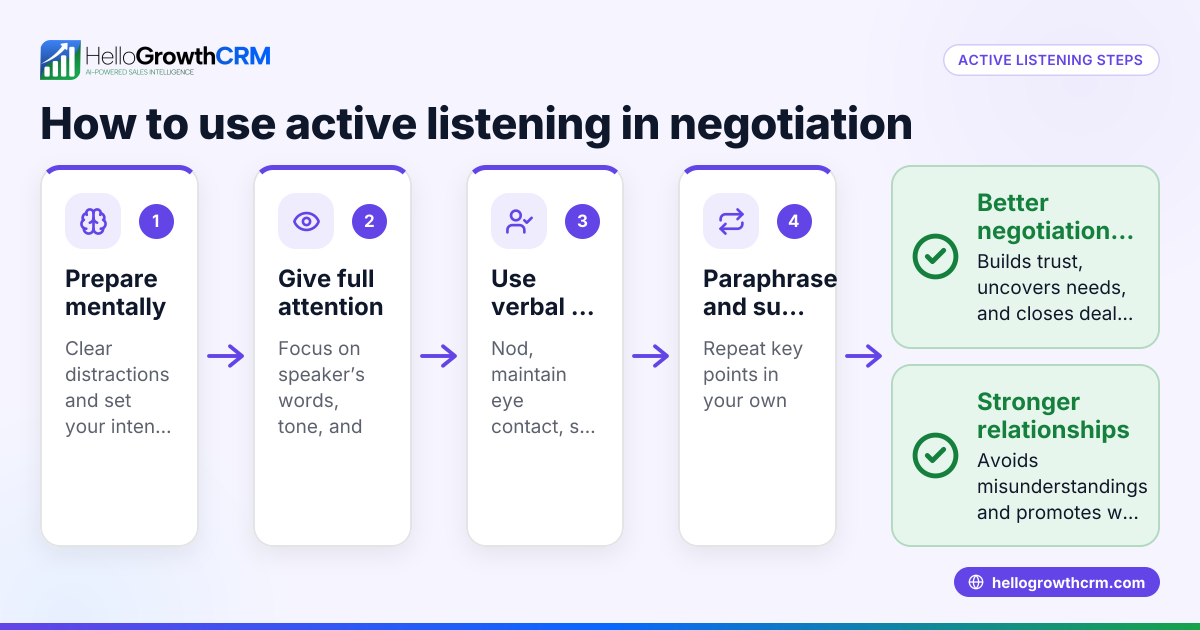
- Listen actively and confirm understanding
- Pay close attention without interrupting.
- Paraphrase or ask questions to confirm you understood.
- Express your needs clearly and calmly
- Use simple language and avoid jargon.
- State facts and how they affect you.
- Watch nonverbal cues
- Notice tone, facial expressions, and body language.
- Adjust your approach if the other party seems defensive.
- Handle objections with empathy and facts
- Acknowledge concerns before responding.
- Provide clear explanations or alternatives.
- Summarize agreements and next steps
- Repeat key points agreed upon.
- Clarify deadlines or responsibilities.
- Follow up promptly after the negotiation
- Send a summary email or message.
- Confirm both sides’ understanding.
Using tools like a CRM with a built-in dialer can help log calls and keep track of negotiation outcomes for follow-up. See built-in CRM dialer for more.
Example (fictional figures)
A plumbing company in Austin, Texas, negotiates a $15,000 contract with a property management firm on 07/15/2025.
- Step 1: The owner prepares key points: price $15,000, completion in 30 days, payment within 15 days of invoice.
- Step 2: They start the call with a friendly greeting.
- Step 3: The property manager expresses concerns about the timeline.
- Step 4: The owner listens and confirms: “You want completion in 20 days?”
- Step 5: The owner calmly explains why 30 days is needed due to workload.
- Step 6: They agree on a compromise: $15,000 price, 25 days completion.
- Step 7: The owner summarizes: “We agreed on $15,000, 25 days to finish, payment 15 days after invoice.”
- Step 8: The owner logs the call outcome in the CRM and sends a follow-up email.
This clear communication helped close the deal without confusion.
Arithmetic in the example
Price agreed: $15,000
Timeline initially requested: 20 days
Timeline owner proposed: 30 days
Compromise timeline: 25 days
Payment terms: 15 days after invoice
The negotiation adjusted the timeline by adding 5 days to the requested 20 days, balancing both sides' needs.
Common mistakes
- Talking too much, listening too little
- Prevent by practicing active listening and asking open questions.
- Using unclear or technical language
- Prevent by simplifying your message and checking understanding.
- Ignoring nonverbal signals
- Prevent by observing body language and tone, adjusting your approach.
- Failing to summarize agreements
- Prevent by repeating key points and confirming next steps.
- Delaying follow-up after negotiation
- Prevent by promptly logging outcomes and sending summaries.
Using a WhatsApp and SMS CRM can also help maintain clear communication channels.
Doing this in HelloGrowthCRM
HelloGrowthCRM includes a built-in dialer that lets your rep work a list from inside the CRM. Each call’s outcome is logged directly on the lead record, helping you track negotiation progress and plan follow-ups efficiently. This keeps your communication organized and accessible for your sales team. Learn more about the built-in CRM dialer.
Frequently asked questions
What is the role of communication in negotiation? Communication is the foundation of negotiation. It enables both parties to share their needs, clarify misunderstandings, and find common ground. Without clear communication, agreements may fail or cause conflict.
How can I improve listening skills during negotiation? Focus fully on the speaker, avoid interrupting, and ask clarifying questions. Summarize what you heard to confirm understanding. This shows respect and helps you respond appropriately.
Why is summarizing important in negotiation? Summarizing ensures both parties agree on what was discussed and decided. It prevents misunderstandings and provides a clear record of commitments.
How does technology help communication in negotiation? Tools like CRMs with built-in dialers help track calls, log outcomes, and schedule follow-ups. This keeps communication organized and ensures no lead or detail is lost.
Can nonverbal communication affect negotiation outcomes? Yes. Tone, facial expressions, and body language convey emotions and openness. Being aware of these cues helps you adjust your approach and build rapport.
Key takeaways
- Communication in negotiation means clear, two-way exchange to reach agreement.
- Prepare your goals, listen actively, and express needs simply.
- Watch nonverbal signals and summarize agreements clearly.
- Avoid common mistakes like poor listening and delayed follow-up.
- Use tools like HelloGrowthCRM’s built-in dialer to log calls and track negotiations.
Start improving your negotiation communication by managing leads and calls efficiently with HelloGrowthCRM. Start on the Free Forever plan (200 leads, no credit card).
Ready to put this into practice?
Set up your pipeline, WhatsApp follow-ups, and AI lead scoring in minutes — free, no credit card.
Try HelloGrowthCRM freeGet CRM tips in your inbox
Join thousands of sales professionals who get weekly insights on CRM strategy, AI automation, and pipeline optimization.

The HelloGrowthCRM team publishes guides on CRM strategy, AI sales tools, and revenue operations for small business sales teams.