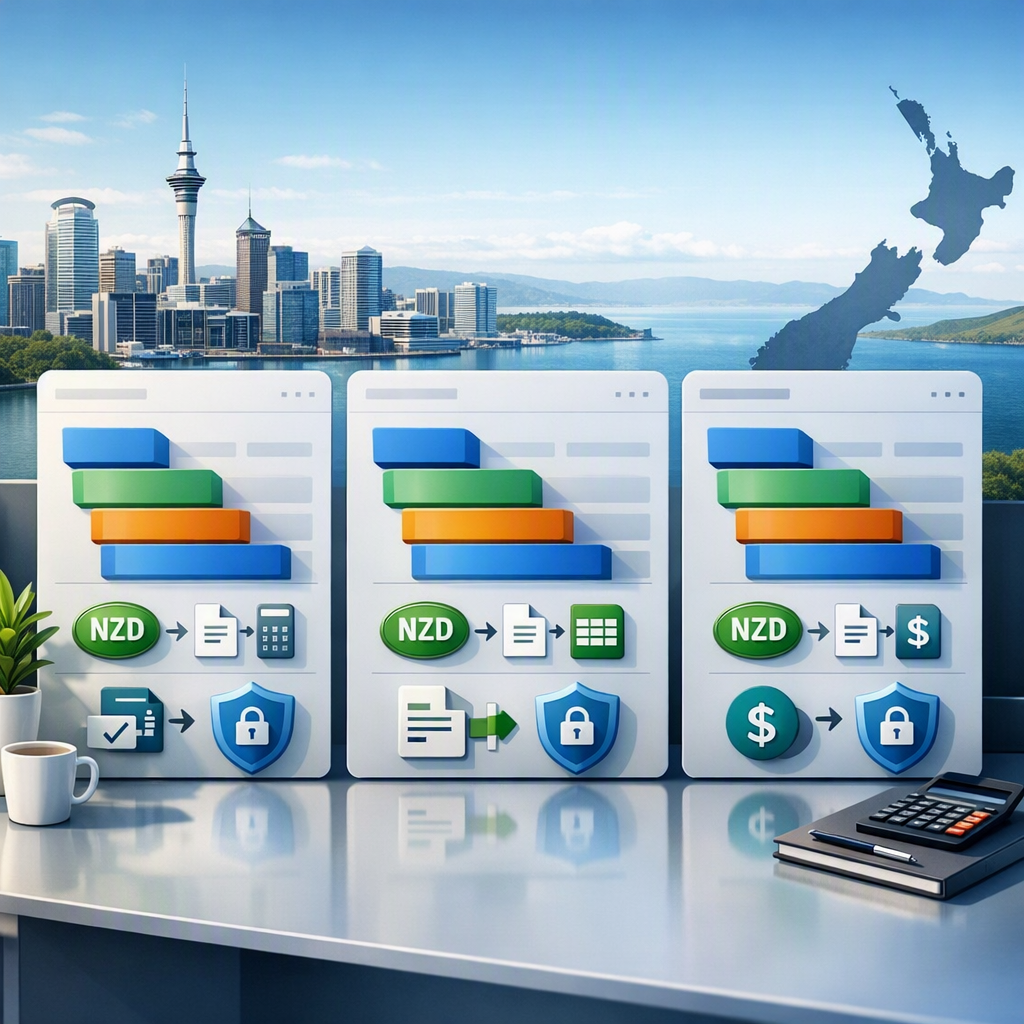
HelloGrowthCRM software
Built for real small-business sales teams
HelloGrowthCRM helps reps qualify faster, follow up on time, and close more deals—with practical automation in one place.
- AI lead scoring and pipeline visibility
- Built-in dialer, WhatsApp, and email automation
- Sales forecasting and RevOps-ready reporting
AI lead scoring for New Zealand SMBs is the use of CRM-based machine learning and rules to rank, route, and prioritise prospects using behaviour, fit, and revenue signals in a way that supports faster sales follow-up, cleaner forecasting, and compliant data handling under New Zealand privacy and messaging laws.
Key Takeaways
- AI lead scoring helps Auckland, Wellington, and Christchurch SMBs focus reps on the leads most likely to buy.
- For New Zealand teams, scoring workflows must respect the Privacy Act 2020 and outbound guardrails under the Unsolicited Electronic Messages Act.
- HelloGrowthCRM can combine product interest, engagement, source quality, and Xero-linked revenue context to score leads automatically in NZD.
- Good lead scoring is not just a model. It also needs routing, SLA-based follow-up, consent checks, and feedback loops.
- Export-led SMBs can use AI scoring to separate local demand from NZTE-style expansion opportunities without adding admin.
What is AI lead scoring for New Zealand SMBs?
AI lead scoring for New Zealand SMBs is a CRM workflow that predicts which prospects deserve attention first by using firmographic, behavioural, and commercial data, then applies routing and follow-up rules that fit local privacy expectations, outbound laws, and small-team resource limits.
For most SMBs, lead scoring fails for one simple reason. The score lives in a dashboard, but the team still works from gut feel.
A better setup connects scoring to action. In HelloGrowthCRM’s AI Lead Scoring, the score does three jobs:
- ranks inbound and outbound leads
- routes leads to the right rep or queue
- triggers the next best action automatically
That matters for lean teams. A five-person sales team in Auckland cannot afford to spend Monday calling every form fill in the same order. They need to know:
- who is sales-ready now
- who needs nurture
- who should be disqualified early
- which leads match ideal customer profile
- which accounts show revenue potential
In practice, good AI scoring blends rules and model signals. It does not rely on a black box alone. Typical signals include:
Fit signals
- industry
- company size
- location
- buyer role
- export potential
- current tech stack, such as Xero or Shopify
Intent signals
- pricing page visits
- demo requests
- email replies
- meeting bookings
- content downloads
- repeat site visits
Revenue signals
- invoice history
- average order value
- payment timeliness
- product line mix
- expansion likelihood
When I have audited pipelines like this, the strongest gains usually come from removing manual triage, not from chasing a perfect model. Teams often improve response time first, then conversion rate.
Why does AI lead scoring matter for SMB growth in Auckland, Wellington, and Christchurch?
AI lead scoring matters for SMB growth in Auckland, Wellington, and Christchurch because smaller New Zealand teams need to convert more revenue from limited lead volume, and scoring helps them respond faster, prioritise better-fit accounts, and avoid wasting rep time on low-intent or non-compliant outreach.
The New Zealand market is compact. That changes the economics of pipeline management.
Many SMBs do not have:
- dedicated SDR teams
- full-time RevOps support
- separate inbound and outbound motions
- enough volume to hide weak conversion
That is why prioritisation matters more here than in larger markets. One missed high-intent lead can be the difference between a good month and a flat one.
New Zealand’s Privacy Commissioner sets expectations around lawful, transparent handling of personal information, which makes disciplined data use a commercial issue, not just a legal one.
For export-led teams, there is another layer. New Zealand Trade and Enterprise supports businesses growing beyond the domestic market through capability building and export development at NZTE. That means many SMBs need a scoring system that can tell apart:
- local owner-operator demand
- channel and distributor interest
- offshore expansion opportunities
- existing customers with upsell potential
In one rollout we did with a 12-person sales team, the real win was not the model score itself. It was the combination of scoring, SLA alerts, and Meeting Scheduler automation that stopped warm leads sitting untouched overnight.
How can AI lead scoring stay compliant with the Privacy Act 2020 and outbound messaging rules?
AI lead scoring can stay compliant with the Privacy Act 2020 and outbound messaging rules by limiting data collection to clear business purposes, documenting lawful use, checking consent and source quality, and applying channel guardrails before any email, SMS, or automated follow-up is triggered.
This is where many tools get risky. They score first and ask questions later.
For New Zealand SMBs, your workflow should start with data governance. The Privacy Act 2020 is principles-based. That means your process matters as much as your technology.
Privacy-safe scoring principles
Use these guardrails before you switch on automation:
- collect only data you need for lead qualification
- tell people why you are collecting it
- keep records current and relevant
- restrict access by role
- avoid sensitive data unless clearly justified
- define retention periods
The Department of Internal Affairs explains that New Zealand’s Unsolicited Electronic Messages Act sets rules for commercial electronic messages, including consent and sender identification.
Practical outbound guardrails
If your CRM triggers outreach, build these controls in:
- verify consent status before email automation
- suppress purchased lists unless legal review approves use
- include sender identity and unsubscribe options
- separate transactional from promotional messaging
- treat SMS and WhatsApp with tighter controls where needed
Inside Email Automation and WhatsApp & SMS CRM, these checks should sit before send logic, not after.
What not to do
Avoid these common mistakes:
- scoring leads with old scraped data
- enriching records without clear purpose
- using invoice data from finance systems for unrelated targeting
- triggering cold outbound just because a score crossed a threshold
This is a practical limitation worth stating clearly. If your team uses broad outbound prospecting across multiple markets, you may need legal review before automating at scale. For teams under 50 reps, operational discipline usually matters more than complex legal architecture.
Which data should New Zealand SMBs use in an AI lead scoring model?
New Zealand SMBs should use AI lead scoring data that reflects fit, intent, timing, and likely revenue, while excluding unnecessary or overly sensitive personal information, so the model stays accurate, explainable, and easier to defend under internal governance and New Zealand privacy expectations.
The best models start simple. Most SMBs do not need 200 variables.
A practical scoring design for HelloGrowthCRM often uses four buckets:
| Signal group | Example fields | Why it matters | NZ-specific note |
|---|---|---|---|
| Firmographic fit | industry, employee count, location, role | shows ICP match | segment Auckland, Wellington, Christchurch separately |
| Behavioural intent | page views, demo requests, email clicks, replies | shows buying activity | apply consent-aware tracking rules |
| Source quality | referral, partner, organic, paid, outbound | predicts conversion by channel | track local events and NZ partner sources |
| Revenue context | invoice status, plan value, historical spend | shows commercial potential | sync Xero values in NZD |
Why Xero sync changes lead scoring quality
For New Zealand SMBs, finance context is often the missing layer. Many teams qualify heavily on marketing activity and ignore actual buying power.
A Xero-connected workflow can help you score based on:
- historical revenue by account
- invoice recency
- average deal or subscription value
- overdue payment risk
- product or service mix
That is where Revenue Attribution and Sales Forecasting become useful. The score is no longer just “engaged.” It becomes “engaged and commercially valuable.”
Keep the model explainable
Reps need to trust the score. Managers need to coach against it.
Use visible reason codes such as:
- visited pricing page twice in 7 days
- matches target industry
- replied to outbound email
- existing Xero customer with upsell potential
- no activity in 30 days
That is also why AI Sales Copilot and AI Deal Insights work well with lead scoring. They turn score changes into plain-English next steps.
How does HelloGrowthCRM score, route, and prioritise leads automatically?
HelloGrowthCRM scores, routes, and prioritises leads automatically by combining fit, intent, and revenue signals into a transparent score, then using workflow rules to assign owners, trigger follow-ups, and surface high-priority accounts inside one AI CRM built for fast-moving revenue teams.
Here is the practical flow.
1. Score the lead
HelloGrowthCRM’s AI CRM can weigh:
- form submissions
- page visits
- email engagement
- lead source
- company profile
- account revenue context
2. Route the lead
Once the score passes a threshold, routing rules can send the lead to:
- a territory owner using Territory Management
- an inbound queue
- a named account executive
- a nurture workflow if the score is too low
3. Trigger follow-up
The next action can happen automatically through:
4. Learn from outcomes
Won, lost, stalled, and disqualified outcomes feed back into the score logic over time.
In one rollout we did for a mixed inbound-outbound team, the breakthrough came from adding negative scoring for poor-fit micro-accounts and stale no-response sequences. That stopped reps chasing activity that looked busy but did not convert.
This is also where HelloGrowthCRM differs from point tools. Instead of exporting scores into spreadsheets or patching actions together through multiple apps, teams can manage scoring, follow-up, and pipeline movement in one place. If you want to see the wider setup, the Features page shows how the pieces connect.
How to set up AI lead scoring for New Zealand SMBs: Step-by-Step
Setting up AI lead scoring for New Zealand SMBs means defining your ideal customer profile, choosing compliant data inputs, connecting finance and communication systems, setting score thresholds, automating routing, and reviewing outcomes often enough to improve accuracy without creating extra admin for sales or operations teams.
- Define your ICP and exclusions
List your best-fit segments by industry, size, geography, role, and use case. Also define who should never score highly, such as tiny low-margin accounts or non-target sectors. - Map lawful data sources
Identify which fields come from forms, website activity, sales conversations, Xero, and integrations. Check collection purpose and access rules against the Privacy Act guidance. - Connect your systems
Link your CRM, email, calendar, and finance stack. For many NZ SMBs that means Gmail, Google Meet, Xero via All Integrations, and internal alerts through Slack. - Create scoring rules and thresholds
Start with simple positive and negative values. Add a small number of score bands, such as hot, warm, nurture, and disqualify. - Add routing and SLA workflows
Assign owners based on territory, round-robin, or account ownership. Then trigger tasks, reminders, or sequences so the score changes behaviour, not just reporting. - Apply outbound compliance checks
Insert consent, source, and suppression logic before emails or messages send. This is critical for the Unsolicited Electronic Messages Act. - Review conversion by score band
Compare MQL-to-SQL, meeting rate, and win rate by score band each month. Use the Pipeline Health Score and CRM ROI Calculator to see if scoring improves pipeline quality and revenue efficiency.
A simple scorecard to start with
A starter model can look like this:
- +20 for demo request
- +15 for pricing page visit
- +10 for ICP industry fit
- +10 for director or head-of role
- +15 for existing customer expansion signal from Xero-linked revenue
- -20 for unsubscribed or no-consent status
- -15 for non-target geography
- -10 for no activity in 30 days
A useful benchmark sentence belongs here. According to Xero’s official reporting, the platform serves millions of subscribers globally, including a large SMB base relevant to New Zealand finance workflows, which is why Xero remains a practical source of revenue context for local CRM automation https://www.xero.com/nz/about/investors/.
What should buyers compare when choosing AI lead scoring software in New Zealand?
Buyers comparing AI lead scoring software in New Zealand should assess data transparency, compliance controls, Xero connectivity, workflow automation depth, and local operating fit, because scoring accuracy alone does not matter if the system creates legal risk, extra admin, or weak follow-up execution.
Do not buy on “AI” branding alone. Compare how the workflow works day to day.
| Criteria | HelloGrowthCRM | Generic CRM add-on | Standalone scoring tool |
|---|---|---|---|
| Explainable scoring | Strong reason codes and workflow context | Often basic | Varies widely |
| Built-in routing and follow-up | Yes | Sometimes | Usually needs extra tools |
| Xero-friendly revenue context | Strong fit for NZ SMB workflows | Often limited | Rare |
| Compliance guardrails | Can be embedded in workflow design | Depends on setup | Often outside core product |
| NZ SMB usability | High for lean teams | Mixed | Mixed |
| Admin overhead | Lower when kept in one system | Medium | Higher with multiple systems |
HelloGrowthCRM is our product, so that is an important disclosure. If you already run a large enterprise stack with a mature RevOps team, a more complex platform may fit. But for most New Zealand SMBs, simplicity, explainability, and low admin matter more than model sophistication.
Before you commit, ask vendors these questions:
- Can reps see why a lead scored high or low?
- Can the score trigger routing and tasks automatically?
- Can I suppress outreach based on consent status?
- Can I bring in revenue context from finance systems?
- Can I test score bands against real conversion outcomes?
- What does setup look like for a team of under 20 users?
If you are still early, start with a Free Trial or book a Demo. That will tell you more than a feature sheet.
New Zealand teams that want better prioritisation without adding manual admin should try HelloGrowthCRM. You can use AI Lead Scoring with automated routing, finance-aware context, and practical workflow controls that fit local compliance expectations. Explore Pricing or start a Free Trial to see how HelloGrowthCRM supports growth across Auckland, Wellington, Christchurch, and export markets.
About the author
Samir Patel is a Revenue Operations Lead at HelloGrowthCRM with 11 years of experience in B2B SaaS sales operations, CRM design, and automation. He has led lead-routing, forecasting, and scoring projects for SMB and mid-market teams across ANZ. One project that informed this article was a CRM and finance-sync rollout for a 12-person sales team using Xero-linked account signals to prioritise upsell and inbound conversion without increasing admin.
Frequently Asked Questions
Q: What is AI lead scoring for New Zealand SMBs?
A: AI lead scoring for New Zealand SMBs is a way to rank leads by likelihood to convert using CRM data, behaviour, fit, and revenue signals. It helps small teams focus on the best opportunities first and automate routing and follow-up.
Q: Is AI lead scoring legal in New Zealand?
A: Yes, AI lead scoring is legal in New Zealand when you collect, use, and protect personal information properly and apply compliant messaging rules. The main safeguards come from the Privacy Act 2020 and the Unsolicited Electronic Messages Act.
Q: Can AI lead scoring connect with Xero?
Frequently Asked Questions
Ready to put this into practice?
Set up your pipeline, WhatsApp follow-ups, and AI lead scoring in minutes — free, no credit card.
Try HelloGrowthCRM freeGet CRM tips in your inbox
Join thousands of sales professionals who get weekly insights on CRM strategy, AI automation, and pipeline optimization.

The HelloGrowthCRM team publishes guides on CRM strategy, AI sales tools, and revenue operations for small business sales teams.