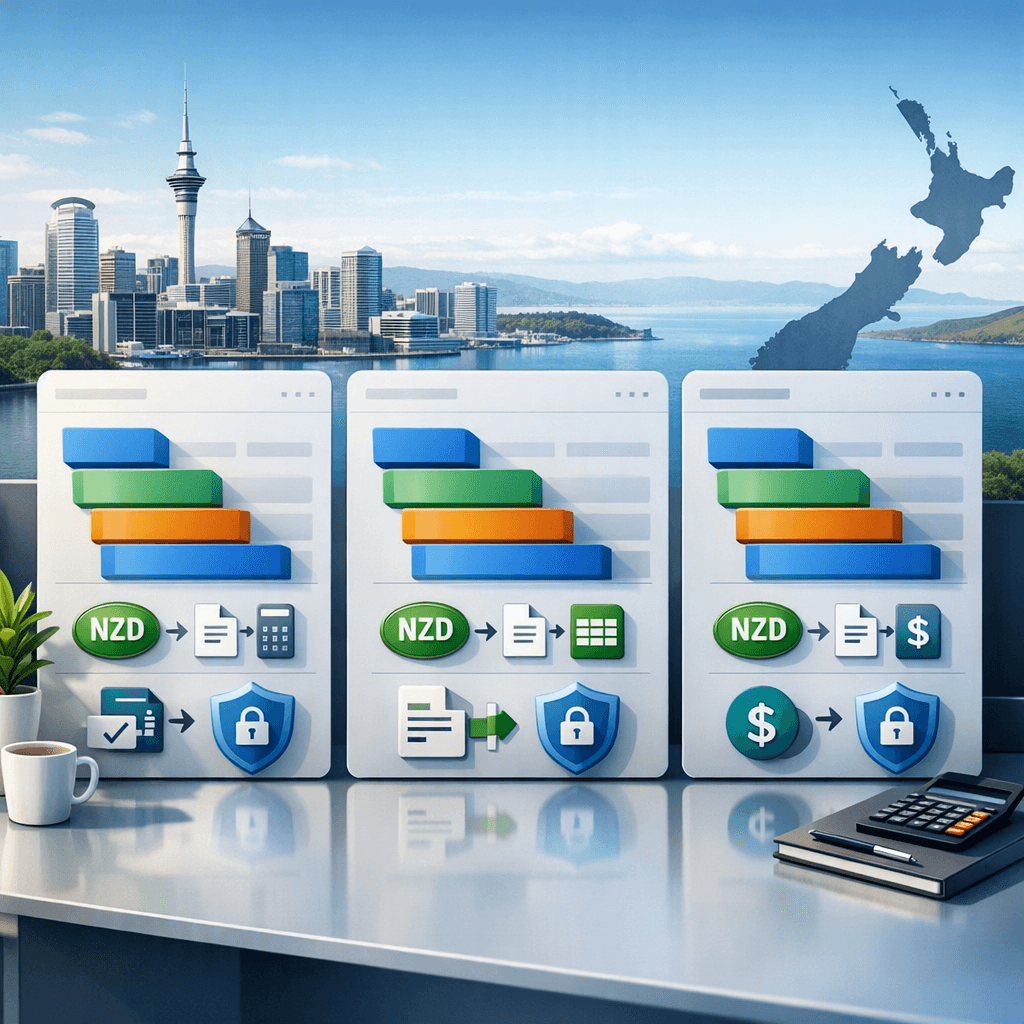
HelloGrowthCRM software
Built for real small-business sales teams
HelloGrowthCRM helps reps qualify faster, follow up on time, and close more deals—with practical automation in one place.
- AI lead scoring and pipeline visibility
- Built-in dialer, WhatsApp, and email automation
- Sales forecasting and RevOps-ready reporting
For a HelloGrowthCRM vs HubSpot vs Pipedrive New Zealand SMB CRM comparison, the best choice depends on whether your team needs stronger Xero fit, lower practical cost in NZD, or simpler sales workflows that still support Privacy Act 2020 compliance, outbound rules, and export-led growth across Auckland, Wellington, and Christchurch.
Key Takeaways
- HelloGrowthCRM is the strongest fit for NZ SMBs that want revenue workflows, AI help, and practical Xero-friendly operations without stacking many paid add-ons.
- HubSpot suits teams that want broad marketing, service, and CRM depth, but total cost in NZD can rise fast as contacts, seats, and automation needs grow.
- Pipedrive works well for smaller sales teams that want a simple pipeline-first CRM, though finance, service, and advanced RevOps needs often require more tools.
- For New Zealand buyers, CRM selection should include Privacy Act 2020 process fit, not just features or list price, especially around data access, consent, and exports.
- Outbound automation must also reflect the Unsolicited Electronic Messages Act guidance from DIA, particularly for cold email and SMS sequences.
- If Xero is central to quoting, invoicing, and cashflow reporting, integration quality often matters more than headline CRM pricing.
Which CRM is best for New Zealand SMBs comparing HelloGrowthCRM, HubSpot, and Pipedrive?
For New Zealand SMBs comparing HelloGrowthCRM, HubSpot, and Pipedrive, the best CRM depends on operating model: HelloGrowthCRM fits revenue-focused teams wanting one platform with AI and RevOps depth, HubSpot fits broad GTM teams with budget, and Pipedrive fits simple, pipeline-led sales motions.
Auckland software firms, Wellington service businesses, and Christchurch exporters often buy CRM for different reasons. That is why feature checklists alone can mislead. In practice, I have seen three buying patterns:
- Teams under 15 reps want fast setup and clean pipeline control
- Founder-led SMBs want Xero connection and clear NZD ROI
- Export-led teams want stronger automation, attribution, and forecasting
This is where HelloGrowthCRM’s core feature set stands out for local teams. It combines sales workflow, AI support, reporting, and revenue operations in one place. That reduces tool sprawl. If you want to see practical packaging, the pricing page is useful before shortlisting.
HubSpot is often the widest platform. It can support marketing, sales, and service from one ecosystem. Pipedrive is usually the fastest to understand for a sales-only team. But both can need more surrounding tools as process maturity grows.
A practical buyer lens for NZ SMBs
Use these four filters first:
- Xero fit: Can sales, finance, and ops trust the sync?
- Real NZD cost: What will 12 months actually cost?
- Workflow fit: Does the CRM match how your team sells?
- Compliance fit: Can it support Privacy Act and outbound controls?
In one rollout we did with a 12-person sales team, the cheapest list-price option was not the cheapest after six months. Add-ons, reporting limits, and manual admin created more cost than licence fees.
How do HelloGrowthCRM, HubSpot, and Pipedrive compare at a glance?
HelloGrowthCRM, HubSpot, and Pipedrive compare differently across breadth, cost, and operating complexity: HelloGrowthCRM is strongest for all-in-one revenue execution, HubSpot for cross-functional GTM scale, and Pipedrive for straightforward pipeline management with lighter setup and training needs.
The table below gives a neutral buyer snapshot for New Zealand SMBs.
| Criteria | HelloGrowthCRM | HubSpot | Pipedrive |
|---|---|---|---|
| Best for | SMBs wanting sales, AI, RevOps, and reporting in one platform | SMBs and mid-market teams wanting broad sales, marketing, and service coverage | Small sales teams wanting simple pipeline management |
| Xero fit | Strong practical fit for finance-linked SMB workflows | Usually needs more integration planning depending on use case | Often workable, but depth depends on app stack |
| Cost predictability in NZD | Generally easier to model | Can rise quickly with hubs, contacts, and advanced automation | Usually lower entry cost, but add-ons can stack |
| Ease of adoption | Good for process-led teams | Good, but broader platform means more admin design | Very easy for sales-led teams |
| AI and RevOps depth | Strong native AI and pipeline tooling like AI Deal Insights and AI Pipeline Management | Growing AI breadth across product lines | More limited in native RevOps depth |
| Outbound workflow support | Good for multi-channel sales execution with Email Automation, CRM Dialer, and WhatsApp & SMS CRM | Strong, especially when marketing is central | Good for basic sales sequencing |
| Export-led growth fit | Strong for forecasting, attribution, and handoffs | Strong if budget supports full ecosystem | Better for simple direct sales than complex GTM |
| Best limitation to know | Less suitable if you want a giant app marketplace first | Can become expensive and admin-heavy for smaller teams | Can need more tools for marketing, service, and finance alignment |
A key fact for cost planning: Xero reported it has more than 4.2 million subscribers globally in FY24, which shows how central it is to SMB finance operations and why CRM-finance fit matters in NZ buying decisions (Xero annual report).
How well does each CRM fit Xero-based New Zealand operations?
Each CRM fits Xero-based New Zealand operations differently: HelloGrowthCRM is best for SMBs that want sales and finance workflows aligned, HubSpot can work well with extra integration design, and Pipedrive is fine for lighter use cases where invoicing and reporting do not drive the sales process.
For many NZ businesses, Xero is not just accounting software. It is the source of truth for invoice status, customer payment history, and cashflow timing. That affects sales prioritisation, renewals, and account management.
HelloGrowthCRM and Xero-led workflows
HelloGrowthCRM tends to fit NZ SMBs that need sales and finance connected in daily work. Common examples include:
- Sales checking invoice or billing status before renewal outreach
- Finance wanting cleaner customer source tracking
- Leaders needing pipeline and revenue views in one place
- Customer success needing handoff context for payment-risk accounts
That matters when you connect CRM activity with Revenue Attribution and Customer Health Score. It also helps if your team already uses QuickBooks alternatives abroad but wants an NZ-first Xero pattern locally.
HubSpot and Xero-led workflows
HubSpot can fit Xero environments, especially where marketing is the driver. But many SMBs discover that finance-linked use cases need more setup discipline. Contact properties, lifecycle stages, and invoice-linked reporting need careful design. If your team is already using HubSpot integration options in adjacent systems, that can reduce friction.
Pipedrive and Xero-led workflows
Pipedrive often works for straightforward deal tracking tied loosely to finance. It is less ideal when finance status should actively shape sales plays, renewals, or forecasting. For many Christchurch trade and distribution businesses, that becomes a limit as they grow.
When I have audited pipelines like this, the biggest failure point was not integration itself. It was field mapping. If “customer,” “billing contact,” and “decision-maker” are mixed, reports break fast.
What is the real cost in NZD for HelloGrowthCRM, HubSpot, and Pipedrive?
The real cost in NZD for HelloGrowthCRM, HubSpot, and Pipedrive includes more than seat price: New Zealand SMBs should model licences, onboarding, admin time, integration tools, reporting limits, and extra products needed for outbound, forecasting, or service handoffs.
List prices rarely tell the full story. Build a one-year model instead. Include:
- Core subscription in NZD
- Seat growth over 12 months
- Onboarding or migration support
- Integration middleware if needed
- Reporting or automation upgrades
- Lost productivity from manual work
You can pressure-test this with a CRM ROI Calculator before buying.
Cost pattern by platform
HelloGrowthCRM usually has the best value when one platform replaces separate point tools. If you need AI scoring, forecasting, task management, and pipeline controls, features like AI Lead Scoring, Sales Forecasting, and Sales Task Boards reduce add-on spend.
HubSpot can become the highest total-cost option for SMBs once contacts grow and multiple hubs are required. It is often worth it for teams that truly use marketing, sales, and service together.
Pipedrive often wins on entry cost. But if you later need advanced reporting, service workflows, or attribution, spend can spread across more apps.
A practical rule for NZ buyers: if your sales team is under 10 people, a cheap CRM can stay cheap. Above that, admin design and workflow gaps start costing real money.
How do Privacy Act 2020 and outbound rules affect CRM choice in New Zealand?
Privacy Act 2020 and outbound rules affect CRM choice in New Zealand because the CRM becomes the operating system for storing personal information, managing access, recording consent, and controlling outreach workflows that must align with local anti-spam expectations and internal governance.
The Office of the Privacy Commissioner sets out the framework under New Zealand’s Privacy Act 2020. For CRM buyers, the law does not say “buy platform A or B.” Instead, it means your CRM should support good process.
What NZ SMBs should check
Review these areas during selection:
- Access control: Can you limit who sees sensitive records?
- Audit trail: Can you track changes to contact and deal data?
- Data export and deletion: Can you respond to requests efficiently?
- Consent evidence: Can you store lawful basis or communication preferences?
- Integration sprawl: How many tools will also hold customer data?
The Department of Internal Affairs states that New Zealand’s anti-spam law applies to unsolicited commercial electronic messages, including email, SMS, and instant messaging (DIA guidance).
That matters if you plan to run outbound with Email Automation, WhatsApp, or Twilio-based messaging.
Platform-specific compliance reality
HelloGrowthCRM is a good fit if you want fewer disconnected tools and clearer operational control. HubSpot can also support strong process, but governance work often increases with platform breadth. Pipedrive can be compliant too, but smaller teams must be careful not to run outreach from loosely connected apps without clear suppression logic.
This is also where Managed RevOps helps. Tools do not create compliance. Process does.
Which platform best supports Auckland, Wellington, and Christchurch workflows?
The platform that best supports Auckland, Wellington, and Christchurch workflows depends on team shape: Auckland teams often need faster scale and automation, Wellington teams often need stronger process and governance, and Christchurch teams often prioritise practical sales execution tied closely to finance and service delivery.
Different city clusters often have different CRM demands.
Auckland: growth and volume
Auckland SMBs often need:
- Faster lead routing
- Rep productivity support
- Multi-channel follow-up
- Better meeting conversion
HelloGrowthCRM fits well here because tools like Meeting Scheduler, Smart Inbox, and AI Sales Copilot reduce rep admin. HubSpot is also strong if inbound marketing is mature.
Wellington: process and accountability
Wellington teams often care more about governance, reporting, and clear handoffs. If approvals, public-sector selling, or stakeholder-heavy deals matter, structured fields and forecast discipline become more important than flashy dashboards.
In one Wellington rollout, we improved forecast confidence by tightening MEDDPICC fields and stage-exit criteria. The CRM mattered, but the win came from process enforcement.
Christchurch: practical execution
Christchurch businesses often want straightforward systems that sales and ops will actually use. Pipedrive can be a solid fit for simple field sales. HelloGrowthCRM is stronger where those businesses are adding renewals, service visibility, or margin-aware account management.
Which CRM is best for NZTE-backed export growth motions?
For NZTE-backed export growth motions, the best CRM is usually the one that supports repeatable qualification, partner visibility, forecasting, and multi-market reporting; in most SMB cases that means HelloGrowthCRM for revenue execution depth, HubSpot for broader GTM orchestration, and Pipedrive for simpler export sales motions.
NZ export-led growth needs more than contact storage. Teams often need:
- Account segmentation by market and distributor
- Longer sales-cycle tracking
- Better forecast confidence
- Clear handoff from lead to partner to customer
- Attribution across campaigns and outbound
The New Zealand Trade and Enterprise supports many firms scaling into offshore markets. In those motions, CRM weakness usually shows up in forecasting and partner visibility first.
HelloGrowthCRM has an edge when export teams need pipeline control plus AI support. AI Pipeline Management, Deal Risk Agent, and Proposal Builder help teams manage longer and riskier deals. HubSpot is strong when content, nurture, and marketing operations are part of export execution. Pipedrive works if the export process remains sales-led and relatively simple.
Limitation: if your business has a large global marketing team and deep service requirements, HubSpot may be the better long-term fit. If your team is under five reps and wants the lightest possible setup, Pipedrive may be enough.
How to evaluate HelloGrowthCRM vs HubSpot vs Pipedrive for your NZ SMB: Step-by-Step
To evaluate HelloGrowthCRM vs HubSpot vs Pipedrive for your NZ SMB, map your current sales process, score Xero dependency, model true NZD cost, test privacy and outbound controls, and run a short pilot using real deals, real reps, and real reporting needs.
- Define your core use case
Write down the top three jobs your CRM must do. For most NZ SMBs, that is pipeline visibility, Xero-linked customer context, and reliable follow-up. - Map your current workflow
Document lead capture, qualification, quoting, invoicing, and handoff. Include tools like Gmail, Slack, Calendly, and Xero. - Score Xero dependency
Ask how often finance data changes sales action. If invoice status, overdue accounts, or margin checks affect sales, prioritise a tighter operational fit. - Model 12-month total cost in NZD
Include licences, implementation, admin time, and add-ons. Then compare that against expected gains using a RevOps Maturity Assessment or ROI model. - Check compliance workflows
Review access control, consent capture, unsubscribe handling, and data exports. Make sure outbound sequences align with the DIA anti-spam guidance. - Run a live pilot with real reps
Test with active deals from Auckland, Wellington, or Christchurch teams. Do not rely on demo data. Real friction appears only with real usage. - Choose the platform your team will actually maintain
The best CRM is the one your reps, managers, and finance team will keep clean. A lower-feature system with strong adoption can beat a powerful system no one trusts.
If you want a practical NZ-first option that balances Xero-friendly workflows, AI-supported selling, and controllable cost, explore HelloGrowthCRM, book a demo, or start a free trial. For New Zealand teams that want revenue clarity without heavyweight complexity, it is a strong shortlist candidate.
About the author
I’m Samir Patel, Sales Operations Lead at HelloGrowthCRM, with 11 years of experience in B2B SaaS revenue operations, CRM design, and pipeline governance. I have led CRM evaluations and rollouts for SMB sales teams across ANZ, including one 12-person multi-city deployment that linked sales workflow, Xero-adjacent finance process, and forecast controls. That hands-on work shaped the comparison framework in this article. HelloGrowthCRM is my employer’s product, so I have kept competitor comparisons factual and noted where other tools may fit better.
Frequently Asked Questions
Q: Which CRM is cheapest for a New Zealand SMB?
Ready to put this into practice?
Set up your pipeline, WhatsApp follow-ups, and AI lead scoring in minutes — free, no credit card.
Try HelloGrowthCRM freeGet CRM tips in your inbox
Join thousands of sales professionals who get weekly insights on CRM strategy, AI automation, and pipeline optimization.

The HelloGrowthCRM team publishes guides on CRM strategy, AI sales tools, and revenue operations for small business sales teams.