HelloGrowthCRM software
Built for real small-business sales teams
HelloGrowthCRM helps reps qualify faster, follow up on time, and close more deals—with practical automation in one place.
- AI lead scoring and pipeline visibility
- Built-in dialer, WhatsApp, and email automation
- Sales forecasting and RevOps-ready reporting
In the UK, an automated lead follow-up system should be built around PECR, UK GDPR, British payment habits and the way your enquiries actually arrive, not around a generic sequence of emails.
That matters because a UK business can look organised while still creating legal and operational mess: texting people who did not consent, losing the source of a lead from Checkatrade or Google Business Profile, or treating a bank transfer deposit as if finance can tidy it up later. Good automation is less about sending more messages and more about deciding what happens next, who owns it, and what record you keep.
If you run a local service business, a clinic, a practice or a sales team that covers more than one nation of the UK, your setup needs to reflect local realities. England and Wales, Scotland and Northern Ireland do not share one holiday calendar. UK buyers often pay by Faster Payments or Direct Debit rather than card. And the form on your website is where retention, consent and data minimisation start, not an afterthought for compliance.
PECR decides whether your first automated message is allowed
In the UK, marketing by email and text is regulated by the Privacy and Electronic Communications Regulations, usually shortened to PECR, and enforced by the Information Commissioner’s Office. PECR sits alongside the UK GDPR and the Data Protection Act 2018. That means a business can have a CRM workflow that is technically clever but still unlawful if the message type and consent are wrong.
For lead follow-up, the practical issue is simple: not every enquiry gives you the right to start a marketing sequence. A genuine reply to the person’s request is one thing; promotional follow-up over email or SMS is another. The narrow UK “soft opt-in” can apply in some circumstances, but only where the contact details were obtained in the right context and the person had a clear chance to refuse at that point. If your website form buries this in unclear wording, your automation is built on sand.
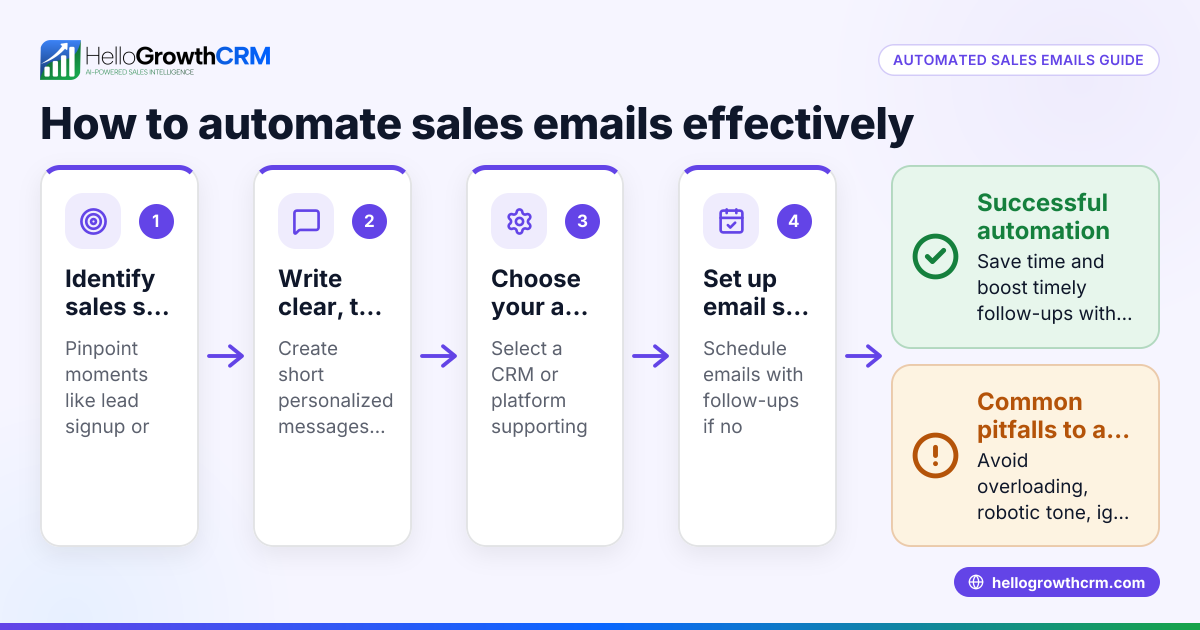
WhatsApp and SMS can work well for UK response times, but they are not a shortcut around consent rules. If you plan to use WhatsApp or SMS workflows, separate service messages from marketing messages in your logic. “Your survey slot is held until tomorrow” is different from “Here is our monthly offer”. The safest design is to tag the lawful basis and communication permission at capture, then let automation read those fields before sending anything.
This is also where subject access requests become real. If someone asks what you hold on them, you need one record showing when they enquired, what permissions were captured and what was sent. A lead follow-up system is part sales process, part evidence trail.
Your form should collect only the details that change the next action
Many UK businesses overbuild enquiry forms, then wonder why completion drops and staff ignore half the fields. A better test is whether a field changes the next step. If it does not alter routing, timing, compliance or quote preparation, do not ask for it at first contact.
For an electrical contractor in Glasgow, postcode, job type, tenancy status and preferred visit window may be enough to decide whether the lead is in area, whether travel time is realistic and whether to book a site visit or a phone call. For a conveyancing practice in Cardiff, transaction type and whether the person is buying, selling or both may matter more than collecting a long narrative. For a veterinary surgery in Bristol, automation must be even tighter because health-related information may drift into special category data if your intake is poorly designed. Under UK GDPR and the Data Protection Act 2018, special category data carries additional conditions, so the form should avoid asking for more than is needed.
The Equality Act 2010 also reaches this stage. If your booking or enquiry page is customer-facing, reasonable adjustments are not optional good manners. In practice that can mean allowing a lead to request a phone call instead of online booking, making fields and labels readable by assistive technology, and not forcing a channel that excludes some users. If you operate in Wales, Welsh-language provision may also be a practical consideration for customer-facing forms and follow-up.
A useful internal check is this:
- Does each form field change routing, timing, compliance checks or quote preparation?
- Can the person refuse marketing at the point their details are collected?
- Have you defined how long the lead record should be kept if they never buy?
- Would you be comfortable producing the form submission and message history to the ICO?
Google Business Profile, Checkatrade and referrals should not enter the same path
UK leads arrive with different expectations depending on source. A person who finds you on Google Business Profile may expect a quick call-back and local proof that you cover their area. A Checkatrade or Rated People lead often expects speed, price clarity and proof that you can attend soon. A LinkedIn lead for a Manchester recruitment firm may need a slower, more consultative path. A referral may already trust you enough to skip education and move straight to booking.
If all of those enter one automated sequence, your response will feel generic. Source should decide the first action, the channel and the handoff rule. That is not a cosmetic CRM preference; it changes close speed and staff workload. A mobile service business may want Google Business Profile enquiries routed by territory and travel time, while a practice with fixed rooms may want instant access to a booking page.
For that reason, capture source explicitly and keep it clean. Free-text source fields quickly become useless. A lead from Yell, Facebook or a business listing should be normalised into consistent values so you can build sensible automation. If you are using lead capture and qualification tools, make sure the source field is mandatory enough to route the next step without manual detective work.
The UK norm of local search also matters. Buyers looking for a nearby electrician, vet or solicitor often care less about a long nurture journey and more about whether you serve their postcode, when you can speak, and whether the first reply sounds local rather than centralised.
UK timing means more than office hours
Bad timing is one of the easiest ways to make automation look careless in the UK. The obvious point is business hours, but the harder part is calendar variation across the four nations. Scotland has bank holidays that England and Wales do not share, and Northern Ireland has its own calendar too. If your system ships one UK holiday list and sends reminders as normal everywhere, it will eventually message people on the wrong day.
This matters most for teams that schedule calls, visits or viewings across borders. A field team serving Carlisle and Dumfries should not use a single holiday assumption. A recruiter booking interviews across Manchester and Belfast should not rely on one regional calendar. The fix is not complicated: store region, branch or territory, and let automation read the relevant holiday schedule before sending reminders or booking tasks.
Travel time is another UK-specific timing issue for mobile businesses. A same-day call-back is good; a same-day visit promise that ignores route time is not. If your lead follow-up creates field tasks, build in enough structure to distinguish “call now” from “visit worth scheduling”. This is where territory and field-operation tools can help a team allocate ownership by area rather than by whoever happens to notice the lead first.
Do not overlook channel timing either. Email may suit a legal or B2B enquiry, while SMS can suit appointment confirmation. But your automation should stop once the lead responds. Otherwise the UK buyer who has already replied by phone may still receive another scheduled nudge, which looks disjointed and can create complaints.
Deposits and payment method belong in the follow-up record
In many UK businesses, the moment a lead becomes a customer is messy because payment happens outside the sales trail. A card-only assumption misses how people actually pay. Deposits by Faster Payments are common. Ongoing fees may be collected by Direct Debit. Some firms still receive BACS. Others increasingly use Open Banking alongside cards. If your automation records only card payments, the commercial story is incomplete.
This has a UK tax angle. VAT is administered by HMRC, and the point at which payment is received can matter for VAT record-keeping. HMRC publishes the current VAT registration threshold and guidance on when VAT becomes due. You should check the current position on GOV.UK, especially if your business takes deposits. Receipt of payment can trigger the obligation, so the arrival of a deposit is not just finance trivia to be reconciled later. HMRC has also issued specific guidance over time on retained deposits when a customer does not attend or cancels, so businesses that take booking money should review the current treatment rather than rely on old habits.
Making Tax Digital adds another operational layer because VAT records need to be kept in the required way. Even if your CRM is not your accounting system, your follow-up record should show when the deposit request was sent, how the customer paid and whether the payment was received. That reduces the gap between sales promises and tax records.
The arithmetic below is illustrative; the figures are made up to show the shape of the decision. A three-room practice in Leeds quotes £280 for a private assessment and asks for a £60 deposit to hold the appointment. The patient books online on Monday, pays the £60 by Faster Payments on Tuesday, then settles the remaining £220 by card after the appointment. If the CRM marks the deal as won only on the appointment date and stores no record of the earlier deposit, staff can miss what happened commercially and finance may have to reconstruct it later. A better system logs the deposit request, records that £60 arrived by bank transfer, then triggers the right appointment confirmation and balance reminder. This example leaves out the exact VAT treatment, any exemption questions, and accounting entries; those depend on the service and current HMRC guidance.
Regulated sectors need intake gates before any nurture sequence
Some UK businesses should not automate the same way as a standard home-services firm. A conveyancing practice, a care provider, a veterinary surgery or a consumer-credit business may face sector rules as well as general data law. The regulator changes the intake design. The Solicitors Regulation Authority, the Care Quality Commission and the Financial Conduct Authority each shape what can happen before work starts, even if your first concern is “how do we follow up faster?”
That does not mean no automation. It means the first automation may be an internal check, not an outbound message. A conveyancing lead may need conflict screening and matter-type confirmation before any detailed discussion. A care enquiry may require careful handling of health-related information. A firm in a regulated financial activity may need approved wording and a clear distinction between factual information and promotion.
In these cases, create a gated status such as “intake review required” or “compliance check pending”. Do not let every new enquiry fall straight into a sales cadence. The best automated lead follow-up system for a regulated UK business often does less outwardly and more internally: task creation, ownership assignment, required fields and auditability.
Ownership should shift cleanly between admin, sales and field staff
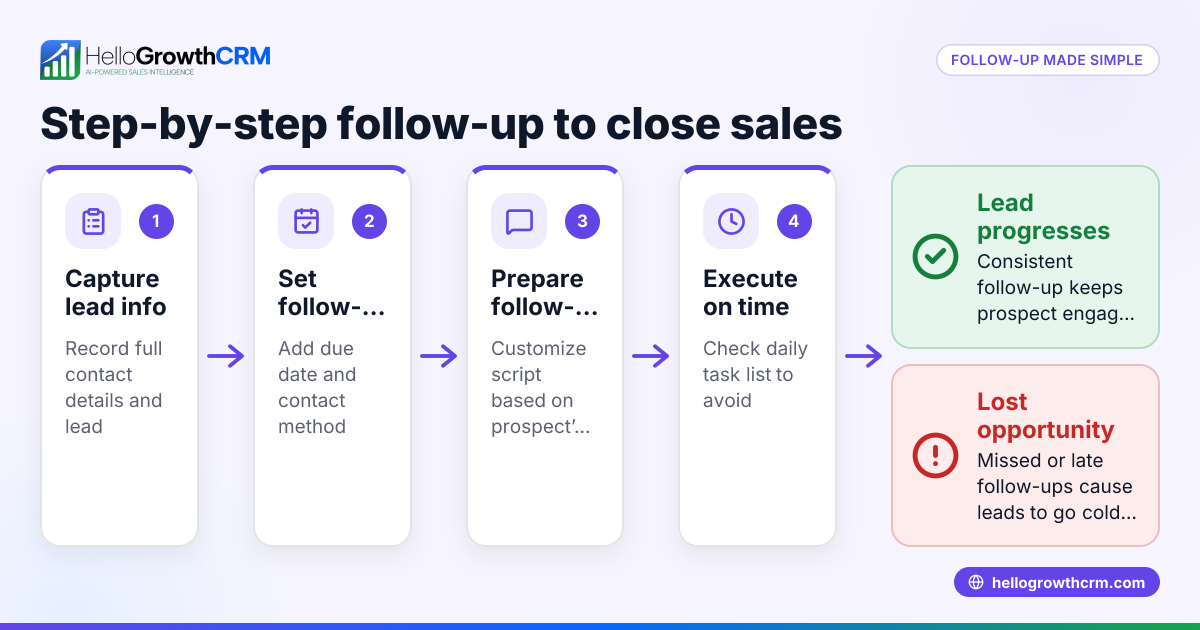
UK teams often lose leads not because no one replied, but because ownership became fuzzy. Reception assumes sales will call. Sales assumes the branch will book. The engineer thinks the office has confirmed. A good automated system makes handoffs visible.
For a Glasgow electrical contractor, a new enquiry might begin with admin checking postcode coverage, move to an estimator for quote triage, then pass to a field operative once a site visit is agreed. For a Manchester recruitment firm, ownership may shift from inbound qualification to a consultant with the right desk focus. The automation should change the owner when the stage changes, create the next task and preserve the history.
This is where a CRM’s pipeline and task structure matter more than flashy messaging. Pipeline management gives you stage movement and expected value, while task boards and activity history keep calls, meetings and notes attached to the same record. That is particularly useful when a lead has interacted across email, phone and a booking page and you need one account of what has happened.
If your team still works partly from mobiles and partly from desks, keep the rule simple: every stage change must create one named owner and one next action. Anything vaguer will eventually produce duplicated calls or dead time.
A small, auditable UK setup beats a clever one you cannot defend
The strongest UK implementation is usually narrower than businesses expect. Start with a handful of source values, a short set of compliant message types, one regional calendar rule, and payment capture that reflects how customers actually pay. Add complexity only when a real operational difference justifies it.
Auditability is the standard to aim for. Could you show why a person received a message, where their details came from, who owned the lead, and what happened when they paid a deposit? Could you stop the sequence when they responded? Could you answer a subject access request without searching five tools? If not, the automation is not finished.
HelloGrowthCRM is most useful here when you want one working record from enquiry to close: lead capture and qualification, a pipeline, scheduling, task history, a built-in dialer, and timed sequences across email and messaging. If you are evaluating tools, the free CRM lets you test the operating shape before rolling it out more widely.
In the UK, a good automated lead follow-up system is the one that fits PECR, respects UK calendars and payment habits, and leaves a clear record that your team can actually run.
Ready to put this into practice?
Set up your pipeline, WhatsApp follow-ups, and AI lead scoring in minutes — free, no credit card.
Try HelloGrowthCRM freeGet CRM tips in your inbox
Join thousands of sales professionals who get weekly insights on CRM strategy, AI automation, and pipeline optimization.

The HelloGrowthCRM team publishes guides on CRM strategy, AI sales tools, and revenue operations for small business sales teams.