HelloGrowthCRM software
Built for real small-business sales teams
HelloGrowthCRM helps reps qualify faster, follow up on time, and close more deals—with practical automation in one place.
- AI lead scoring and pipeline visibility
- Built-in dialer, WhatsApp, and email automation
- Sales forecasting and RevOps-ready reporting
Call structure is a planned sequence of stages or topics to cover during a sales call. It helps salespeople guide conversations, build rapport, uncover needs, present solutions, and close deals efficiently. This article explains why call structure matters for small businesses, provides a step-by-step guide to creating one, shares a realistic example, highlights common mistakes, and shows how HelloGrowthCRM’s built-in dialer can support your calls.
Why this comes up / what goes wrong
Small-business owners often find their sales calls lack focus or consistency, leading to lost leads and missed opportunities. Without a clear call structure, sales reps might jump around topics, forget to ask important questions, or fail to handle objections. This often results in longer calls that don’t progress the sale, or worse, prospects feeling confused or unvalued. For businesses relying on calls alongside texts, emails, or spreadsheets, an unstructured approach can cause slow follow-up and disorganized lead management.
Step-by-step
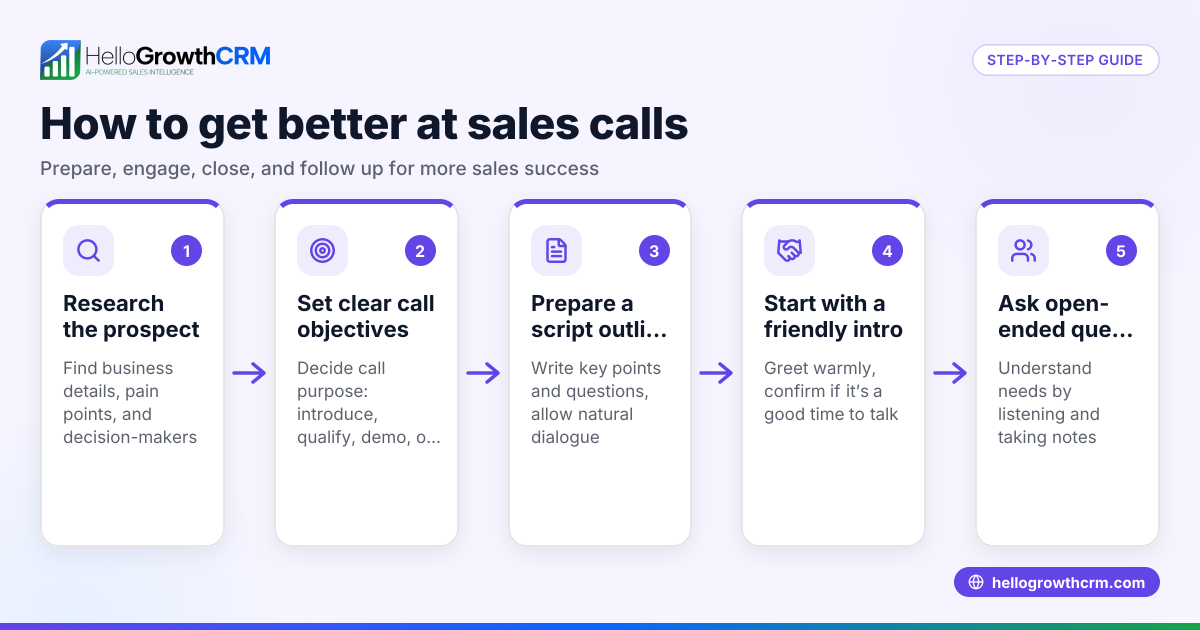
- Prepare your call objectives: Define what you want to achieve in the call — whether it’s qualifying a lead, setting a demo, or closing a sale. Check that your goal is realistic for the call duration.
- Start with a warm greeting and rapport building: Quickly introduce yourself and your company, then engage in light conversation to create comfort. Check the prospect’s availability to talk.
- State the call purpose clearly: Let the prospect know why you’re calling and what you hope to cover. This sets expectations and shows respect for their time.
- Ask discovery questions: Use open-ended questions to understand the prospect’s needs, challenges, and priorities. Check you’re listening actively and taking notes.
- Present your solution briefly: Tailor your pitch to the prospect’s needs uncovered earlier. Avoid long monologues—focus on benefits relevant to them.
- Handle objections: Be ready to address concerns calmly and clearly. Check that you understand the objection fully before responding.
- Close with a clear next step: Whether scheduling a follow-up, sending a proposal, or closing the sale, confirm the next action and timeline.
- Summarize and thank: Recap what was agreed upon and thank the prospect for their time.
- Log the call outcome immediately: Record notes, next steps, and call results to keep your CRM updated and ready for follow-up.
Example (fictional figures)
A landscaping contractor in Charlotte, North Carolina, wants to qualify leads for a spring cleanup service. On 03/15/2026, a sales rep calls a prospect.
- Objective: Schedule an on-site estimate.
- Greeting and rapport: “Hi, this is Sarah from GreenScape. How are you today?”
- Purpose: “I’m calling to see if you’re interested in our spring cleanup service.”
- Discovery: “Can you tell me about your current lawn care routine?”
- Solution: “Our cleanup includes leaf removal, pruning, and mulching tailored to your yard.”
- Objection: “I’m worried about cost.” Response: “We offer flexible packages starting at $350.”
- Close: “Can I schedule an estimate for next week?”
- Summary: “Great, I’ll see you Tuesday at 10 AM. Thanks for your time.”
This clear structure keeps the call focused and productive.
Common mistakes
- Skipping preparation: Prevent by defining call goals before dialing.
- Talking too much without listening: Prevent by asking open questions and pausing for answers.
- Ignoring objections or rushing to close: Prevent by acknowledging concerns and addressing them calmly.
- Not confirming next steps: Prevent by clearly stating and agreeing on follow-up actions.
- Failing to log call outcomes promptly: Prevent by updating your CRM immediately after the call.
- Using inconsistent call approaches across reps: Prevent by standardizing your call structure and training your team.
Using a consistent call structure helps avoid these pitfalls and improves lead conversion.
Doing this in HelloGrowthCRM
HelloGrowthCRM includes a built-in dialer that lets your sales reps call directly from the CRM. As they work a calling list, each call’s outcome is logged on the lead record automatically. This keeps your call history organized and linked to contacts and deals, making follow-up easier and more effective. Learn more about the built-in CRM dialer and how HelloGrowthCRM supports sales teams in the United States at HelloGrowthCRM for the United States. If you also use texts or WhatsApp, see the WhatsApp and SMS CRM features.
Frequently asked questions
What is the ideal length for a sales call? Sales calls typically last between 5 and 20 minutes depending on the call’s purpose. Qualification calls are shorter, while closing or demo scheduling calls may take longer. The key is to keep your call structured so you cover necessary points without rushing.
How do I handle a prospect who is not interested? Respect their time and politely ask if you can follow up later or send information by email. Logging this outcome in your CRM helps you avoid wasting time and keeps the door open for future opportunities.
Should I script my sales calls? Using a script or outline ensures consistency and helps new reps. However, avoid sounding robotic—use the structure as a guide and adapt to each conversation naturally.
How can I improve my call closing rate? Focus on listening carefully to needs, addressing objections clearly, and always confirming a next step. Practice and review call outcomes regularly to identify improvement areas.
Can HelloGrowthCRM help with managing call follow-ups? Yes, with the built-in dialer, every call is logged, and you can set reminders or tasks for follow-up actions, helping you keep your sales pipeline moving efficiently.
Key takeaways
- Call structure is a planned sequence of stages that guides sales calls for better outcomes.
- Preparing objectives and discovery questions ensures focused and relevant conversations.
- Handling objections calmly and confirming next steps prevent lost opportunities.
- Logging call outcomes immediately keeps your CRM up to date and follow-ups effective.
- Avoid common mistakes like skipping preparation or ignoring objections by standardizing your approach.
- HelloGrowthCRM’s built-in dialer helps manage calls and outcomes directly within your CRM.
Organizing your sales calls with a clear call structure increases your chances of converting leads and builds professional relationships. Start improving your calls today and manage them efficiently with tools designed for small and mid-sized businesses.
Ready to get started? Start on the Free Forever plan (200 leads, no credit card) and see how HelloGrowthCRM can help you organize and track your sales calls.
Ready to put this into practice?
Set up your pipeline, WhatsApp follow-ups, and AI lead scoring in minutes — free, no credit card.
Try HelloGrowthCRM freeGet CRM tips in your inbox
Join thousands of sales professionals who get weekly insights on CRM strategy, AI automation, and pipeline optimization.

The HelloGrowthCRM team publishes guides on CRM strategy, AI sales tools, and revenue operations for small business sales teams.