HelloGrowthCRM software
Built for real small-business sales teams
HelloGrowthCRM helps reps qualify faster, follow up on time, and close more deals—with practical automation in one place.
- AI lead scoring and pipeline visibility
- Built-in dialer, WhatsApp, and email automation
- Sales forecasting and RevOps-ready reporting
Construction sales training is designed to help contractors improve their ability to win projects, manage sales leads efficiently, and increase revenue. It focuses on the unique challenges of selling construction projects, such as bidding, client relationships, and project scope communication.
Why this comes up / what goes wrong
Construction business owners and accountants often face sales challenges that come from managing leads across multiple channels like emails, text messages, and spreadsheets. This scattered approach can cause slow or missed follow-ups, lost bids, and unpredictable revenue. Without training tailored to construction sales, teams may struggle to price projects accurately, communicate value effectively, or close deals consistently. These issues make it harder to grow the business and maintain steady cash flow.
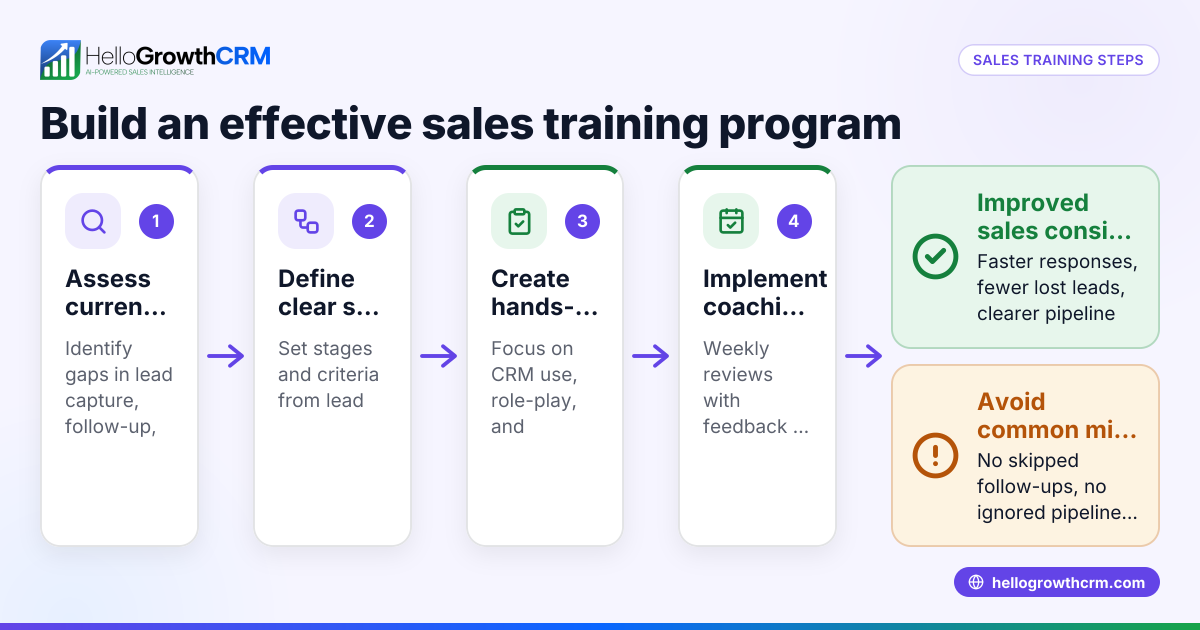
Step-by-step
- Identify your sales challenges: Write down specific problems such as slow follow-up times, low bid acceptance rates, or difficulty managing multiple prospects.
- Research construction-focused training providers: Look for programs that teach bidding strategies, client communication, and how to handle project scopes.
- Check the training format and length: Decide if you prefer online courses, in-person workshops, or ongoing coaching depending on your team’s availability.
- Verify trainer experience: Confirm that trainers have direct experience in construction sales or have worked closely with contractors.
- Ask about customization options: Ensure the training can be tailored to your business size, region, and typical project types.
- Review training materials and tools: Good programs provide practical resources like sales scripts, proposal templates, and CRM integration advice.
- Consider post-training support: Find out if the program offers follow-up coaching, refresher sessions, or access to a community for ongoing learning.
- Compare pricing and expected ROI: Weigh the cost against potential improvements in win rates and revenue growth.
- Request references or case studies: Talk to other contractors who have completed the training to understand its effectiveness.
- Plan how to measure success: Set KPIs such as lead response time, bid acceptance rates, and sales cycle length to track improvements.
Example (fictional figures)
A two-location landscaping and construction company in Columbus, Ohio, with 15 employees, invests $5,000 in a construction sales training program on 04/01/2026. Before training, they submit 100 bids annually, with an average bid size of $50,000 and a close rate of 20%.
Current annual revenue from bids:
100 bids × $50,000 = $5,000,000 total bid value
$5,000,000 × 20% = $1,000,000 revenue from closed bids
After training, their close rate improves to 30%, and the average bid size increases to $55,000.
New annual revenue from bids:
100 bids × $55,000 = $5,500,000 total bid value
$5,500,000 × 30% = $1,650,000 revenue from closed bids
Revenue increase:
$1,650,000 - $1,000,000 = $650,000
Return on training investment:
$650,000 ÷ $5,000 = 130× return
This example shows how focused sales training can significantly boost revenue by improving bid success and increasing average project size.
Common mistakes
- Choosing generic sales training: Avoid this by selecting programs focused specifically on construction sales challenges.
- Ignoring lead follow-up processes: Prevent lost leads by integrating training with tools that track follow-ups, such as a CRM.
- Not involving the entire sales team: Ensure all relevant staff participate to maintain consistent messaging and skills.
- Failing to measure results: Set clear KPIs before training to track improvements effectively.
- Skipping post-training reinforcement: Schedule refresher sessions or coaching to sustain gains.
- Overlooking technology support: Pair training with CRM tools that support construction sales workflows.
Doing this in HelloGrowthCRM
HelloGrowthCRM helps construction sales teams stay organized and follow up promptly. Deals (pipeline) let you track open opportunities from first contact through close, with stage movement and follow-up dates so no quotation is forgotten. Territories, field operations, and commissions features allow field reps to log visits from their phones while managers see daily activity. Managed RevOps provides founders without sales managers weekly support to keep the follow-up queue active. Learn more about HelloGrowthCRM for the United States.
Frequently asked questions
What topics are covered in construction sales training? Construction sales training typically covers bidding strategies, client communication, project scope management, pricing, and sales pipeline management tailored to construction projects.
How long does construction sales training usually take? Training duration varies from a few hours of online modules to multi-day workshops or ongoing coaching. Choose a format that fits your team’s schedule and learning preferences.
Can sales training improve lead follow-up? Yes. Training teaches best practices for follow-up, and when combined with CRM tools, reminders and deal tracking become automated, ensuring no lead is missed.
Should I train my entire sales team or just the leaders? Training the whole sales team ensures consistent messaging and skills application. Leaders can reinforce training and help apply strategies daily.
How do I measure if the training was successful? Track KPIs such as lead response time, bid close rates, average project size, and sales cycle length before and after training to assess impact.
Where can I learn more about managing construction sales processes? Visit CRM academy for sales management resources and Contractors and construction for industry-specific CRM advice.
Key takeaways
- Construction sales training addresses unique challenges like bidding and project scope communication.
- Choose training led by experienced construction sales professionals offering practical tools.
- Set clear KPIs to measure training success and track improvements.
- Avoid generic sales programs; involve the entire sales team.
- Combine training with CRM tools like HelloGrowthCRM to manage leads and follow-ups.
- Post-training support and coaching help maintain and build on gains.
Start improving your construction sales process today. Start on the Free Forever plan (200 leads, no credit card) with HelloGrowthCRM and see how it supports your sales pipeline and follow-up.
Ready to put this into practice?
Set up your pipeline, WhatsApp follow-ups, and AI lead scoring in minutes — free, no credit card.
Try HelloGrowthCRM freeGet CRM tips in your inbox
Join thousands of sales professionals who get weekly insights on CRM strategy, AI automation, and pipeline optimization.

The HelloGrowthCRM team publishes guides on CRM strategy, AI sales tools, and revenue operations for small business sales teams.