HelloGrowthCRM software
Built for real small-business sales teams
HelloGrowthCRM helps reps qualify faster, follow up on time, and close more deals—with practical automation in one place.
- AI lead scoring and pipeline visibility
- Built-in dialer, WhatsApp, and email automation
- Sales forecasting and RevOps-ready reporting
A contact database for small business is a digital collection of your customers' and leads' contact details and related information. It helps you organize communication, track sales opportunities, and improve follow-up speed to avoid losing leads. This article covers why small businesses need a contact database, how to build one step-by-step, a practical example, common pitfalls, and how HelloGrowthCRM’s Managed RevOps service can assist in managing your sales pipeline.
Why this comes up / what goes wrong
Small business owners often start with contacts saved in scattered places: phone contacts, spreadsheets, emails, or text messages. This fragmentation leads to slow or missed follow-ups, lost sales, and poor customer experience. Without a centralized contact database, it’s hard to track leads’ status or assign follow-ups reliably. Many small teams also lack a dedicated sales manager to keep the sales process organized, worsening the problem.
Step-by-step
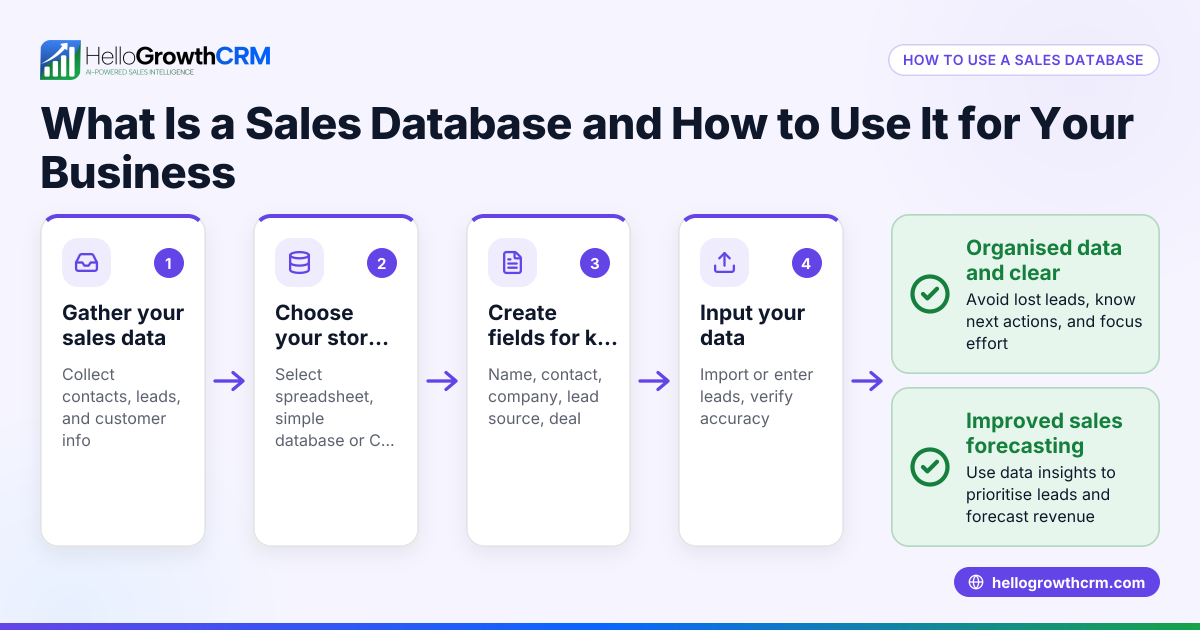
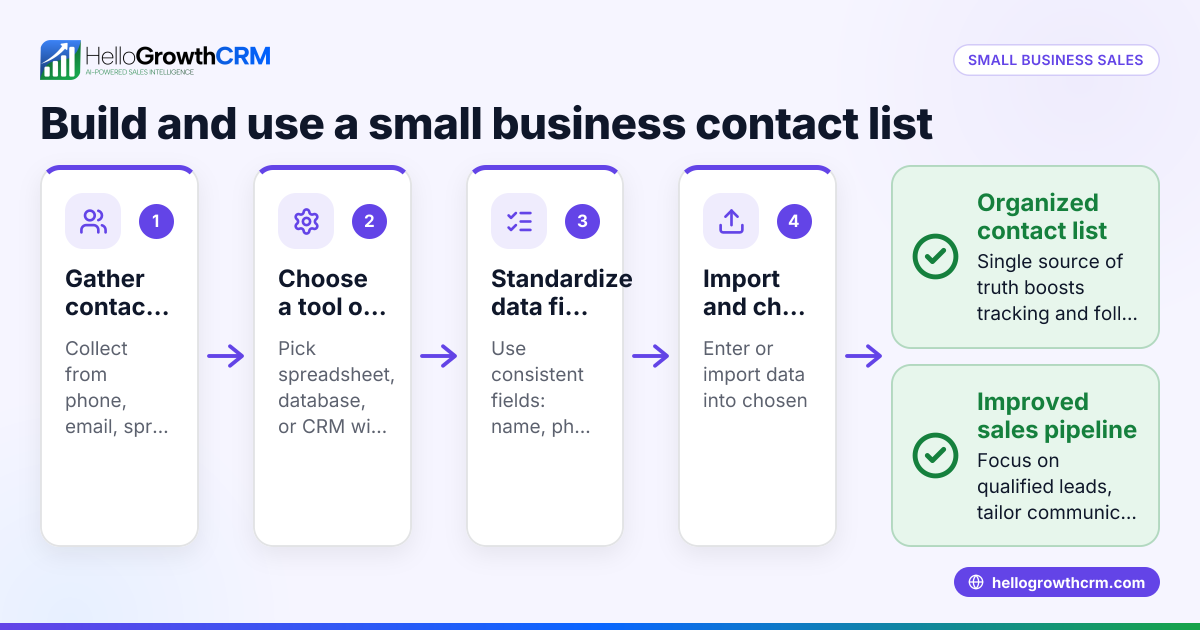
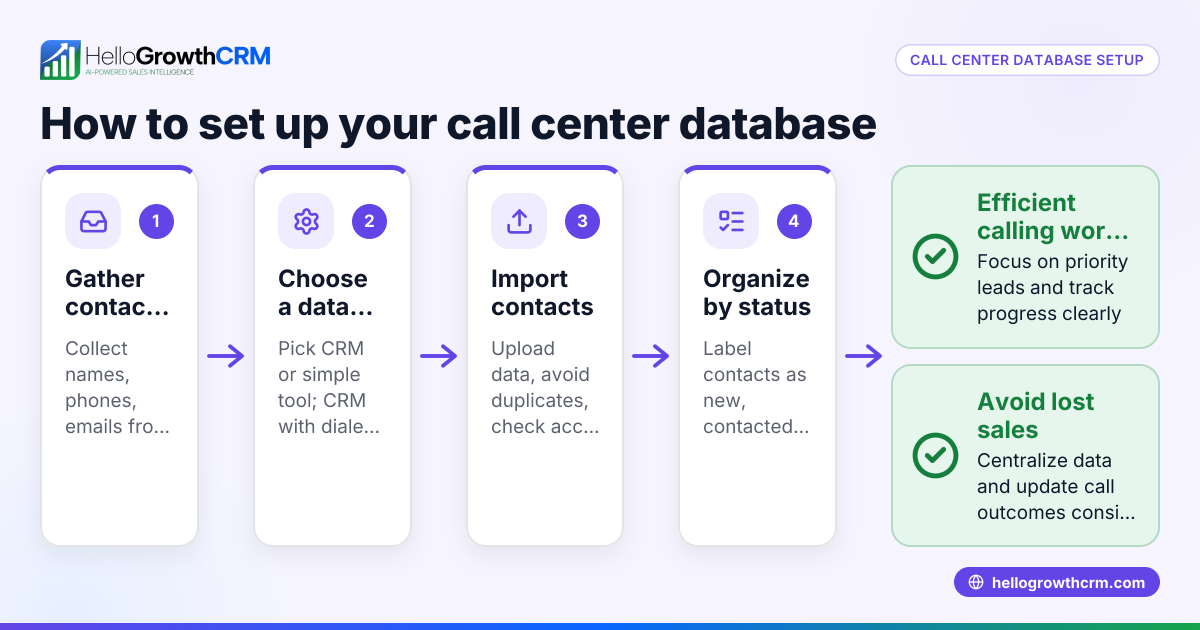
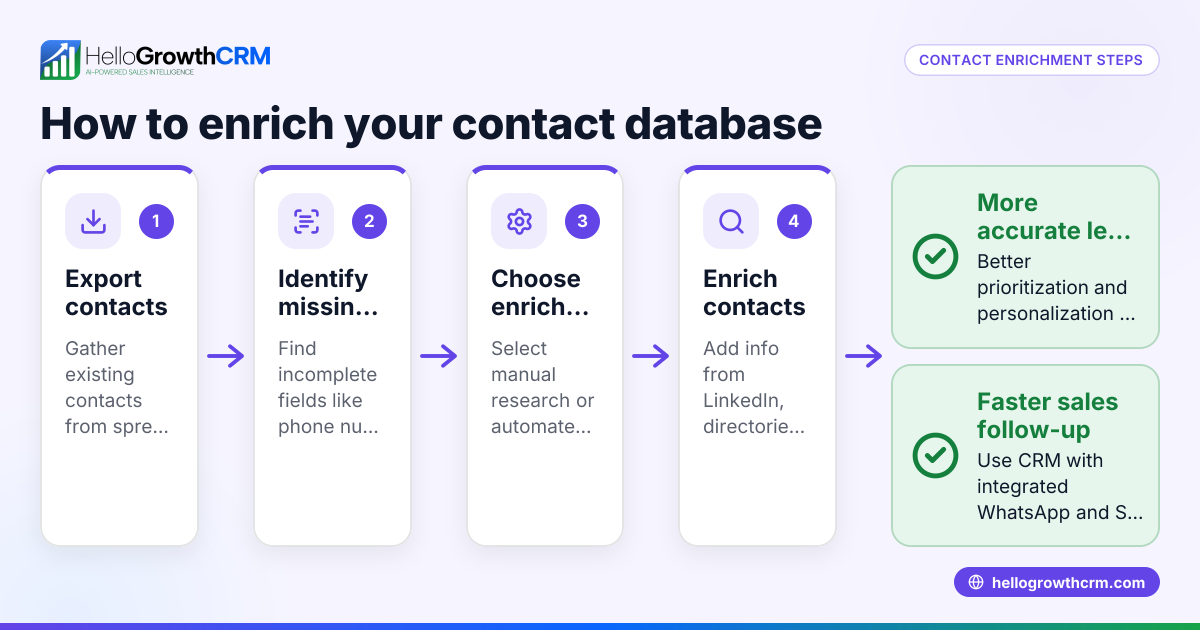
- Gather all existing contacts: Collect customer and lead details from phone contacts, emails, spreadsheets, and any other sources. Check for duplicates and incomplete entries.
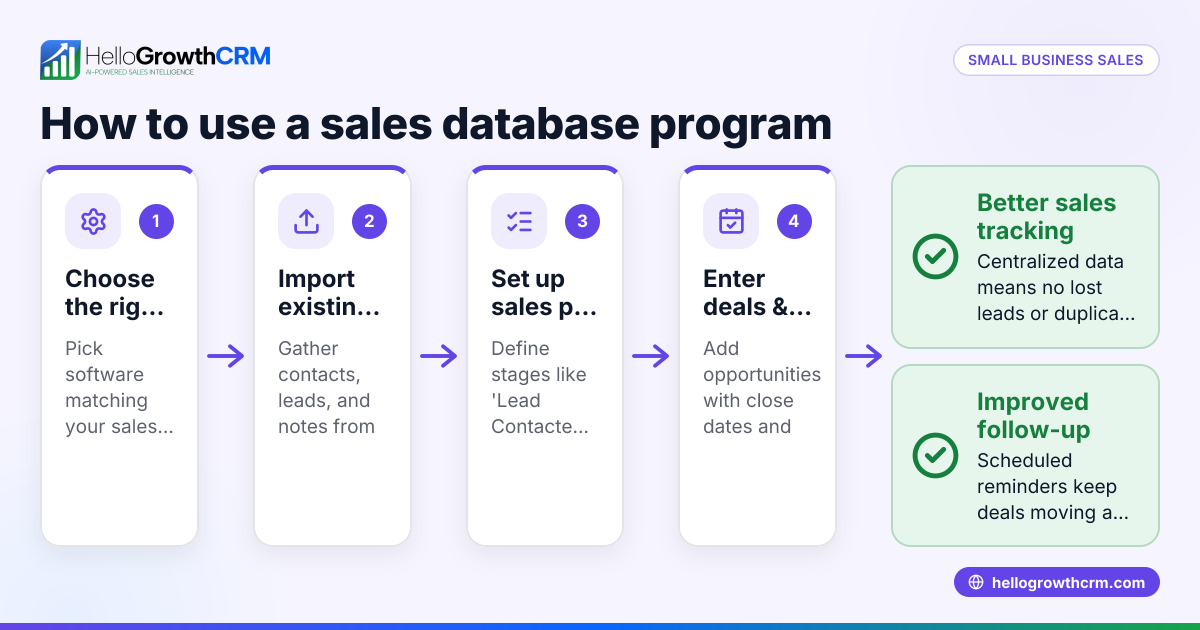
- Choose a database format: Decide if you want a spreadsheet, simple database software, or a CRM system. For small businesses aiming to grow, a CRM like HelloGrowthCRM can automate and centralize contact management.
- Input and organize data: Enter contacts with key fields such as name, phone number, email, company, lead source, and status. Ensure consistency in data entry to avoid confusion.
- Set up categories and tags: Use categories like “prospect,” “customer,” or “follow-up needed” to segment contacts. This helps prioritize and target communication.
- Schedule regular updates and cleanups: Assign someone to review the database weekly or monthly to remove outdated contacts, update statuses, and fix errors.
- Establish follow-up processes: Define who follows up with leads and when. Use reminders or task boards to track activities.
- Integrate communication channels: If possible, link your database with email, WhatsApp, or SMS tools to manage conversations in one place.
- Monitor performance: Track lead conversion rates and follow-up times to identify bottlenecks and improve processes.
For more on managing sales and follow-ups, see WhatsApp and SMS CRM.
Example (fictional figures)
A residential real-estate team in Phoenix, Arizona, wants to build a contact database to manage leads from their website and walk-in inquiries.
- They collect 200 new leads monthly.
- Each lead is entered with name, phone, email, lead source, and interest level.
- They assign a status: New, Contacted, Follow-up, or Closed.
- They schedule follow-ups within 2 days.
Calculations:
Monthly leads = 200
Follow-up rate target = 90%
Leads followed up = 200 × 90% = 180
Conversion rate target = 10%
Expected sales = 200 × 10% = 20
This system helps them prioritize leads and track progress, improving sales consistency.
Common mistakes
- Not centralizing contacts: Keeping contacts in multiple places causes confusion. Use a single database to avoid this.
- Ignoring data cleanup: Outdated or duplicate contacts waste time. Schedule regular reviews.
- No follow-up process: Without clear responsibility and timelines, leads fall through the cracks. Assign tasks and use reminders.
- Overcomplicating the database: Too many fields or categories can overwhelm users. Keep it simple and relevant.
- Failing to integrate communication: Managing calls, emails, and messages separately slows response. Use tools that unify channels like HelloGrowthCRM.
- Not tracking performance: Without metrics, you can’t improve. Monitor follow-up rates and sales conversions.
For tips on simple CRM solutions, check free CRM for small business.
Doing this in HelloGrowthCRM
HelloGrowthCRM offers Managed RevOps, a done-for-you revenue operations service that helps founders without a sales manager keep their follow-up queue active every week. This service includes weekly follow-up execution, pipeline cleanup, and hygiene, ensuring leads are contacted promptly and opportunities are not missed. Learn more about how this can help your small business at HelloGrowthCRM for the United States.
Frequently asked questions
What is the difference between a contact database and a CRM? A contact database is a digital list of contacts with their details. A CRM (Customer Relationship Management) system includes a contact database plus tools to track interactions, automate follow-ups, manage pipelines, and analyze sales performance.
Can I use a spreadsheet as a contact database? Yes, spreadsheets are a simple way to start. However, they lack automation and integration features that CRMs provide, which become important as your business grows.
How often should I update my contact database? Regular updates are essential. Weekly or monthly reviews help remove outdated information, update contact statuses, and keep data accurate.
How can I ensure my team uses the contact database effectively? Keep the database simple, assign clear roles for data entry and follow-up, and provide training. Tools like HelloGrowthCRM’s Managed RevOps can also support consistent use.
Is it possible to integrate WhatsApp and SMS with my contact database? Yes, some CRMs, including HelloGrowthCRM, integrate WhatsApp and SMS messaging, allowing you to communicate directly from the platform, improving response times and record-keeping.
Key takeaways
- A contact database centralizes customer and lead information to improve sales follow-up.
- Start by gathering all contacts and organizing them consistently.
- Regularly update and clean your database to maintain accuracy.
- Establish clear follow-up processes and assign responsibility.
- Avoid overcomplicating your database; keep it simple and actionable.
- HelloGrowthCRM’s Managed RevOps can help maintain follow-up discipline and pipeline hygiene.
Building and maintaining a contact database is essential for small business growth and sales efficiency. Start organizing your contacts today and consider using a CRM to automate and improve your sales process.
Start on the Free Forever plan (200 leads, no credit card) at free CRM for small business.
Ready to put this into practice?
Set up your pipeline, WhatsApp follow-ups, and AI lead scoring in minutes — free, no credit card.
Try HelloGrowthCRM freeGet CRM tips in your inbox
Join thousands of sales professionals who get weekly insights on CRM strategy, AI automation, and pipeline optimization.

The HelloGrowthCRM team publishes guides on CRM strategy, AI sales tools, and revenue operations for small business sales teams.