HelloGrowthCRM software
Built for real small-business sales teams
HelloGrowthCRM helps reps qualify faster, follow up on time, and close more deals—with practical automation in one place.
- AI lead scoring and pipeline visibility
- Built-in dialer, WhatsApp, and email automation
- Sales forecasting and RevOps-ready reporting
An online sales database is a cloud-based system that stores, tracks, and manages your sales leads, contacts, and deals in one place accessible from anywhere. This article explains why small businesses look for an online sales database, the key steps to evaluate options, a practical example with numbers, common mistakes to avoid, and how HelloGrowthCRM supports sales management.
Why this comes up / what goes wrong
Small business owners often find themselves juggling sales leads across multiple channels—emails, text messages, spreadsheets, and even WhatsApp chats. Without a centralized system, leads get lost or forgotten, follow-ups are delayed, and sales opportunities slip away. When your team grows beyond a handful of people or your sales process becomes more complex, a simple spreadsheet or manual tracking no longer works. The need for an online sales database arises to organize leads, track deals through stages, assign follow-ups, and provide visibility into sales performance.
Step-by-step
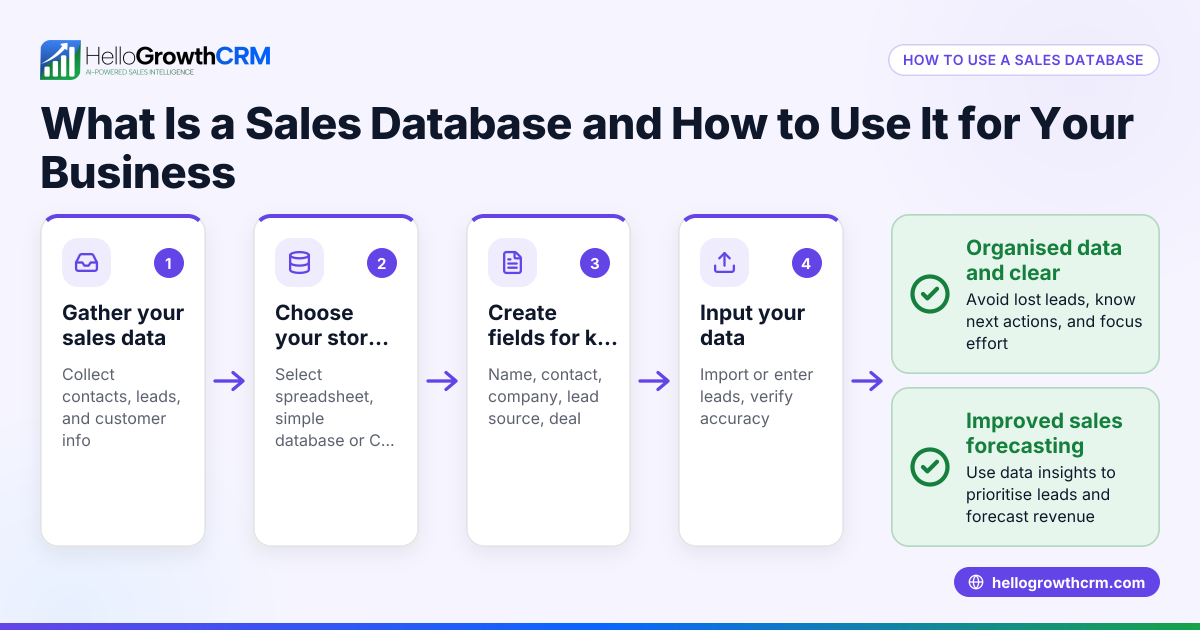
- Identify your sales data needs. Decide what information you want to store: contact details, lead source, deal value, stage in the pipeline, follow-up dates, and communication history.
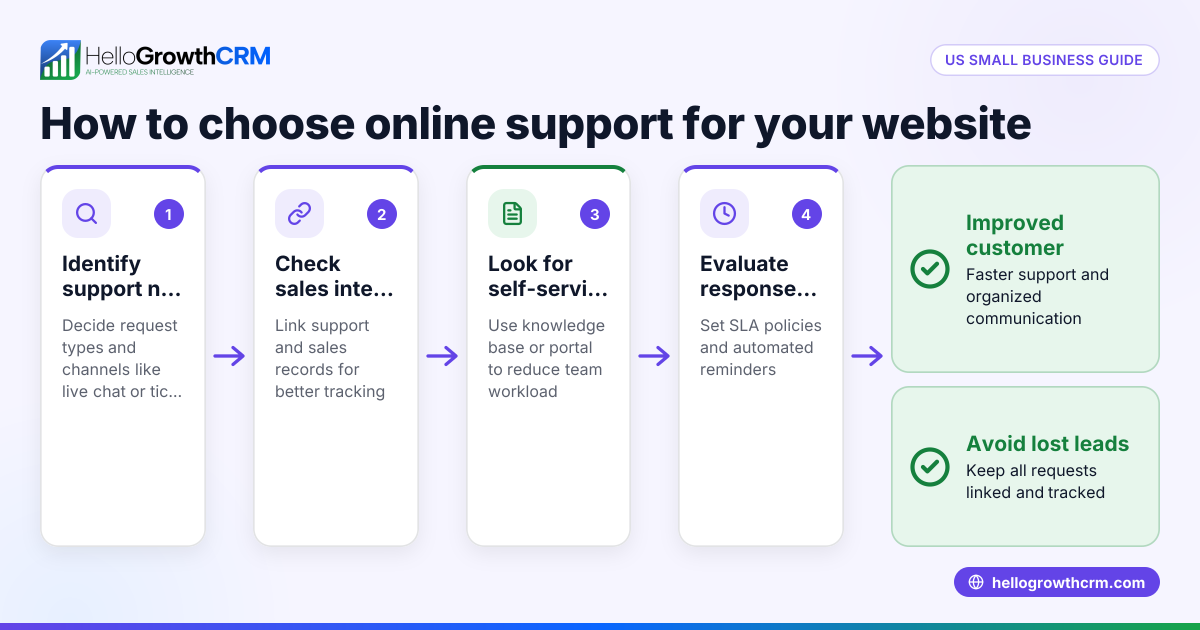
- Check accessibility and ease of use. Ensure the database is online and accessible from desktop and mobile devices so your team can update leads on the go.
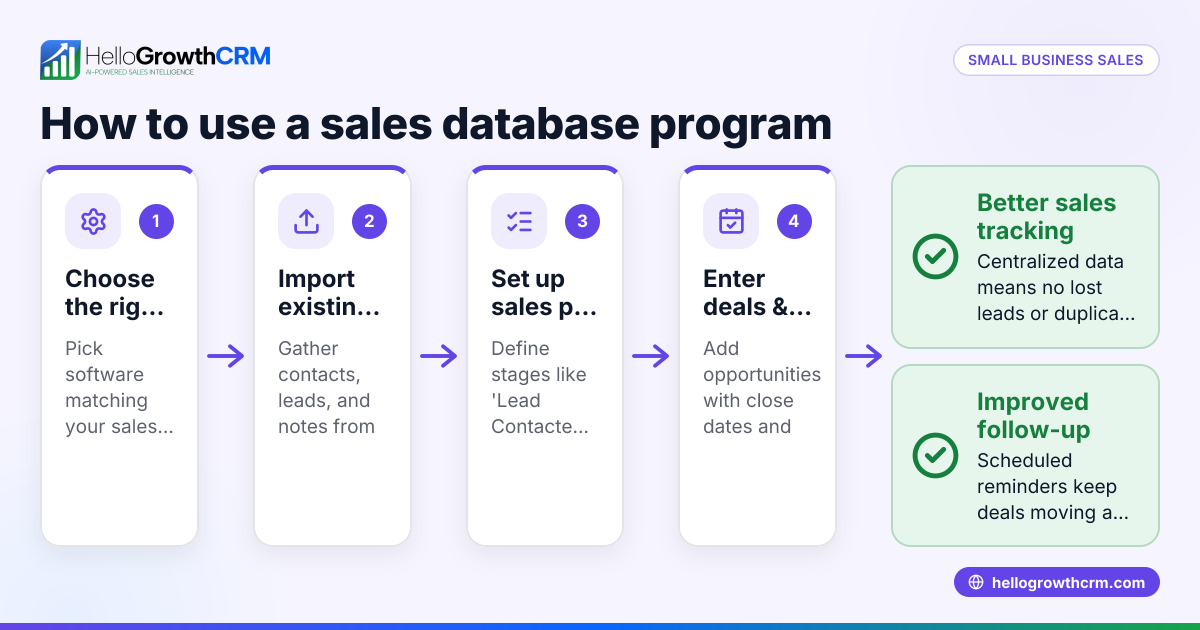
- Look for pipeline and deal tracking features. A good sales database should let you track deals through stages (e.g., new lead, contacted, quote sent, negotiation, won/lost) and set reminders for follow-ups.
- Consider communication integration. If your sales happen over WhatsApp, SMS, or email, check if the database integrates or supports sequences and logs conversations.
- Evaluate reporting and forecasting tools. The database should provide sales forecasts, reports on deal progress, and team performance metrics.
- Assess territory and field operations support if applicable. For businesses with field reps or distributors, tools for logging visits and managing commissions are important.
- Test the database with your team. Choose a solution that your salespeople find intuitive and actually use daily to avoid data gaps.
- Review pricing and scalability. Make sure the database can grow with your business and that costs fit your budget.
Example (fictional figures)
A plumbing company in Austin, Texas, wants to improve its sales tracking. They receive leads from their website and phone calls. They estimate an average deal value of $3,000.
- Current monthly leads: 30
- Conversion rate: 20% (6 closed deals)
- Average deal value: $3,000
They want to track these leads and deals in an online sales database with follow-up reminders.
If they use a database that helps them follow up promptly and increase conversion to 25%, their closed deals would be:
30 leads × 25% = 7.5 deals (round to 8 deals)
Monthly revenue from deals:
8 deals × $3,000 = $24,000
Compared to before:
6 deals × $3,000 = $18,000
Increase in revenue:
$24,000 - $18,000 = $6,000
This shows how better sales tracking and follow-up with an online sales database can improve revenue by $6,000 monthly.
Common mistakes
- Choosing a database that’s too complex. Avoid systems with features you don’t need; they can overwhelm your team. Pick one that matches your sales process.
- Ignoring mobile access. Sales teams often work outside the office; without mobile-friendly access, updates get delayed.
- Not setting follow-up reminders. Leads go cold without timely follow-ups. Use a system with pipeline stages and task boards.
- Failing to train the team. Even the best database fails if the team doesn’t use it consistently. Provide training and assign responsibility.
- Overlooking communication channels integration. If your sales happen over WhatsApp or SMS, choose a CRM that supports these channels to keep all data in one place.
- Neglecting reporting and forecasting. Without sales reports, it’s hard to track progress or adjust strategy.
Doing this in HelloGrowthCRM
HelloGrowthCRM offers a Deals (pipeline) feature where a quotation sent last week appears as a deal at the 'quote sent' stage with a follow-up date, ensuring no opportunity is forgotten. For businesses with field reps, the Territories, field operations and commissions tools let distributors log visits from their phones, and managers see the day's activity. If you don’t have a sales manager, the Managed RevOps service provides weekly follow-up execution and pipeline cleanup, helping you stay on top of leads. Learn more about HelloGrowthCRM for the United States and explore its WhatsApp and SMS CRM capabilities, plus the built-in CRM dialer to streamline calls.
Frequently asked questions
What is an online sales database used for? An online sales database stores and organizes sales leads, contacts, and deals in a centralized system accessible online. It helps sales teams track progress, schedule follow-ups, and manage pipelines efficiently.
How does an online sales database improve sales? By centralizing data and automating reminders, it reduces lost leads and delays. It provides visibility into sales stages and forecasts, enabling better decision-making and higher conversion rates.
Can I use an online sales database without a sales team? Yes. Even solo founders benefit from tracking leads and deals in one place. Some services, like Managed RevOps, can assist with follow-up execution if you lack a dedicated sales manager.
What features should a small business look for in a sales database? Key features include deal pipeline tracking, mobile access, communication integration (WhatsApp, SMS, email), follow-up reminders, reporting, and scalability.
Is it necessary to have a CRM with built-in communication tools? If your sales rely heavily on WhatsApp or SMS, a CRM with integrated messaging helps keep all communication linked to leads and deals, preventing data fragmentation.
Key takeaways
- An online sales database centralizes and organizes your sales leads and deals.
- Choose a system with pipeline tracking, follow-up reminders, and mobile access.
- Integration with communication channels like WhatsApp and SMS improves team efficiency.
- Avoid overly complex systems and ensure your team is trained to use the database.
- Regular reporting and forecasting help track sales progress and adjust strategies.
- HelloGrowthCRM offers pipeline deals, field operations tools, and Managed RevOps support.
Start managing your sales leads more effectively today. Start on the Free Forever plan (200 leads, no credit card) and see how an online sales database can help your business grow.
Ready to put this into practice?
Set up your pipeline, WhatsApp follow-ups, and AI lead scoring in minutes — free, no credit card.
Try HelloGrowthCRM freeGet CRM tips in your inbox
Join thousands of sales professionals who get weekly insights on CRM strategy, AI automation, and pipeline optimization.

The HelloGrowthCRM team publishes guides on CRM strategy, AI sales tools, and revenue operations for small business sales teams.