HelloGrowthCRM software
Built for real small-business sales teams
HelloGrowthCRM helps reps qualify faster, follow up on time, and close more deals—with practical automation in one place.
- AI lead scoring and pipeline visibility
- Built-in dialer, WhatsApp, and email automation
- Sales forecasting and RevOps-ready reporting
CRM event logging and incident response for roofing systems means capturing and tracking every customer interaction, service update, and incident detail in a central system. This ensures roofing businesses can respond quickly to issues, maintain quality service, and keep customers informed throughout the repair or installation process.
Why this comes up / what goes wrong
Roofing businesses in the UAE often handle multiple projects and incidents simultaneously, such as leaks, damage after storms, or warranty claims. These events require quick responses to avoid further damage and maintain customer satisfaction. However, many roofing companies rely on WhatsApp chats, phone calls, and spreadsheets to track these events, which leads to scattered information and missed follow-ups.
Business owners and accountants struggle to keep a clear record of all events and incident responses. Without a centralised CRM that logs all communications and schedules follow-ups, it's easy to lose track of critical details like repair deadlines or warranty expiries. This causes delays, unhappy customers, and potential financial losses. A structured CRM event logging and incident response system helps avoid these issues by organising all data and tasks in one place.
Step-by-step
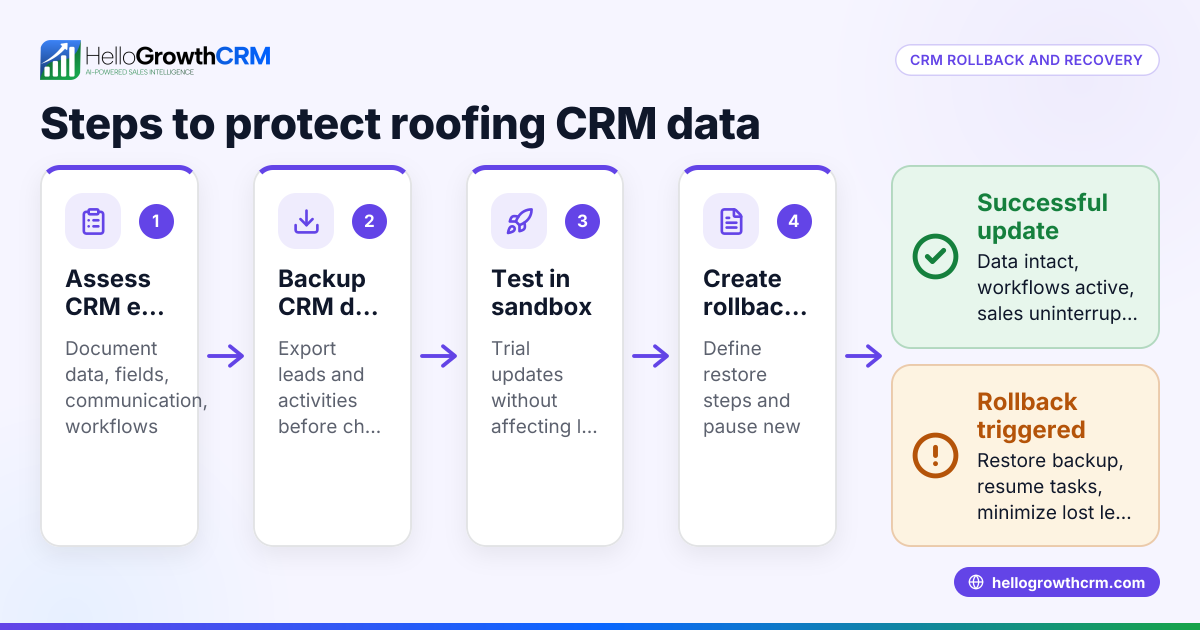
- Select a CRM that supports event logging and incident tracking: Confirm it can log WhatsApp and SMS conversations, phone calls, emails, and notes tied to each customer or project record.
- Define event categories relevant to roofing systems: Examples include inspection, repair request, incident report, follow-up call, warranty claim, and emergency response.
- Log every customer interaction immediately: Record WhatsApp messages, phone calls, emails, and onsite visit notes as activities linked to the lead or customer.
- Create tasks and set due dates for each event: Assign follow-up calls, inspections, or repair deadlines as tasks to team members to ensure timely responses.
- Use automated sequences for incident follow-up: Set up multi-step workflows that send reminders and check-in messages over a set period, stopping automatically when the customer replies.
- Regularly review event logs and task boards: Supervisors should monitor progress, identify stalled cases, and ensure no incidents are overlooked.
- Analyse incident trends to improve service quality: Use CRM reports to spot recurring problems like faulty materials or installation issues and adjust processes accordingly.
For more on managing local service businesses efficiently, see Local service businesses.
Example (fictional figures)
A roofing service company based in Dubai Marina receives a complaint about a leaking roof on 15/04/2024. They log the event in their CRM immediately:
- Inspection scheduled for 17/04/2024
- Repair cost estimated at AED 3,500
- Follow-up task created for 24/04/2024 to confirm repair quality
Calculations for budgeting contingency:
AED 3,500 (repair cost) × 5% contingency reserve = AED 175
AED 3,500 + AED 175 = AED 3,675 total provisioned cost
The CRM triggers an automated WhatsApp follow-up sequence reminding the technician and the customer about the scheduled repair and post-repair satisfaction checks until confirmation is received.
Common mistakes
- Not logging WhatsApp conversations: Important details get lost if chats aren’t recorded. Prevent this by using a CRM that automatically logs WhatsApp messages, such as HelloGrowthCRM’s WhatsApp and SMS CRM features.
- Ignoring task deadlines: Delayed responses frustrate customers. Use activities and task boards to organise daily follow-ups and keep deadlines visible.
- Relying on manual follow-ups only: Teams may forget to follow up, losing leads and delaying incident resolution. Implement sequences and campaigns to automate follow-ups.
- Scattered information across spreadsheets, calls, and messages: This creates confusion and inefficiency. Consolidate all data in a single CRM platform.
- Failing to analyse incident patterns: Without reviewing logs, recurring issues go unaddressed. Regularly use CRM reports to identify and fix common problems.
Learn more about task management and sales workflows at HelloGrowthCRM for the United Arab Emirates.
Doing this in HelloGrowthCRM
HelloGrowthCRM supports WhatsApp and SMS messaging where conversations with leads are logged directly on their records, ensuring no communication is missed. Each follow-up becomes a task with a due date on activities and task boards, so your team sees the day’s calls and reminders clearly. Automated sequences run multi-step follow-ups over two weeks and stop immediately when a prospect replies, helping roofing businesses maintain timely incident responses without manual tracking. Explore these features at WhatsApp and SMS CRM.
Frequently asked questions
How can I ensure all roofing incidents are logged in the CRM? Use a CRM that integrates WhatsApp and SMS logging and requires your team to record every call, message, and onsite visit as tasks or activities. Regular audits of the CRM help ensure compliance and completeness.
What is the best way to follow up on roofing incident reports? Set up automated sequences that send reminders and check-ins over a defined period, stopping as soon as the customer responds. This reduces manual effort and speeds up issue resolution.
Can I track multiple roofing projects and incidents simultaneously? Yes, use pipeline and task boards to visualise all active projects and incidents. This helps prioritise urgent cases and assign tasks efficiently.
Why is event logging critical for roofing businesses in the UAE? Roofing involves warranty obligations and safety concerns. Detailed logs protect your business and build customer trust by showing prompt and transparent incident responses.
How do I avoid losing leads from slow follow-up? Automate follow-ups with sequences and use task boards to manage daily calls and activities, ensuring no lead or incident is forgotten.
Key takeaways
- Log every customer interaction and incident immediately in your CRM.
- Use task boards to organise follow-ups with due dates.
- Automate incident response with multi-step sequences.
- Regularly review logs to identify service improvements.
- Choose a CRM that integrates WhatsApp and SMS messaging.
- Avoid scattered data by consolidating all information in one platform.
Start managing your roofing business’s event logging and incident response with HelloGrowthCRM. Start on the Free Forever plan (200 leads, no credit card).
Ready to put this into practice?
Set up your pipeline, WhatsApp follow-ups, and AI lead scoring in minutes — free, no credit card.
Try HelloGrowthCRM freeGet CRM tips in your inbox
Join thousands of sales professionals who get weekly insights on CRM strategy, AI automation, and pipeline optimization.

The HelloGrowthCRM team publishes guides on CRM strategy, AI sales tools, and revenue operations for small business sales teams.