HelloGrowthCRM software
Built for real small-business sales teams
HelloGrowthCRM helps reps qualify faster, follow up on time, and close more deals—with practical automation in one place.
- AI lead scoring and pipeline visibility
- Built-in dialer, WhatsApp, and email automation
- Sales forecasting and RevOps-ready reporting
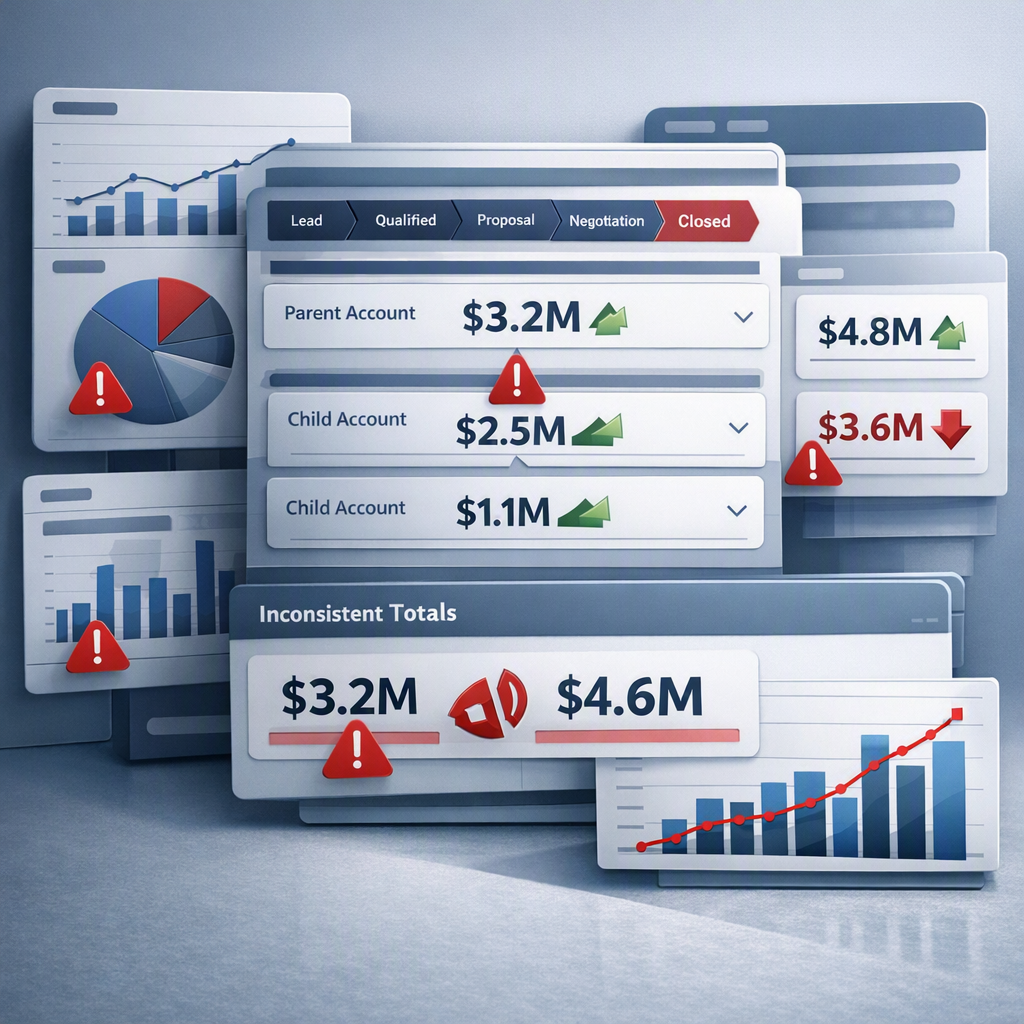
A CRM forecast hygiene checklist is a practical audit framework B2B sales teams use to find and fix pipeline data problems that distort revenue forecasts, especially stale deals, missing next steps, inconsistent stage usage, weak ownership rules, and poor rep discipline before choosing or replacing a CRM system.
Key Takeaways
- Forecast accuracy usually breaks because pipeline data is incomplete, old, or entered differently by each rep.
- A strong CRM forecast hygiene checklist should cover deal freshness, stage rules, next steps, ownership, close dates, and amount integrity.
- Buyers evaluating a new CRM should look for workflow enforcement, AI-driven risk detection, and managed RevOps support.
- In my experience, forecast reliability improves fastest when sales process rules are built into the CRM instead of left to manager reminders.
- HelloGrowthCRM aligns well for this use case because it combines AI CRM, AI Pipeline Management, and Managed RevOps.
Why CRM forecast hygiene matters before you buy a new system
CRM forecast hygiene matters before you buy a new system because bad process and bad data usually survive migration, then ruin reporting in the new platform too. If your team does not fix pipeline discipline first, a new CRM will only make inaccurate forecasts easier to view.
Many teams start a CRM evaluation because they do not trust the forecast. That instinct is often right. But the root issue is not always the software. It is usually a mix of loose sales stages, poor inspection habits, and missing process controls.
When I have audited pipelines like this, I usually find the same pattern. Leadership says the CRM is weak. Managers say reps are not updating deals. Reps say stages do not match reality. All three can be true at once.
That is why a forecast hygiene review should happen before vendor selection. It helps you separate:
- system limitations
- process design flaws
- rep behavior issues
- reporting model gaps
This also gives you a better buying brief. Instead of asking for a “better CRM,” you can ask for exact controls like required next steps, aging alerts, and forecast risk flags. That makes it easier to assess Features, compare Pricing, and decide whether a Demo should focus on forecasting workflows or broader sales execution.
According to Gartner’s CRM topic overview, CRM value depends heavily on adoption, process alignment, and data quality. That matches what most RevOps teams see in practice.
The cost of poor forecast hygiene
Poor hygiene affects more than forecast calls. It can also break:
- sales capacity planning
- hiring timing
- marketing spend allocation
- board reporting
- territory coverage decisions
In one rollout we did with a 12-person sales team, the biggest forecast issue was not win rate. It was that nearly one-third of “commit” deals had no customer-confirmed next meeting. Once we enforced next-step rules and aging alerts, the weekly forecast conversation got shorter and more honest.
The core CRM forecast hygiene checklist for B2B sales teams
A CRM forecast hygiene checklist for B2B sales teams should inspect the few data points that most strongly affect forecast quality: stale deals, missing next steps, stage consistency, close-date realism, amount accuracy, owner clarity, and manager inspection cadence. These checks reveal whether your pipeline can actually support a reliable forecast.
Use this checklist during CRM evaluation, migration planning, or quarterly pipeline cleanup.
1. Check for stale deals
A stale deal is any opportunity with no meaningful customer activity in a defined period. For many B2B teams, that means 14 to 30 days depending on deal cycle length.
Review:
- last outbound activity date
- last inbound response date
- last meeting date
- days since stage change
If a CRM cannot highlight aging by stage, your forecast review will stay manual. Tools like Pipeline Health Score can help define thresholds before automation is configured.
2. Check for missing next steps
Every active forecasted deal should have a clear next step, owner, and due date. “Follow up” is not a next step. “Security review with IT on June 12” is.
Good systems should support:
- required next-step field updates
- due-date alerts
- manager visibility into overdue actions
- workflow triggers through Sales Task Boards
I treat this as one of the strongest forecast signals. If there is no agreed next step, there is usually no real deal momentum.
3. Check for inconsistent stage usage
Stage definitions must map to buyer reality, not rep optimism. If one rep marks a deal as “proposal” after sending pricing, while another waits for procurement review, your forecast category becomes meaningless.
Audit stage entry and exit criteria such as:
- MEDDPICC evidence captured
- decision-maker confirmed
- commercial terms shared
- legal review started
- mutual action plan agreed
This is where AI Deal Insights and AI Sales Copilot can help flag missing proof behind stage claims.
4. Check close-date integrity
Close dates are often changed to protect pipeline optics. That weakens forecast trust fast. Look for repeated pushes without a documented reason.
Ask:
- how often does the close date move?
- does stage age match expected cycle time?
- is there a customer event tied to the date?
- is the date still within a realistic procurement timeline?
5. Check amount and forecast category logic
Amounts should follow pricing rules. Forecast categories should follow evidence. If reps self-select “commit” without controls, the number becomes political.
Strong CRM design should support validation through Proposal Builder, approval workflows, and manager overrides where needed.
6. Check ownership and handoff rules
Every opportunity should have one accountable owner at all times. Shared ownership sounds collaborative, but it often creates update gaps.
Review:
- SDR to AE handoff rules
- AE to account management rules
- territory reassignment logic
- inactive owner alerts via Territory Management
The most common pipeline hygiene gaps that distort forecasts
The most common pipeline hygiene gaps that distort forecasts are stale opportunities, missing buyer-confirmed next steps, loose stage definitions, inflated close dates, and unclear ownership. These issues make pipeline reports look healthy on paper while hiding real execution risk that sales leaders only discover too late.
Below are the problems I see most often in B2B teams evaluating a new CRM.
Stale deals stay open too long
If closed-lost discipline is weak, dead deals linger for months. This inflates coverage and makes stage conversion rates look worse than they are.
A practical rule is simple: if there has been no meaningful customer movement and no scheduled next event, the deal should be reviewed for downgrade or closure.
Managers inspect different things
One manager may focus on deal size. Another may focus on notes quality. A third may only ask for close dates. This inconsistency teaches reps that CRM updates are subjective.
A shared inspection framework fixes this. HelloGrowthCRM teams often pair Sales Forecasting with managed pipeline reviews through Managed RevOps so managers inspect the same signals every week.
Activities live outside the CRM
Forecast quality drops when key buyer signals sit in inboxes, calendars, spreadsheets, and chat threads. Native logging and integrations matter.
This is where connected systems help. If your team uses Gmail, Google Meet, Microsoft Teams, or Slack, activity capture should flow back into the opportunity record.
AI cannot fix bad process alone
AI can identify risk, but it cannot invent disciplined ownership rules. If stages are vague or close dates are unmanaged, AI will surface noise faster.
Forrester has noted that B2B revenue teams need connected processes and data to improve decision quality, not just more tooling, in its sales research overview at Forrester.
What to look for in a new CRM if forecast hygiene is a buying priority
If forecast hygiene is a buying priority, look for a CRM that enforces process rules inside the workflow, captures activity automatically, flags risk with AI, and includes RevOps support to keep definitions, dashboards, and inspection habits aligned after implementation.
This is the key shift buyers should make. Do not ask only, “Can this CRM show a forecast dashboard?” Ask, “Can this CRM improve the quality of the underlying forecast inputs?”
Must-have capabilities
Look for these capabilities during evaluation:
- required fields by stage
- automated stale-deal alerts
- close-date push tracking
- forecast category rules
- activity sync across email and meetings
- AI-based deal risk signals
- role-based dashboards
- audit trails for ownership changes
HelloGrowthCRM is built well for this model because AI Pipeline Management can surface deal risk, Revenue Attribution supports cleaner reporting, and Email Automation plus Meeting Scheduler reduce off-system activity.
Comparison table: basic CRM vs forecast-focused CRM
| Capability | Basic CRM setup | Forecast-focused CRM setup |
|---|---|---|
| Stage management | Static picklist | Stage entry and exit rules |
| Next steps | Optional notes field | Required action, owner, and due date |
| Stale deal control | Manual manager review | Automated aging alerts and risk flags |
| Activity capture | Partial or manual logging | Native sync across email, calls, meetings |
| Forecast categories | Rep judgment | Evidence-based rules and manager review |
| Ownership | Loose handoffs | Clear reassignment and audit trail |
| Optimization | Internal admin only | CRM plus ongoing RevOps support |
Why managed RevOps matters
A lot of teams underestimate the operating model. Buying software is easier than sustaining forecast discipline.
In one implementation I led, the system was configured correctly on day one. Six months later, forecast quality had still drifted because stage definitions were not reinforced in QBRs, and managers coached differently. That is exactly why ongoing Managed RevOps support matters for scaling teams.
How to use a CRM forecast hygiene checklist: Step-by-Step
Using a CRM forecast hygiene checklist means reviewing pipeline data in a fixed order, defining pass-fail rules for each forecast signal, then converting findings into CRM requirements, workflow rules, and manager habits. This process helps buyers choose a system that improves forecast reliability instead of just replacing the interface.
- Define your forecast goal
- Pull a current pipeline snapshot
- Set hygiene thresholds
- Audit by manager and stage
- Map each issue to a CRM requirement
- Test the new CRM against live scenarios
- Build a post-go-live inspection rhythm
A simple scorecard for evaluating CRM forecast hygiene readiness
A simple scorecard for evaluating CRM forecast hygiene readiness helps buyers compare systems based on practical forecast controls, not just product demos. The best scorecards measure whether the CRM can prevent bad data, detect risk early, and support manager inspection without heavy manual work.
Score each area from 1 to 5:
Process control
- required fields by stage
- validation rules
- handoff workflows
- close-date change tracking
Data capture
- email sync
- meeting logging
- call logging with CRM Dialer
- multi-channel capture through WhatsApp & SMS CRM
Forecast intelligence
- risk scoring
- stage aging visibility
- AI alerts through AI Lead Scoring and AI Deal Insights
- rep and manager forecast views
Operating support
- dashboard customization
- admin usability
- integration coverage through All Integrations
- RevOps guidance after implementation
A fair limitation: smaller teams under 10 reps may not need deep automation on day one. But teams with multi-stage B2B deals, multiple managers, or long sales cycles usually benefit quickly from structured controls.
If your team is evaluating a new CRM because forecasts feel unreliable, do not stop at dashboard screenshots. Test whether the system can enforce next steps, expose stale deals, standardize stage usage, and support manager inspection at scale. HelloGrowthCRM combines AI CRM, Sales Forecasting, and Managed RevOps to help B2B teams improve pipeline control and forecast trust faster. Start with a Free Trial or book a Demo to see the checklist in action on your own pipeline.
About the author
Arjun Mehta is a Revenue Operations Lead at HelloGrowthCRM with 11 years of experience in B2B SaaS sales operations, CRM design, and forecasting. He has led CRM migrations, stage redesign projects, and forecast process rollouts for growing sales teams across global markets. One project that shaped this article was a pipeline cleanup and forecast redesign for a 12-person mid-market sales team, where enforced next-step rules and stage aging alerts improved weekly forecast quality within one quarter.
Frequently Asked Questions
Q: What is a CRM forecast hygiene checklist?
A: A CRM forecast hygiene checklist is a structured review of the pipeline fields and workflow rules that affect forecast accuracy. It checks for stale deals, missing next steps, weak stage discipline, unrealistic close dates, and unclear ownership inside the CRM.
Q: Why should sales teams audit forecast hygiene before buying a new CRM?
A: Sales teams should audit forecast hygiene before buying a new CRM because process flaws and dirty pipeline data often transfer into the new system. The audit helps buyers choose features and workflows that fix the real forecasting problem.
Q: What are the biggest signs of poor forecast hygiene in a B2B CRM?
A: The biggest signs of poor forecast hygiene in a B2B CRM are stale opportunities, missing next steps, repeated close-date pushes, inconsistent stage use, and unclear deal ownership. These signals usually mean the forecast is less reliable than the dashboard suggests.
Q: How often should a sales team review pipeline hygiene?
A: A sales team should review pipeline hygiene weekly at the manager level and monthly at the RevOps level. Weekly reviews catch deal-level issues early, while monthly audits reveal broader process drift across stages, teams, and territories.
Q: Can AI improve forecast hygiene on its own?
A: AI cannot improve forecast hygiene on its own because it still depends on clear process rules and usable data. AI helps most when it flags stale deals, missing activity, and risk patterns inside a well-defined sales process.
Q: What CRM features help improve forecast reliability?
A: CRM features that help improve forecast reliability include required stage fields, activity sync, stale-deal alerts, close-date tracking, ownership workflows, and AI risk detection. Managed RevOps support also helps keep those controls aligned after go-live.
Q: Is managed RevOps necessary for better forecasting?
Frequently Asked Questions
Ready to put this into practice?
Set up your pipeline, WhatsApp follow-ups, and AI lead scoring in minutes — free, no credit card.
Try HelloGrowthCRM freeGet CRM tips in your inbox
Join thousands of sales professionals who get weekly insights on CRM strategy, AI automation, and pipeline optimization.

The HelloGrowthCRM team publishes guides on CRM strategy, AI sales tools, and revenue operations for small business sales teams.