HelloGrowthCRM software
Built for real small-business sales teams
HelloGrowthCRM helps reps qualify faster, follow up on time, and close more deals—with practical automation in one place.
- AI lead scoring and pipeline visibility
- Built-in dialer, WhatsApp, and email automation
- Sales forecasting and RevOps-ready reporting
A CRM for real estate helps agents and brokers manage leads, track communications, and organise sales pipelines specific to property transactions. This article explains why real estate businesses need a specialised CRM, guides you through choosing one step-by-step, shows a Canadian example, outlines common mistakes, and introduces HelloGrowthCRM features suited for real estate teams.
Why this comes up / what goes wrong
Real estate business owners and accountants in Canada often struggle to keep track of numerous leads coming from open houses, online listings, referrals, and social media. Without a dedicated CRM, they rely on spreadsheets, text messages, and email chains that scatter client information and delay follow-ups. This fragmentation leads to lost sales opportunities and poor client experiences. Moreover, real estate transactions involve multiple stages—from lead capture to showing properties, negotiating offers, and closing deals—requiring a CRM that can handle these workflows efficiently.
Canadian real estate teams also face unique challenges such as coordinating with mortgage brokers, lawyers, and inspectors, requiring clear communication logs and timely task management. Without industry-specific features and integration capabilities, managing these relationships becomes cumbersome.
Step-by-step
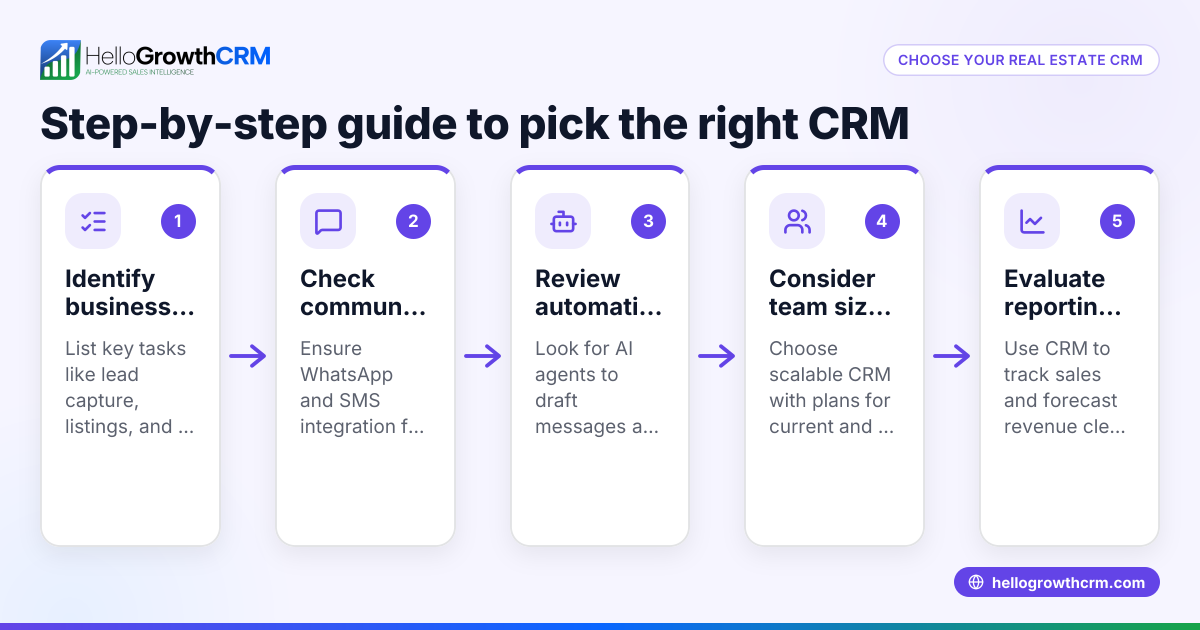
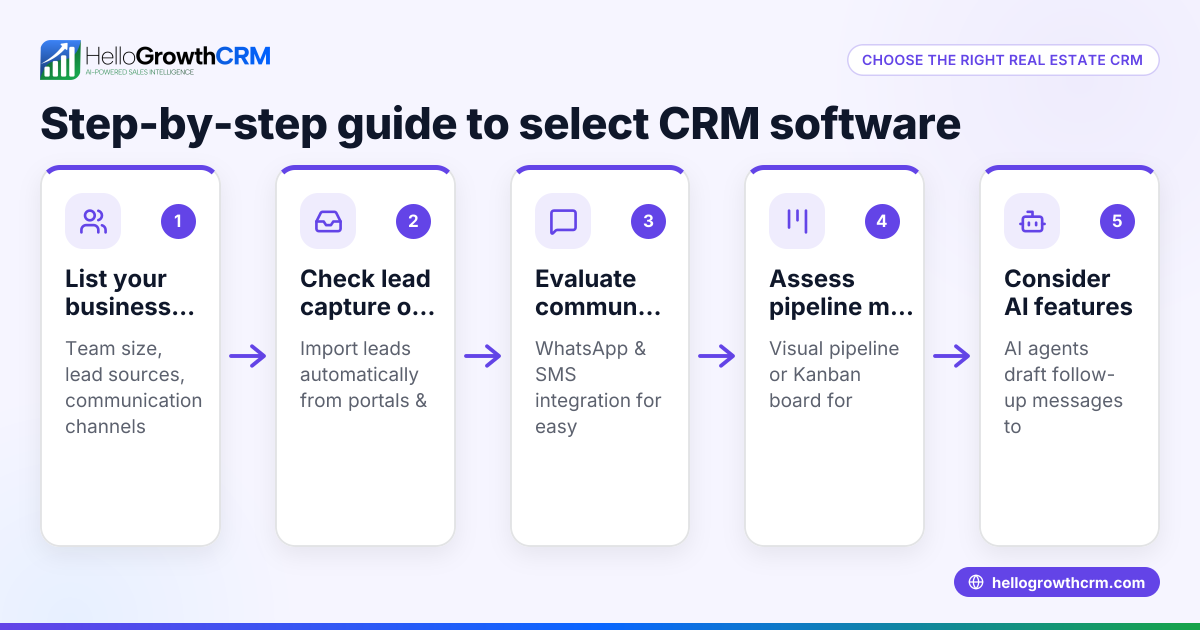
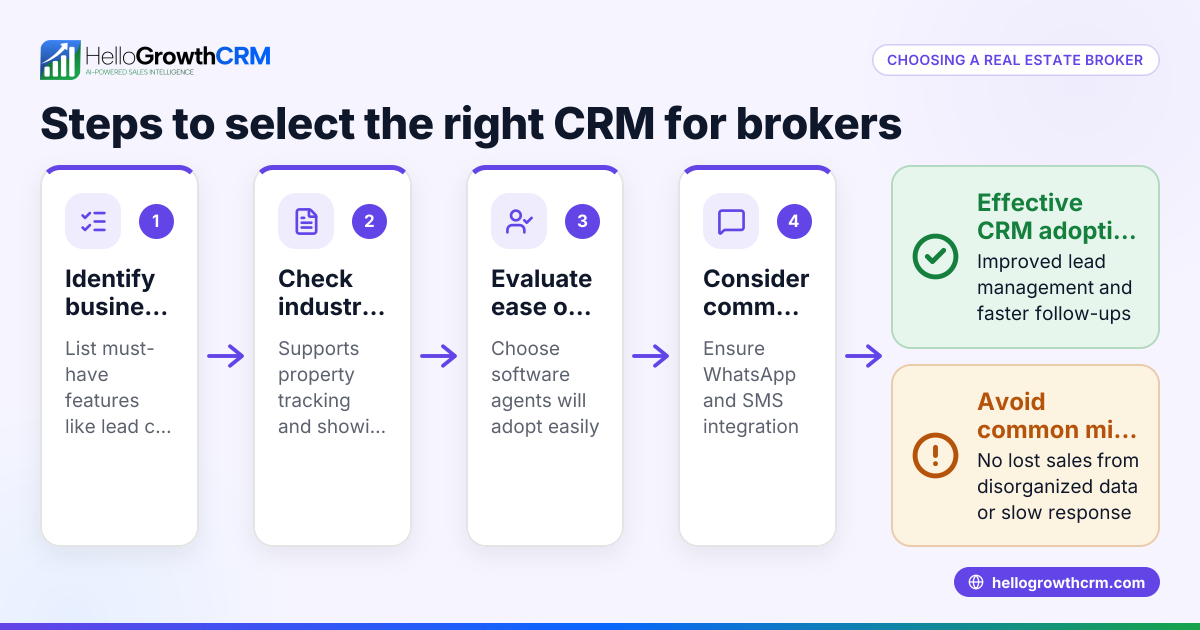
- Identify your business needs: List the key functions your CRM must support, such as lead capture from web forms, communication tracking via WhatsApp or SMS, managing property listings, and pipeline stages specific to real estate deals.
- Check communication channels: Ensure the CRM supports channels your clients use frequently, especially WhatsApp and SMS, which are popular for quick updates and confirmations.
- Evaluate lead management features: Look for AI lead scoring or automated follow-ups to prioritise hot leads and reduce manual effort.
- Assess pipeline and task management: Confirm the CRM offers visual pipelines and task boards tailored for real estate workflows, helping your team track stages from initial contact to closing.
- Consider integration options: Verify if the CRM can integrate with your existing tools like email, web forms, or mortgage software.
- Review user experience: Choose a CRM that your sales team will actually use daily, with intuitive interfaces and mobile-friendly access.
- Check pricing and scalability: Start with a plan that fits your current team size and allows growth without disruptive migrations.
- Test with a trial or free plan: Use a free or trial version to evaluate how well the CRM fits your processes before committing.
For more on industry-specific CRMs, see Real estate and builders.
Example (fictional figures)
Maple Leaf Mortgages, a mortgage brokerage in Mississauga, Ontario, wants to improve lead follow-up and deal tracking. They receive about 150 new leads monthly from their website and referrals.
- They capture leads via web forms integrated into their CRM.
- Each lead is assigned a score based on readiness to apply for a mortgage.
- The sales team uses WhatsApp to communicate with leads, logging conversations.
- The pipeline has stages: New Lead → Contacted → Application Submitted → Approved → Closed.
Calculations for monthly lead handling:
150 leads × 40% contact rate = 60 contacted leads
60 contacted leads × 30% application submission rate = 18 applications
18 applications × 80% approval rate = 14 approved mortgages
Tracking these stages in the CRM helps the team focus on leads most likely to close and schedule timely follow-ups.
Common mistakes
- Not using a CRM tailored to real estate: Avoid generic CRMs that lack pipeline stages or communication tools suited for property sales. Prevent by choosing one with real estate-specific workflows.
- Ignoring mobile communication channels: Many clients prefer WhatsApp or SMS. Missing these channels causes delayed responses. Choose a CRM supporting WhatsApp and SMS messaging.
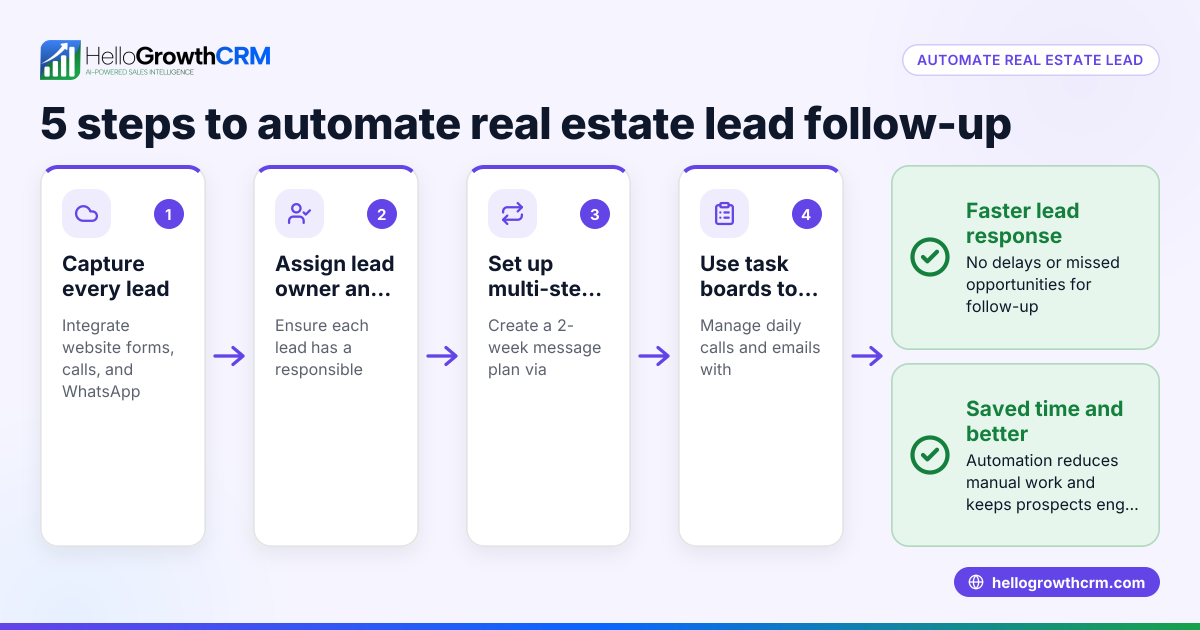
- Failing to automate follow-ups: Manual follow-up tasks are often forgotten. Use AI agents or automated sequences to draft and remind reps about follow-ups.
- Overcomplicating the CRM: Too many features can overwhelm small teams. Start with essential functions and scale up.
- Neglecting team adoption: A CRM nobody uses wastes investment. Train your team and involve them in the selection process to ensure adoption.
For more on communication features, see WhatsApp and SMS CRM.
Doing this in HelloGrowthCRM
HelloGrowthCRM supports WhatsApp and SMS messaging where conversations with leads are logged on the lead record, helping real estate teams keep communications organised. After calls, AI agents (currently in Beta on Growth plans) draft follow-up messages for reps to review and send, saving time and ensuring timely contact. Small teams can start with the Free Forever plan, managing a pipeline with up to two users at no cost until advanced calling or WhatsApp automation is needed. Learn more about HelloGrowthCRM for Canadian businesses at HelloGrowthCRM for Canada.
Frequently asked questions
What features should a real estate CRM have? A real estate CRM should support lead capture, pipeline stages tailored to property sales, communication via popular channels like WhatsApp and SMS, task management, and integration with other tools. Automation features such as AI lead scoring and follow-up drafting can improve efficiency.
Can I use HelloGrowthCRM for a small real estate team? Yes, the Free Forever plan supports up to two users managing pipelines and tasks without cost. For WhatsApp and SMS messaging or AI agents, paid plans are available.
How does WhatsApp integration help real estate sales? WhatsApp allows quick, informal communication with clients, making it easier to send updates, schedule showings, and answer questions. Conversations are logged on the lead record, keeping all information organised.
Is AI lead scoring reliable for real estate? AI lead scoring can help prioritise leads based on engagement and data patterns, but it should complement, not replace, personal judgment. It helps sales teams focus efforts on leads most likely to convert.
What is the best way to get my team to use a new CRM? Involve your team in the selection process, provide training, and choose a CRM with an intuitive interface. Starting with essential features and gradually adding more can improve adoption.
For more industry-specific advice, visit Real estate and builders.
Key takeaways
- A real estate CRM must handle lead capture, communication, and pipeline stages specific to property transactions.
- Support for WhatsApp and SMS messaging is crucial for timely client communication.
- AI features like lead scoring and follow-up drafting help prioritise leads and save time.
- Start with a CRM your team finds easy to use and scale features as needed.
- Testing a free plan or trial can help ensure the CRM fits your business processes.
Start managing your real estate leads more efficiently by trying the Free Forever plan, which supports 200 leads and requires no credit card. Visit Start on the Free Forever plan (200 leads, no credit card) to get started today.
Ready to put this into practice?
Set up your pipeline, WhatsApp follow-ups, and AI lead scoring in minutes — free, no credit card.
Try HelloGrowthCRM freeGet CRM tips in your inbox
Join thousands of sales professionals who get weekly insights on CRM strategy, AI automation, and pipeline optimization.

The HelloGrowthCRM team publishes guides on CRM strategy, AI sales tools, and revenue operations for small business sales teams.