HelloGrowthCRM software
Built for real small-business sales teams
HelloGrowthCRM helps reps qualify faster, follow up on time, and close more deals—with practical automation in one place.
- AI lead scoring and pipeline visibility
- Built-in dialer, WhatsApp, and email automation
- Sales forecasting and RevOps-ready reporting
CRM software for endocrinologists helps manage patient leads, appointments, and communications efficiently, reducing lost follow-ups and improving patient engagement. This article covers why endocrinologists need specialized CRM features, the step-by-step process to select the right CRM, a practical example with costs, common mistakes, and how HelloGrowthCRM can support your practice.
Why this comes up / what goes wrong
Endocrinologists running small or mid-sized practices often juggle patient intake, follow-ups, lab results, and appointment scheduling without a centralized system. Many rely on text messages, emails, or spreadsheets to track patients and leads, which leads to missed appointments, slow follow-up, and lost revenue. Unlike general sales teams, endocrinology practices need a CRM that can handle sensitive patient communication, integrate messaging channels like WhatsApp or SMS, and help manage ongoing treatment pipelines.
Without a CRM tailored to their workflow, endocrinologists risk poor patient retention and inefficient administrative tasks, which can hurt both care quality and business growth.
Step-by-step
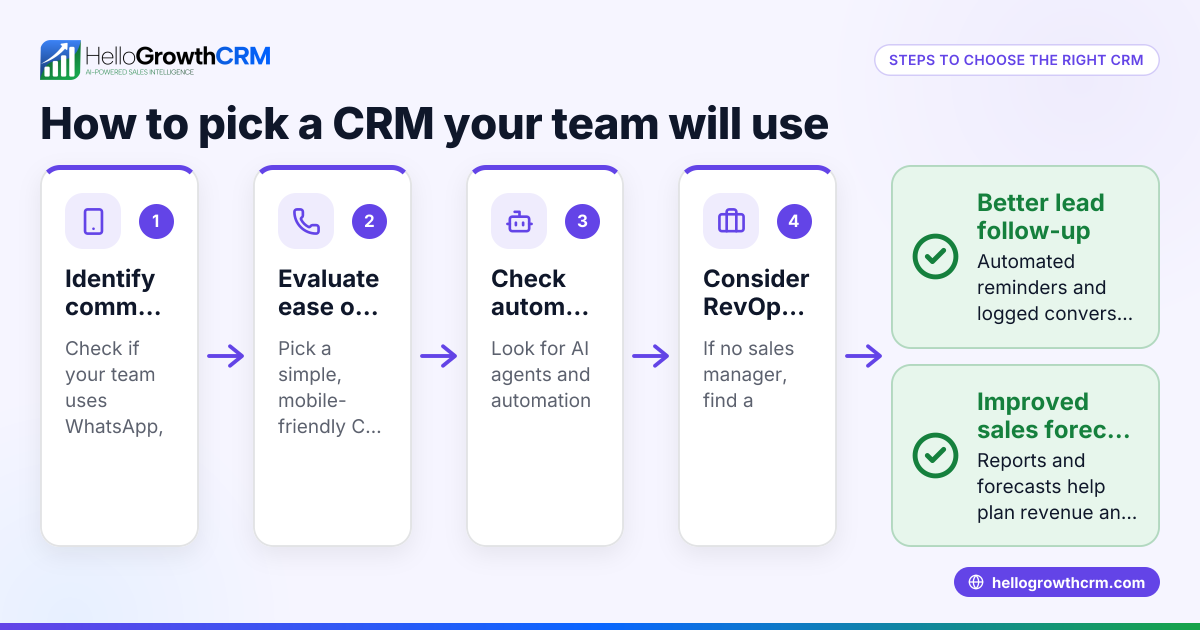
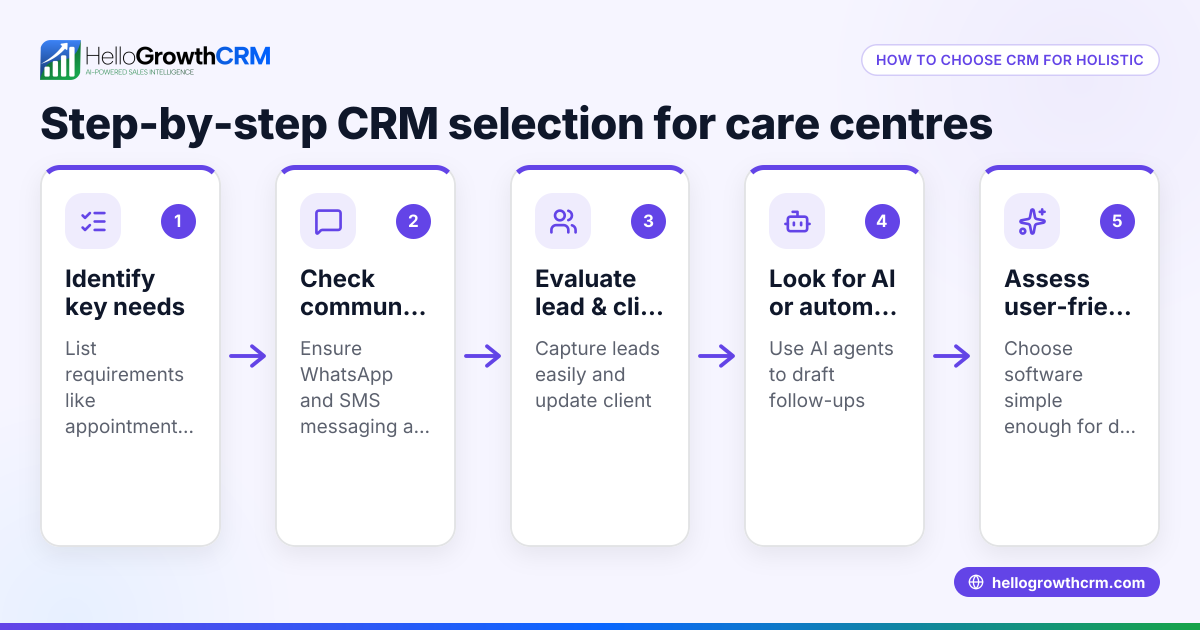
- Identify your practice’s communication channels: Check if your patients prefer WhatsApp, SMS, email, or phone calls. A CRM that supports these channels natively will improve engagement.
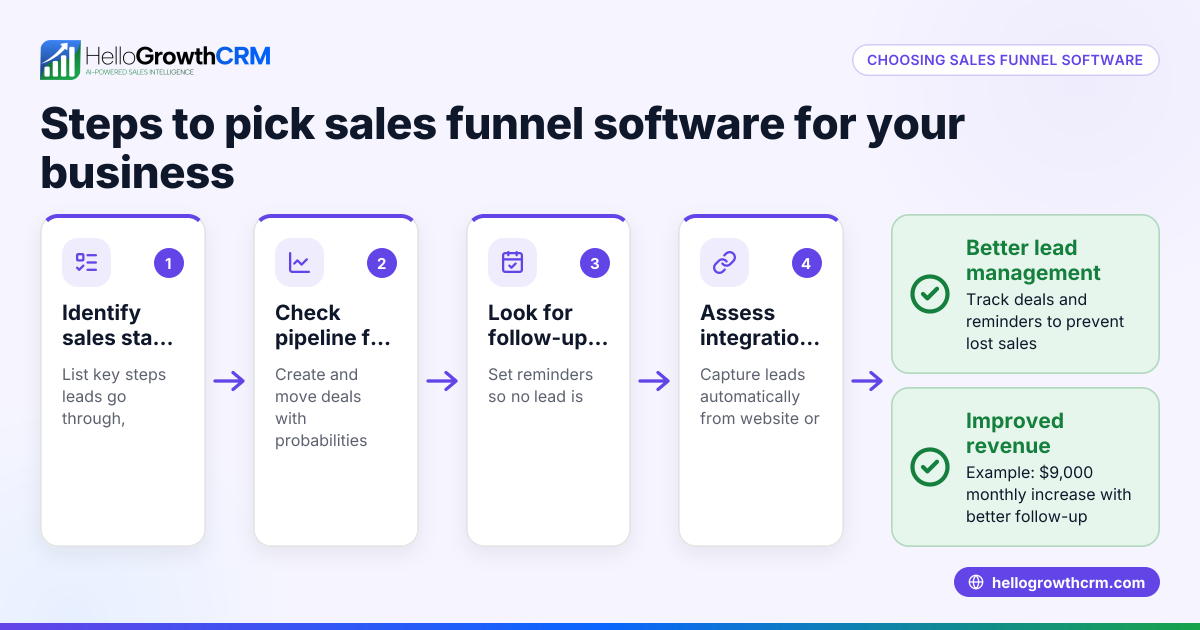
- Evaluate lead and patient management features: Look for contact and lead capture from web forms or integrations, and easy logging of conversations to maintain patient history.
- Check for automation and AI support: Automated follow-up reminders and AI-drafted messages save time and reduce human error.
- Consider pipeline and task management: Ensure the CRM offers pipeline boards or task lists to track patient progress, appointments, and lab results.
- Look for sales forecasting and reporting: Even medical practices benefit from understanding appointment trends and revenue forecasts.
- Review compliance and privacy options: Confirm the CRM supports HIPAA compliance or similar patient data protections (NEEDS EXPERT REVIEW).
- Assess ease of use and adoption: The system should be intuitive for your team to use daily without extensive training.
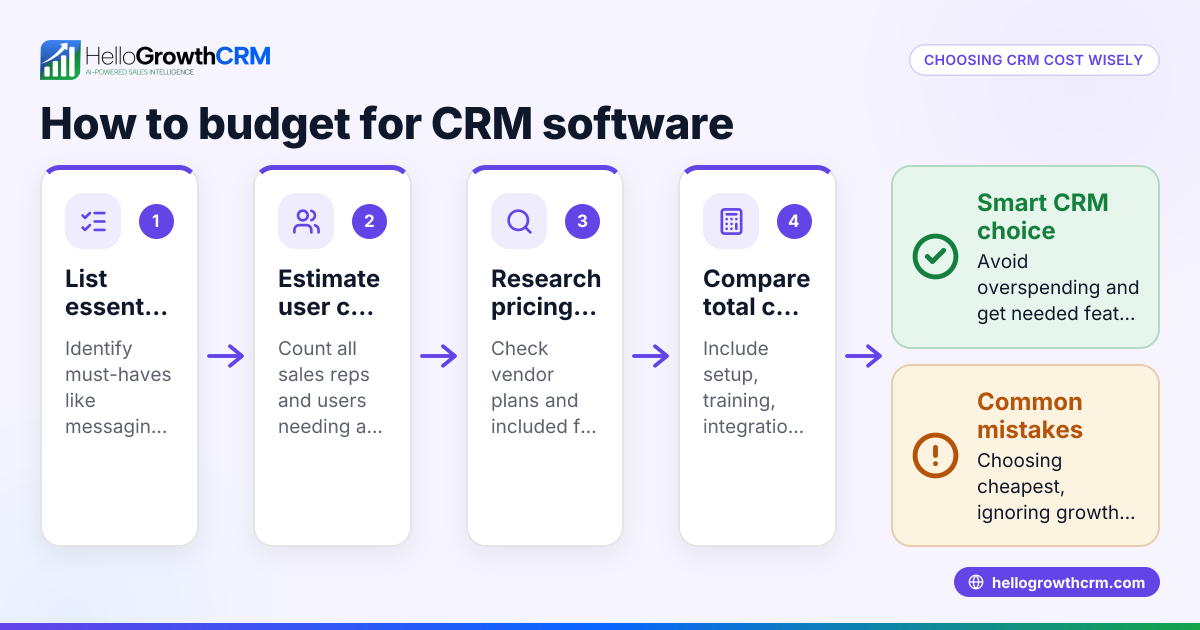
- Compare pricing and support options: Choose a CRM with transparent pricing and reliable customer support.
- Test with a trial or demo: Before committing, try the CRM with real patient data and workflows.
For more on CRM features to look for, see CRM features.
Example (fictional figures)
Dr. Smith runs an endocrinology practice in Austin, Texas, with 5 staff members. She wants to switch from spreadsheets and text messages to a CRM that supports WhatsApp and SMS.
- Initial setup cost: $1,200 (one-time for data import and training)
- Monthly CRM subscription: $150
- Estimated time saved per week by automation: 5 hours
- Average revenue per patient visit: $200
- Patients seen per week: 40
- Increase in patient retention expected: 5%
Calculation of additional revenue from improved retention:
40 patients × $200 = $8,000 weekly revenue
5% retention increase means 2 extra patients per week:
2 patients × $200 = $400 additional weekly revenue
Annual additional revenue:
$400 × 52 weeks = $20,800
Annual CRM cost:
$150 × 12 months = $1,800
Return on investment:
$20,800 - $1,800 - $1,200 = $17,800 net gain
This example shows how a CRM tailored for endocrinologists can improve follow-up and increase revenue.
Common mistakes
- Choosing a generic CRM without medical communication support: Avoid CRMs that do not support WhatsApp or SMS messaging channels preferred by patients. Instead, pick one that logs conversations centrally. See WhatsApp and SMS CRM.
- Ignoring automation and AI features: Manually writing follow-ups wastes time and risks delays. Use AI agents to draft follow-up messages after calls so reps only review and send.
- Overlooking ongoing operations support: Without a sales or operations manager, follow-ups can fall through. Consider managed RevOps to keep the follow-up queue active weekly.
- Not testing usability with the actual team: Complex systems discourage adoption. Test usability before purchasing.
- Neglecting data privacy and compliance checks: Patient data is sensitive. Confirm the CRM supports necessary compliance (NEEDS EXPERT REVIEW).
- Focusing only on price, not features: The cheapest CRM may cost more in lost efficiency and patient retention.
Doing this in HelloGrowthCRM
HelloGrowthCRM supports endocrinologists by logging WhatsApp conversations and SMS messages on each lead record, making follow-ups easier and more consistent. Its AI agents draft follow-up messages after calls, so your team reviews and sends without delay. For founders without a sales manager, HelloGrowthCRM offers managed RevOps services, ensuring someone works your follow-up queue weekly to prevent lost leads. Learn more about these capabilities at WhatsApp and SMS CRM and HelloGrowthCRM for the United States.
Frequently asked questions
What communication channels should a CRM for endocrinologists support? A CRM should support WhatsApp, SMS, email, and phone calls, as patients often prefer messaging apps for appointment reminders and quick questions. Logging all conversations on the lead record helps maintain a clear patient history.
How does AI help in managing patient follow-ups? AI agents can draft follow-up messages after calls, reducing the time your staff spends writing messages and minimizing delays. This helps keep patient engagement timely and consistent.
Is there a CRM that helps if I don’t have a sales manager? Yes, some CRMs offer managed RevOps services where a specialist works your follow-up queue weekly, ensuring no leads or patients slip through the cracks.
What should I avoid when choosing a CRM for my endocrinology practice? Avoid CRMs without native messaging support or those that are complicated to use. Also, ensure the CRM meets patient privacy requirements (NEEDS EXPERT REVIEW).
Can CRM software improve patient retention in medical practices? Yes, by automating follow-ups and centralizing communication, CRMs help practices keep patients engaged and reduce missed appointments.
Key takeaways
- Choose a CRM that supports WhatsApp, SMS, and email messaging natively.
- Use AI features to automate drafting follow-ups and reduce manual work.
- Managed RevOps can help practices without dedicated sales managers stay on top of leads.
- Test usability and compliance before committing to a CRM.
- Avoid generic CRMs that don’t fit the medical communication workflow.
If you want to try a CRM that supports WhatsApp and SMS natively, drafts AI follow-ups, and offers managed RevOps, start on the Free Forever plan (200 leads, no credit card) at HelloGrowthCRM.
Ready to put this into practice?
Set up your pipeline, WhatsApp follow-ups, and AI lead scoring in minutes — free, no credit card.
Try HelloGrowthCRM freeGet CRM tips in your inbox
Join thousands of sales professionals who get weekly insights on CRM strategy, AI automation, and pipeline optimization.

The HelloGrowthCRM team publishes guides on CRM strategy, AI sales tools, and revenue operations for small business sales teams.