HelloGrowthCRM software
Built for real small-business sales teams
HelloGrowthCRM helps reps qualify faster, follow up on time, and close more deals—with practical automation in one place.
- AI lead scoring and pipeline visibility
- Built-in dialer, WhatsApp, and email automation
- Sales forecasting and RevOps-ready reporting
Customer payment reminder messages are essential for Singapore small businesses to maintain steady cash flow and reduce late payments. These messages should be polite and precise, giving customers all the necessary payment details to encourage prompt payment without harming the business relationship.
Why this comes up / what goes wrong
Many Singapore small-business owners face late payments from customers, which disrupt cash flow and day-to-day operations. Businesses often rely on WhatsApp chats, emails, or spreadsheets to track payments, which can lead to missed follow-ups or unclear communication. Without clear payment reminders, customers may forget payment deadlines or misunderstand amounts due, causing delays and disputes that hurt the business.
This problem is common because small teams may lack a structured way to manage follow-ups, and informal reminders risk being overlooked. Clear, timely payment reminders help avoid these issues and keep customer relationships professional.
Step-by-step
- Verify invoice details: Confirm the invoice number, exact amount due, and payment due date. Double-check these details against your records before sending any reminder.
- Choose the right communication channel: Use WhatsApp, SMS, or email depending on your customer’s preferred contact method. Consistency helps customers recognise your messages.
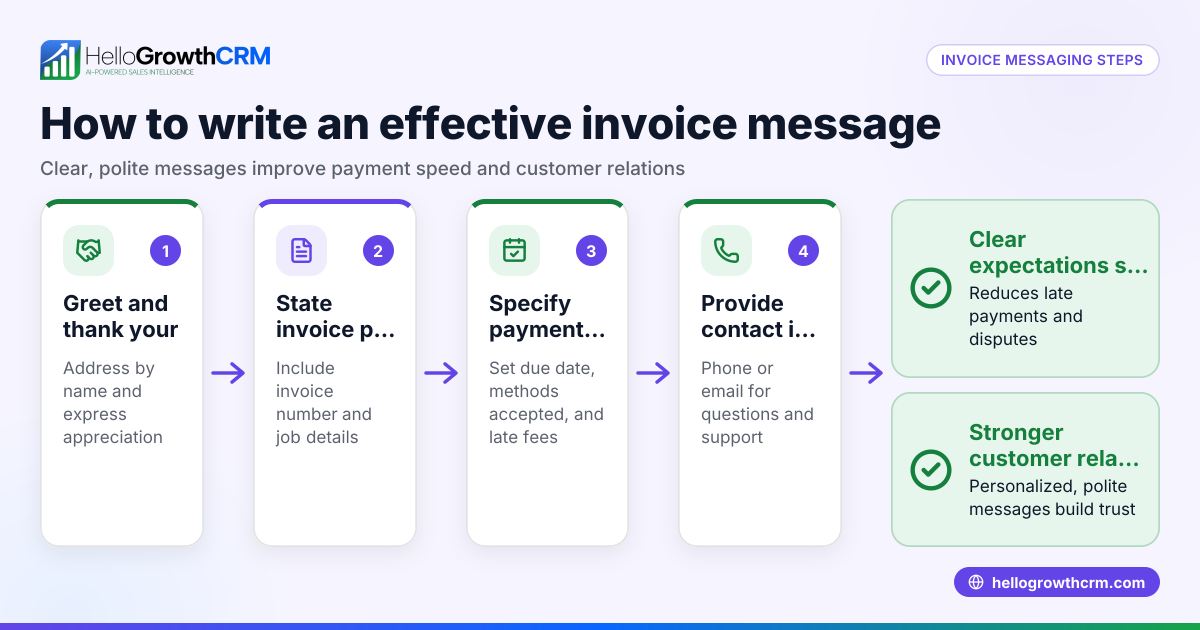
- Write a polite, clear message: Include the customer’s name, invoice number, amount due, due date, and payment instructions or methods. Be concise and professional.
- Send the first reminder promptly: Ideally, send the first reminder the day after the payment due date to keep it top of mind without seeming impatient.
- Schedule follow-up reminders: If payment is not received, plan further reminders at regular intervals (e.g., one week apart). Keep the tone polite and firm.
- Log all communications: Record reminders sent and customer responses to avoid confusion and track progress.
Using sales task boards helps organise follow-ups, ensuring no payment reminder is forgotten. For messaging, WhatsApp and SMS CRM tools log conversations with customers and automate reminders, saving time and improving consistency.
Example (fictional figures)
An F&B supplier in Woodlands invoiced a customer S$3,500 on 01/06/2024 with payment due on 15/06/2024.
- Invoice amount = S$3,500
- Invoice date = 01/06/2024
- Payment due date = 15/06/2024
On 16/06/2024, the supplier sends this payment reminder:
"Dear Mr Tan, our records show your payment of S$3,500 for invoice #4521 was due on 15/06/2024. Please arrange payment at your earliest convenience. Thank you."
If no payment is received by 22/06/2024, a follow-up reminder is sent:
"Dear Mr Tan, we note that payment of S$3,500 for invoice #4521 is still outstanding. Please let us know if you require any assistance or an updated invoice."
This process encourages timely payment while keeping communication professional and clear.
Arithmetic for tracking payment status:
Invoice amount = S$3,500
Payment received = S$0 (initially)
Outstanding amount = S$3,500 - S$0 = S$3,500
After payment received (example):
Payment received = S$3,500
Outstanding amount = S$3,500 - S$3,500 = S$0
This helps the business track exactly how much is owed and when follow-ups are needed.
Common mistakes
- Being vague about payment details: Always specify the exact amount, invoice number, and due date to avoid confusion. Prevent this by double-checking invoice details before sending reminders.
- Using aggressive language: Maintain a polite tone to preserve good customer relationships. Avoid words that sound threatening or impatient.
- Failing to schedule follow-ups: Without reminders, late payments may go unchecked. Use task boards to organise follow-ups and never rely on memory alone.
- Mixing communication channels without logging: This leads to lost messages and poor tracking. Use a CRM with WhatsApp and SMS integration to log all conversations.
- Delaying reminders: Send the first reminder promptly after the due date to improve chances of on-time payment.
Avoid these mistakes by using sales task boards to organise follow-ups and WhatsApp and SMS CRM tools to keep all communication logged and accessible.
Doing this in HelloGrowthCRM
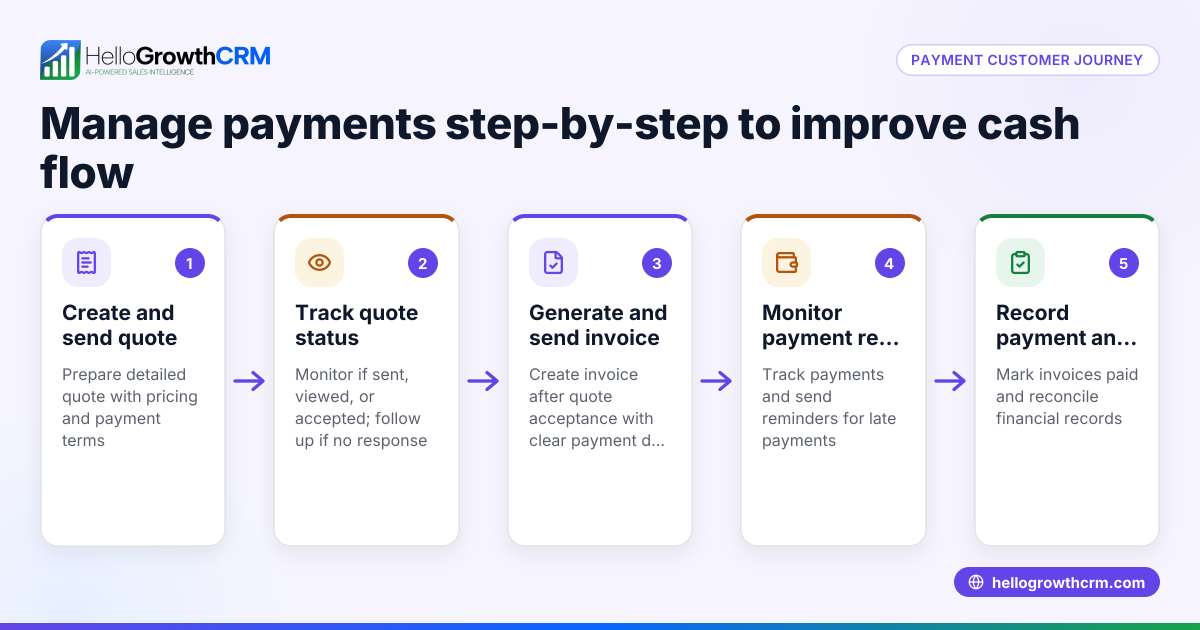
HelloGrowthCRM helps Singapore businesses manage payment reminders efficiently. Each follow-up becomes a task with a due date on sales task boards, so your team never misses a reminder. WhatsApp conversations with customers are logged on the lead record, and follow-ups can be sent as WhatsApp or SMS messages directly from the CRM. You can also send quotations and invoices from the deal screen, track their status (sent, viewed, accepted), and reconcile payments received—all in one place. Learn more about WhatsApp and SMS CRM and sales task boards.
Frequently asked questions
How soon after the due date should I send a payment reminder? Send the first reminder the day after the due date to keep the payment top of mind without seeming impatient. Follow up again if payment is not received within a week.
What tone should I use in payment reminders? Use polite, professional language that is clear and respectful. Avoid aggressive or threatening wording to maintain good customer relationships.
Can I use WhatsApp for payment reminders in Singapore? Yes, WhatsApp is widely used in Singapore, and sending payment reminders via WhatsApp can be effective. Using a WhatsApp-native CRM ensures messages are logged and follow-ups are automated.
What details should be included in a payment reminder message? Include the customer’s name, invoice number, amount due, due date, and payment instructions or methods.
How can I keep track of all payment reminders sent? Use a CRM with activities and task boards to log each reminder and schedule follow-ups. This prevents missed reminders and keeps your team organised.
Why is it important to log WhatsApp conversations in a CRM? Logging WhatsApp conversations ensures all communication is recorded and accessible to your team. This prevents missed follow-ups and keeps customer interactions transparent.
Key takeaways
- Write clear, polite payment reminders stating amount, invoice number, due date, and payment instructions.
- Send the first reminder promptly after the payment due date.
- Use sales task boards to organise follow-up reminders and avoid missed payments.
- Log all WhatsApp and SMS reminders in a CRM to keep communication history.
- Avoid vague messages and aggressive language to maintain good customer relationships.
- Use consistent communication channels preferred by your customers.
Start managing your payment reminders and customer communication more effectively with HelloGrowthCRM. Start on the Free Forever plan (200 leads, no credit card).
Ready to put this into practice?
Set up your pipeline, WhatsApp follow-ups, and AI lead scoring in minutes — free, no credit card.
Try HelloGrowthCRM freeGet CRM tips in your inbox
Join thousands of sales professionals who get weekly insights on CRM strategy, AI automation, and pipeline optimization.

The HelloGrowthCRM team publishes guides on CRM strategy, AI sales tools, and revenue operations for small business sales teams.