HelloGrowthCRM software
Built for real small-business sales teams
HelloGrowthCRM helps reps qualify faster, follow up on time, and close more deals—with practical automation in one place.
- AI lead scoring and pipeline visibility
- Built-in dialer, WhatsApp, and email automation
- Sales forecasting and RevOps-ready reporting
Customer segmentation cluster analysis is a statistical technique used to divide your customers into distinct groups or clusters based on similar traits such as demographics, purchasing behavior, or engagement levels. This helps businesses target marketing campaigns, improve product offerings, and prioritize sales efforts for better results.
Why this comes up / what goes wrong
Small-business owners often struggle to reach the right customers with the right message. Without clear customer groups, marketing and sales efforts can be inefficient, wasting time and losing revenue. For example, a local dental practice might treat all patients the same in marketing, missing chances to offer special services to families or seniors. Cluster analysis helps by identifying meaningful customer segments, so you know who to focus on and how.
Step-by-step
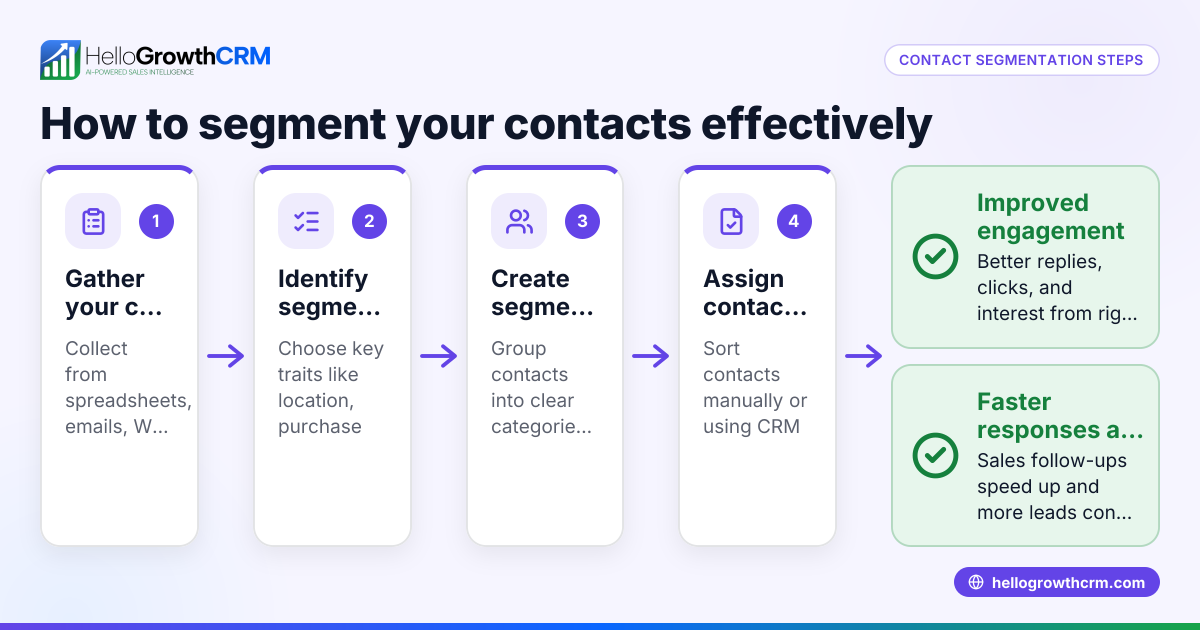
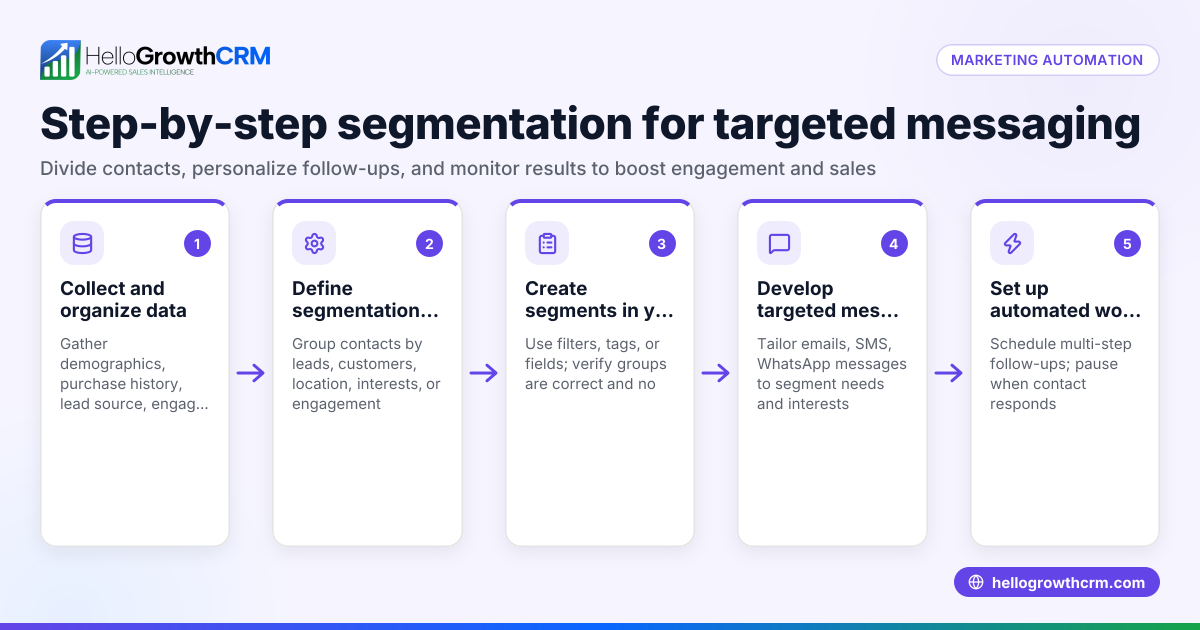
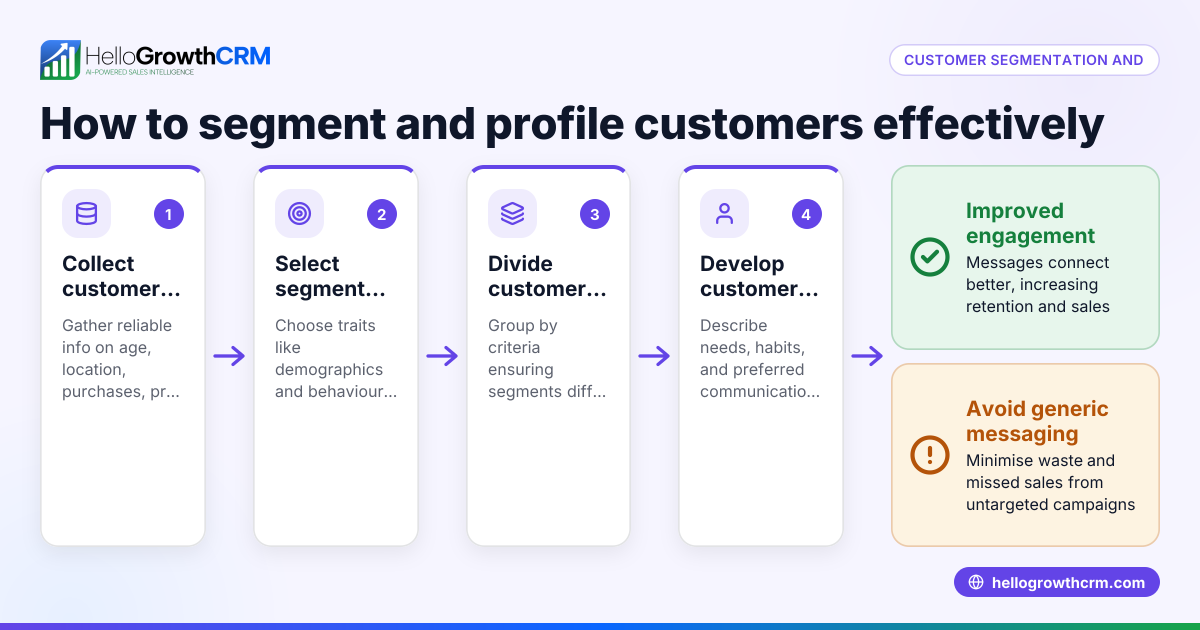
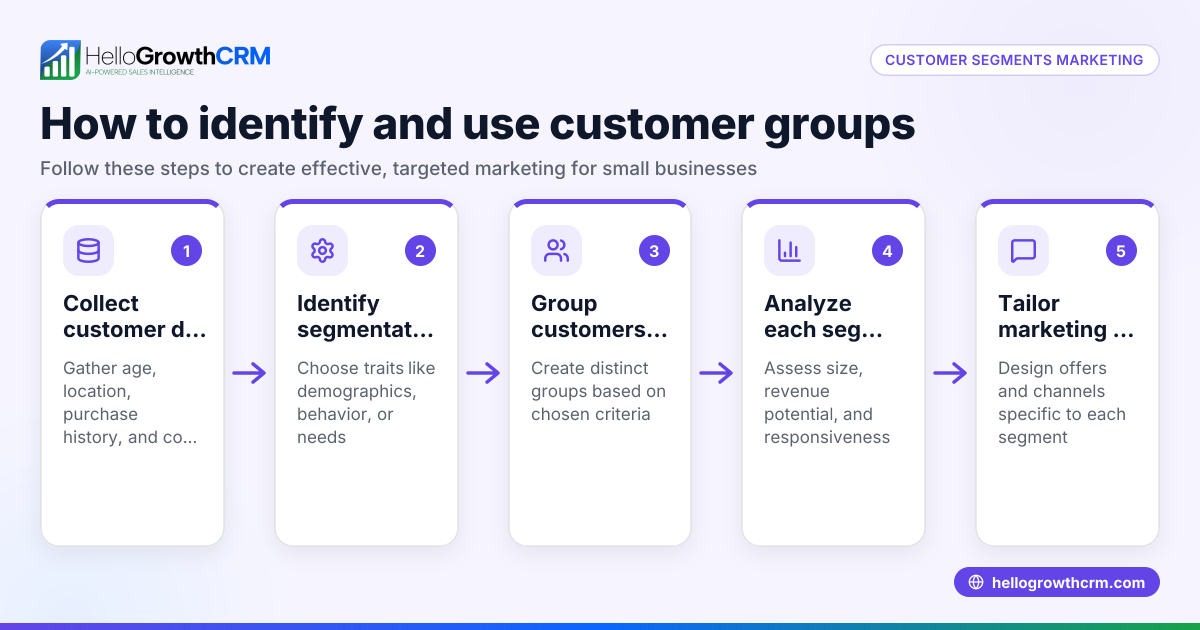
- Collect Customer Data: Gather relevant customer information such as age, location, purchase history, and communication preferences. Check the data for completeness and accuracy.
- Choose Segmentation Variables: Decide which customer attributes to use for clustering—for example, purchase frequency, average spend, or product interest. Verify these variables are measurable and relevant to your business goals.
- Select a Clustering Method: Common methods include K-means or hierarchical clustering. K-means is straightforward and widely used for beginners. Confirm you have the software or tools to perform this method.
- Preprocess Data: Clean the data by handling missing values and normalizing variables to ensure fair comparison. Check for outliers that might skew your results.
- Run the Cluster Analysis: Apply the chosen method to your data, specifying the number of clusters you want. Review the clusters formed and their characteristics.
- Interpret Clusters: Understand what defines each group—such as high spenders, occasional buyers, or loyal customers. Make sure the clusters make sense for your business.
- Apply Insights: Use the cluster information to tailor marketing messages, sales approaches, and product offers for each segment. Track results and adjust your strategy over time.
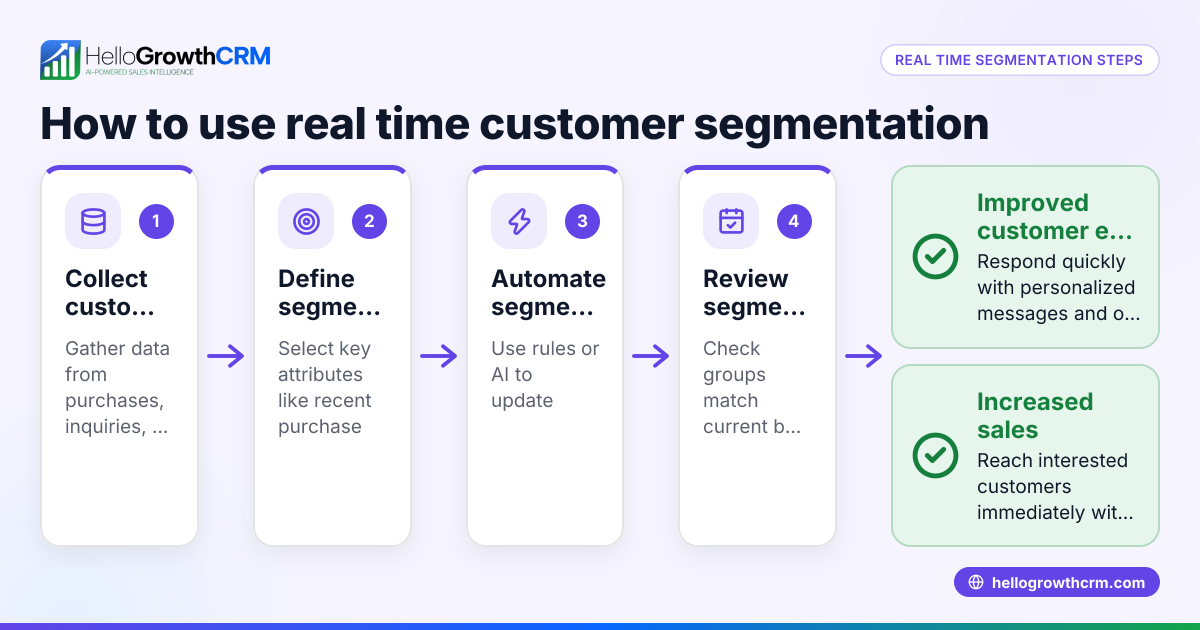
- Maintain Customer Data: Keep your customer records updated to reflect changes and new customers. This supports ongoing segmentation efforts.
Using tools that offer a customer health score can complement cluster analysis by tracking engagement within segments.
Example (fictional figures)
A two-location dental practice in Columbus, Ohio, wants to segment its 1,200 patients to improve marketing.
- They collect data on age, visit frequency, and treatment type.
- They choose K-means clustering with 3 clusters.
Results:
Cluster 1: Families with children (450 patients) Cluster 2: Seniors needing regular checkups (300 patients) Cluster 3: Young adults with occasional visits (450 patients)
Marketing budget: $9,000
Allocate marketing spend:
- Families: $9,000 × 50% = $4,500
- Seniors: $9,000 × 30% = $2,700
- Young adults: $9,000 × 20% = $1,800
This focused approach helps the practice create targeted promotions, increasing appointment bookings and patient satisfaction.
Common mistakes
- Using irrelevant variables: Prevent by selecting variables clearly linked to customer behavior or value.
- Choosing too many or too few clusters: Test different numbers and pick the one that balances detail and usability.
- Ignoring data quality: Clean and validate data before analysis.
- Not updating segments regularly: Schedule periodic reviews to keep segments relevant.
- Failing to act on insights: Use cluster results to guide marketing and sales decisions.
- Overcomplicating the process: Start simple and build sophistication as you learn.
Avoid these mistakes to get the most from your cluster analysis and improve your sales targeting. For ongoing sales follow-up, tools like HelloGrowthCRM’s WhatsApp and SMS CRM can help by enabling targeted communication based on segments.
Doing this in HelloGrowthCRM
HelloGrowthCRM helps you manage customer data efficiently after segmentation. Its customer portal, referrals, tickets, and knowledge base keep service requests and sales deals linked in one place. This unified record lets your team track customer interactions post-sale, making follow-up and support easier. Learn more about managing customer relationships with HelloGrowthCRM in the HelloGrowthCRM for the United States overview.
Frequently asked questions
What is the difference between customer segmentation and cluster analysis? Customer segmentation is the overall process of dividing customers into groups. Cluster analysis is a statistical method used to find these groups based on data patterns.
How many clusters should I use in my analysis? There’s no fixed number; it depends on your business needs and data. Try different numbers and choose the one that provides clear, actionable groups.
Can I do cluster analysis without technical skills? Basic cluster analysis can be done using user-friendly software or spreadsheets with add-ons. Starting simple helps build confidence before using advanced tools.
How often should I update my customer segments? Review and update segments regularly, such as quarterly or biannually, to reflect changes in customer behavior and market conditions.
How does cluster analysis improve sales follow-up? By grouping customers, sales teams can prioritize leads and tailor communication, leading to faster and more relevant follow-up, which reduces lost leads. HelloGrowthCRM’s WhatsApp and SMS CRM features support this targeted outreach.
Key takeaways
- Customer segmentation cluster analysis groups customers by shared traits for targeted marketing.
- Follow clear steps: collect data, choose variables, run clustering, interpret, and apply insights.
- Avoid common mistakes like poor data quality and ignoring results.
- Update segments regularly to keep them relevant.
- HelloGrowthCRM supports customer management after segmentation with integrated customer records.
Start improving your marketing and sales targeting today by applying cluster analysis. To manage your segmented customers effectively, start on the Free Forever plan (200 leads, no credit card) with HelloGrowthCRM.
Ready to put this into practice?
Set up your pipeline, WhatsApp follow-ups, and AI lead scoring in minutes — free, no credit card.
Try HelloGrowthCRM freeGet CRM tips in your inbox
Join thousands of sales professionals who get weekly insights on CRM strategy, AI automation, and pipeline optimization.

The HelloGrowthCRM team publishes guides on CRM strategy, AI sales tools, and revenue operations for small business sales teams.