HelloGrowthCRM software
Built for real small-business sales teams
HelloGrowthCRM helps reps qualify faster, follow up on time, and close more deals—with practical automation in one place.
- AI lead scoring and pipeline visibility
- Built-in dialer, WhatsApp, and email automation
- Sales forecasting and RevOps-ready reporting
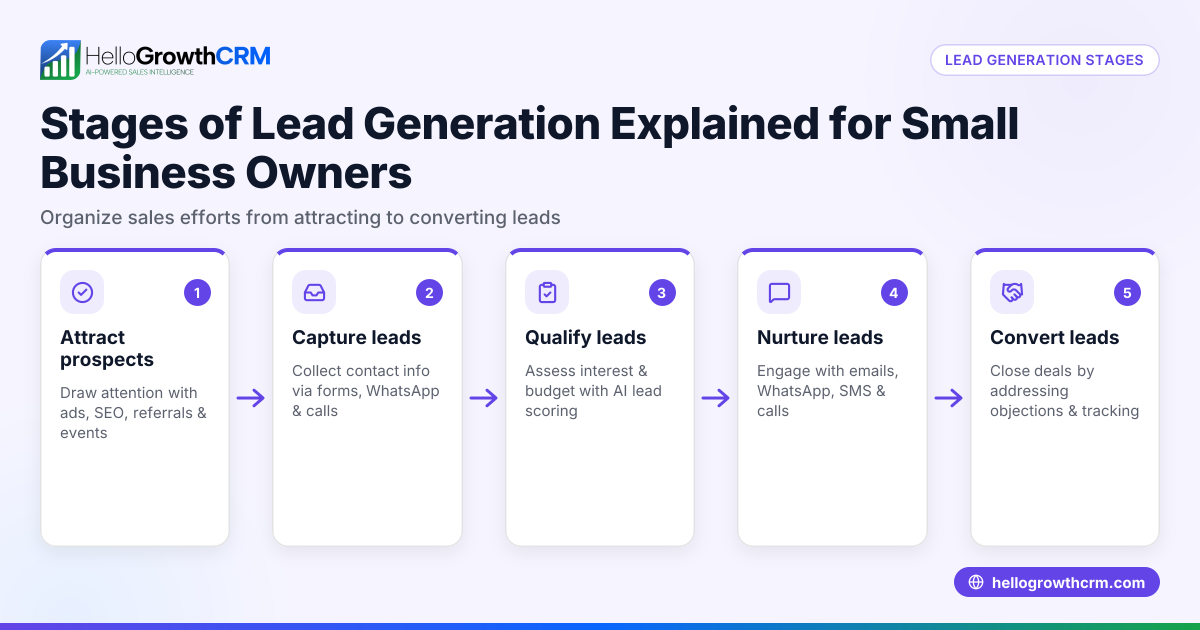
To create sales stages for your business in India, you need to outline the key milestones a potential customer passes through before becoming a buyer. Each stage should have clear criteria and actions so your sales team knows what to do and when to move leads forward. This article explains why defining sales stages is important, provides a step-by-step method to create them, shows a worked example with Indian rupees, highlights common mistakes to avoid, and describes how HelloGrowthCRM helps manage your sales pipeline efficiently.
Why this comes up / what goes wrong
Many small business owners in India run sales informally, often using WhatsApp or spreadsheets. This leads to lost leads, missed follow-ups, and unclear sales progress. Without defined sales stages, teams don’t know when to push a lead forward or when to re-engage, causing slow sales cycles and revenue loss. Founders or sales leaders often search for "how to create sales stages for a business India" to bring structure and clarity, especially when scaling beyond a few customers.
Step-by-step
- Identify your typical sales process: List the main steps a lead goes through, from initial enquiry to closing. For example, stages might be Lead Captured, Contacted, Needs Identified, Quotation Sent, Negotiation, and Closed Won/Lost.
- Define clear criteria for each stage: Specify what must happen for a lead to enter or leave a stage. For instance, “Quotation Sent” means a formal price quote has been emailed or shared.
- Assign actions and responsibilities: Decide who on your team handles each stage and what tasks they must complete, such as calling the lead, sending a quotation, or scheduling a demo.
- Set follow-up timelines: For each stage, define how quickly the next action should happen. For example, follow up within 3 days after sending a quotation.
- Create stage names that are simple and meaningful: Use terms your sales team understands easily. Avoid jargon.
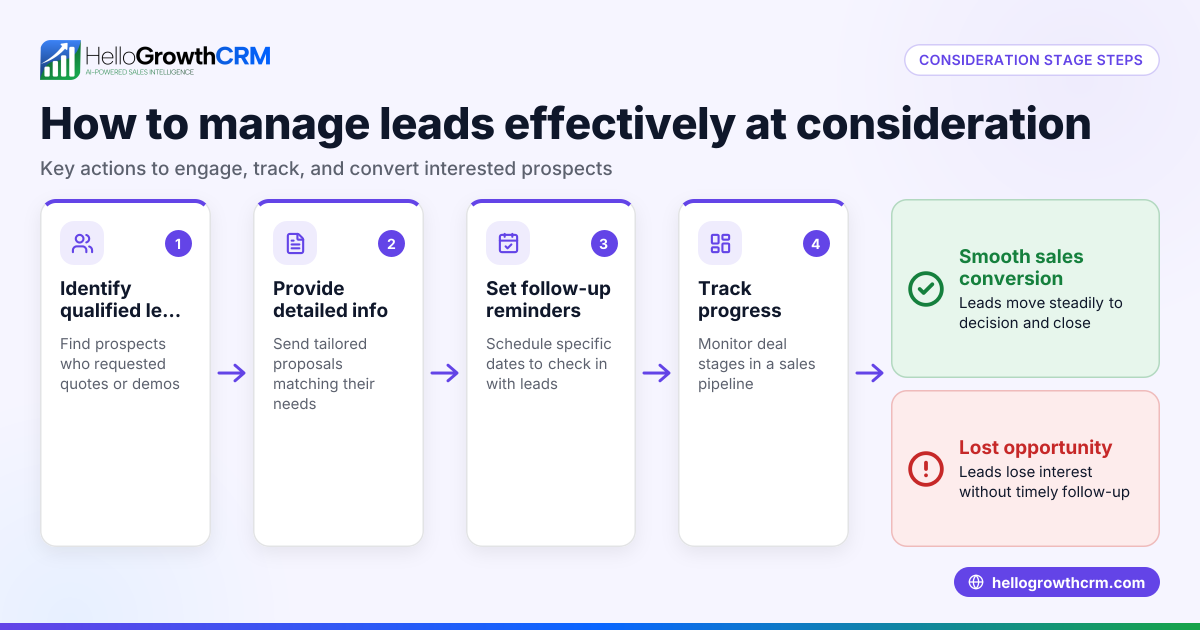
- Use a pipeline or CRM tool to track stages: Record each lead’s current stage and next steps to avoid leads slipping through cracks.
- Review and refine stages regularly: As you learn what works, adjust your stages and criteria for better accuracy and efficiency.
Remember to check that each stage moves the lead closer to a sale and that no stage overlaps or is redundant. For managing these steps digitally, consider tools like a WhatsApp and SMS CRM or a built-in CRM dialer for faster communication and tracking.
Example (fictional figures)
A Mumbai-based manufacturer sells industrial pumps. Their sales stages are:
- Lead Captured
- Contacted
- Needs Identified
- Quotation Sent
- Negotiation
- Closed Won
A lead enquiry comes in on 01/03/2024 with an expected order value of ₹5,00,000.
- 01/03/2024: Lead Captured
- 02/03/2024: Contacted the lead by phone
- 04/03/2024: Identified needs and specifications
- 05/03/2024: Sent a quotation for ₹5,00,000
- 10/03/2024: Negotiation on price begins
- 15/03/2024: Closed Won with a 5% discount
Calculation of final sale value:
₹5,00,000 × 5% = ₹25,000 (discount)
₹5,00,000 − ₹25,000 = ₹4,75,000 (final order value)
This example shows how each stage has clear dates and actions, and the final sale value reflects negotiation.
Common mistakes
- Too many or too few stages: Having too many stages complicates tracking; too few stages miss important steps. Keep it balanced by focusing on meaningful milestones.
- Unclear criteria for moving stages: Without clear rules, leads get stuck or regress. Define specific actions or outcomes needed to advance.
- Ignoring follow-up timelines: Leads cool off if not followed up promptly. Set and monitor deadlines for next actions.
- Not using a CRM or pipeline tool: Relying only on spreadsheets or WhatsApp chats leads to lost leads. Use tools like HelloGrowthCRM to track deals and follow-ups.
- No regular review of stages: Business and customer behaviour change. Review stages quarterly to improve.
- Failing to assign responsibilities: Without clear ownership, leads are neglected. Assign stages to specific team members.
Doing this in HelloGrowthCRM
HelloGrowthCRM helps Indian SMBs manage sales stages with its Deals (pipeline) feature. You can track open opportunities from first contact to close, moving deals through stages like “quote sent” with follow-up dates so nothing is forgotten. Managed RevOps support is available for founders without sales managers, ensuring weekly follow-up and pipeline hygiene. For field sales teams, Territories, field operations and commissions tools let reps log visits from their phones and managers see daily beats. Learn more about how HelloGrowthCRM supports sales stages at HelloGrowthCRM for India. Also explore its WhatsApp and SMS CRM and built-in CRM dialer features.
Frequently asked questions
What are sales stages in a business? Sales stages are defined steps that a lead passes through in the sales process, from initial contact to closing the deal. They help organise and track sales activities clearly.
How many sales stages should a small business have? Typically, 5 to 7 stages work well for small businesses. Too many stages complicate tracking, while too few can miss key sales actions.
Can I customize sales stages for different products? Yes, sales stages should reflect your sales process and can be customised per product or service line to match how customers buy.
How do I ensure my team follows the sales stages? Assign clear responsibilities, set follow-up timelines, and use a CRM tool to track progress and send reminders.
Is it necessary to use a CRM for sales stages? While not mandatory, a CRM like HelloGrowthCRM helps automate tracking, reminders, and reporting, reducing manual errors and missed leads.
How often should I review my sales stages? Review your sales stages quarterly or after significant changes in your sales process to keep them relevant and effective.
Key takeaways
- Define clear, meaningful sales stages that represent milestones in your sales process.
- Set specific criteria and follow-up timelines for moving leads between stages.
- Assign responsibilities to team members for each stage.
- Use a CRM tool like HelloGrowthCRM to track deals, follow-ups, and pipeline health.
- Avoid too many or too few stages and review your process regularly.
Start improving your sales process today by creating clear sales stages and tracking them efficiently. To get started without any cost, try HelloGrowthCRM’s Free Forever plan with 200 leads and no credit card required at Start on the Free Forever plan (200 leads, no credit card).
Ready to put this into practice?
Set up your pipeline, WhatsApp follow-ups, and AI lead scoring in minutes — free, no credit card.
Try HelloGrowthCRM freeGet CRM tips in your inbox
Join thousands of sales professionals who get weekly insights on CRM strategy, AI automation, and pipeline optimization.

The HelloGrowthCRM team publishes guides on CRM strategy, AI sales tools, and revenue operations for small business sales teams.