HelloGrowthCRM software
Built for real small-business sales teams
HelloGrowthCRM helps reps qualify faster, follow up on time, and close more deals—with practical automation in one place.
- AI lead scoring and pipeline visibility
- Built-in dialer, WhatsApp, and email automation
- Sales forecasting and RevOps-ready reporting
Managing payment follow ups is crucial for maintaining healthy cash flow in your small business. Without a system, you risk delayed payments and strained customer relations. This guide explains why payment follow ups are often neglected, then offers a clear, numbered process to handle them efficiently. You'll also find a worked example with realistic Singapore figures, common pitfalls to avoid, and a brief overview of using HelloGrowthCRM to organise follow ups.
Why this comes up / what goes wrong
Small business owners in Singapore often juggle many roles, including sales, operations, and finance. Payment follow ups can slip through the cracks because:
- Invoices are sent but not tracked, so owners forget who owes what and when.
- Follow ups rely on memory or scattered notes, causing inconsistent or late reminders.
- Communication channels like WhatsApp or email are mixed, making it hard to keep a clear record.
- Without a dedicated person, follow ups get deprioritised amid other urgent tasks.
This leads to delayed payments, cash flow problems, and sometimes awkward customer interactions. A structured approach is needed to avoid these issues.
Step-by-step
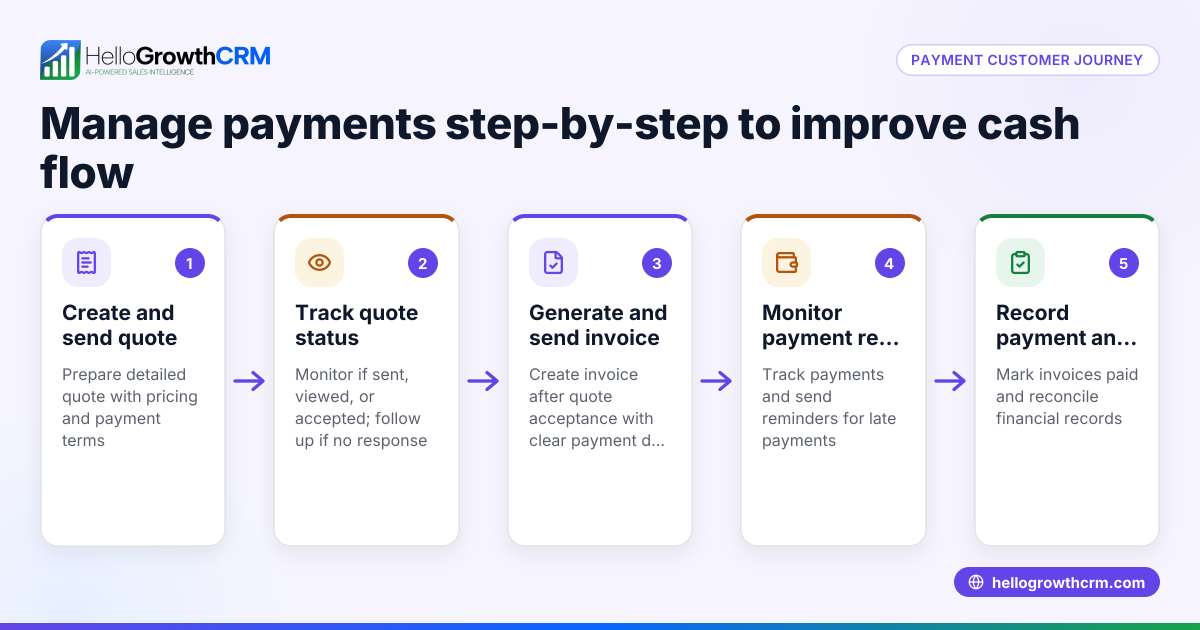
- Issue clear invoices promptly
- Send invoices as soon as the service or product is delivered.
- Include payment terms (e.g., due in 30 days), amount, invoice number, and payment methods.
- Check the invoice details carefully before sending.
- Record and track each invoice
- Maintain a simple spreadsheet or use a CRM to log invoice dates, amounts, customer names, and due dates.
- Regularly update the status: sent, viewed, paid, overdue.
- Schedule follow-up tasks before and after due dates
- Set reminders to contact customers a few days before the due date as a courtesy reminder.
- If unpaid by the due date, schedule a polite payment reminder immediately.
- Plan subsequent follow ups at regular intervals (e.g., 7 days, 14 days after due date) until payment is received.
- Use consistent communication templates
- Prepare polite, professional message templates for reminders.
- Send reminders via the customer's preferred channel (WhatsApp, email, SMS).
- Log all communication
- Keep records of calls, messages, and responses linked to each invoice.
- Escalate if necessary
- If payment is significantly overdue, escalate to a phone call or formal letter.
- Consider offering payment plans if customers face genuine difficulties.
- Review follow-up performance weekly
- Check which invoices remain unpaid and adjust follow-up frequency.
- Assign follow-up duties clearly if you have a team.
- Reconcile payments promptly
- Mark invoices as paid immediately upon receipt.
- Send payment confirmations to customers.
Example (fictional figures)
A renovation contractor in Jurong issues an invoice of S$12,000 on 01/03/2024 with payment terms of 30 days.
- Invoice date: 01/03/2024
- Due date: 31/03/2024 (30 days after invoice date)
- Amount: S$12,000
Follow-up schedule:
- 28/03/2024: Send a courtesy reminder 3 days before due date.
- 01/04/2024: Payment not received, send first payment reminder.
- 08/04/2024: Still unpaid, send second reminder.
- 15/04/2024: Call customer to discuss payment.
Calculations:
- Invoice amount = S$12,000
No additional fees apply in this example.
This clear schedule helps the contractor stay on top of payments without relying on memory.
Common mistakes
- Not tracking invoices systematically
- Prevent by using a spreadsheet or CRM to log all invoices and due dates.
- Delaying follow ups until payments are overdue
- Prevent by sending reminders before due dates as a courtesy.
- Mixing communication channels without records
- Prevent by centralising follow ups in one system or keeping detailed logs.
- Using inconsistent or overly aggressive messages
- Prevent by preparing polite, standard templates and adjusting tone based on customer relationship.
- Failing to assign responsibility
- Prevent by designating a team member or using managed revenue operations support to handle follow ups weekly.
- Ignoring overdue payments instead of escalating
- Prevent by scheduling escalation steps after repeated reminders.
Doing this in HelloGrowthCRM
HelloGrowthCRM helps small businesses manage payment follow ups with features like quotes, proposals, invoices, and payments received all tied to deals. You can send and track quotes and invoices from the same screen where follow-up tasks are scheduled, so you never lose track of who owes what. Each follow-up becomes a task with a due date, and the day’s calls and reminders appear as a clear list, reducing memory load. For founders without a sales manager, Managed RevOps service assigns a specialist to work the follow-up queue weekly, ensuring no payment is missed.
Learn more about sales task boards and email automation and sequences to automate reminders and stay organised.
Frequently asked questions
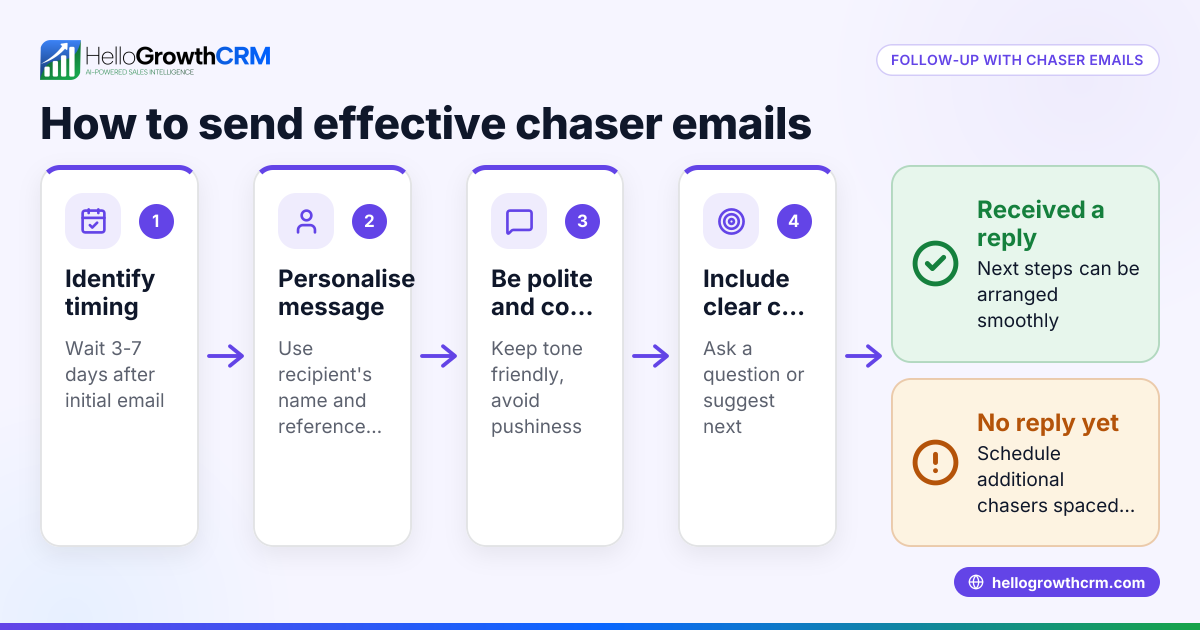
How soon should I start payment follow ups after sending an invoice? Start with a courteous reminder a few days before the payment due date. Follow up promptly on the day after the due date if payment is not received.
What is the best way to communicate payment reminders? Use your customer’s preferred channel, such as WhatsApp or email, and keep messages polite and professional. Consistency helps maintain good relationships.
How often should I follow up on overdue payments? Follow up every 7 to 14 days after the due date, adjusting frequency based on customer responsiveness.
Can I assign payment follow ups to my team? Yes, assign clear responsibility for payment follow ups. If you don’t have a sales manager, consider Managed RevOps support to ensure weekly follow-up execution.
How do I keep track of all payment communications? Use a CRM or task board to log all calls, messages, and notes linked to each invoice, avoiding scattered records.
Key takeaways
- Issue clear invoices with payment terms promptly.
- Track all invoices and due dates systematically.
- Schedule and log follow-up tasks before and after due dates.
- Use polite, consistent communication templates.
- Assign responsibility for follow ups or use Managed RevOps.
- Keep detailed records of all communications.
Managing payment follow ups efficiently will improve your cash flow and customer relationships. Start organising your payment follow ups today with HelloGrowthCRM. Start on the Free Forever plan (200 leads, no credit card).
Ready to put this into practice?
Set up your pipeline, WhatsApp follow-ups, and AI lead scoring in minutes — free, no credit card.
Try HelloGrowthCRM freeGet CRM tips in your inbox
Join thousands of sales professionals who get weekly insights on CRM strategy, AI automation, and pipeline optimization.

The HelloGrowthCRM team publishes guides on CRM strategy, AI sales tools, and revenue operations for small business sales teams.