HelloGrowthCRM software
Built for real small-business sales teams
HelloGrowthCRM helps reps qualify faster, follow up on time, and close more deals—with practical automation in one place.
- AI lead scoring and pipeline visibility
- Built-in dialer, WhatsApp, and email automation
- Sales forecasting and RevOps-ready reporting
To set up recurring payment reminders in India, follow a clear, step-by-step process to ensure timely follow-up and reduce missed payments. This guide walks you through each step, including what to check, a realistic example, common pitfalls, and a brief overview of HelloGrowthCRM features that support collections.
Why this comes up / what goes wrong
Small business owners in India often deal with multiple customers and recurring payments such as monthly subscriptions, service fees, or instalments. Without a reliable reminder system, payments get delayed or missed, affecting cash flow. Many rely on manual methods like WhatsApp or Excel sheets, which are prone to errors and forgetfulness. Setting up a recurring payment reminder system ensures you notify customers before payment due dates, improving collection rates and customer relationships.
Step-by-step
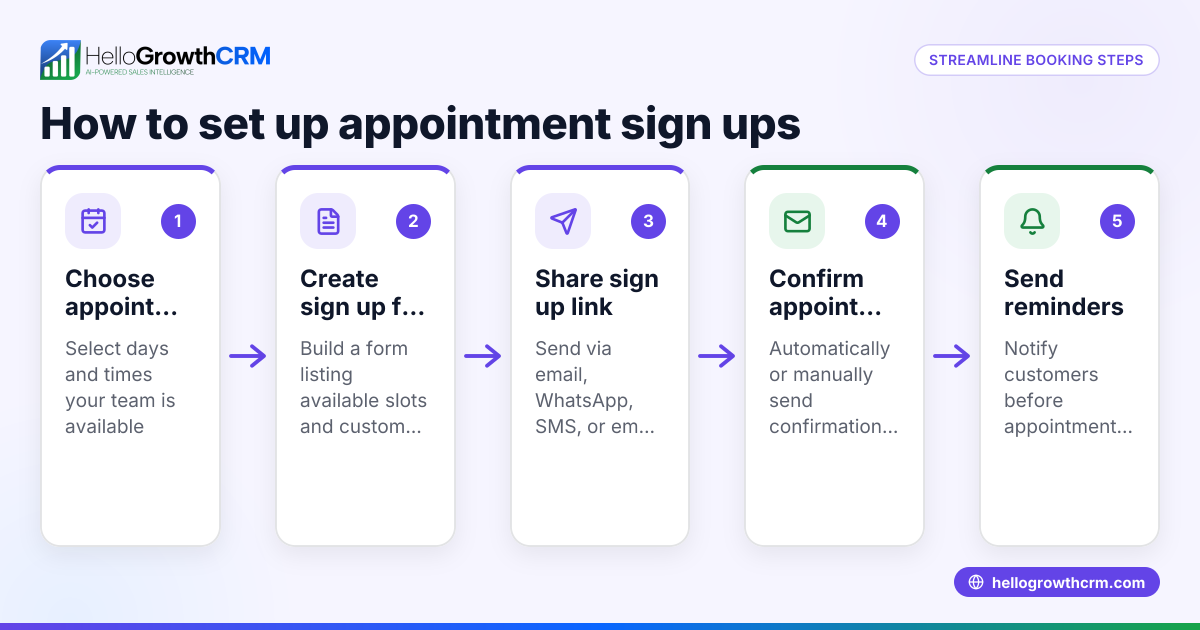
- List all recurring payments: Identify all customers or clients with recurring payments, noting the amount, frequency (monthly, quarterly), and due date.
- Choose reminder intervals: Decide when to send reminders. Common practice is to notify customers 7 days before, 3 days before, and on the due date.
- Select communication channels: Use WhatsApp, SMS, and/or email based on your customer's preferences and your business capabilities.
- Draft clear reminder messages: Keep messages polite and concise, including payment amount, due date, payment methods, and contact info for queries.
- Set up a reminder schedule: Use a calendar or CRM tool to schedule reminders according to the intervals chosen. Ensure reminders repeat for each billing cycle.
- Automate reminders if possible: Manual reminders are time-consuming and error-prone. Use software that supports automated, recurring reminders to save time and reduce mistakes.
- Track payment status: Record when payments are received and stop reminders for paid invoices to avoid annoying customers.
- Review and update regularly: Periodically check your list for changes in payment amounts, new customers, or cancellations.
Example (fictional figures)
ABC Enterprises provides monthly maintenance services charging ₹15,000 per client. They want to set up reminders for a client whose payment is due on 15/07/2024.
- Payment amount: ₹15,000
- Due date: 15/07/2024
- Reminder intervals: 7 days before (08/07/2024), 3 days before (12/07/2024), and on due date (15/07/2024)
Step 1: Schedule reminder 1 on 08/07/2024 Message: "Dear Customer, your monthly maintenance payment of ₹15,000 is due on 15/07/2024. Please ensure timely payment. Contact us for help."
Step 2: Schedule reminder 2 on 12/07/2024 Message: "Reminder: Your maintenance payment of ₹15,000 is due in 3 days on 15/07/2024. Please arrange payment to avoid service interruption."
Step 3: Schedule reminder 3 on 15/07/2024 Message: "Today is the due date for your ₹15,000 maintenance payment. Please make the payment to continue enjoying our services."
If payment is received on 14/07/2024, cancel reminders 2 and 3.
Common mistakes
- Sending reminders too late or only on the due date: Start reminders at least a week before the due date. Prevent by setting multiple intervals.
- Using only one communication channel: Customers may miss messages on one platform. Use WhatsApp, SMS, and email together when possible.
- Not updating payment status promptly: Continuing reminders after payment annoys customers. Track payments carefully and stop reminders once paid.
- Generic messages without payment details: Messages lacking amount or due date confuse customers. Always include clear, specific information.
- Manual tracking without automation: Increases errors and workload. Use task boards or CRM sequences to automate reminders and follow-ups. See sales task boards for managing follow-ups.
Doing this in HelloGrowthCRM
HelloGrowthCRM helps small businesses manage recurring payment reminders efficiently. You can send quotes, proposals, and invoices directly from deals and track their status (sent, viewed, accepted) on the same screen as follow-up tasks. Each follow-up becomes a task with a due date, so your team knows exactly what to do without relying on memory. Automated sequences run multi-step follow-ups over two weeks and stop as soon as the customer replies, saving time and improving collections. Learn more about HelloGrowthCRM for India.
Frequently asked questions
How often should I send payment reminders? Send reminders at least three times: one week before, three days before, and on the due date. Adjust frequency depending on customer response and business needs.
Can I use WhatsApp for payment reminders legally? Yes, WhatsApp is widely used for business communication in India. Ensure messages are polite and comply with WhatsApp Business policies. For automation, consider software that supports WhatsApp messaging.
What if a customer ignores payment reminders? After reminders, follow up with a personal call or escalate as per your company policy. Document all communications for reference.
Is it better to automate reminders or do them manually? Automation reduces errors, saves time, and ensures consistency. Manual reminders can cause missed follow-ups and increased workload.
How can I track payments efficiently? Use a CRM or accounting tool to log payments against invoices and deals. This stops unnecessary reminders and helps your sales or collections team stay organised.
Key takeaways
- List all recurring payments with amounts and due dates.
- Send reminders multiple times before the due date using WhatsApp, SMS, and email.
- Automate reminders and follow-ups to reduce manual errors.
- Track payment receipt promptly to stop reminders.
- Use clear, polite, and informative messages including payment details.
- HelloGrowthCRM supports quotes, task boards, and automated sequences to manage reminders.
Start setting up your recurring payment reminders today to improve your cash flow and customer relationships. To try a system that supports automated follow-ups, start on the Free Forever plan (200 leads, no credit card).
Ready to put this into practice?
Set up your pipeline, WhatsApp follow-ups, and AI lead scoring in minutes — free, no credit card.
Try HelloGrowthCRM freeGet CRM tips in your inbox
Join thousands of sales professionals who get weekly insights on CRM strategy, AI automation, and pipeline optimization.

The HelloGrowthCRM team publishes guides on CRM strategy, AI sales tools, and revenue operations for small business sales teams.