HelloGrowthCRM software
Built for real small-business sales teams
HelloGrowthCRM helps reps qualify faster, follow up on time, and close more deals—with practical automation in one place.
- AI lead scoring and pipeline visibility
- Built-in dialer, WhatsApp, and email automation
- Sales forecasting and RevOps-ready reporting
To write a payment follow up message in New Zealand, keep it polite, clear, and professional. Reference the invoice number and due date, state the amount owing, and kindly request payment or an update. Provide your contact details for any questions. This article explains why payment follow-ups are necessary, provides step-by-step instructions, a worked example with realistic NZ figures, common mistakes to avoid, and how HelloGrowthCRM can assist with follow-up management.
Why this comes up / what goes wrong
Many small business owners in New Zealand face late or missed payments from customers. This often happens because invoices get overlooked, customers forget the due date, or communication is unclear. Without a clear follow-up message, businesses risk cash flow problems. Writing an effective payment follow-up message helps remind customers politely and professionally, increasing the chance of timely payment without damaging the business relationship.
Step-by-step
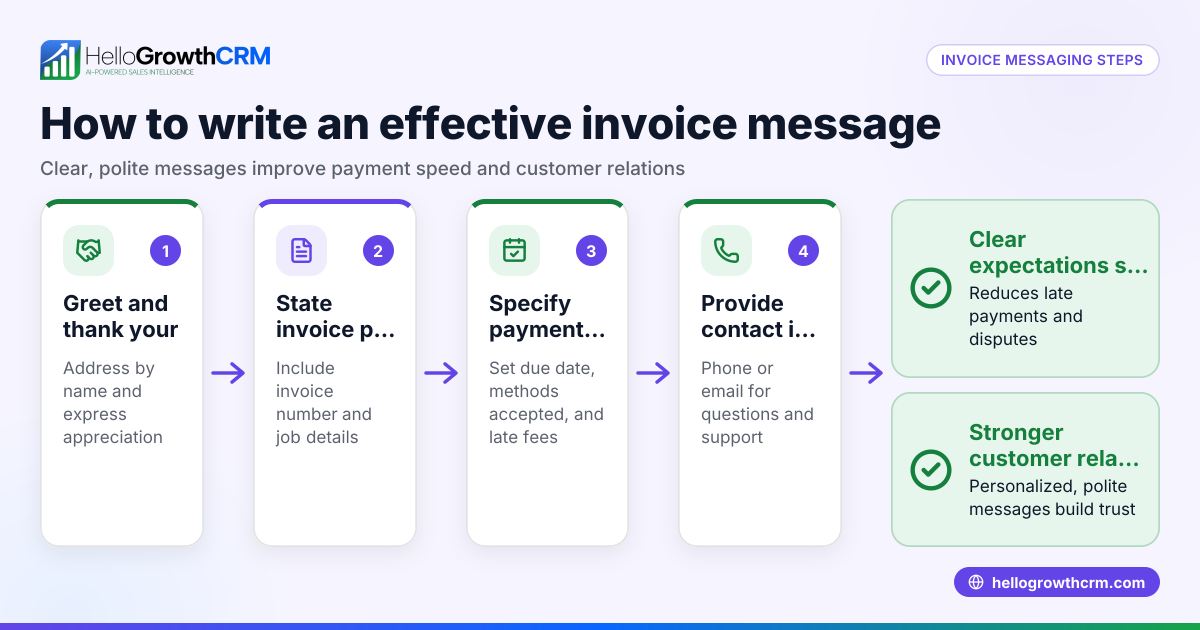
- Check the invoice details: Confirm the invoice number, issue date, due date, and amount outstanding before writing your message.
- Start politely: Open with a courteous greeting and remind the customer of the invoice and its due date.
- State the amount due: Clearly mention the exact amount that is outstanding.
- Request payment or update: Ask for payment or an update on the payment status.
- Provide payment options: Briefly mention how the customer can pay (e.g., bank transfer, online payment).
- Include your contact details: Offer a phone number or email for any questions or clarifications.
- Close politely: Thank the customer for their attention and express willingness to assist.
- Set a follow-up task: Schedule a reminder or task to follow up again if payment is not received.
Use a clear subject line if sending by email, such as “Payment Reminder: Invoice #12345”. Keep the tone professional and avoid sounding confrontational.
Example (fictional figures)
Jane runs a small tourism business in Queenstown. She sent an invoice on 15/05/2024 for a guided tour costing NZ$1,500 due on 30/05/2024. On 05/06/2024, payment has not arrived, so Jane writes a follow-up message.
Subject: Payment Reminder: Invoice #20240515
Dear Mr Smith,
I hope you are well. I am writing to remind you that invoice #20240515 for the Queenstown guided tour, issued on 15/05/2024, was due on 30/05/2024. The outstanding amount is NZ$1,500.
Please let us know if you have already made the payment or if you require any assistance with the payment process. Payment can be made via bank transfer to account 12-3456-7890123-00.
Thank you for your attention to this matter. Please feel free to contact me at jane@queenstowntours.nz or 021 123 4567 if you have any questions.
Kind regards, Jane
Calculation check: Invoice amount = NZ$1,500 Due date = 30/05/2024 Follow-up date = 05/06/2024
Jane sets a task to follow up again in 7 days if payment is not received.
Common mistakes
- Being vague about the invoice: Always include the invoice number and due date to avoid confusion.
- Using a harsh tone: Keep the message polite to maintain good customer relations.
- Forgetting to include contact details: Customers need an easy way to reach you with questions.
- Not scheduling a follow-up: Without a reminder, you might forget to chase payment again.
- Sending follow-ups too frequently: Space out reminders reasonably, such as one every week or two.
Using sales task boards helps manage follow-ups efficiently and avoid missing reminders. Learn more about sales task boards.
Doing this in HelloGrowthCRM
HelloGrowthCRM helps you manage payment follow-ups with these features:
- Activities and task boards: Each payment follow-up becomes a task with a due date, so you see a clear list of calls or messages to send each day instead of relying on memory.
- WhatsApp and SMS: You can send follow-up messages directly via WhatsApp or SMS, with all conversations logged on the lead record for easy tracking.
- Sequences and campaigns: Automate a multi-step follow-up sequence over two weeks that stops automatically when the customer replies, saving you time.
Explore how HelloGrowthCRM supports your follow-ups on WhatsApp and SMS here and discover email automation and sequences for follow-ups here.
Frequently asked questions
How soon should I send a payment follow-up message? Send your first follow-up shortly after the payment due date passes, typically within 5-7 days. This timing is polite yet prompt enough to encourage payment without seeming impatient.
What if the customer says they cannot pay yet? Respond politely and ask for an expected payment date. You can then schedule another follow-up based on that date. Maintaining communication helps keep the relationship positive.
Can I send payment follow-ups via WhatsApp? Yes, WhatsApp is widely used in New Zealand and can be an effective channel. Using a CRM with WhatsApp integration helps you track conversations and automate follow-ups.
How many follow-up messages should I send? Typically 3-5 follow-ups spaced over two weeks work well. Too many reminders can annoy customers, while too few may reduce your chances of payment.
What if the customer disputes the invoice? Address their concerns professionally and promptly. Clarify any misunderstandings or errors to resolve the dispute quickly.
Key takeaways
- Include invoice number, due date and exact amount in your follow-up message.
- Use a polite, professional tone and provide contact details.
- Schedule reminders to follow up again if payment is not received.
- Avoid vague messages, harsh tones, and forgetting contact info.
- Use task boards and messaging sequences to manage follow-ups efficiently.
- WhatsApp and SMS can be effective channels for payment reminders.
Start managing your payment follow-ups better today. You can start on the Free Forever plan (200 leads, no credit card) with HelloGrowthCRM.
Ready to put this into practice?
Set up your pipeline, WhatsApp follow-ups, and AI lead scoring in minutes — free, no credit card.
Try HelloGrowthCRM freeGet CRM tips in your inbox
Join thousands of sales professionals who get weekly insights on CRM strategy, AI automation, and pipeline optimization.

The HelloGrowthCRM team publishes guides on CRM strategy, AI sales tools, and revenue operations for small business sales teams.