HelloGrowthCRM software
Built for real small-business sales teams
HelloGrowthCRM helps reps qualify faster, follow up on time, and close more deals—with practical automation in one place.
- AI lead scoring and pipeline visibility
- Built-in dialer, WhatsApp, and email automation
- Sales forecasting and RevOps-ready reporting
Opt in email marketing means sending marketing emails only to people who have explicitly agreed to receive them. This ensures your messages reach interested recipients and helps you comply with laws like CAN-SPAM and the TCPA, which regulate marketing emails but do not require clear consent for CAN-SPAM. (ftc.gov) This article covers why opt in is important, how to collect opt ins properly, an example with figures, common mistakes, and how HelloGrowthCRM supports opt in email campaigns.
Why this comes up / what goes wrong
Many small business owners start emailing potential customers without clear permission, often using purchased lists or contacts collected without consent. This leads to low response rates, spam complaints, and legal exposure. Without opt in, your emails may be marked as spam, damaging your sender reputation and reducing deliverability. Also, recipients who did not agree to receive emails are less likely to engage, wasting your marketing effort.
Small businesses running sales through email, text, or spreadsheets often struggle to track who has opted in and when. This confusion can cause accidental marketing to non-consenting contacts or missed opportunities to follow up with interested leads.
Step-by-step
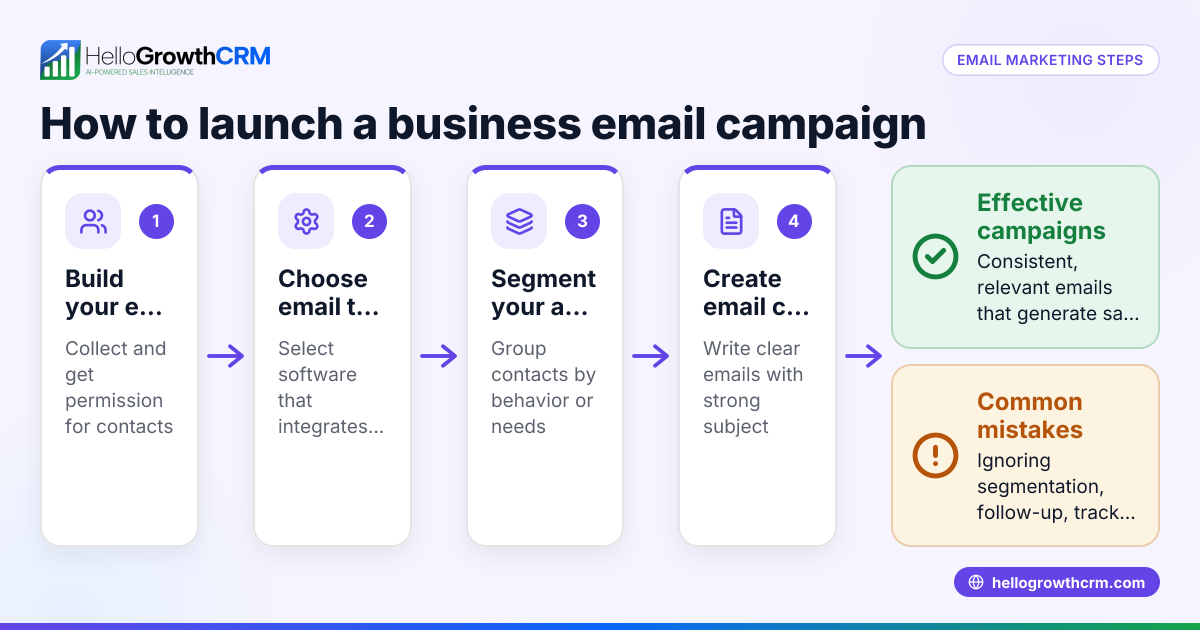
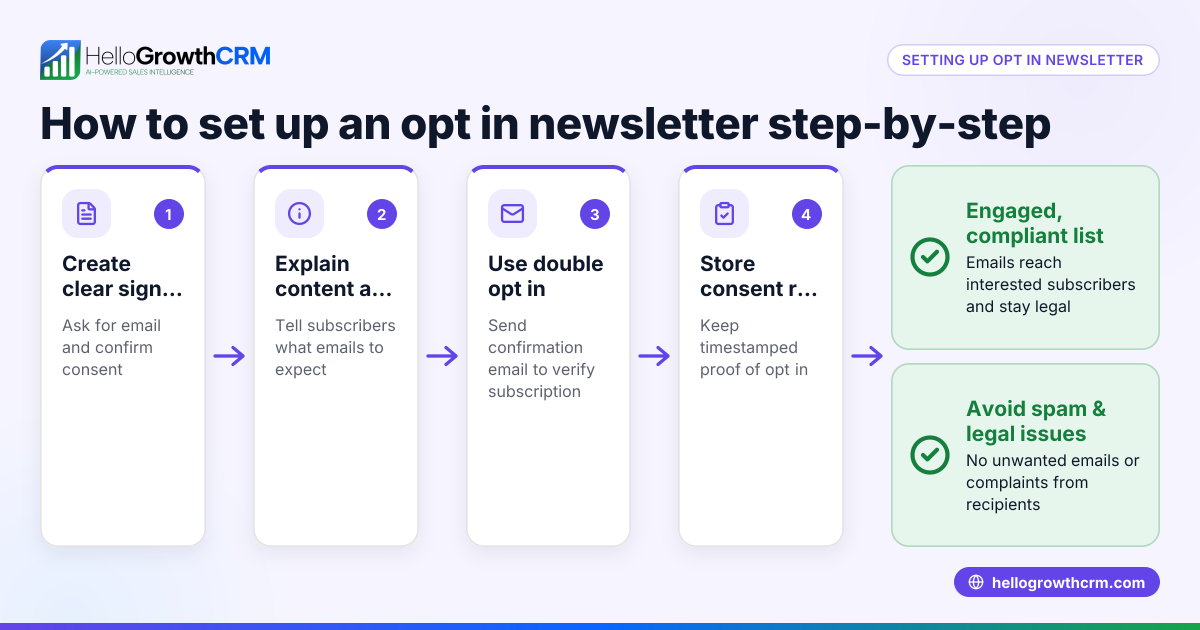
- Create a clear opt in form: Use your website, social media, or in-person sign-ups to collect email addresses. Clearly state what people are signing up for, e.g., "Get weekly updates and exclusive offers by email." Avoid pre-checked boxes.
- Confirm the opt in: Send a confirmation email asking the person to verify their subscription (double opt in). This reduces fake or mistyped addresses and confirms genuine interest.
- Record consent details: Store the date, time, and method of opt in in your CRM or database. This proves consent if needed.
- Segment your list: Separate contacts who opted in from those who have not. Only send marketing campaigns to the opted-in group.
- Send relevant, valuable content: Respect your subscribers by sending emails that match what they signed up for. Avoid overwhelming them with too many messages.
- Provide an easy unsubscribe option: Every email must include a clear way to opt out. Honor unsubscribe requests promptly.
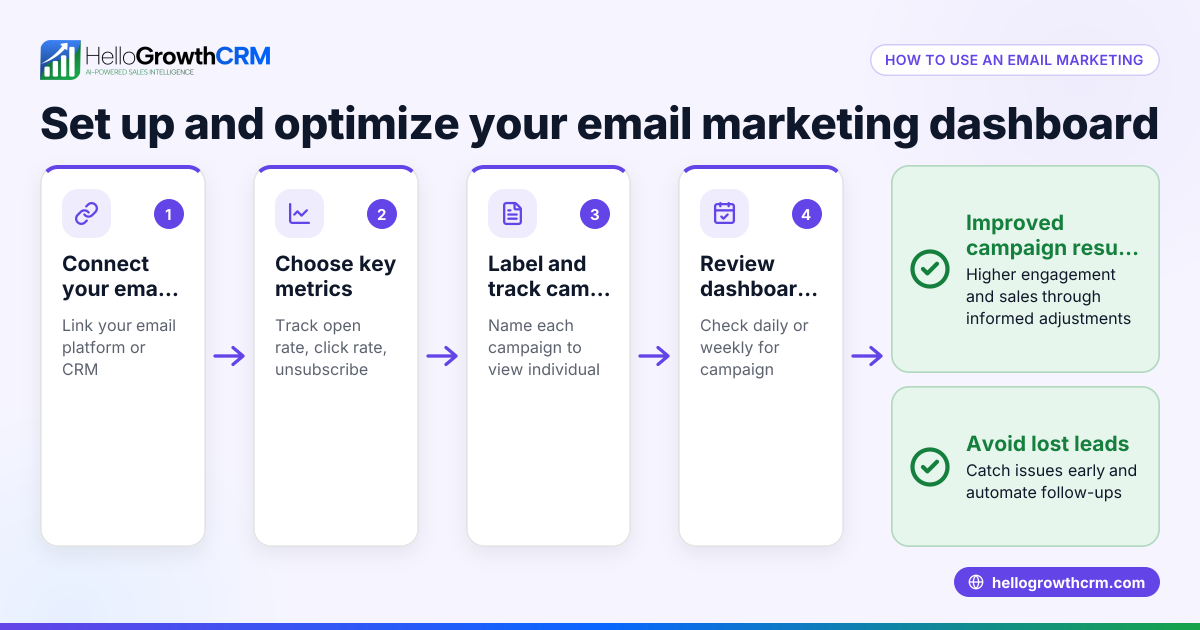
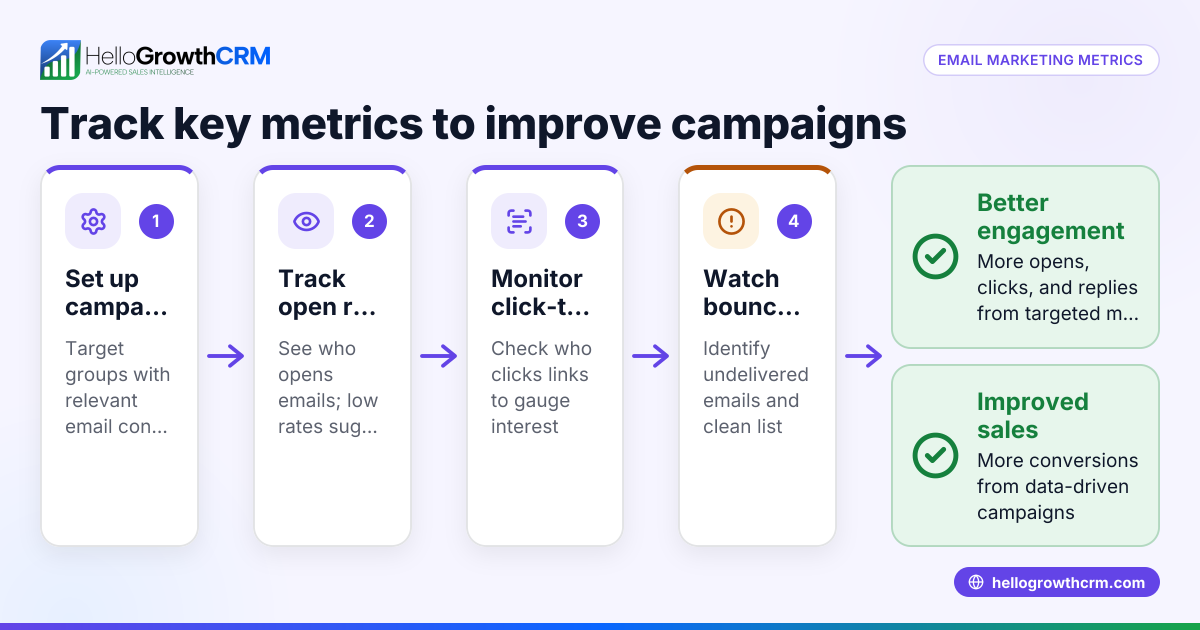
- Track engagement and compliance: Monitor open rates, clicks, and complaints. Remove inactive or complaining contacts to maintain list health.
- Maintain records and update regularly: Keep your opt in records up to date and review your list periodically to ensure ongoing compliance.
Using tools like HelloGrowthCRM’s email automation and sequences helps automate follow-ups and manage opt ins consistently.
Example (fictional figures)
A two-location dental practice in Columbus, Ohio, wants to start an opt in email marketing campaign.
- They create an online form offering "Monthly dental health tips and appointment reminders."
- 500 patients sign up over 3 months.
- They send a confirmation email with a verification link; 450 confirm (double opt in).
- They segment these 450 as the opted-in list.
- They schedule a 5-step email sequence over two weeks with helpful tips and a call to book a check-up.
Costs and results:
- Email platform subscription: $50/month
- Estimated new appointments from campaign: 15
- Average appointment revenue: $200
Revenue from campaign:
15 appointments × $200 = $3,000
Cost:
3 months × $50 = $150
Net gain:
$3,000 - $150 = $2,850
This shows how opt in email marketing can generate measurable business value when done properly.
Common mistakes
- Not getting explicit consent: Avoid sending marketing emails to contacts who have not clearly agreed. Prevent by using clear opt in forms and double opt in.
- Using pre-checked boxes: This can invalidate consent. Always require active action from the subscriber.
- Ignoring unsubscribe requests: This can lead to complaints and legal issues. Always honor opt outs promptly.
- Mixing opted-in and non-opted-in lists: Sending to non-consenting contacts damages reputation. Keep lists segmented and clean.
- Failing to track opt ins and engagement: Without records, you can’t prove consent or improve campaigns. Use a CRM to log opt in data and monitor results.
- Over-emailing subscribers: Sending too many emails causes unsubscribes. Maintain a reasonable frequency aligned with subscriber expectations.
Using a CRM with features for managing email sequences and shared inboxes like HelloGrowthCRM helps prevent these mistakes by automating follow-ups and tracking replies. See more on WhatsApp and SMS CRM.
Doing this in HelloGrowthCRM
HelloGrowthCRM supports opt in email marketing with several features:
- HelloMail shared inbox: Replies to quotation or marketing emails are visible to the whole team on the deal, ensuring coordinated follow-up.
- Built-in dialer: Reps can work from inside the CRM, calling leads and logging outcomes directly, keeping communication history complete.
- Sequences and campaigns: Automate a five-step follow-up over two weeks that stops immediately when the prospect replies, ensuring timely and respectful outreach.
Learn more about these features on the email automation and sequences page.
Frequently asked questions
What is the difference between single opt in and double opt in? Single opt in means a person is added to your list after submitting their email once. Double opt in requires them to confirm by clicking a link in a confirmation email, improving list quality and reducing spam complaints.
Can I buy email lists for marketing? Buying email lists is risky and often violates anti-spam laws. Recipients didn’t give permission to you specifically, leading to low engagement and potential legal penalties. It’s best to build your own opt in list.
How often should I email my opt in list? Frequency depends on your audience and content. Start with one email per week or biweekly. Monitor unsubscribe rates and feedback to adjust.
What happens if someone unsubscribes? You must remove them from your marketing list promptly. Continuing to email unsubscribed contacts can cause spam complaints and legal issues.
How do I prove someone opted in? Keep records of when, where, and how they gave consent, such as form submissions and confirmation emails. A CRM can store this information securely.
Can I use HelloGrowthCRM for opt in email marketing? Yes, HelloGrowthCRM offers tools like shared inboxes, built-in dialer, and automated sequences to manage opt in campaigns effectively and ensure timely follow-up.
Key takeaways
- Opt in email marketing means sending emails only to people who have given clear permission.
- Use clear opt in forms and confirm subscriptions with double opt in.
- Keep detailed records of consent and segment your lists accordingly.
- Avoid common mistakes like sending to non-consenting contacts or ignoring unsubscribe requests.
- Automate follow-ups and track replies with HelloGrowthCRM’s sequences and shared inbox.
- Regularly review engagement and maintain list hygiene to maximize results.
Start building your opt in email list and automate follow-ups with HelloGrowthCRM. Start on the Free Forever plan (200 leads, no credit card).
Ready to put this into practice?
Set up your pipeline, WhatsApp follow-ups, and AI lead scoring in minutes — free, no credit card.
Try HelloGrowthCRM freeGet CRM tips in your inbox
Join thousands of sales professionals who get weekly insights on CRM strategy, AI automation, and pipeline optimization.

The HelloGrowthCRM team publishes guides on CRM strategy, AI sales tools, and revenue operations for small business sales teams.