HelloGrowthCRM software
Built for real small-business sales teams
HelloGrowthCRM helps reps qualify faster, follow up on time, and close more deals—with practical automation in one place.
- AI lead scoring and pipeline visibility
- Built-in dialer, WhatsApp, and email automation
- Sales forecasting and RevOps-ready reporting
A performance improvement plan (PIP) for a sales representative is a formal document designed to address specific performance issues by setting measurable goals, timelines, and providing support resources. It helps small-business owners systematically improve sales outcomes and retain valuable team members.
Why this comes up / what goes wrong
Small-business owners often encounter sales representatives who fail to meet sales targets, delay follow-ups, or do not close deals consistently. These problems can stem from unclear expectations, inadequate training, poor time management, or low motivation. Without a clear improvement plan, businesses risk losing leads, revenue, and customer trust, which can impact growth and profitability.
Step-by-step
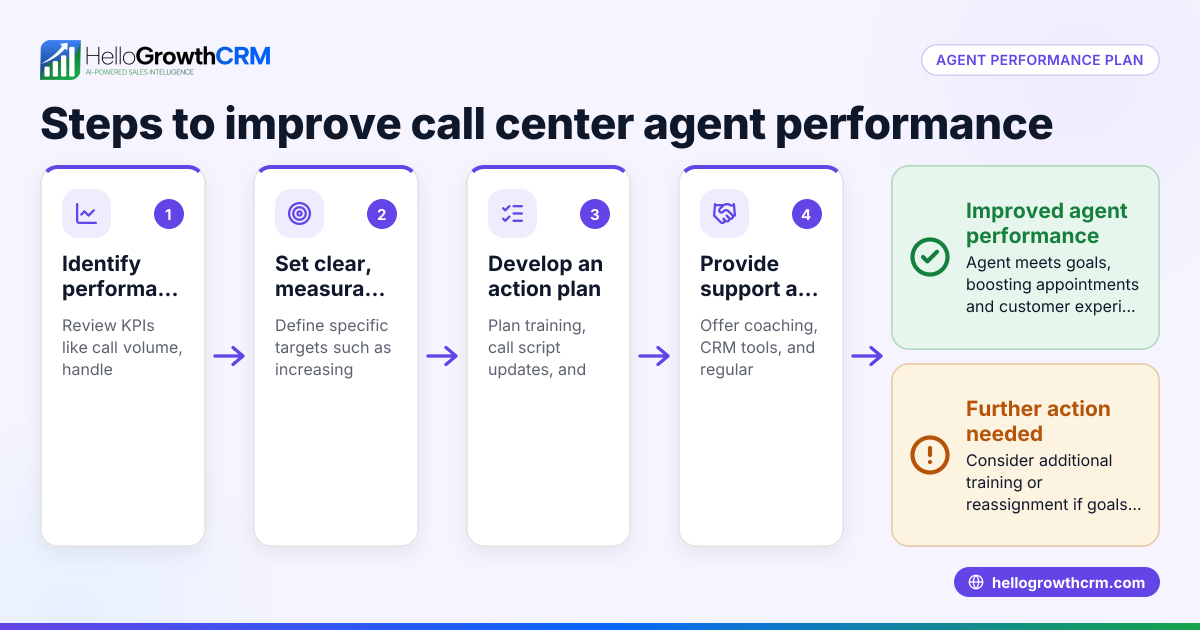
- Identify specific performance issues: Analyze sales data, customer feedback, and communication records to find where the sales rep is underperforming. Check metrics like number of calls made, lead follow-up time, conversion rates, and closed deals.
- Set clear, measurable goals: Define what success looks like with numbers and deadlines. For example, increase monthly closed deals from 5 to 8 within 60 days or reduce lead follow-up time to under 24 hours.
- Develop an action plan: List concrete steps the sales rep will take, such as increasing prospecting calls by 20%, attending weekly sales training, or using a CRM to track leads and follow-ups.
- Assign support and resources: Provide coaching, tools, or workflow changes. Using a CRM with pipeline management and follow-up reminders can help the rep stay organized and accountable.
- Establish a timeline and checkpoints: Set a typical duration of 30 to 90 days with weekly or biweekly progress reviews to monitor improvements and provide feedback.
- Document the plan and communicate clearly: Share the PIP document with the sales rep, explaining expectations, goals, support available, and consequences if targets are not met.
- Monitor progress and adjust as needed: Use sales reports and CRM data to track results. Celebrate improvements or decide next steps if goals remain unmet.
Example (fictional figures)
A plumbing company in Austin, Texas, called ABC Plumbing, noticed their sales rep, John, was closing only 4 deals per month instead of the target 7. They created a PIP starting 05/01/2026.
- Current deals closed per month = 4
- Target deals closed per month = 7
- Timeframe = 60 days
John's plan includes:
- Increase prospecting calls by 20% weekly
- Use CRM to track leads and follow-up dates
- Attend one sales training session per week
Calculations:
Target increase in deals = 7 - 4 = 3 deals
Timeframe = 60 days = 2 months
Additional deals needed per month = 3 deals ÷ 2 months = 1.5 deals per month
If each deal is worth approximately $5,000, the additional revenue expected per month is:
1.5 deals × $5,000 = $7,500
Over 2 months, additional revenue = $7,500 × 2 = $15,000
John will increase weekly prospecting calls by 20% to generate enough leads to meet this goal. Progress reviews will occur every 2 weeks to check calls made, follow-ups completed, and deals closed.
Common mistakes
- Setting vague goals: Prevent this by using specific, measurable targets like "increase closed deals from 4 to 7 within 60 days."
- No clear timeline or follow-up: Prevent by scheduling regular check-ins to review progress and provide feedback.
- Failing to provide support: Prevent by offering coaching, training, and tools such as a CRM pipeline to organize leads and follow-ups.
- Ignoring root causes of poor performance: Prevent by analyzing why the sales rep is underperforming before creating the plan.
- Not documenting the plan formally: Prevent by writing and sharing the PIP document clearly with the sales rep.
- Overloading the sales rep with unrealistic targets: Prevent by setting achievable goals based on data and capacity.
Doing this in HelloGrowthCRM
HelloGrowthCRM offers features that support managing sales performance improvement plans effectively. The Deals (pipeline) feature tracks open opportunities from first contact through close with follow-up dates, ensuring quotations or leads are not forgotten. Managed RevOps provides done-for-you revenue operations support, where a named revenue specialist works the follow-up queue weekly, helping founders without sales managers keep leads moving. For businesses with field sales teams, Territories, field operations and commissions tools allow reps to log visits from their phones while managers monitor daily activities. Learn more about WhatsApp and SMS CRM, the built-in CRM dialer, and HelloGrowthCRM for the United States.
Frequently asked questions
What should be included in a performance improvement plan for a sales rep? A PIP should include specific performance issues, measurable goals, an action plan, resources available, a timeline with checkpoints, and clear communication about expectations and consequences.
How long should a performance improvement plan last? Typically, a PIP lasts 30 to 90 days with regular progress reviews. The exact duration depends on the severity of the issues and the complexity of the goals.
Can a PIP help improve motivation? Yes, by setting clear goals and providing support, a PIP can clarify expectations and create accountability, which may boost motivation if handled transparently.
What if the sales rep does not improve after the PIP? If goals are not met despite support and clear communication, the business owner may need to consider reassignment, additional training, or termination, depending on company policy.
How can a CRM support a PIP? A CRM like HelloGrowthCRM helps track leads, deals, follow-up dates, and sales activities, providing data to measure progress and identify areas needing attention.
Key takeaways
- A sales rep performance improvement plan sets clear, measurable goals with a timeline.
- Identify specific performance issues before creating the plan.
- Provide support and tools, such as a CRM pipeline and follow-up management.
- Schedule regular reviews to monitor progress and adjust the plan.
- Document and communicate the plan clearly to the sales rep.
- Use sales management tools like HelloGrowthCRM to track activities and results.
Start improving your sales team's performance today. Start on the Free Forever plan (200 leads, no credit card).
Ready to put this into practice?
Set up your pipeline, WhatsApp follow-ups, and AI lead scoring in minutes — free, no credit card.
Try HelloGrowthCRM freeGet CRM tips in your inbox
Join thousands of sales professionals who get weekly insights on CRM strategy, AI automation, and pipeline optimization.

The HelloGrowthCRM team publishes guides on CRM strategy, AI sales tools, and revenue operations for small business sales teams.