HelloGrowthCRM software
Built for real small-business sales teams
HelloGrowthCRM helps reps qualify faster, follow up on time, and close more deals—with practical automation in one place.
- AI lead scoring and pipeline visibility
- Built-in dialer, WhatsApp, and email automation
- Sales forecasting and RevOps-ready reporting
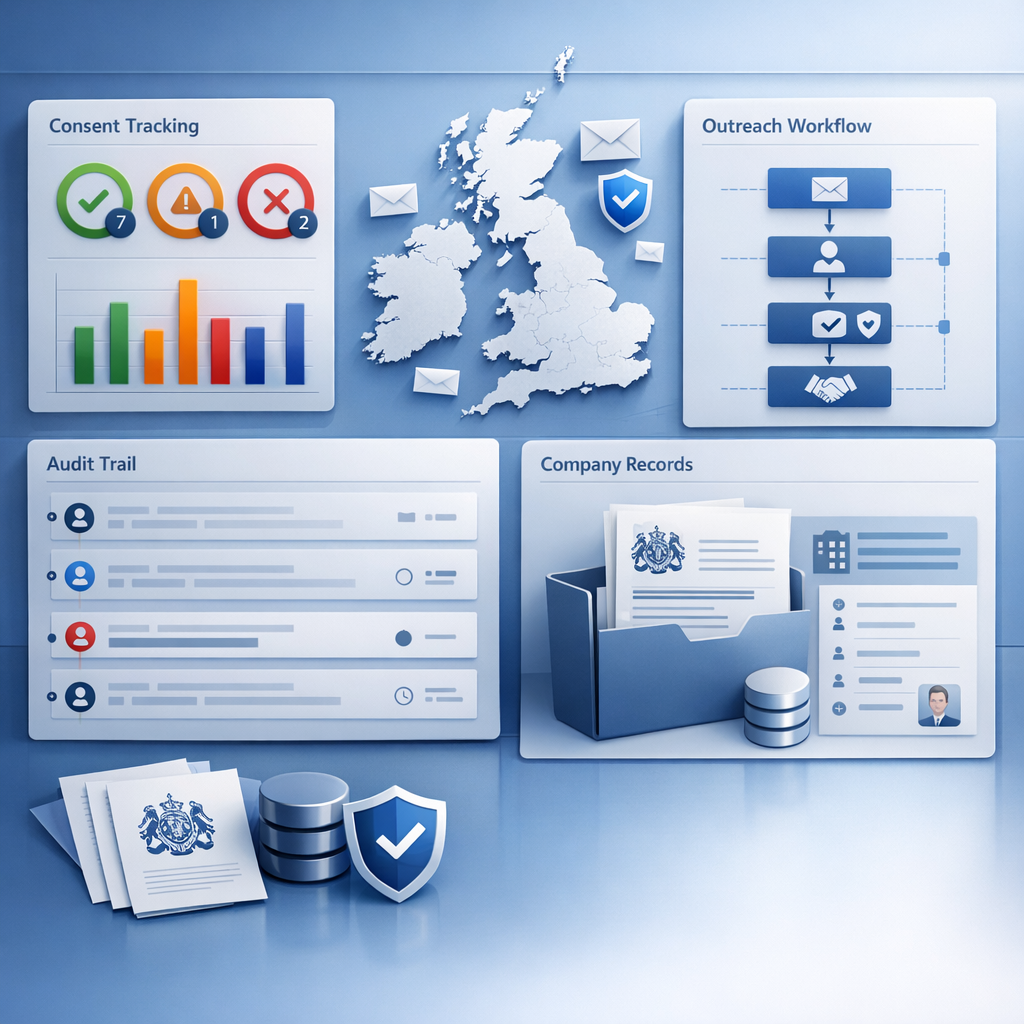
UK AI lead scoring workflows are structured CRM processes that rank UK B2B leads using form data, behavioural signals, and company enrichment such as Companies House records, then trigger compliant follow-up based on buying intent while respecting UK GDPR, the Data Protection Act 2018, ICO consent guidance, and PECR rules.
For UK revenue teams, that means your CRM does more than store contacts. It scores fit and intent, pushes sales-ready accounts to reps, slows down low-intent names, and keeps marketing and sales aligned on what “ready” actually means. In HelloGrowthCRM, this works best when AI Lead Scoring, Email Automation, and AI Pipeline Management are configured around your real funnel stages, not generic templates.
Key Takeaways
- UK AI lead scoring workflows combine three inputs: declared data, behavioural data, and trusted company enrichment.
- Companies House data helps validate firmographic fit, but it should support scoring, not replace buying-intent signals.
- Consent and outreach rules are not the same thing. UK GDPR, PECR, and ICO guidance must shape each workflow step.
- The best scoring models use clear thresholds for MQL, SQL, and disqualification, then automate follow-up inside the CRM.
- HelloGrowthCRM helps British teams prioritise leads, route tasks, and trigger compliant sales actions from one system.
- Teams in London, Manchester, and Birmingham usually get faster adoption when they start with one segment and one scorecard.
What are UK AI lead scoring workflows?
UK AI lead scoring workflows are CRM-driven rules and models that assign scores to leads based on fit, engagement, and timing, then automate actions like routing, follow-up, suppression, or nurture while staying aligned with UK data protection and electronic marketing rules.
In practice, a workflow is not just a number. It is a sequence:
- Capture lead data
- Enrich the company profile
- Score fit and intent
- Decide the next action
- Log consent and outreach basis
- Review conversion outcomes
For most B2B teams, score quality depends on three signal groups.
1. Form and declared data
This is the information the lead gives you directly:
- Name
- Work email
- Job title
- Department
- Company name
- Employee size
- Use case
- Budget range
- Region such as London, Manchester, or Birmingham
This data helps define ideal customer profile fit. A Head of Sales at a 50-person software firm in London should score differently from a student using a Gmail address.
2. Behavioural signals
These show active buying intent:
- Pricing page visits
- Repeat visits in seven days
- Demo requests
- Webinar attendance
- Email replies
- Proposal views
- Meetings booked via Meeting Scheduler
- Sales email opens and clicks tracked in Smart Inbox
When I have audited pipelines like this, weak teams often overweight email opens and underweight high-intent events like booking a discovery call. That leads reps to chase noise.
3. Company enrichment
This adds external context to the account:
- Registered company status
- Incorporation date
- SIC code
- Registered office
- Filing history
- Officer details from Companies House
For UK B2B teams, Companies House can improve account matching and segmentation. It can also help spot fit signals, such as incorporated status or sector alignment. It cannot tell you whether someone is ready to buy this quarter. Your workflow still needs behavioural evidence.
Why do UK B2B teams need a local approach?
UK B2B teams need a local approach because lead scoring decisions affect outreach, profiling, and consent handling, and those actions must reflect UK GDPR, the Data Protection Act 2018, PECR, and ICO guidance rather than generic US-first marketing automation assumptions.
Many CRM playbooks online assume broad opt-out emailing rules. That is risky for British teams. In the UK, electronic marketing and cookie use have specific rules under PECR, while personal data processing sits under UK GDPR and the Data Protection Act 2018.
The ICO’s guide to PECR is the practical reference point for electronic marketing and cookies. The UK GDPR guide from GOV.UK explains the broader legal framework.
What this changes in lead scoring design
Your scoring logic should separate:
- Sales priority from marketing permission
- Account-level fit from contact-level consent
- Website activity from cookie consent status
- Legitimate interest assessment from explicit consent records
That means a lead can be high-fit but not marketable by email. Your workflow should still score the account, but it may route that lead to a different action, such as a call task, LinkedIn research, or a rep review.
Common UK mistakes
I see four repeat issues in UK setups:
- Treating all form fills as blanket consent
- Using cookie-derived behaviour without checking consent settings
- Blending personal and company data into one score with no audit trail
- Sending automated sequences before checking lawful basis and suppression logic
In one rollout we did with a 12-person sales team, the biggest fix was not the model itself. It was creating separate fields for consent source, lawful basis, and contactability status inside the CRM. That cut pointless follow-up and made handoffs cleaner.
Which data sources should power a UK AI lead scoring model?
The best UK AI lead scoring models use first-party CRM data, web behaviour, sales activity, and verified company enrichment such as Companies House records, then weight each signal by how strongly it predicts opportunity creation rather than by how easy it is to capture.
A simple model usually beats a complex one in the first 90 days. Start with signals you trust.
Recommended scoring inputs
Fit signals
- Company size
- Industry or SIC alignment
- Geography
- Team function
- Seniority
- Existing tech stack
- Revenue band if available
- Registered company status
Intent signals
- Demo request
- Pricing page visit
- Two or more product page visits
- Repeat website sessions
- Email reply
- Meeting booked
- Proposal opened in Proposal Builder
- Sales call completed through CRM Dialer
Negative signals
- Personal email address for enterprise segment
- Student or consultant title if outside ICP
- No activity for 30 days
- Unsubscribed status
- Duplicate records
- Existing customer
- Open opportunity already in pipeline
A practical weighting example
For a UK SaaS vendor selling into SMEs:
| Signal | Example rule | Score impact |
|---|---|---|
| Job title | Head of Sales or RevOps | +15 |
| Company size | 20-200 employees | +12 |
| Region | UK-based | +5 |
| Companies House status | Active company match | +8 |
| Pricing visit | Visited pricing twice in 7 days | +20 |
| Demo form | Submitted demo request | +30 |
| Email reply | Replied to outbound or inbound email | +25 |
| Personal email | Gmail or Outlook address | -10 |
| No activity | No meaningful engagement for 21 days | -15 |
| Unsubscribed | Opted out of marketing | suppress marketing |
Use this as a starting point, not a universal model. If your average contract value is over £15,000, rep interaction and stakeholder count may matter more than website behaviour alone. If your deals are under £3,000, speed-to-lead often matters more.
How HelloGrowthCRM automates scoring and follow-up
HelloGrowthCRM automates UK AI lead scoring workflows by combining CRM data, website behaviour, enrichment, and activity signals into live lead scores, then triggering routing, tasks, sequences, and deal updates while giving teams a clearer audit trail for consent, source, and follow-up status.
This is where scoring becomes operational. A score on its own does nothing. The workflow after the score creates value.
What automation should happen after a score changes
In HelloGrowthCRM, a lead crossing a threshold can trigger:
- Rep assignment by territory using Territory Management
- A follow-up task on Sales Task Boards
- A tailored nurture sequence in Email Automation
- A summary for reps in AI Sales Copilot
- Pipeline creation in AI Pipeline Management
- Slack alerts through the Slack integration
- Calendar handoff using Calendly or Meeting Scheduler
Example workflow for a London inbound lead
A VP Sales from a London fintech submits a demo form, visits pricing twice, and matches an active Companies House record.
The workflow could:
- Set fit score to high
- Set intent score to very high
- Assign to the London AE
- Create a same-day call task
- Send a confirmation email
- Add an opportunity if a meeting is booked
- Pause marketing nurture once sales engagement starts
Example workflow for a Manchester mid-intent account
A Manchester operations manager downloads a guide, views two product pages, but does not request a demo.
The workflow could:
- Add moderate fit score
- Add light intent score
- Keep in nurture
- Trigger two educational emails
- Alert SDR only if the score rises above threshold
- Check cookie-consent-backed page view rules before using browsing signals
If you want to test score impact before rollout, the Lead Scoring Calculator and CRM ROI Calculator help frame the model financially.
How to build UK AI lead scoring workflows: Step-by-Step
Building UK AI lead scoring workflows means defining your ICP, choosing trusted signals, setting score thresholds, mapping compliant next actions, and reviewing conversion data weekly so the model improves without drifting away from UK legal requirements or real sales outcomes.
- Define your ICP and exclusions
- Map your data sources
- Separate fit, intent, and compliance fields
- Add Companies House enrichment carefully
- Set action thresholds
- Define channel-safe follow-up
- Train reps on score meaning
- Review weekly for 6-8 weeks
A simple governance checklist
- Document your scoring fields
- Log consent source and date
- Review cookie-based events
- Suppress unsubscribed contacts
- Keep retention rules clear
- Test false positives every week
The UK GDPR places accountability at the centre of data use, and the ICO’s accountability guidance is worth reviewing when you formalise this process.
How should you compare manual, rules-based, and AI-driven scoring?
You should compare manual, rules-based, and AI-driven scoring by looking at speed, consistency, transparency, maintenance effort, and suitability for your deal volume, because the best option depends on team size, data quality, and whether you need explainable actions as well as predictive prioritisation.
For many UK teams, the right path is staged maturity. Start with rules. Add AI once your CRM data is clean enough.
| Approach | Best for | Strengths | Limits | HelloGrowthCRM fit |
|---|---|---|---|---|
| Manual rep judgement | Very small teams | Fast to start, low setup | Inconsistent, hard to scale | Useful only at earliest stage |
| Rules-based scoring | Teams needing control | Transparent, easy to audit | Can get rigid, misses patterns | Strong starting point |
| AI-assisted scoring | Growing teams with enough data | Better prioritisation, adapts to patterns | Needs clean data and oversight | Best with AI CRM and clear governance |
| Fully automated scoring plus actioning | High-volume funnels | Fast routing and response | Needs strong QA and compliance controls | Best after process maturity |
Because HelloGrowthCRM is our product, that comparison is not neutral. The practical limitation is this: if your team has fewer than 500 meaningful lead events a month, a simple rules-based model may outperform a more advanced AI setup at first.
What compliance issues matter most for UK scoring and follow-up?
The most important compliance issues for UK lead scoring and follow-up are lawful processing, transparency, consent or legitimate interest for specific channels, cookie and tracking rules under PECR, suppression handling, and clear recordkeeping for how each lead was scored and contacted.
The ICO says PECR applies to marketing by electronic means and complements data protection law. That matters because a lead can be lawful to store in your CRM but not lawful to market to in the way your workflow assumes.
Practical rules for British teams
- Treat cookie-based web behaviour as a governed input
- Keep consent records tied to source and timestamp
- Review whether B2B email outreach relies on consent or legitimate interests in your context
- Honour unsubscribe and suppression requests immediately
- Avoid scoring sensitive personal data unless you have a clear lawful basis and business need
- Document profiling logic in simple terms
A safer workflow pattern
For a Birmingham manufacturer prospect:
- Match account via Companies House
- Score account fit
- Capture form submission details
- Check cookie preferences before using tracked web visits
- Route to SDR review if intent rises
- Let the rep choose the first channel if email eligibility is unclear
This pattern is slower than “auto-enrol everyone into a sequence,” but it is more defensible. It also tends to reduce spam complaints and improve reply quality.
If you need help designing the operating model, Managed RevOps can help map fields, stages, thresholds, and governance before you automate at scale.
British B2B teams that want faster prioritisation without messy handoffs should try HelloGrowthCRM. You can see how AI Lead Scoring, Email Automation, and AI Sales Copilot work together in a live Demo, review feature depth on the Features page, or start a Free Trial to build a compliant scoring workflow for your UK sales team.
About the author
Nathan Cole is a Sales Operations Lead at HelloGrowthCRM with 11 years of experience in B2B SaaS revenue operations, CRM design, and lead management. He has led scoring and routing projects for UK go-to-market teams across London, Manchester, and Birmingham. One project that informed this article involved rebuilding lead qualification and consent handling for a 12-person sales team selling into regulated UK service firms. He writes about practical RevOps systems that reps will actually use.
Frequently Asked Questions
Q: What is a UK AI lead scoring workflow?
A: A UK AI lead scoring workflow is a CRM process that ranks leads using fit, intent, and enrichment signals, then triggers the next action in a way that respects UK data and marketing rules. It usually combines forms, web activity, and company data with routing and follow-up automation.
Q: Can I use Companies House data for lead scoring?
A: Yes, you can use Companies House data for lead scoring as a firmographic enrichment source to validate account fit and company identity. It is most useful for matching, segmentation, and sector checks, not for measuring immediate buying intent.
Frequently Asked Questions
Ready to put this into practice?
Set up your pipeline, WhatsApp follow-ups, and AI lead scoring in minutes — free, no credit card.
Try HelloGrowthCRM freeGet CRM tips in your inbox
Join thousands of sales professionals who get weekly insights on CRM strategy, AI automation, and pipeline optimization.

The HelloGrowthCRM team publishes guides on CRM strategy, AI sales tools, and revenue operations for small business sales teams.