HelloGrowthCRM software
Built for real small-business sales teams
HelloGrowthCRM helps reps qualify faster, follow up on time, and close more deals—with practical automation in one place.
- AI lead scoring and pipeline visibility
- Built-in dialer, WhatsApp, and email automation
- Sales forecasting and RevOps-ready reporting
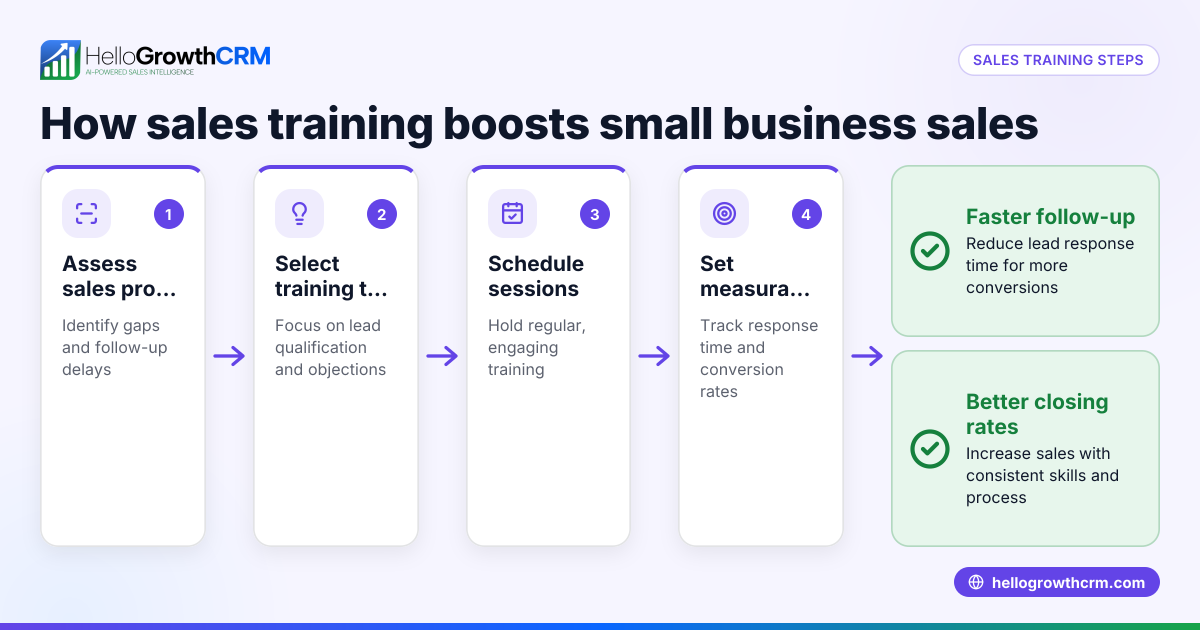
Value based sales training is a method that shifts sales conversations from price and product features to the real benefits and outcomes the customer gains. This approach improves customer trust and increases sales success by focusing on solving customer problems and delivering clear value.
Why this comes up / what goes wrong
Small-business owners often struggle with sales because their teams focus too much on product details or price discounts. This leads to lost deals and slow follow-up. Without training that emphasizes customer value, sales reps may fail to connect with prospects on what matters most to them. Many small teams run sales on text messages, email, and spreadsheets, making it easy to lose track of leads or miss timely follow-ups. Value based sales training helps fix these issues by teaching reps to listen for customer needs and tailor their pitch accordingly.
Step-by-step
- Identify your customer’s key problems and goals. Talk with your sales team and customers to understand what challenges your product or service solves. Check that these insights are documented and shared.
- Map product features to customer benefits. For each feature, list the specific value it provides to customers. Confirm that your sales materials highlight these benefits clearly.
- Train your sales team on value messaging. Conduct role-plays and workshops focusing on asking questions, active listening, and presenting solutions based on customer needs. Verify everyone can explain value in their own words.
- Create sales scripts and templates based on value. Develop email and call scripts that open conversations with value points, not just product specs or price. Review scripts regularly for relevance.
- Use a CRM to track leads and follow-ups. Ensure your sales team logs interactions and sets reminders for next steps. Check the CRM pipeline regularly to avoid losing deals.
- Measure results and refine training. Collect feedback from sales reps and customers on what messaging works. Adjust your training and materials based on this data.
For more on organizing sales processes, see CRM academy.
Example (fictional figures)
A B2B software reseller in Denver, Colorado, wants to improve its sales approach. They sell a project management tool priced at $12,000 per year.
- They identify that customers struggle with remote team coordination and missed deadlines.
- They map features like task assignment and deadline alerts to benefits such as improved team productivity and fewer project delays.
- Sales reps are trained to ask prospects about their current coordination challenges and to explain how the tool solves these.
- An email template is created starting with: “Many teams face missed deadlines—our tool helps you stay on track with real-time alerts.”
- Using HelloGrowthCRM, the team logs each lead and sets follow-up reminders.
A lead expresses interest on 04/01/2026.
Quotation sent on 04/05/2026 for $12,000.
Follow-up scheduled for 04/10/2026.
This pipeline tracking ensures no lead is forgotten.
Common mistakes
- Focusing on features, not customer value. Prevent by always linking features to real benefits during training.
- Ignoring customer pain points. Prevent by teaching reps to ask open-ended questions.
- Using generic sales scripts. Prevent by customizing scripts based on customer segments.
- Poor follow-up and lead tracking. Prevent by using a CRM pipeline to set reminders and track deals.
- Not measuring training impact. Prevent by collecting feedback and sales data regularly.
Learn how to avoid these mistakes with structured sales processes at CRM academy.
Doing this in HelloGrowthCRM
HelloGrowthCRM helps small businesses apply value based sales training by managing deals in a clear pipeline. For example, a quotation sent last week appears at the 'quote sent' stage with a follow-up date, so no lead is forgotten. Field sales teams can log visits from the phone, and managers see daily activity with territory tools. For founders without a sales manager, Managed RevOps support ensures weekly follow-up and pipeline hygiene. Learn more about these features at HelloGrowthCRM for the United States and WhatsApp and SMS CRM.
Frequently asked questions
What is the main goal of value based sales training? The main goal is to equip salespeople to focus on the customer’s needs and the value the product delivers, rather than just listing features or competing on price. This builds trust and improves closing rates.
How long does it take to see results from value based sales training? Results can vary, but typically sales teams begin to improve messaging and customer engagement within a few weeks. Ongoing practice and CRM support help sustain progress.
Can small sales teams do value based selling without a sales manager? Yes, small teams or founders can implement value based selling with proper training and tools. Services like Managed RevOps can assist with follow-up and pipeline management.
How does a CRM help with value based sales? A CRM organizes leads, tracks conversations, and schedules follow-ups so that salespeople can focus on delivering value without losing opportunities. It also helps measure which messages work best.
Is value based sales training suitable for all industries? While the core principles apply broadly, training should be tailored to the specific customer needs and buying processes of each industry for best results.
Key takeaways
- Value based sales training teaches focusing on customer needs and benefits over features or price.
- Understanding customer problems is the first step to effective value messaging.
- Sales scripts and follow-ups should be tailored to highlight value.
- Using a CRM ensures leads are tracked and follow-ups happen on time.
- Avoid common mistakes like ignoring pain points or poor lead management.
- HelloGrowthCRM supports value based sales with pipeline tracking, territory tools, and Managed RevOps.
Start improving your sales approach today. Start on the Free Forever plan (200 leads, no credit card).
Ready to put this into practice?
Set up your pipeline, WhatsApp follow-ups, and AI lead scoring in minutes — free, no credit card.
Try HelloGrowthCRM freeGet CRM tips in your inbox
Join thousands of sales professionals who get weekly insights on CRM strategy, AI automation, and pipeline optimization.

The HelloGrowthCRM team publishes guides on CRM strategy, AI sales tools, and revenue operations for small business sales teams.